A festival where a straw snake rope winds through the settlement, carrying prayers and community ties to the Snake Mound
Saragi Snake Procession and Soup-Pouring Festival
Festival information
EVENT INFORMATION- Season / frequency
- Every year on May 5 / Every year
- Location
- Noguchi Shrine and the settlement of Saragi
- Area
- Nara Prefecture・Gose City(From Tokyo: approx. 3 h–3 h 30 min · bullet train + connecting train)Prefecture-level estimate to a main station or airport, not the venue. Airport access, check-in and onward travel are extra; remote areas and islands can take much longer.
- Features
- Highlights and activities
- Wishes behind the festival
- Participation / viewing
- Spectators welcome
- Last updated
- 2026/11/11
Held every year on May 5 in Saragi, Gose City, this festival features a straw snake rope winding through the settlement. The toya and local residents pass down the legend behind the soup-pouring ritual and prayers for abundant harvests and protection from evil.
About Saragi Snake Procession and Soup-Pouring Festival
Centered around Noguchi Shrine in Saragi, this local festival is held every year on May 5.
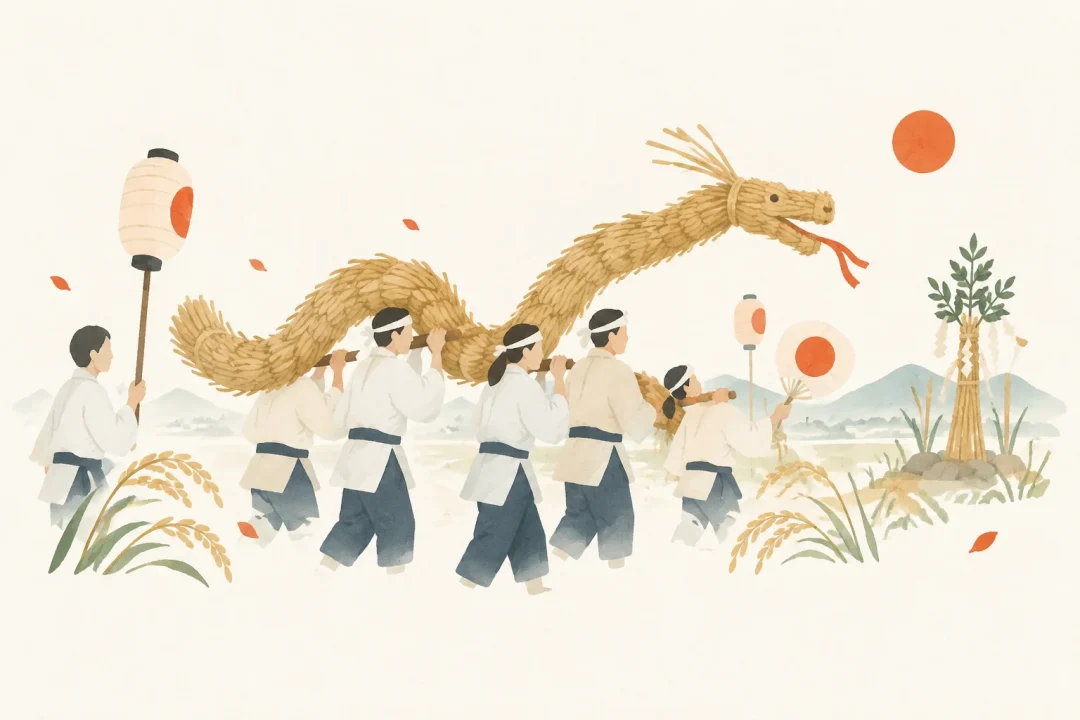
A straw snake rope sets off at the signal of the soup-pouring ritual and travels to homes throughout the settlement before being wound around the Snake Mound at Noguchi Shrine.
The toya and neighborhood groups handle preparations and make the snake rope, and the festival is passed down through the bonds among local people.
The soup-pouring ritual carries prayers for abundant harvests, rain, protection from evil, and protection from illness.
Festival highlights
The highlights are the long straw snake rope made by people from the settlement and its procession.
The snake rope stretches about 14 meters and visits all of the approximately 140 households.
At each household, people heave the snake rope up and down to shouts of “Heave-ho!” while the announcing its arrival and flutes lead the procession.
According to local tradition, the snake’s head must not face north; at times, it even proceeds tail-first.
A festival where a straw snake rope winds through the settlement, carrying prayers and community ties to the Snake Mound
What to expect
The festival begins when the and snake head set out from the toya’s home.
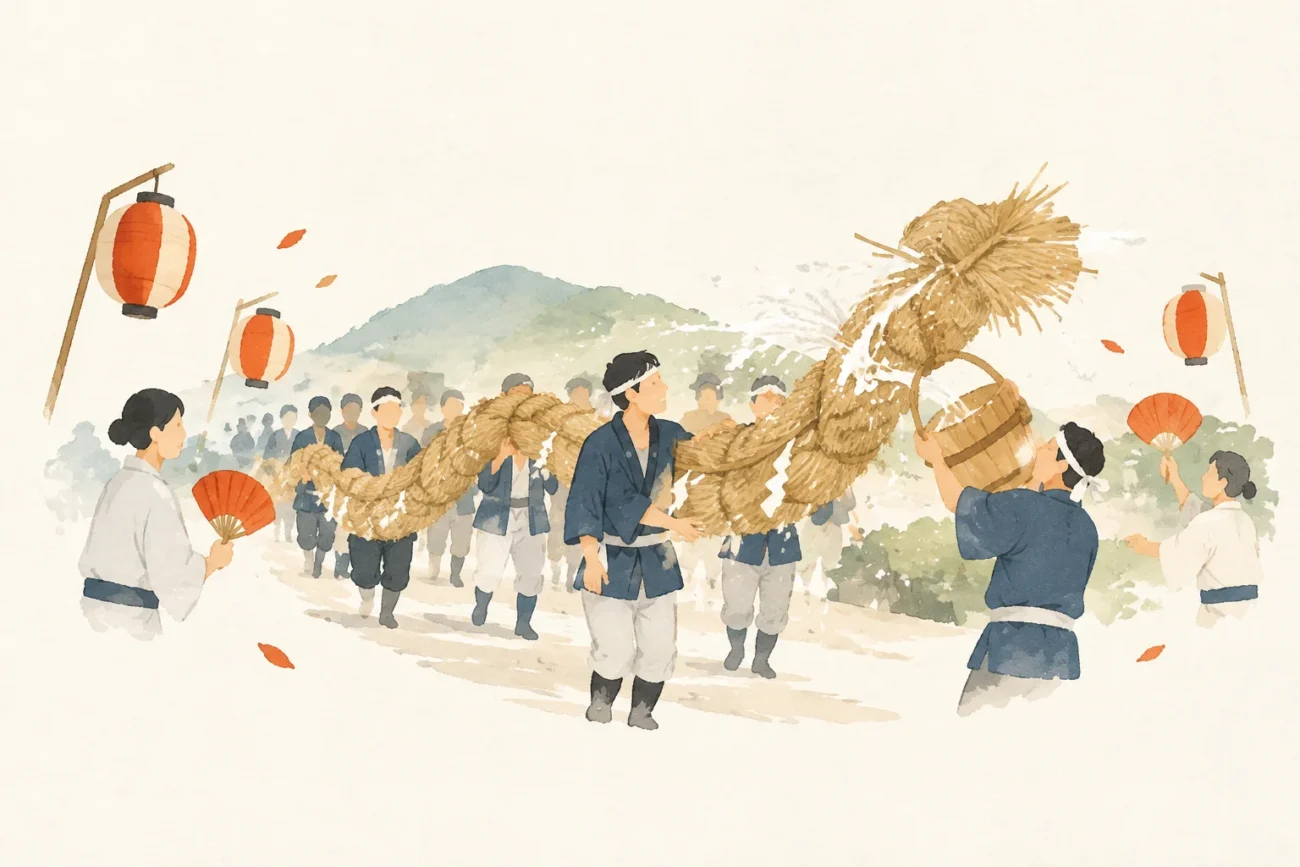
At the shrine, straw is added to complete the snake rope, followed by the soup-pouring ritual, in which miso soup is scattered.
The snake rope is then led through the settlement, visiting each household, by the taiko announcing its arrival and flutes, before returning to Noguchi Shrine.
The festival concludes when the snake rope is wound around the Snake Mound, and the toya handover and distribution of offerings are completed.
How to take part
The festival is organized by the toya and neighborhood groups, who handle preparations, make the snake rope, and pull it.
Visitors come from within and beyond the settlement, and on the day, rice balls and other food are served to participants and spectators at the community hall.
No information is provided about registration for general visitors or advance applications.
Location and access
- Venue and address
Noguchi Shrine, 540 Saragi, Gose City
- Parking
The parking lot at Noguchi Shrine is being improved
Address 540 Saragi, Gose City
Dates and season
- Season
Every year on May 5
- Frequency
Every year
Accommodation and hotels PR
Showing nearby accommodation.
Prices and availability are current at the time of retrieval. For multi-night stays, only the first night’s price is shown. Confirm the final price and directions to the venue with the booking provider. Select your dates again when using the area search link. Search area: within 3 km of Central Nara Prefecture / Gose City (the search is not centered on the festival venue)
Tips for your visit
In the past, miso soup was poured over spectators during the soup-pouring ritual. Today, a scatters it from side to side with a branch, then serves it to everyone.
To help prevent the spread of infectious diseases, some parts of the event, such as the snake rope procession and the distribution of offerings, may not take place.
Nearby attractions

葛城一言主神社
奈良県御所市森脇にある神社
Origins and History of Saragi Snake Procession and Soup-Pouring Festival
According to legend, a young woman who fell in love with the ascetic En no Gyoja turned into a snake, and villagers drove her away by pouring miso soup over her.
Noguchi Shrine is said to have originated as a place of worship for Ryujin, the dragon deity of water, and the festival is also said to have begun as a prayer for abundant harvests.
The snake procession dates back to the Edo period. Women joined the participants around Showa 60, whereas previously only men took part.
Today, local adults also help pull the snake rope, preserving the toya and kakuchi systems as the tradition is passed on.
Official information
Nara Prefecture’s “Saragi Snake Procession and Soup-Pouring Festival”
Saragi Snake Procession and Soup-Pouring Festival at a Glance
The Saragi Snake Procession and Soup-Pouring Festival is a local festival in which a straw snake rope winds through the settlement and is laid at the Snake Mound at Noguchi Shrine.
The legend behind the soup-pouring ritual is linked to prayers for abundant harvests, rain, protection from evil, and protection from illness.
The toya and neighborhood groups handle preparations, and the snake rope visits each household, led by taiko and flutes.
This event, which dates back to the Edo period, is passed down through community traditions and cooperation across generations.
Sources and references
Japanese Festivals.jp Editorial Team
Celebrating local culture and helping you discover a side of Japan you never knew.
Article updated: 2026/11/11