A rice-planting festival entrusting hopes for an abundant harvest to a sand-made Ota and wild-rice “Big Men”
The Otaue Festival at Shimomura Kamo Shrine
Festival information
EVENT INFORMATION- Season / frequency
- June, on the first Day of the Hare
- Location
- Shimomura Kamo
- Area
- Toyama Prefecture・Imizu City(From Tokyo: approx. 2 h 10 min–2 h 40 min · bullet train)Prefecture-level estimate to a main station or airport, not the venue. Airport access, check-in and onward travel are extra; remote areas and islands can take much longer.
- Wishes behind the festival
- Last updated
- 2026/11/11
This agricultural ritual at Shimomura Kamo Shrine features rice planting in a sand-made Ota and a custom involving “Big Men” figures made from wild rice plants.
About The Otaue Festival at Shimomura Kamo Shrine
The Otaue Festival at Shimomura Kamo Shrine is an agricultural ritual praying for the rice to grow well and for an abundant harvest.
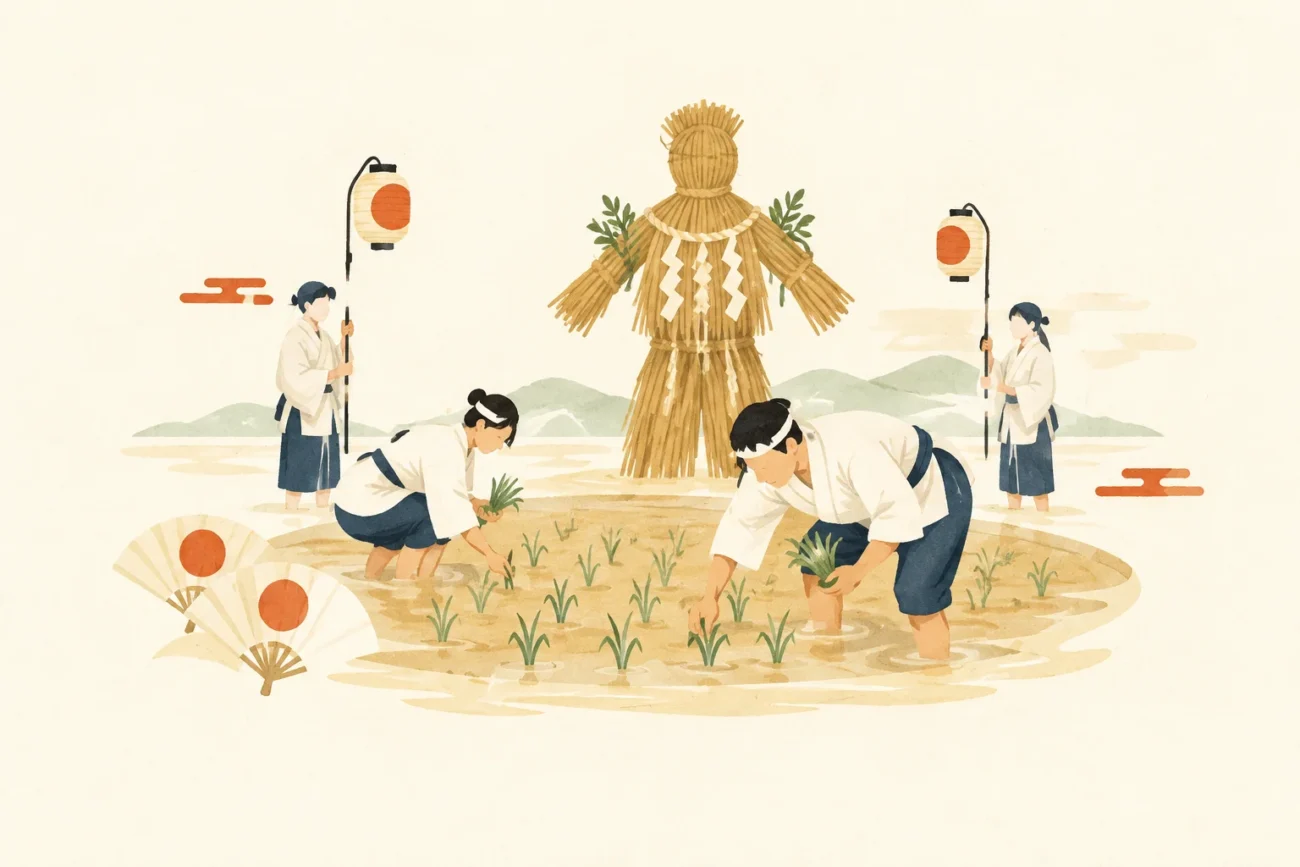
On June, the first Day of the Hare, the chief priest plants rice in an Ota made by piling sand into ridges in the shrine grounds.
After the planting, a custom involving “Big Men” figures made from wild rice plants continues to be observed. The event is designated an Intangible Folk Cultural Property of Toyama Prefecture for preserving the form of an old agricultural ritual.
Festival highlights
The highlight is the chief priest planting rice in an Ota made by piling up sand.
Afterward, a pair of “Big Men” figures made from ten bundles of wild rice plants are tossed backward. It is said that whoever catches one will have a good harvest.
Worshippers compete to catch the figures in a distinctive custom, and the event is considered unique within the prefecture.
A rice-planting festival entrusting hopes for an abundant harvest to a sand-made Ota and wild-rice “Big Men”
What to expect
The event begins with the chief priest planting rice in a sand-made Ota set up in the shrine grounds.
After the rice planting, a pair of “Big Men” figures made from ten bundles of wild rice plants are tossed backward.
Worshippers compete to catch the figures, and it is said that whoever catches one will enjoy a good harvest.
Location and access
- Venue and address
Shimomura Kamo Shrine grounds (630 Kamonaka-bu, Imizu City)
Address 630 Kamonaka-bu, Imizu City
Dates and season
- Season
June, on the first Day of the Hare
Accommodation and hotels PR
Showing nearby accommodation.
Prices and availability are current at the time of retrieval. For multi-night stays, only the first night’s price is shown. Confirm the final price and directions to the venue with the booking provider. Select your dates again when using the area search link. Search area: within 3 km of Central Toyama Prefecture / Imizu City (the search is not centered on the festival venue)
Nearby attractions

射水市大島絵本館
富山県射水市にある博物館

射水市新湊博物館
富山県の博物館・美術館のスポットです。
Origins and History of The Otaue Festival at Shimomura Kamo Shrine
This festival has been passed down while preserving the form of an old agricultural ritual.
It is considered unique within the prefecture, and was designated a prefectural Intangible Folk Cultural Property in Heisei 6 February 24.
No information is provided about when the festival began or how it changed over time.
The Otaue Festival at Shimomura Kamo Shrine at a Glance
The Otaue Festival at Shimomura Kamo Shrine is an agricultural ritual in which the chief priest plants rice in an Ota made of sand, praying for the rice to grow well and for an abundant harvest.
After the rice planting, 2 figures called “Big Men,” made from wild rice plants and paired together, are tossed into the air. Worshippers compete to catch them.
The event preserves the form of an old agricultural ritual and is designated an Intangible Folk Cultural Property of the prefecture.
Sources and references
Japanese Festivals.jp Editorial Team
Celebrating local culture and helping you discover a side of Japan you never knew.
Article updated: 2026/11/11