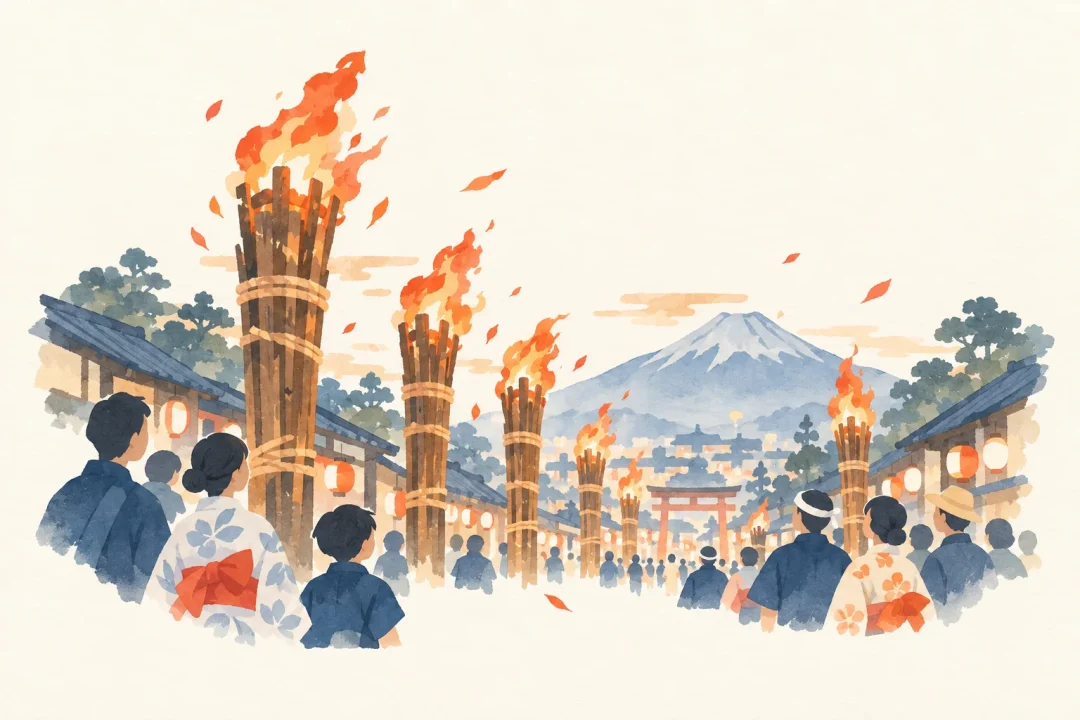
A fire festival of prayer, keeping the flames spinning in Fukutani’s night sky
Daikasé
Festival information
EVENT INFORMATION- Event status
- Cancelled
- Season / frequency
- Usually held on August 14 and the 15th (formerly on August 23 and the 24th) / A tradition held over 2 nights
- Location
- Summit of Kaseyama (Sajikiyama)
- Area
- Fukui Prefecture・Oi Town(From Tokyo: approx. 2 h 50 min–3 h 20 min · bullet train)Prefecture-level estimate to a main station or airport, not the venue. Airport access, check-in and onward travel are extra; remote areas and islands can take much longer.
- Highlights and activities
- Wishes behind the festival
- Last updated
- 2026/11/11
Daikasé, passed down in Fukutani, Oi Town, is a fire festival in which a huge kase is spun amid the flames, knocked down, and raised again. It is known as an event with a tradition of about 300 years, held in prayer for protection from fires and a bountiful harvest.
About Daikasé
Daikasé is a fire festival traditionally held at the summit of Kaseyama (Sajikiyama) in Fukutani, Oi Town.
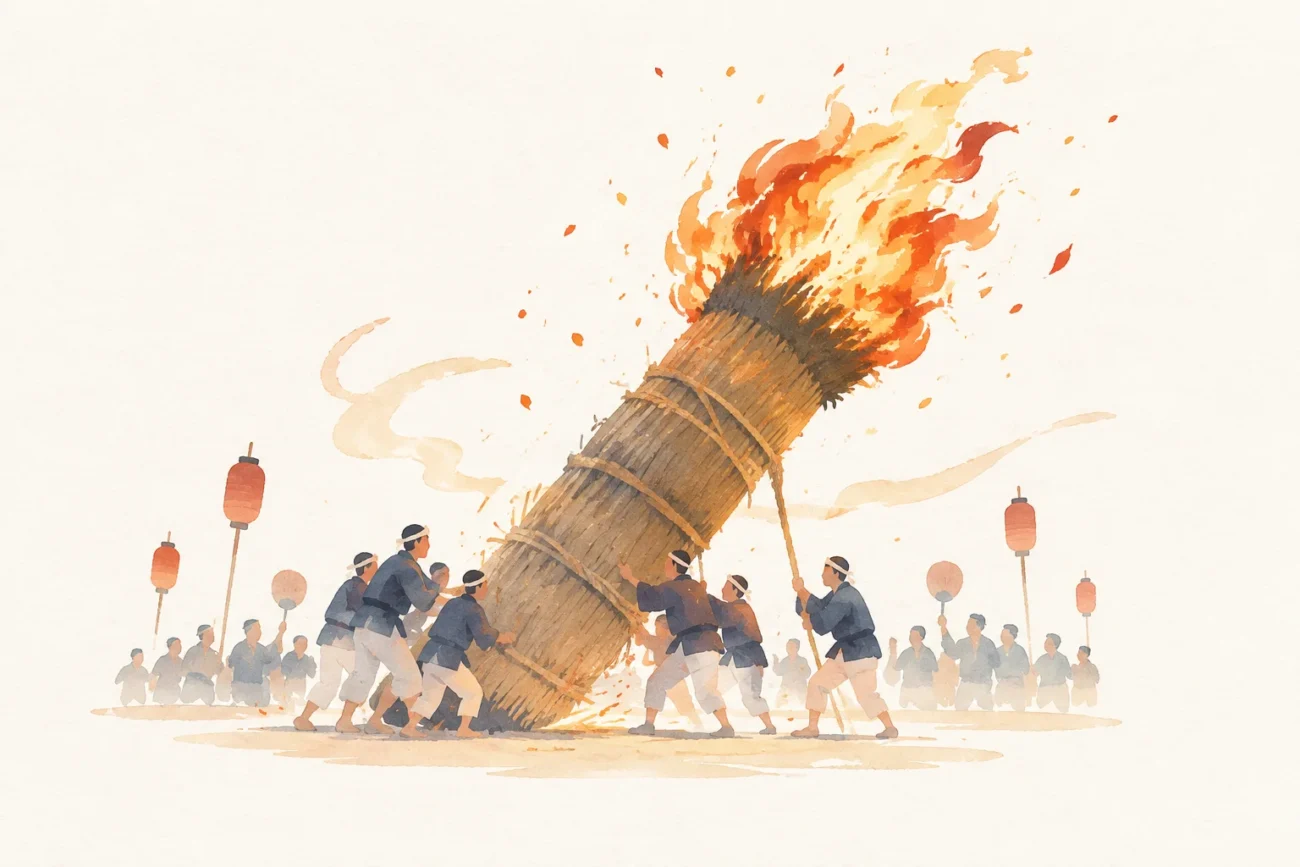
A “kase,” made by attaching bundles of thatch to a pole about 15 meters tall, is set alight.
It has been passed down as a fire-prevention observance of the Atago-ko, with prayers for protection from fires and a bountiful harvest.
It is also an Intangible Folk Cultural Property designated by Fukui Prefecture.
Festival highlights
One highlight is the sight of the kase, a ring-shaped frame bound with torches, spinning dramatically at the summit after dark.
The lit kase is spun several times, knocked down, raised again, and spun repeatedly until the fire goes out.
The town’s guide says it is spun 3 or 5 times before being knocked down, then raised and spun again.
The roughly 15-meter pole and the movement of the flames give the event its imposing character.
A fire festival of prayer, keeping the flames spinning in Fukutani’s night sky
What to expect
First, crossbars and thatch are assembled on a pole about 15 meters tall to make a kase shaped like a leaf.
At night, the kase is lit, spun, knocked down, raised, and spun again; this sequence continues until the fire goes out.
Daikasé is meant to be held over 2 nights, and holding it for only 1 night has traditionally been frowned upon and called “Katamatsu.”
The kindling fire comes from Atago Shrine in Kyoto.
Location and access
- Venue and address
Summit of Kaseyama (Sajikiyama), Fukutani, Oi Town
Address Fukutani, Oi Town
Dates and season
The event is suspended in 2026.
It has usually been held on August 14 and the 15th.
Accommodation and hotels PR
Showing nearby accommodation.
Prices and availability are current at the time of retrieval. For multi-night stays, only the first night’s price is shown. Confirm the final price and directions to the venue with the booking provider. Select your dates again when using the area search link. Search area: within 3 km of Central Fukui Prefecture / Oi Town (the search is not centered on the festival venue)
Nearby attractions

若州一滴文庫
福井県おおい町にある文学館
Origins and History of Daikasé
The precise origins of Daikasé are unknown, but it is said to have begun in the middle of the Edo period.
The town describes it as a fire festival with a tradition of about 300 years, passed down continuously in the Fukutani district.
It was formerly held on August 23 and the 24th, and in recent years has been held on August 14 and the 15th.
In Showa 57 April 23, it became Intangible Folk Cultural Property No. 235 designated by Fukui Prefecture.
Official information
“Daikasé” guide on the official Oi Town website
Daikasé at a Glance
Daikasé is a fire festival passed down at the summit of Kaseyama in Fukutani, Oi Town.
At night, they spin the kase, a frame bound with torches, then knock it down, raise it, and spin it again. They repeat this until the fire goes out.
It is an Intangible Folk Cultural Property designated by Fukui Prefecture, held in prayer for protection from fires and a bountiful harvest, but it is suspended in 2026.
Sources and references
Japanese Festivals.jp Editorial Team
Celebrating local culture and helping you discover a side of Japan you never knew.
Article updated: 2026/11/11