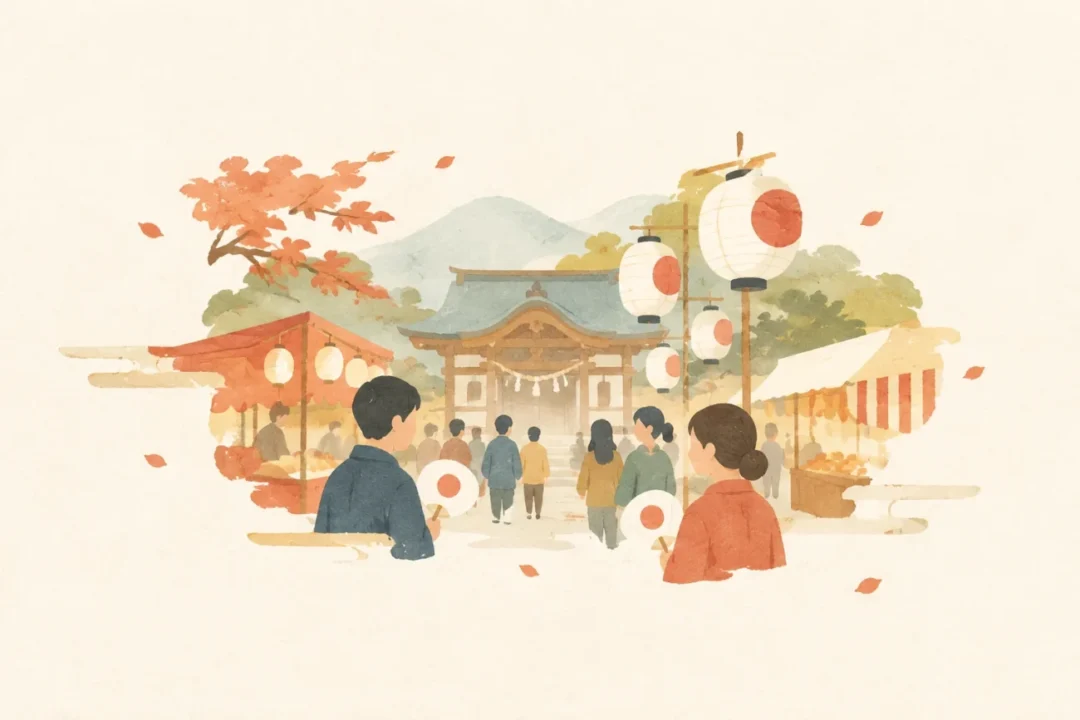
A Shichinen Festival where three mikoshi and dedicated performances process through town
Takahama Shichinen Festival
Festival information
EVENT INFORMATION- Season / frequency
- Jun / Every 6 years (once every 7 years by inclusive counting)
- Location
- Sakiji Shrine and its surroundings, in Takahama Town
- Area
- Fukui Prefecture・Takahama Town(From Tokyo: approx. 2 h 50 min–3 h 20 min · bullet train)Prefecture-level estimate to a main station or airport, not the venue. Airport access, check-in and onward travel are extra; remote areas and islands can take much longer.
- Highlights and activities
- Wishes behind the festival
- Last updated
- 2026/10/19
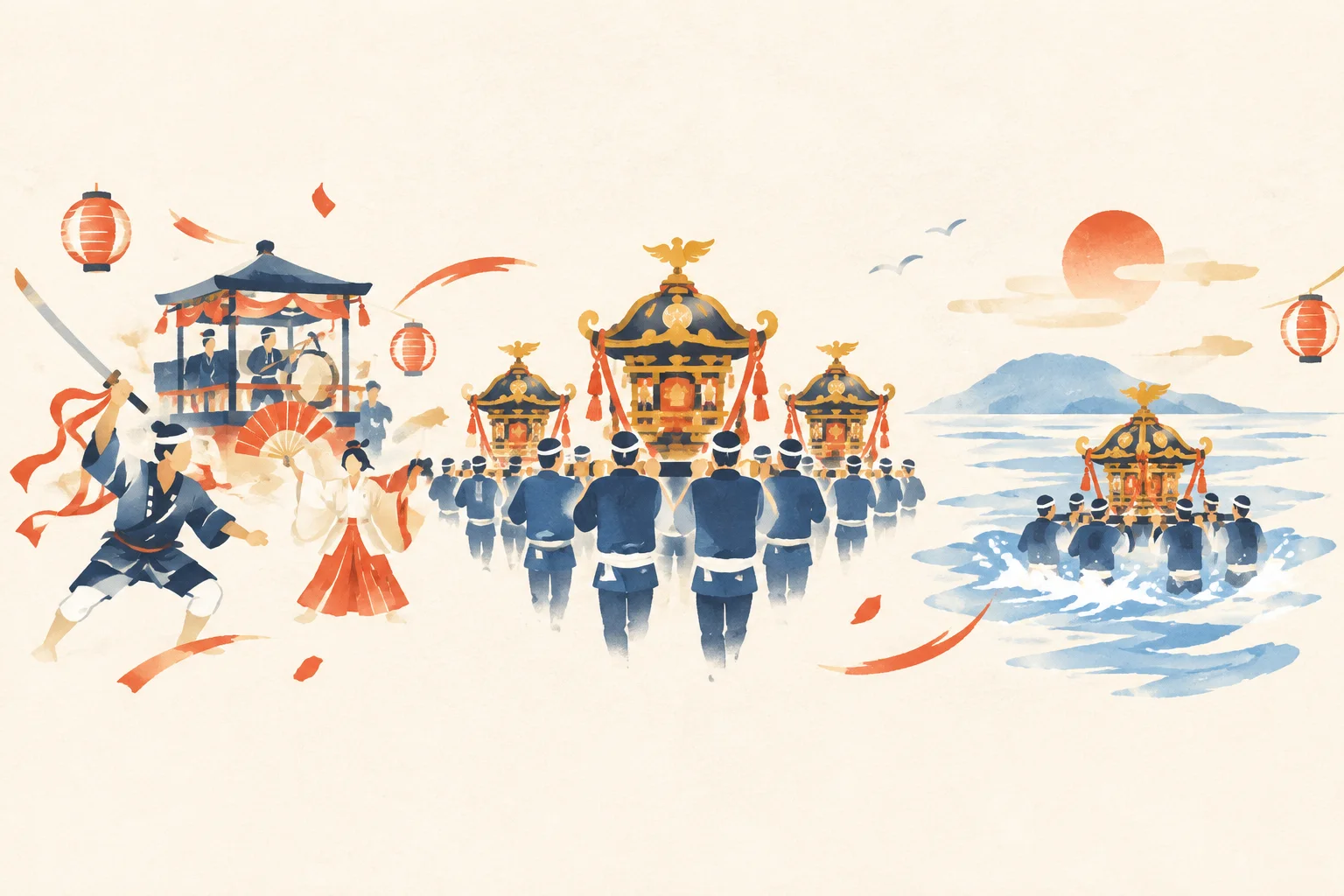
Centered on Sakiji Shrine, the Takahama Shichinen Festival is a periodic grand festival in which three and a wide variety of dedicated performances process through Takahama Town. Tachi-furi sword dances, , and performances convey local traditions, and on the final day, the mikoshi enter the sea in the ashiarai ritual.
About Takahama Shichinen Festival
Photo credits and terms of use
Photographer: Mactomy File:Takahama 7 Years Festival 高浜七年祭足洗.jpg / Wikimedia Commons / CC BY-SA 4.0 Own work by the contributorDisplay size only adjusted.May differ from the event currently featured.The Takahama Shichinen Festival is a periodic grand festival held by Sakiji Shrine in Takahama Town, Fukui Prefecture, and is designated an Intangible Folk Cultural Property of Fukui Prefecture.
The former Takahama district is the parishioner area, and three mikoshi process through the town.
A wide variety of dedicated performances, including tachi-furi sword dances, rice-planting dances, kagura, and hikiyama performances, bring the festival to life.
It is a traditional event involving the entire town, passed down by local people across generations.
Source: 文化財詳細 | 福井県文化財ページ
Festival highlights
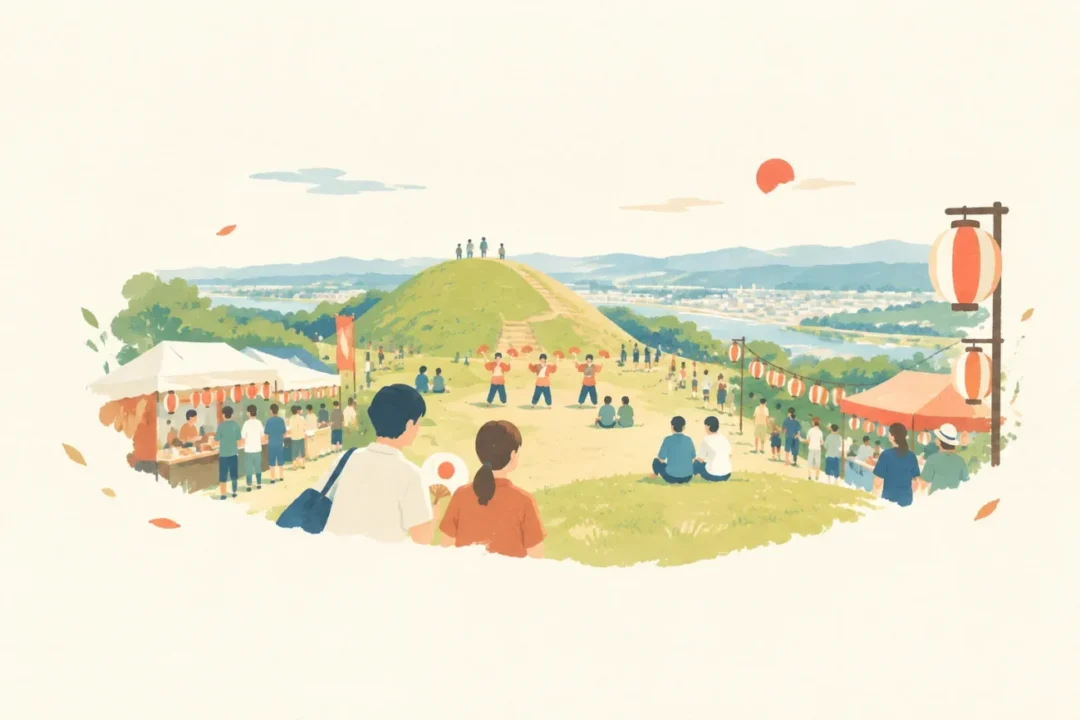
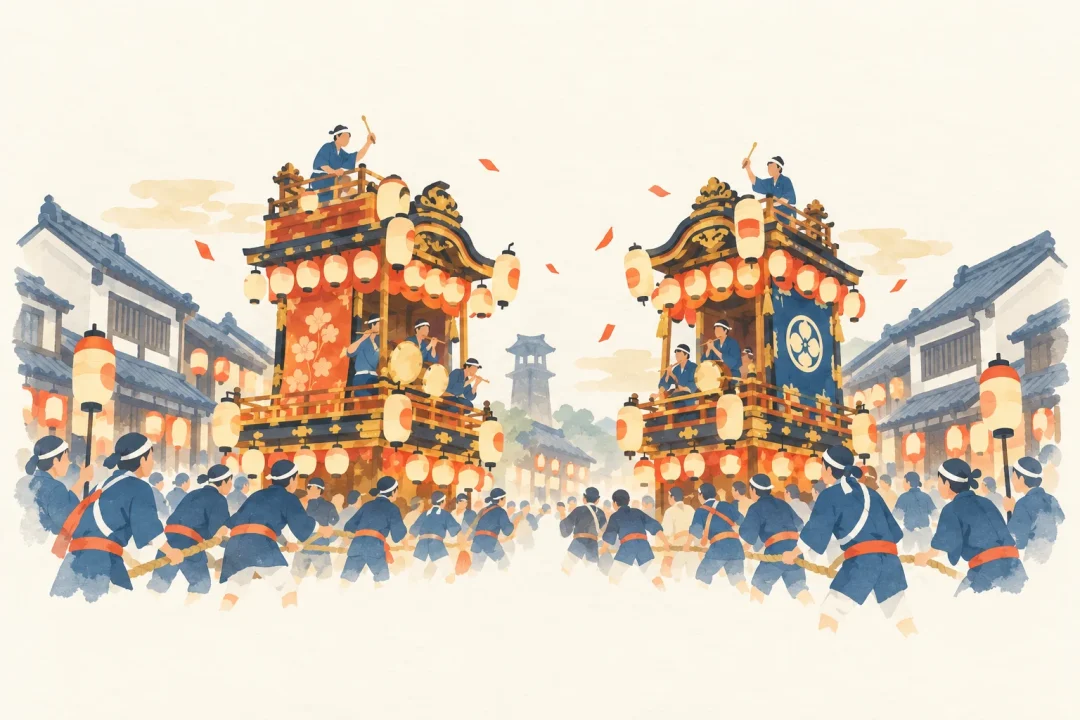
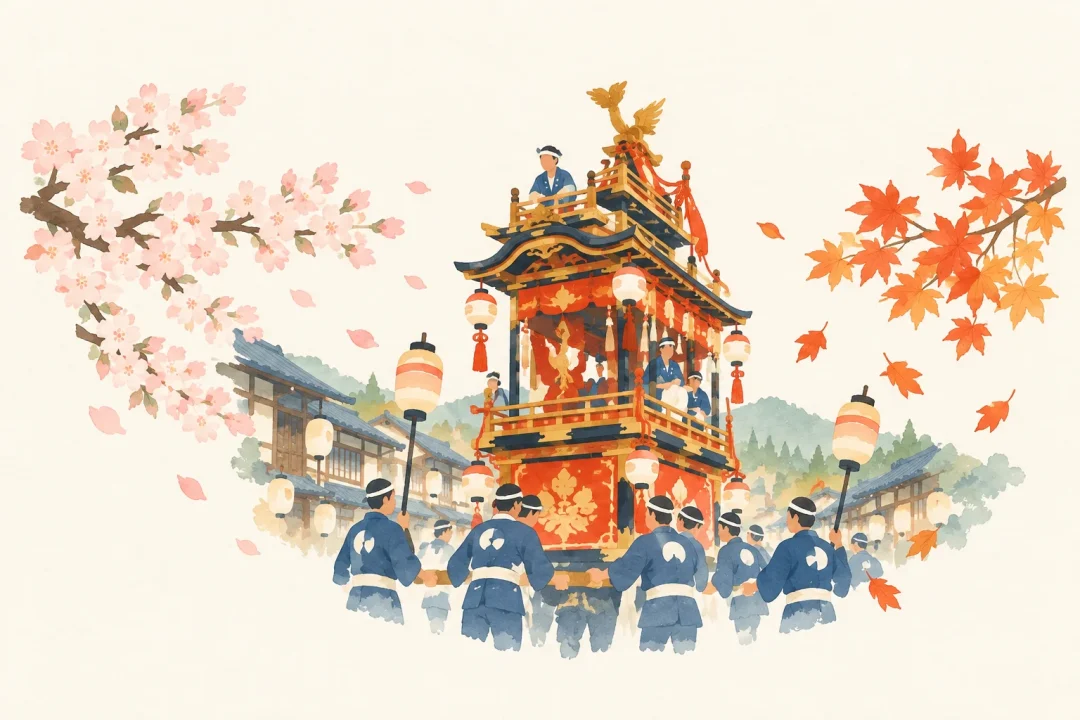
The main highlights are the processions of the three mikoshi—Higashiyama, Nakanoyama, and Nishiyama—and the gathering of seven hikiyama floats at the shrine.
The hikiyama floats feature -bayashi festival music, Japanese dance and popular-song dance performed by children, and drumming.
The performances and styles of tachi-furi sword dances differ by district. Kagura includes the dances of the sacred wand and sword, hon-kagura, and ara-jishi.
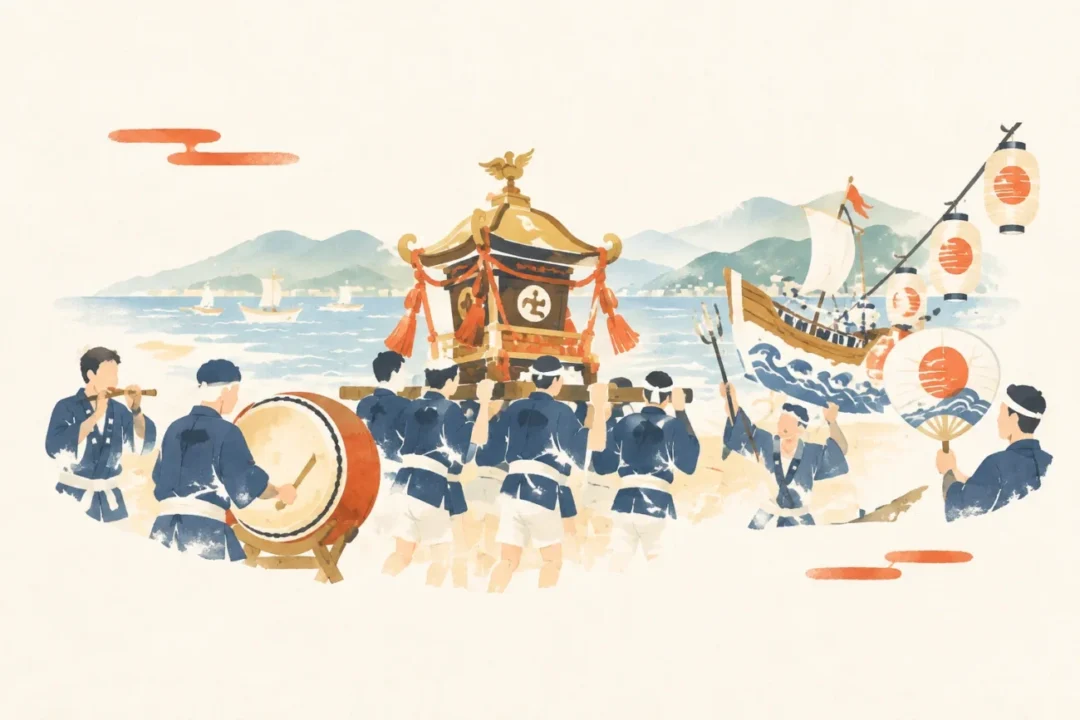
During the ashiarai ritual on the final day, the three mikoshi enter the sea.
Source: 高浜七年祭 - Wikipedia
A Shichinen Festival where three mikoshi and dedicated performances process through town
What to expect
At the festival, performances such as tachi-furi sword dances, rice-planting dances, and kagura are dedicated before the mikoshi depart and after they arrive.
During the festival, the mikoshi process through town, while the hikiyama floats present performances at the shrine, , honjin, and other locations.
The “Yama-agari,” when seven hikiyama floats gather at the shrine, is another moment that lets visitors experience the flow of the festival.
On the final day, the ashiarai ritual, in which three mikoshi enter the sea, takes place after the return procession and the purification ceremony.
Location and access
- Venue
Sakiji Shrine and its surroundings, in Takahama Town
- Address
Takahama, Oi District, Fukui Prefecture
Address Takahama, Oi District, Fukui Prefecture
Dates and season
- Season
Jun
- Frequency
Every 6 years (once every 7 years by inclusive counting)
Accommodation and hotels PR
Showing nearby accommodation.
Prices and availability are current at the time of retrieval. For multi-night stays, only the first night’s price is shown. Confirm the final price and directions to the venue with the booking provider. Select your dates again when using the area search link. Search area: within 3 km of Central Fukui Prefecture / Takahama Town (the search is not centered on the festival venue)
Tips for your visit
The mikoshi and hikiyama processions and performances offered in dedication take place at several locations around town, so what you can see varies depending on your viewing location and the time of day.
Crowds are expected at times in places such as the and the shore, so please follow directions from staff and other event personnel.
During the Ashiarai ritual, when the mikoshi enter the sea, prioritize safety along the shore and keep away from areas where people are asked not to enter.
Check the event information for traffic restrictions and viewing locations for the relevant year.
Source: 高浜七年祭、ついに開幕!町内が祭りの熱気と歓喜に包まれる夢の一週間|ふく旅記事|【公式】福井県 観光/旅行サイト | ふくいドットコム
Nearby attractions
Takahama Town highlights places where visitors can enjoy the natural scenery of the sea and mountains, such as Wakasa-Wada Beach and Mount Aoba.
Wakasa-Wada Beach is a shoreline that has received the international Blue Flag environmental certification.
Mount Aoba is introduced as a symbol of the town, known as the “Wakasa Fuji.”
If visiting alongside the festival, check the opening status and terms of use for each facility in advance.
Source: 高浜町移住定住情報 令和6年度版|高浜町公式ホームページ

若狭たかはまエルどらんど
福井県高浜町にあるサイエンスパーク
Origins and History of Takahama Shichinen Festival
The Takahama Shichinen Festival is a festival with the character of a Goryoe ceremony to quell epidemics and disasters.
Its origins are unclear, but it is thought to have been held by this time because the travel diary of Satomura Joha from 1569 refers to a “Takahama Gion-e.”
It was once held over 9 days, but has been held over 7 days since 1911.
It is now held in June on the Gregorian calendar.
Official information
The official information about the Takahama Shichinen Festival is available on Takahama Town’s “Takahama Shichinen Festival” page.
This is where information on the festival overview, origins, schedule, and other details is published.
Takahama Shichinen Festival at a Glance
Centered on Sakiji Shrine, the Takahama Shichinen Festival is a periodic grand festival featuring mikoshi processions and a wide variety of dedicated performances throughout town.
Three mikoshi, seven hikiyama floats, tachi-furi sword dances, kagura, and rice-planting dances all shape the festival.
Parishioners and local participants carry on the long-standing Goryoe tradition.
The ashiarai ritual, in which the mikoshi enter the sea, is a symbolic ceremony that brings the festival to a close.
Japanese Festivals.jp Editorial Team
Celebrating local culture and helping you discover a side of Japan you never knew.
Article updated: 2026/10/19
Submit information or a correction Submit photos of this festival