A festival in which 9 carved dashi proceed through Satoyamabe to spirited calls
Ofune Festival (Susukimizu Shrine)
Festival information
EVENT INFORMATION- Season / frequency
- Every year
- Location
- From Susukimizu Shrine and the road in front of the Education and Culture Center to the shrine approach and grounds
- Area
- Nagano Prefecture・Matsumoto City(From Tokyo: approx. 1 h 20 min–1 h 50 min · bullet train)Prefecture-level estimate to a main station or airport, not the venue. Airport access, check-in and onward travel are extra; remote areas and islands can take much longer.
- Features
- Highlights and activities
- Wishes behind the festival
- Last updated
- 2026/10/19
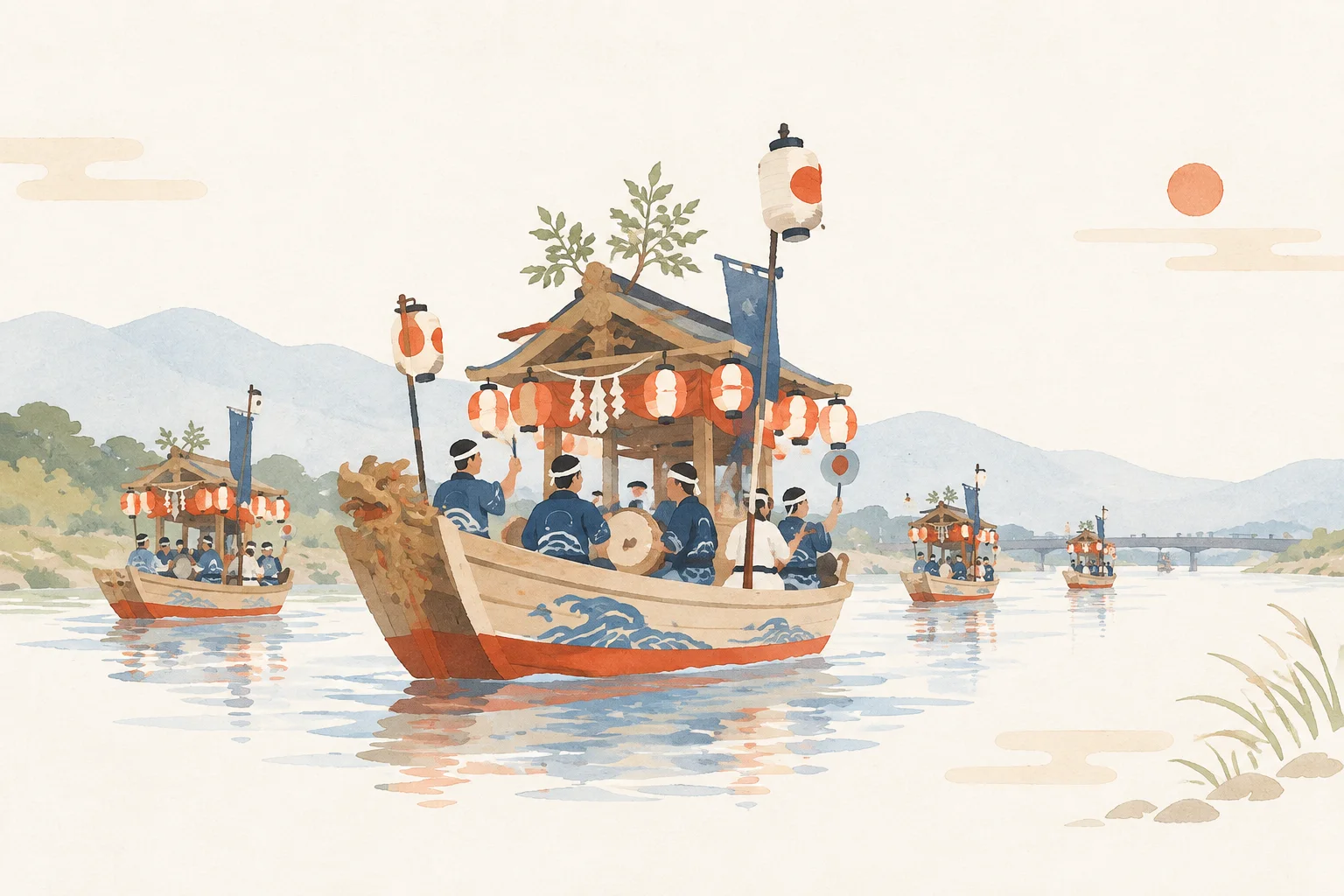
This annual festival at Susukimizu Shrine in Satoyamabe, Matsumoto, features 9 elaborately carved boats moving to festival music and calls. The boats, owned by different neighborhood associations, have been passed down against the backdrop of faith in the water deity of the Usugawa River and prayers for an abundant harvest.
About Ofune Festival (Susukimizu Shrine)
The Ofune Festival is an annual festival held at Susukimizu Shrine in Satoyamabe, Matsumoto.
The event has been passed down as a way to mark the start of rice planting in the Yamabe area and pray for an abundant harvest and the safety of the household.
The festival centers on two-story wooden boats owned by each of the 9 neighborhood associations, and is also closely tied to faith in the water deity of the Usugawa River.
Source: 須々岐水神社(薄宮神社)|スポット|松本市公式観光サイト|松本旅のしらべ / 里山辺お船祭のお船 - 松本市ホームページ / お船祭り (須々岐水神社) - Wikipedia
Festival highlights
A highlight is the procession of all 9 boats winding along the shrine approach amid spirited calls.
The boats are two-story wooden structures, intricately decorated with black and red lacquer, ornamental metal fittings, and carvings of dragons and historical figures.
The carvings, curtains, and roof construction differ from one neighborhood's boat to another; some boats have figures displayed on the second floor.
Source: お船の彫刻について - 松本市ホームページ
A festival in which 9 carved proceed through Satoyamabe to spirited calls
What to expect
On the 4th, the boats are brought out of their boathouses and assembled. For the main festival on the 5th, boats from each neighborhood gather on roads such as the one in front of the Education and Culture Center.
They proceed along the shrine approach to festival music and calls, receive a purification rite in front of the gate, and then rituals and a communal meal are held within the grounds.
In the afternoon, festival music is performed as an offering. At the end, the boats return to their respective neighborhood associations playing return-procession music.
Location and access
- Venue and address
The festival takes place mainly at Susukimizu Shrine (2737 Satoyamabe, Matsumoto, Nagano), extending from the road in front of the Education and Culture Center to the shrine approach and grounds.
- By car
About 30 minutes from Matsumoto IC.
Address 2737 Satoyamabe, Matsumoto, Nagano
Dates and season
- Frequency
Every year
Accommodation and hotels PR
Showing nearby accommodation.
Prices and availability are current at the time of retrieval. For multi-night stays, only the first night’s price is shown. Confirm the final price and directions to the venue with the booking provider. Select your dates again when using the area search link. Search area: within 3 km of Central Nagano Prefecture / Matsumoto City (the search is not centered on the festival venue)
Tips for your visit
The boats are large, and young men steer them in a winding course using wheels and steering poles while calling out.
At the approach to the shrine, in front of the torii gate, and within the grounds, pay attention to the direction of movement and restricted areas, and watch without obstructing the festival proceedings.
Only people designated in advance are permitted to ride aboard the boats.
Nearby attractions
Nearby attractions include the Matsumoto City Education and Culture Center, the former Yamabe School building, Usukawa-dera Temple, and the Castle ruins.
As attractions in the Satoyamabe area around Susukimizu Shrine, these places offer a chance to experience local history and culture alongside the festival.
Check opening days and hours for each facility, as well as whether it will be open on the day of the festival, before visiting.


旧開智学校
長野県松本市にある明治時代の擬洋風建築の小学校校舎。2019年に近代学校建築として初めて国宝に指定された

松本城
長野県松本市にある城

松本市四賀化石館
長野県松本市にある博物館
写真:photo: Qurren ( talk ) Taken with Canon IXY 10S / CC BY-SA 3.0
Photo source ·
松本市立考古博物館
長野県松本市中山にある博物館

松本市美術館
長野県松本市にある美術館

乗鞍岳
飛騨山脈南部の長野県松本市と岐阜県高山市にまたがる山
Origins and History of Ofune Festival (Susukimizu Shrine)
Susukimizu Shrine enshrines the water deity of the Usugawa River and has been worshipped as the ancestral deity of settlement in the Yamabe area.
The Ofune Festival is said to have begun in the Edo period, with people imitating what they had seen. It is said that the present 9 boats were all in place by the Tenpo era.
The boats were built by their respective neighborhood associations from the late Edo period through the modern era, and all 9 were designated Nagano Prefectural Treasures in Showa 61.
Official information
The Matsumoto City Cultural Properties Division provides information on the boat structures, the procession, and the features of each neighborhood's boat under the title “The Boats of the Satoyamabe Ofune Festival.”
The Satoyamabe district information page also directs visitors to city cultural property information about the Ofune Festival.
Source: 里山辺地区 - 松本市ホームページ
Ofune Festival (Susukimizu Shrine) at a Glance
The Ofune Festival is a spring annual festival rooted in the traditions of the 9 Satoyamabe neighborhood associations and faith in the water deity of the Usugawa River.
The sight of 9 boats decorated with carvings and lacquer weaving along the shrine approach to festival music and calls gives this festival its distinctive energy.
When watching, respect the movement of the boats and their handlers, and stay within permitted areas.
Japanese Festivals.jp Editorial Team
Celebrating local culture and helping you discover a side of Japan you never knew.
Article updated: 2026/10/19
Submit information or a correction Submit photos of this festival