A ritual that entrusts sickles to sacred trees and traces the living faith of Suwa in Noto
The Sickle-Driving Ritual of Noto’s Suwa Festival
Festival information
EVENT INFORMATION- Season / frequency
- August 25・August 27
- Location
- Suwa Shrine in Himuro, Edomari-machi, Nanao City / Kamamiya Suwa Shrine in Kanamaru, Nakanoto Town / Sumiyoshi Shrine in Fujii, Nakanoto Town
- Area
- Ishikawa Prefecture・Nanao City, Nakanoto Town(From Tokyo: approx. 2 h 30 min–3 h · bullet train)Prefecture-level estimate to a main station or airport, not the venue. Airport access, check-in and onward travel are extra; remote areas and islands can take much longer.
- Features
- Last updated
- 2026/11/19
A ritual of Suwa faith, passed down in Edomari-machi, Nanao City, and Kanamaru and Fujii, Nakanoto Town, in which sickles are driven into sacred trees. It preserves forms of offering that differ from place to place.
About The Sickle-Driving Ritual of Noto’s Suwa Festival
The sickle-driving ritual of Noto’s Suwa Festival is a distinctive rite associated with Suwa shrines, passed down in Edomari-machi, Nanao City, and Kanamaru and Fujii, Nakanoto Town.
Centered on venerating sacred trees and driving sickles into them, it conveys the ancient faith of Suwa.
It has been performed in its own way at Suwa Shrine in Himuro, Edomari-machi; Kamamiya Suwa Shrine in Kanamaru; and the Suwa Shrine enshrined together with Sumiyoshi Shrine in Fujii, Nakanoto Town.
It is an Ishikawa Prefecture-designated Intangible Folk Cultural Property.
Festival highlights
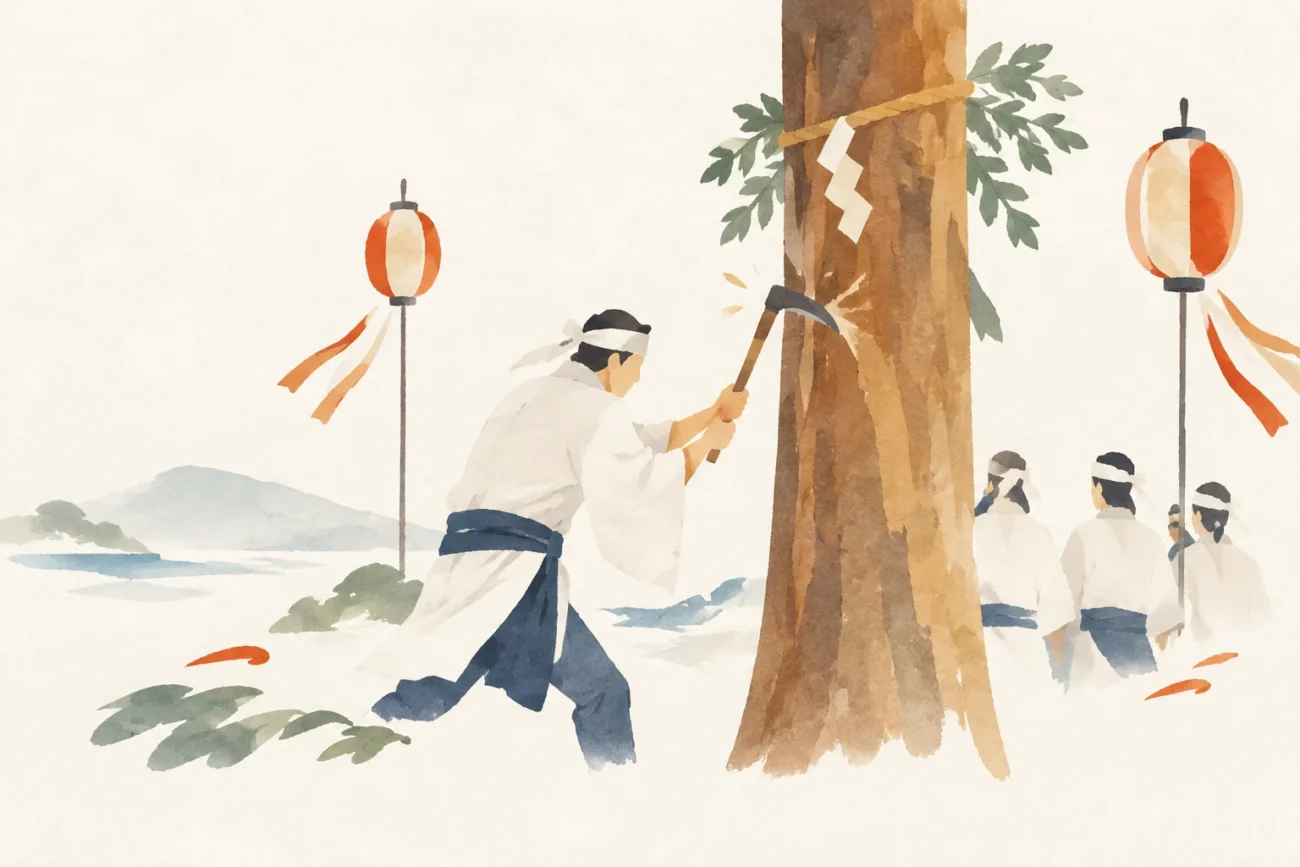
A highlight is the distinctive act of driving a sickle into a sacred tree after the ceremony.
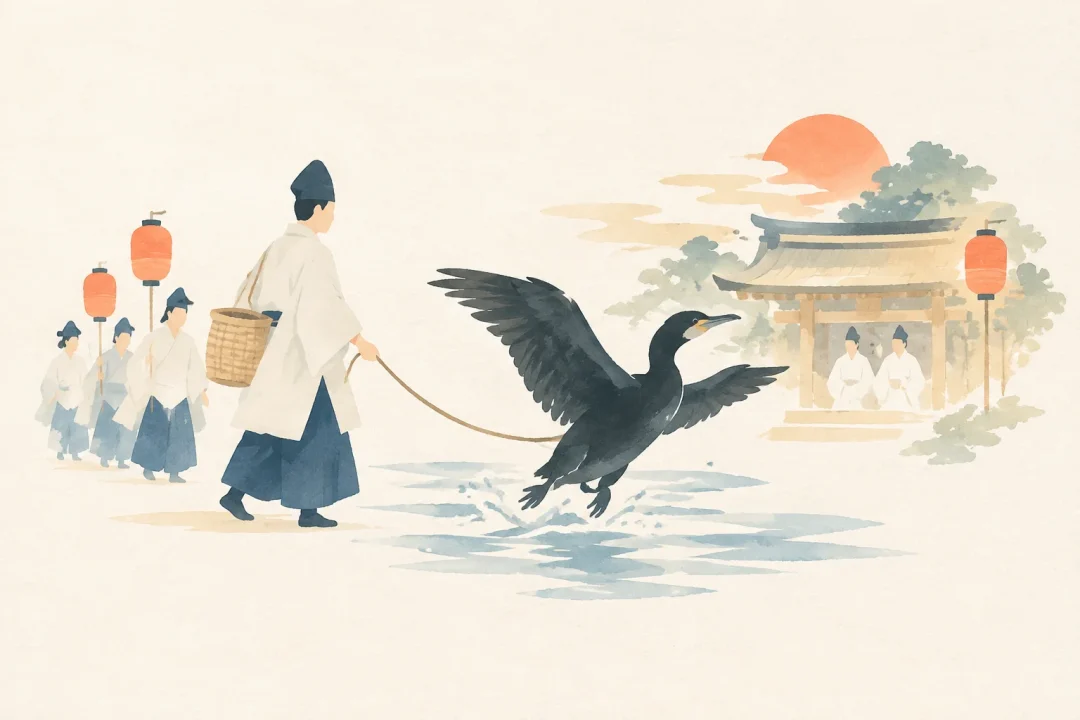
In Himuro, Edomari-machi, the male and female sickles are transferred to Suwa Shrine on the mountaintop and, after the Wind-Calming Festival, driven into an old tabunoki tree behind the .
In Kanamaru, a left-handed sickle decorated with shide and rice ears is offered before the kami; in Fujii, 2 sickles are driven into a large tabunoki tree on the grounds of Sumiyoshi Shrine.
The size of the sickles, the sacred trees, and the way the offerings are made also vary by community.
A ritual that entrusts sickles to sacred trees and traces the living faith of Suwa in Noto
What to expect
The ritual sequence varies by community.
In Himuro, Edomari-machi, 2 sickles are received and enshrined on August 25, then transferred to Suwa Shrine on the mountaintop on the 27th. After the Wind-Calming Festival, they are driven into a sacred tree.
In Kanamaru, the Wind-Calming Festival is held before the sacred tree on August 27, and after the ceremony, the representative of the group on duty drives in the sickle.
In Fujii, a ceremony is held at Sumiyoshi Shrine on August 27, when a shrine priest and the ward chief drive 2 sickles into a large tree on the .
Location and access
- Venue and address
Suwa Shrine in Himuro, Edomari-machi, Nanao City / Kamamiya Suwa Shrine in Kanamaru, Nakanoto Town / Sumiyoshi Shrine in Fujii, Nakanoto Town (Suwa Shrine enshrined together with it)
Address Edomari-machi, Nanao City / Kanamaru, Nakanoto Town / Fujii, Nakanoto Town
Dates and season
- Season
August 25・August 27
Origins and History of The Sickle-Driving Ritual of Noto’s Suwa Festival
This ritual is regarded as a tradition of Suwa faith, whose head shrine is Suwa Taisha in Shinshu.
Some Suwa shrines have no and instead venerate a sacred tree; the sickle has traditionally been considered a symbol of Suwa Myojin.
Suwa Shrine in Fujii, Nakanoto Town, was merged with Sumiyoshi Shrine in Meiji 40, but the Wind-Calming Festival has continued since the merger.
While sickle-driving rituals have almost disappeared in most places, the tradition has been preserved in Noto.
Official information
It is designated an Ishikawa Prefecture Intangible Folk Cultural Property.
The listed groups are the Himuro Kamamatsuri Preservation Society in Edomari-machi, Nanao City; the Kanamaru Kamano-miya Suwa Shrine Sickle-Driving Preservation Society in Nakanoto Town; and the Fujii Sickle-Driving Ritual Preservation Society.
The Sickle-Driving Ritual of Noto’s Suwa Festival at a Glance
The sickle-driving ritual of Noto’s Suwa Festival is an Ishikawa Prefecture-designated Intangible Folk Cultural Property passed down in Edomari-machi, Nanao City, and Kanamaru and Fujii, Nakanoto Town.
Some communities receive the sickles on August 25, while others hold the Wind-Calming Festival or other ceremonies on August 27, so the ritual does not follow one uniform sequence.
Driving sickles into a sacred tree is a shared feature, but the shape and size of the sickles and the way they are offered vary from place to place.
Sources and references
Japanese Festivals.jp Editorial Team
Celebrating local culture and helping you discover a side of Japan you never knew.
Article updated: 2026/11/19