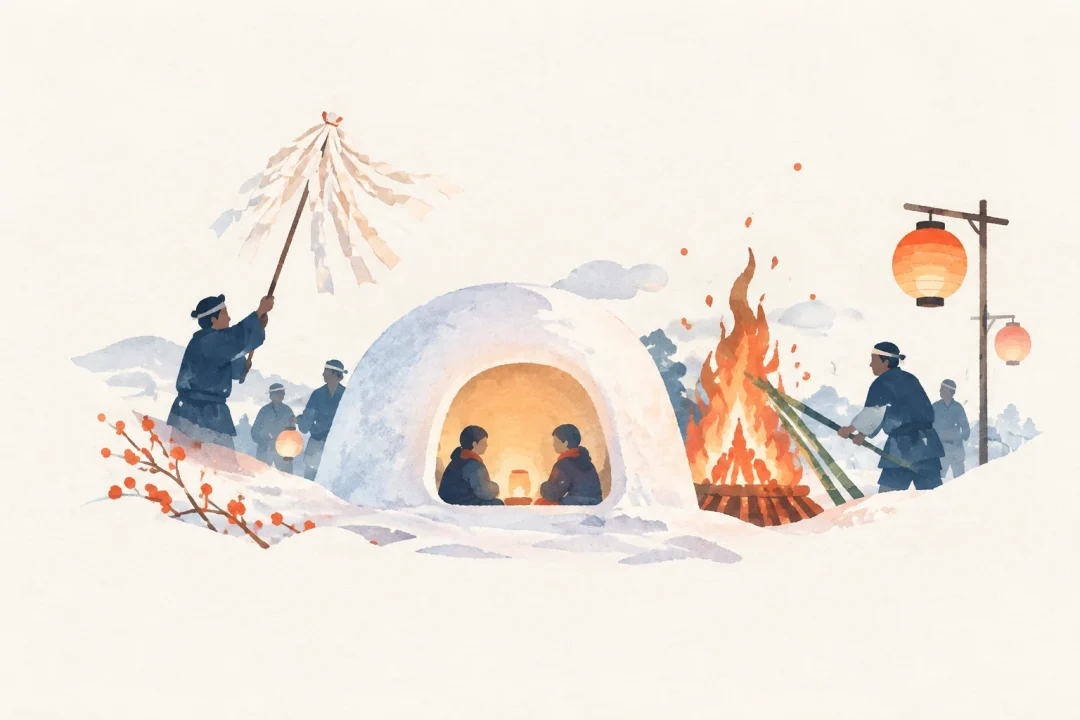
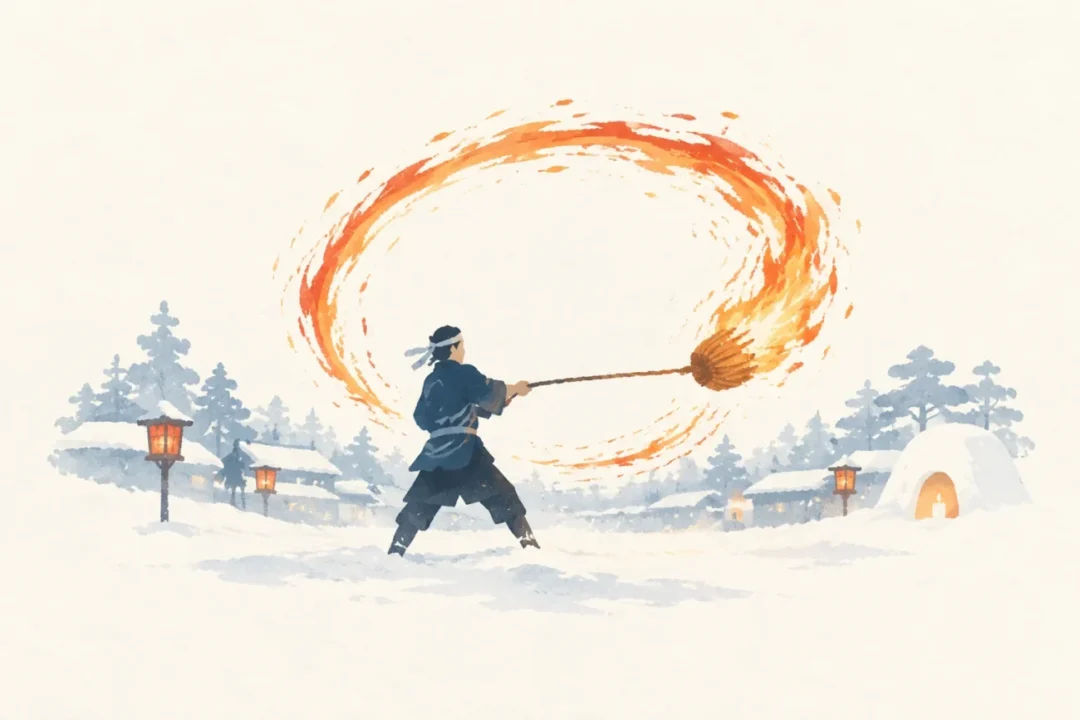
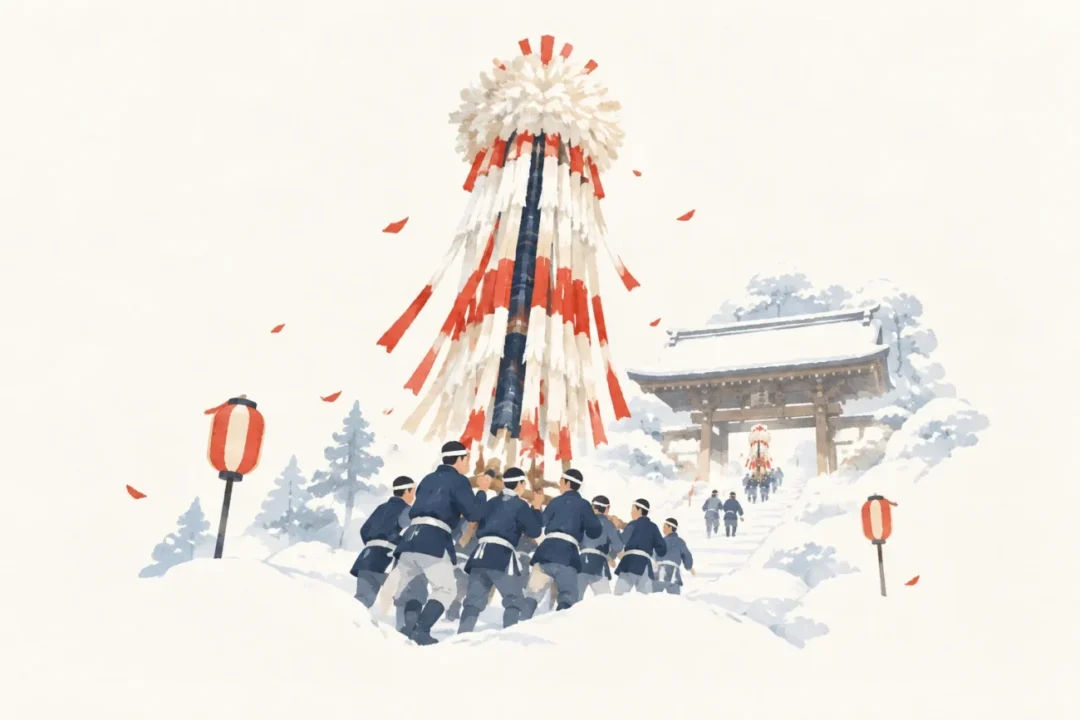
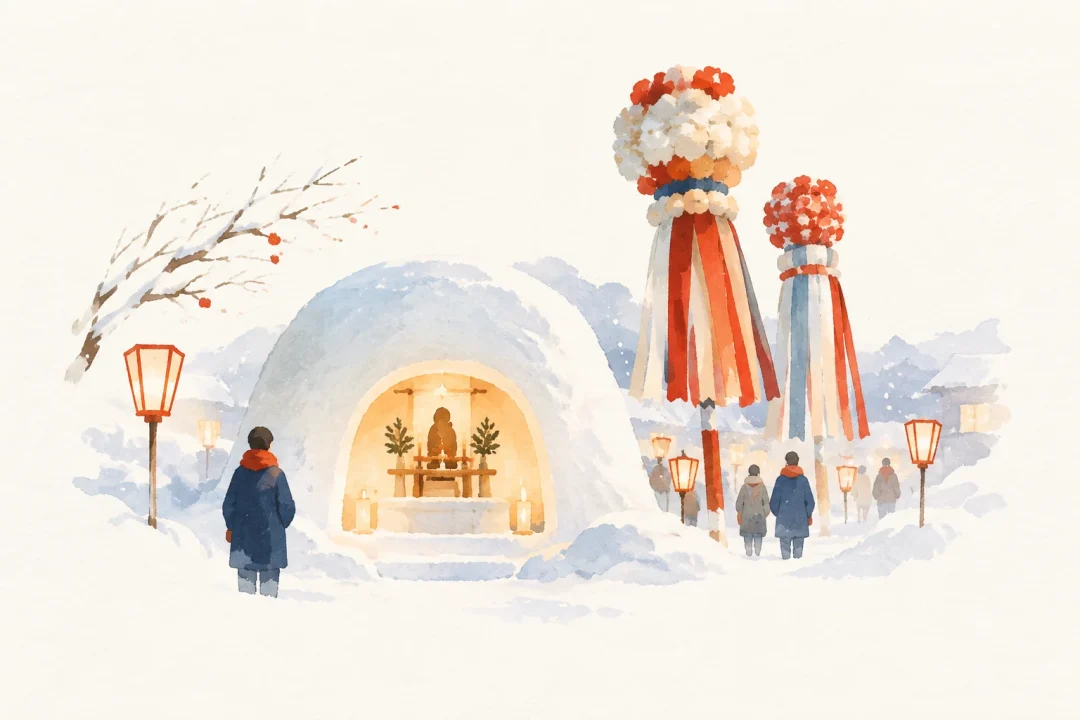
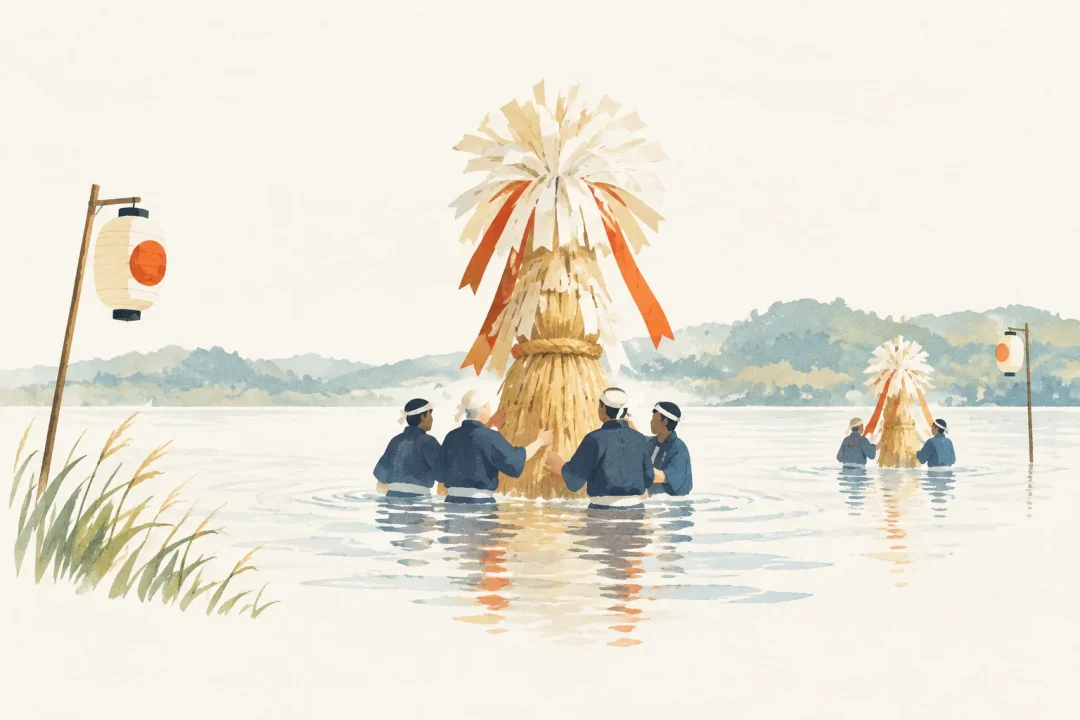
A spirited traditional event passed down in Nashiki, with participants moving through a snowy village amid water and prayer
Nashiki Mizukaburi
Festival information
EVENT INFORMATION- Season / frequency
- The morning of the third Sunday in February / Every year
- Location
- Nashiki Atago Shrine and the Nashiki area of Jumonji
- Area
- Akita Prefecture・Yokote City(From Tokyo: approx. 3 h 40 min–4 h 10 min · bullet train)Prefecture-level estimate to a main station or airport, not the venue. Airport access, check-in and onward travel are extra; remote areas and islands can take much longer.
- Features
- Wishes behind the festival
- Participation fee
- Free
- Last updated
- 2026/11/18
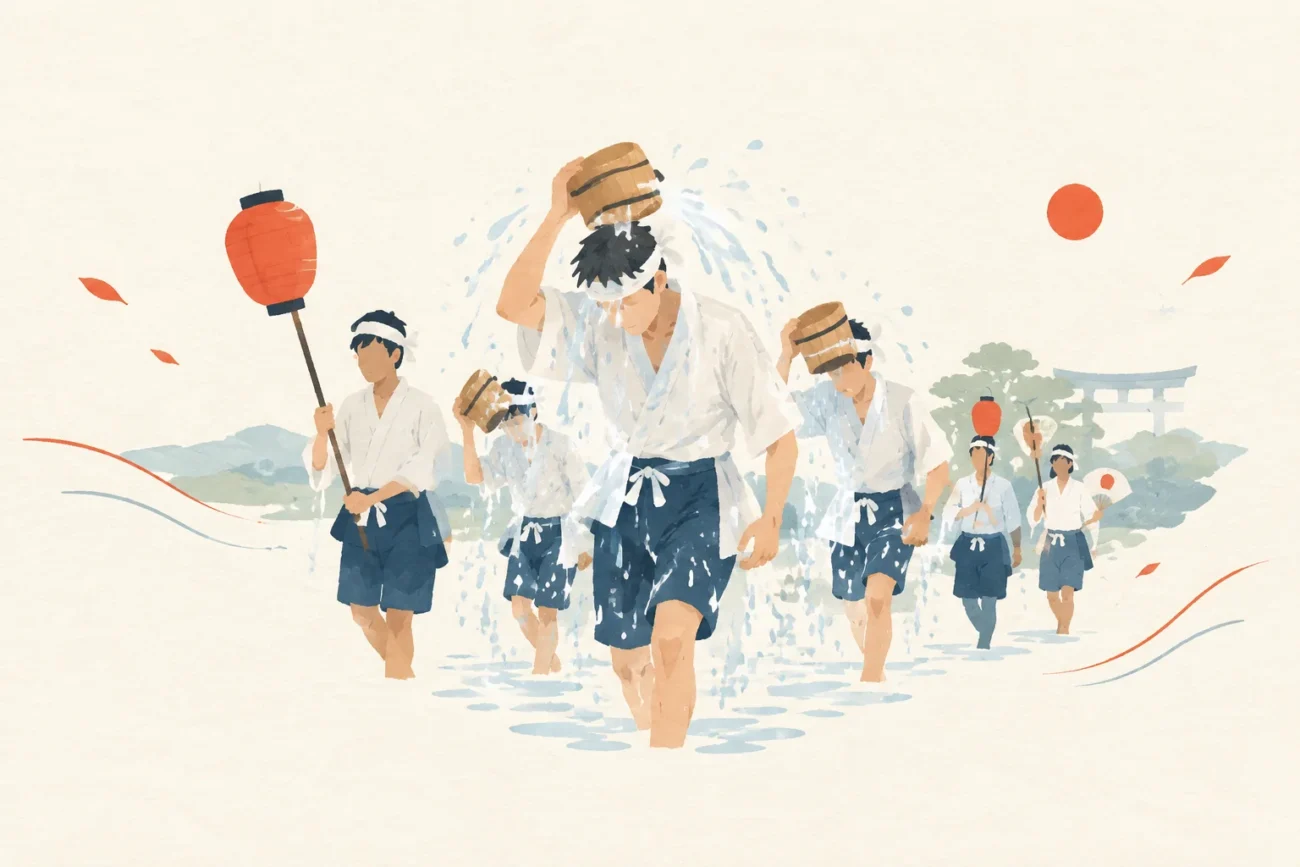
Nashiki Mizukaburi, passed down in Nashiki, Jumonji, Yokote City, is a traditional event in which young men walk through the village while pouring water over themselves. From the purification rites the night before to the morning procession and prayers at the shrine, the community’s prayers are carried on through a series of rituals.
About Nashiki Mizukaburi
Nashiki Mizukaburi is a traditional event passed down in Nashiki, Jumonji, Yokote City.
It is said to have begun in 1751, when villagers prayed for protection from epidemics and abundant harvests by performing water purification and making a midnight visit to the shrine.
Today, the young men walk through the village, pouring over themselves water from buckets prepared at local homes, and then return to Nashiki Atago Shrine.
Festival highlights
A highlight is the sight of the young men, bare-chested and wearing loincloths and tabi-style footwear, making their way through the village while blowing conch shells.
They pour over themselves water from buckets set out along the roadside, and after returning to the shrine, untie their straw sandals and pay their respects at the shrine building.
They also tie together the cords of both straw sandals and throw them up into a Japanese zelkova tree in the shrine precincts, hooking them onto a branch.
A spirited traditional event passed down in Nashiki, with participants moving through a snowy village amid water and prayer
What to expect
The night before, the young men seclude themselves at Atago Shrine, observe abstinence and purification, and wait for dawn to receive a purification rite.
Then, led by a priest, the Ebisu tawara procession moves through the village, with the young men blowing conch shells.
Along the way, they pour water from buckets prepared at homes over themselves, return to the shrine, and pay their respects at the shrine building.
Finally, they throw the cords of their straw sandals up into a Japanese zelkova tree, bringing the event to a close.
How to take part
参加費:無料
Location and access
- Venue and address
梨木愛宕神社 秋田県横手市十文字町梨木/電車・バス:/車:東北中央自動車道 十文字ICから車で約5分/駐車場:
Address 〒019-0509 Dono Ushiro, Nashiki, Jumonji, Yokote City, Akita Prefecture
Dates and season
- Season
The morning of the third Sunday in February
- Frequency
Every year
Accommodation and hotels PR
Showing nearby accommodation.
Prices and availability are current at the time of retrieval. For multi-night stays, only the first night’s price is shown. Confirm the final price and directions to the venue with the booking provider. Select your dates again when using the area search link. Search area: within 3 km of Central Akita Prefecture / Yokote City (the search is not centered on the festival venue)
Tips for your visit
The event takes place in the snow, and it is so cold that loincloths and straw sandals can sometimes freeze.
If you attend, be prepared for the severe cold and the water-pouring ritual, and make sure to dress warmly.
The event proceeds as a procession through the village, so it takes place not only at the shrine but also along the route.
Nearby attractions
Nearby spots listed include Nashiki Park in Yokote City, the Jumonji morning market, and Roadside Station Jumonji.
Also featured are the Masuda Important Preservation District for Groups of Traditional Buildings and Hotaru, a visitor information center for Masuda’s historic streetscape.
Distances to and opening hours of individual facilities are not provided.
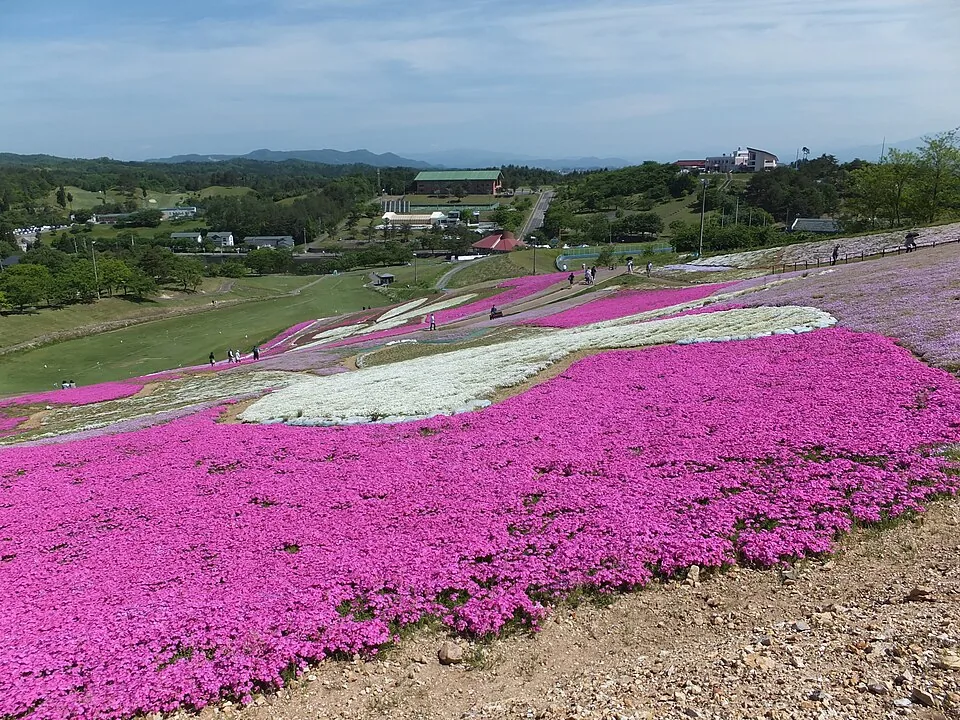
大森公園
秋田県横手市の公園
写真:8-Forest / CC BY-SA 3.0(resized and reformatted)
Photo source ·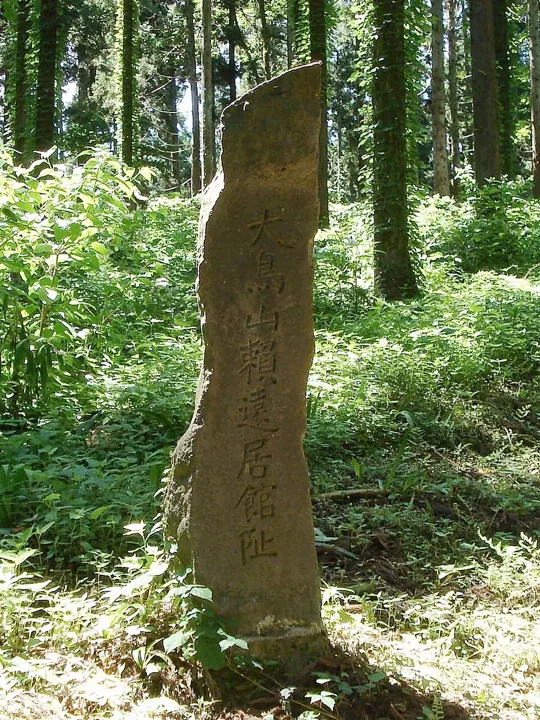
大鳥井山遺跡
日本の秋田県横手市にある平安時代の遺跡、国の史跡。
写真:MChew / CC BY-SA 4.0(resized and reformatted)
Photo source ·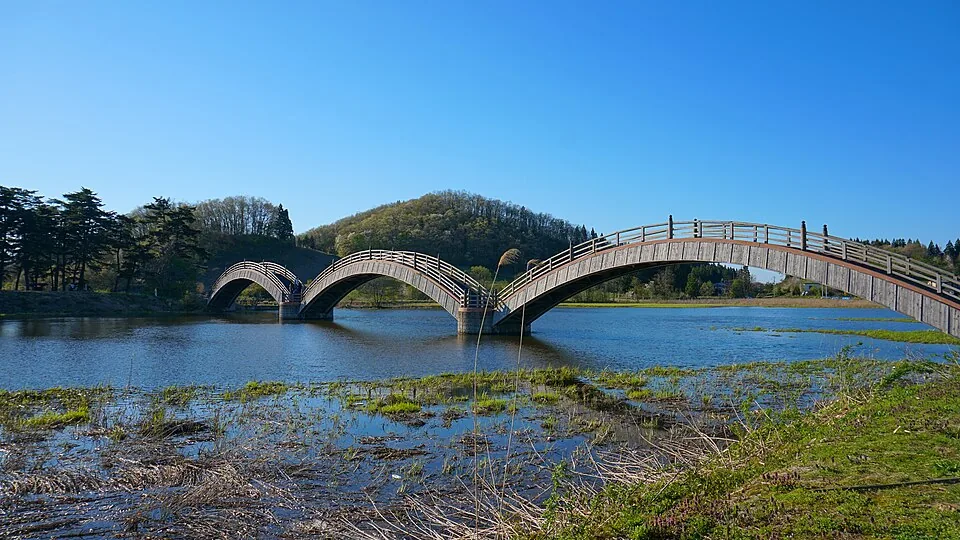
平安の風わたる公園
日本の秋田県横手市にある公園
写真:掬茶 / CC BY-SA 4.0(resized and reformatted)
Photo source ·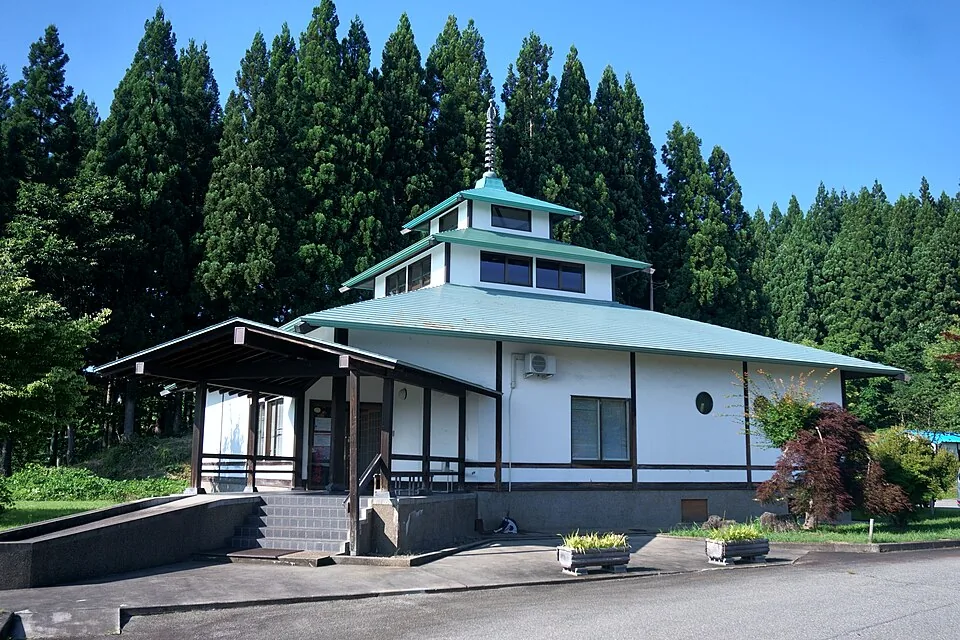
後三年合戦金沢資料館
日本の秋田県横手市にある歴史博物館
写真:掬茶 / CC BY-SA 4.0(resized and reformatted)
Photo source ·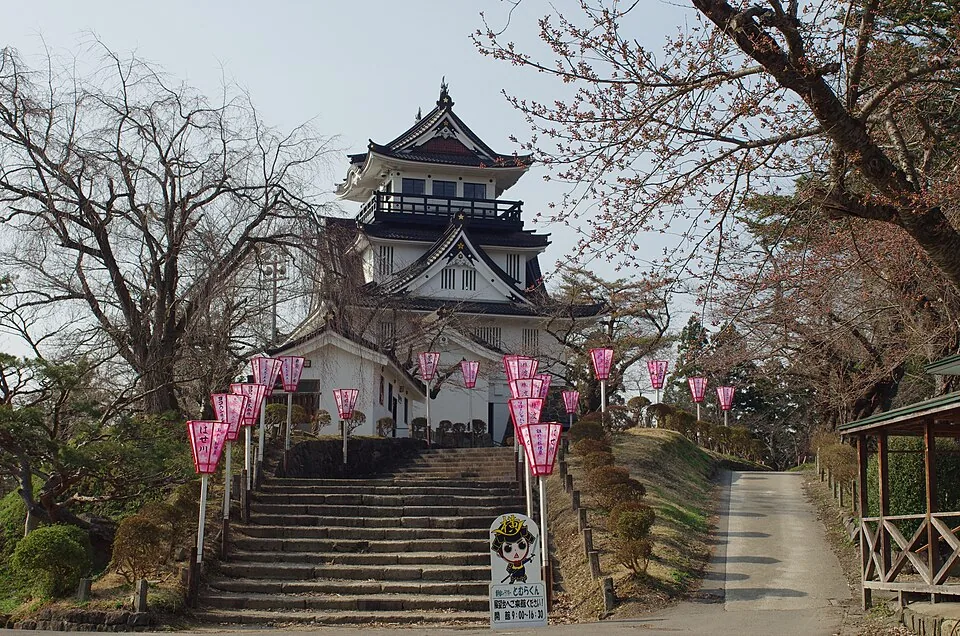
横手公園
秋田県横手市の公園
写真:Yuya Narita / CC BY-SA 3.0(resized and reformatted)
Photo source ·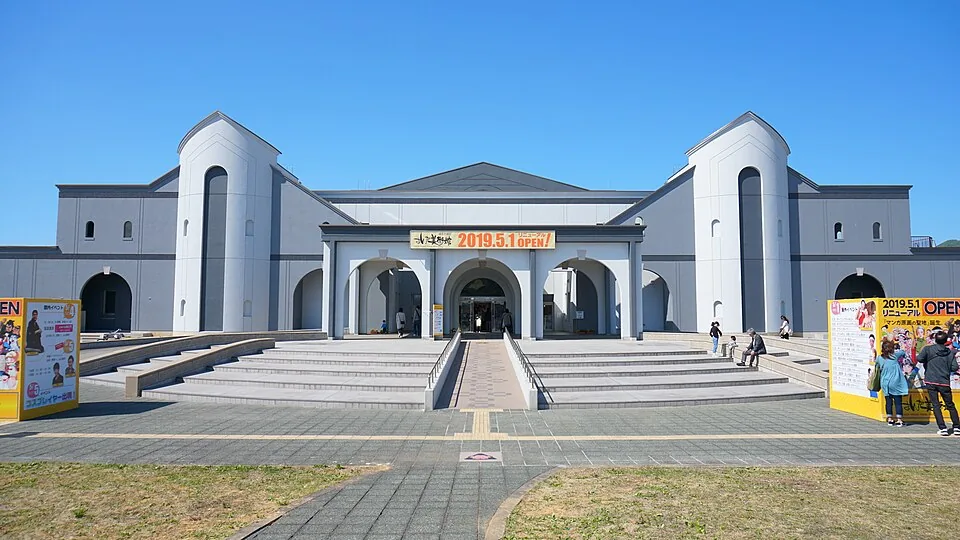
横手市増田まんが美術館
日本の秋田県横手市にある美術館
写真:掬茶 / CC BY-SA 4.0(resized and reformatted)
Photo source ·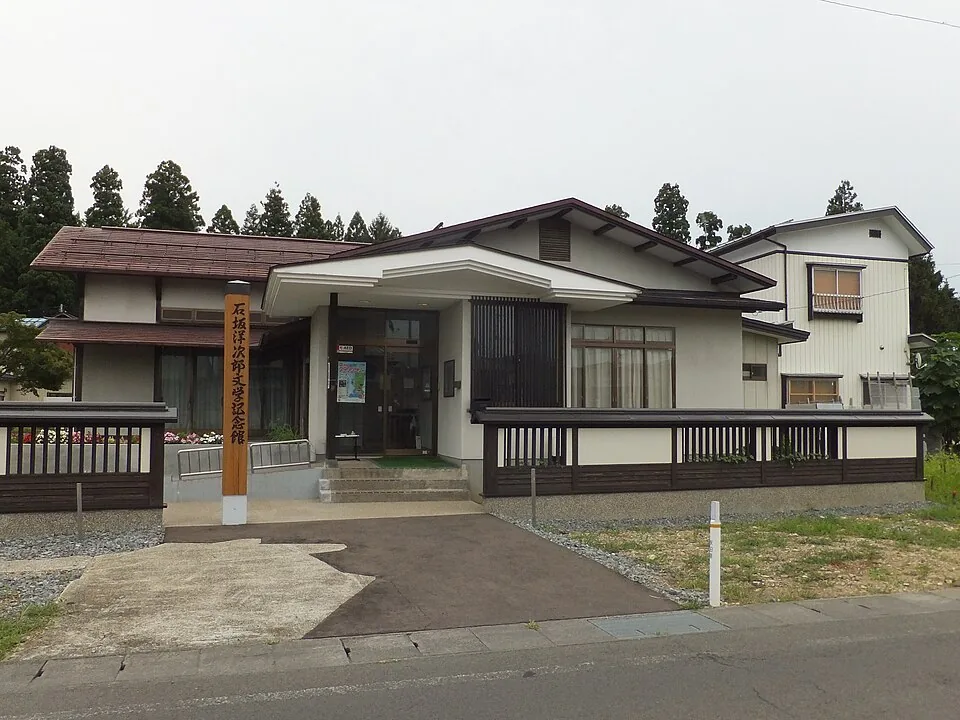
石坂洋次郎文学記念館
日本の秋田県横手市にある人物記念館
写真:掬茶 / CC BY-SA 3.0(resized and reformatted)
Photo source ·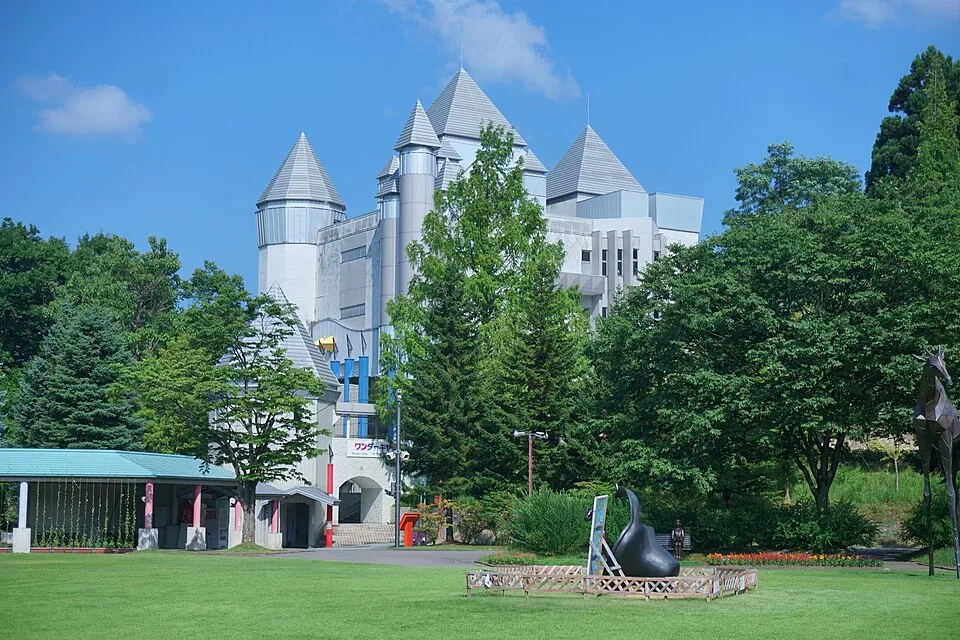
秋田ふるさと村
秋田県の魅力を紹介する秋田県横手市のテーマパーク
写真:掬茶 / CC BY-SA 4.0(resized and reformatted)
Photo source ·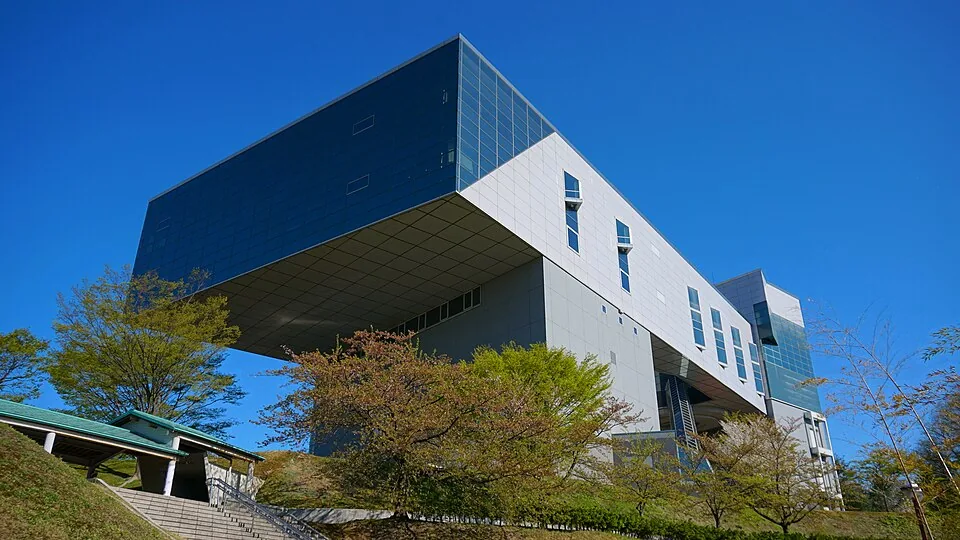
秋田県立近代美術館
秋田県横手市の秋田ふるさと村にある美術館
写真:掬茶 / CC BY-SA 4.0(resized and reformatted)
Photo source ·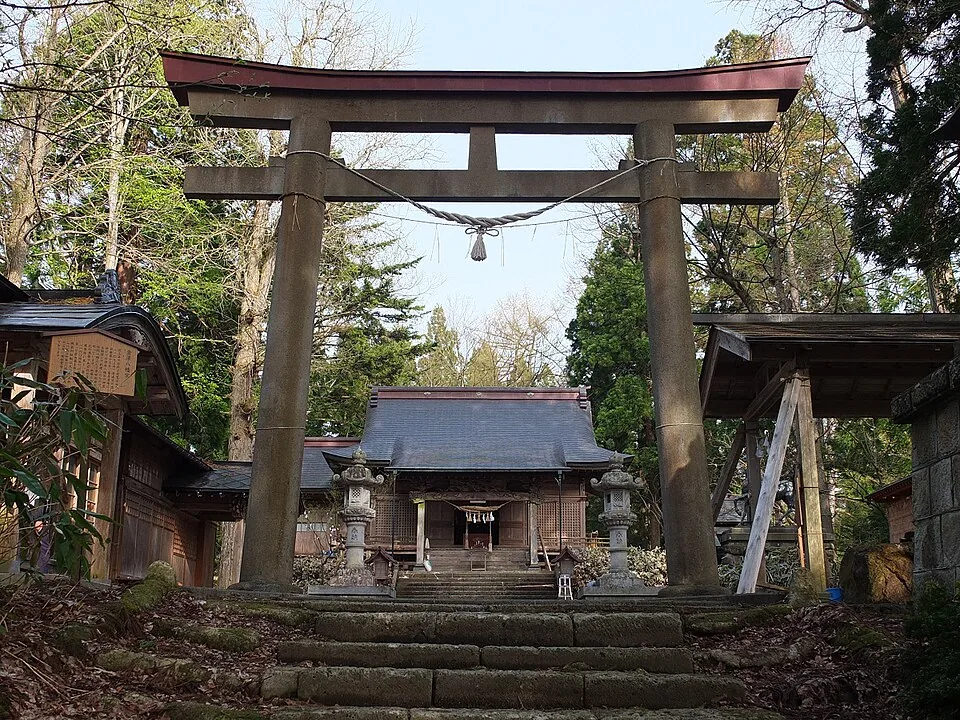
金沢公園
日本の秋田県横手市にある公園
写真:Ocavis Leechroot / CC BY 3.0(resized and reformatted)
Photo source ·Origins and History of Nashiki Mizukaburi
Nashiki Mizukaburi is said to have begun in 1751, when villagers prayed for protection from epidemics and abundant harvests by performing water purification and making a midnight visit to the shrine.
In the past, during their overnight retreat, participants each brought one sho of sake and a tiered food box, and before the procession they performed 33 rounds of clapping twice and bowing once before the deity.
The Nashiki Atago Association continues to work to preserve the event.
Official information
For inquiries, contact the Yokote City Board of Education’s Cultural Properties Protection Division (0182-32-2403) or the Jumonji Regional Affairs Division of the Yokote City Community Development Promotion Department (0182-42-5119).
The Nashiki Atago Association works to preserve the event.
Nashiki Mizukaburi at a Glance
Nashiki Mizukaburi is a traditional event in Nashiki, Jumonji, Yokote City, which began with prayers for protection from epidemics and abundant harvests.
The young men spend the night at the shrine, then walk through the village in the morning with the priest and the Ebisu tawara.
The procession in which participants pour water over themselves, their prayers at the shrine building, and the ritual of throwing the straw-sandal cords up into a Japanese zelkova tree are distinctive features of the event.
Sources and references
Japanese Festivals.jp Editorial Team
Celebrating local culture and helping you discover a side of Japan you never knew.
Article updated: 2026/11/18