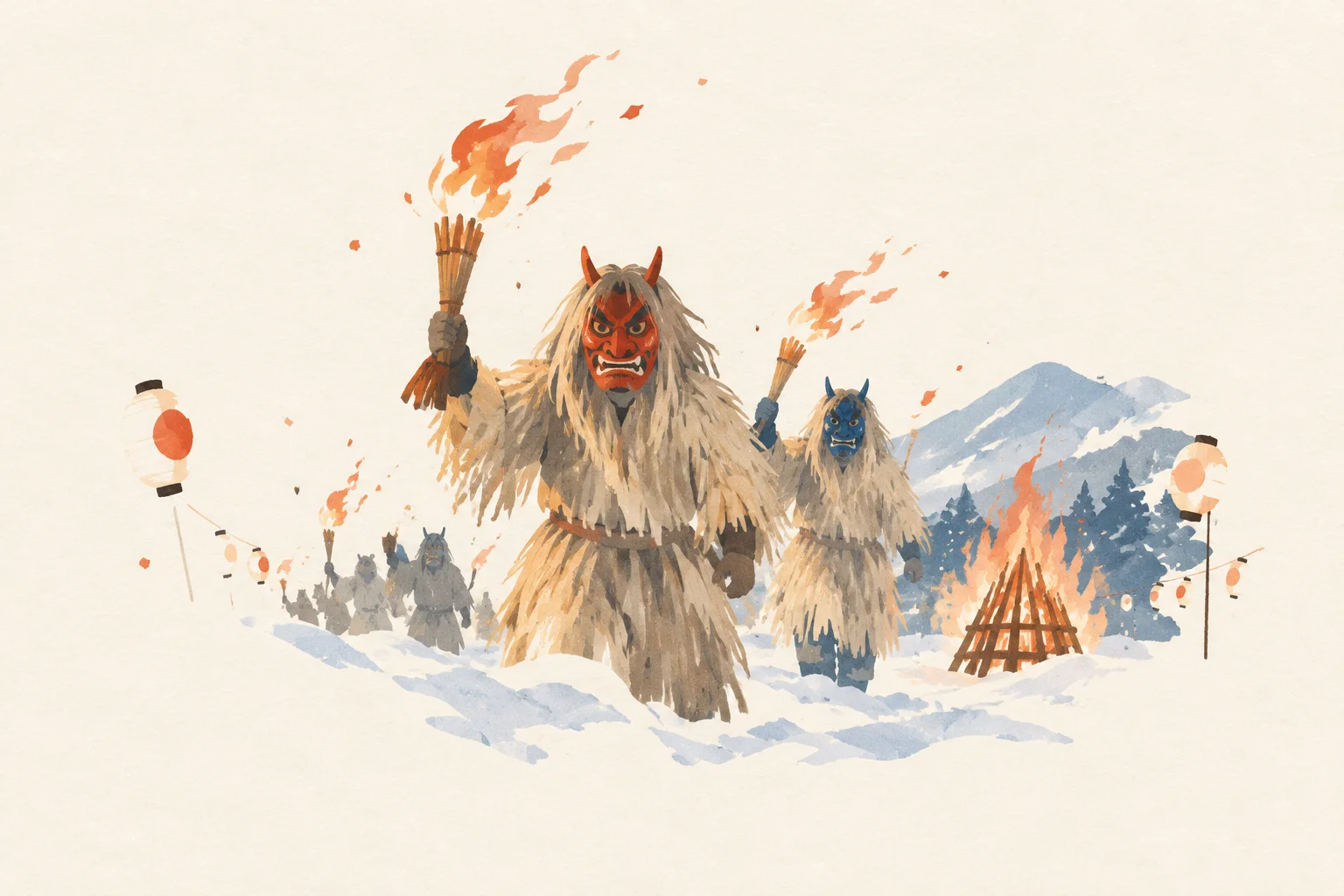
Oga's Namahage culture, illuminated by the saitō fire against the snowy mountain
Namahage Sedo Festival
Festival information
EVENT INFORMATION- Season / frequency
- Every year, Friday, Saturday, and Sunday including the 2nd Saturday of February / Held every year
- Location
- Mayama Shrine
- Area
- Akita Prefecture・Oga City(From Tokyo: approx. 3 h 40 min–4 h 10 min · bullet train)Prefecture-level estimate to a main station or airport, not the venue. Airport access, check-in and onward travel are extra; remote areas and islands can take much longer.
- Highlights and activities
- Wishes behind the festival
- Participation / viewing
- Spectators welcome
- Participation fee
- 2,000 yen per person. Free for junior high school students and younger.
- Age restrictions
- Free for junior high school students and younger
- Official website / social media
- Official website
- Last updated
- 2026/10/19
Illuminated by the saitō fire, religious rites, traditional performing arts, and Namahage descending from the snowy mountain unfold within the same . This festival offers an experience of the Namahage culture passed down in Oga, following the sequence of the event.
Photo credits and terms of use
Photographer: KQuhen File:Namahage Sedo Festival torch procession.jpg / Wikimedia Commons / CC BY-SA 4.0 Own work by the contributorDisplay size only adjusted.May differ from the event currently featured.Photo credits and terms of use
Photographer: KQuhen File:Namahage Sedo Festival taiko performance.jpg / Wikimedia Commons / CC BY-SA 4.0 Own work by the contributorDisplay size only adjusted.May differ from the event currently featured.Photo credits and terms of use
Photographer: 掬茶 File:Parade of Namahage 02.jpg / Wikimedia Commons / CC BY-SA 4.0 Own work by the contributorDisplay size only adjusted.May differ from the event currently featured.About Namahage Sedo Festival
The Namahage Sedo Festival is held at Mayama Shrine in Kitaura, Oga City, combining the Sedo Festival with the traditional event “Oga no Namahage.”
By the light of the saitō fire, purification , the boiling-water ritual, and the ensouling of the Namahage are performed.
Highlights also include a reenactment of the Namahage events held in various parts of Oga City on New Year's Eve, and introductions to the different Namahage of each area.
Source: 柴灯まつり|「重要無形民俗文化財」男鹿のナマハゲ
Festival highlights
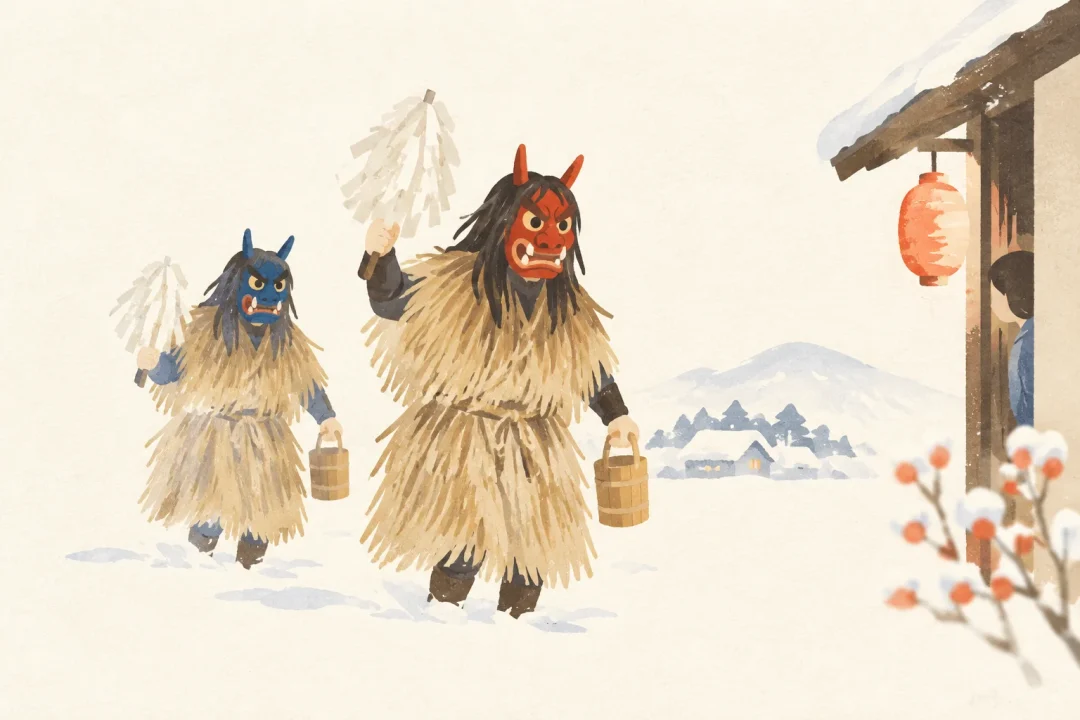
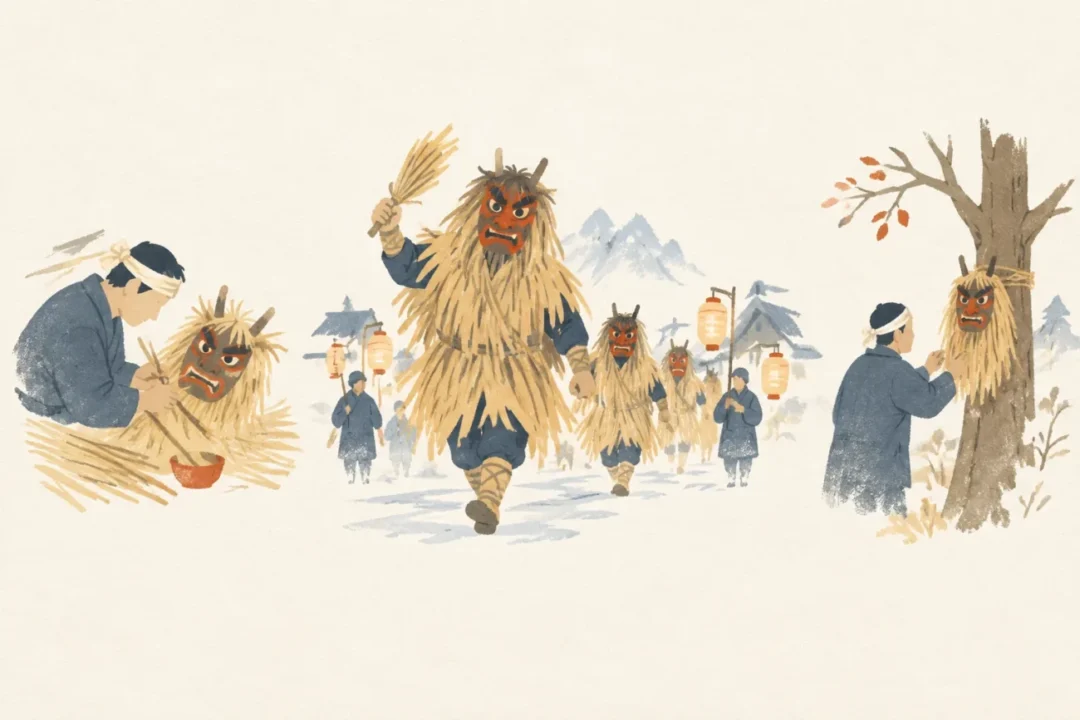
Toward the end of the festival, Namahage carrying torches descend from the dark, snowy mountain and parade through the shrine grounds.
The offering of rice cakes, grilled over the saitō fire, to the Namahage by a shrine priest follows, creating a fantastical scene.
The Namahage Dance and Namahage Daiko, a local performing art combining Namahage and Japanese drums, let visitors enjoy the dancing and powerful rhythms.
Oga's Namahage culture, illuminated by the saitō fire against the snowy mountain
What to expect
The program proceeds in this order: the hot-water dance and Chinkama Festival, the ensouling of the Namahage, a reenactment of the Namahage event, the Namahage Dance, and Namahage Daiko.
Afterward, Namahage carrying torches descend from the mountain, followed by the offering of rice cakes, and then Namahage from different districts in Oga City appear.
Within the venue, visitors can follow the program from place to place, including the kagura hall and the approach to the shrine.
Source: 行事内容|なまはげ柴灯まつり
How to take part
The festival is held as a series of rituals and traditional performing arts to watch at the venue. General visitors can move around the venue and view them as the program progresses.
There is no information indicating that spectators can take part as performers in the main events, such as the Namahage Initiation or the offering of rice cakes.
To use the standing viewing area, apply for a ticket at the festival office inside the venue. Tickets are available on a first-come, first-served basis.
Advance registration is required for admission.
The number of visitors admitted each day is limited, and registration may close early depending on demand.
The admission fee must be paid in advance when registering for admission; cash payment at the venue on the day is not possible.
Source: 事前申込と入場料について|なまはげ柴灯まつり
Location and access
- Venue and address
Mayama Shrine (97 Mizukui-zawa, Mayama, Kitaura, Oga City, Akita Prefecture)
- Train and bus
Take the Namahage shuttle service from JR Oga Station for 25 minutes, get off at Mayama Shrine, and walk a short distance.
- By car
33 km via Route 101 from the Showa-Ogahantō IC on the Akita Expressway, about 40 minutes.
- Parking
Parking available.
Information indicates that a free shuttle bus operates from Parking Lot 4.
Source: 真山神社 - 駅探 / なまはげ柴灯まつり 観光- たびあん
Address 97 Mizukui-zawa, Mayama, Kitaura, Oga City, Akita Prefecture
Dates and season
It is usually held from Friday to Sunday, including the second Saturday of February.
On the day of the event, activities such as the Yu no Mai, Namahage Initiation, and Namahage Descent take place from evening into the night.
Accommodation and hotels PR
Showing nearby accommodation.
Prices and availability are current at the time of retrieval. For multi-night stays, only the first night’s price is shown. Confirm the final price and directions to the venue with the booking provider. Select your dates again when using the area search link. Search area: within 3 km of Central Akita Prefecture / Oga City (the search is not centered on the festival venue)
Tips for your visit
The venue is unpaved, and snow may make it difficult to get around.
Assistance is available for wheelchair users when getting on and off near the stairs, but care is needed when moving around the venue.
Umbrellas, camera tripods, monopods and selfie sticks, stepladders, and step stools are not permitted. Animals, including pets, may not be brought into the venue.
Nearby attractions
Mayama Shrine, the venue, is described as a shrine associated with Namahage.
Nearby, the Namahage Museum introduces Oga's Namahage through a large screen and mask exhibits, while the Oga Shinzan Folklore Museum offers opportunities to learn about and experience Namahage customs.
This facility offers an opportunity to experience the folk culture of the Oga region alongside Mayama Shrine and Namahage culture.
Source: 男鹿市の観光・お出かけスポット - 駅探
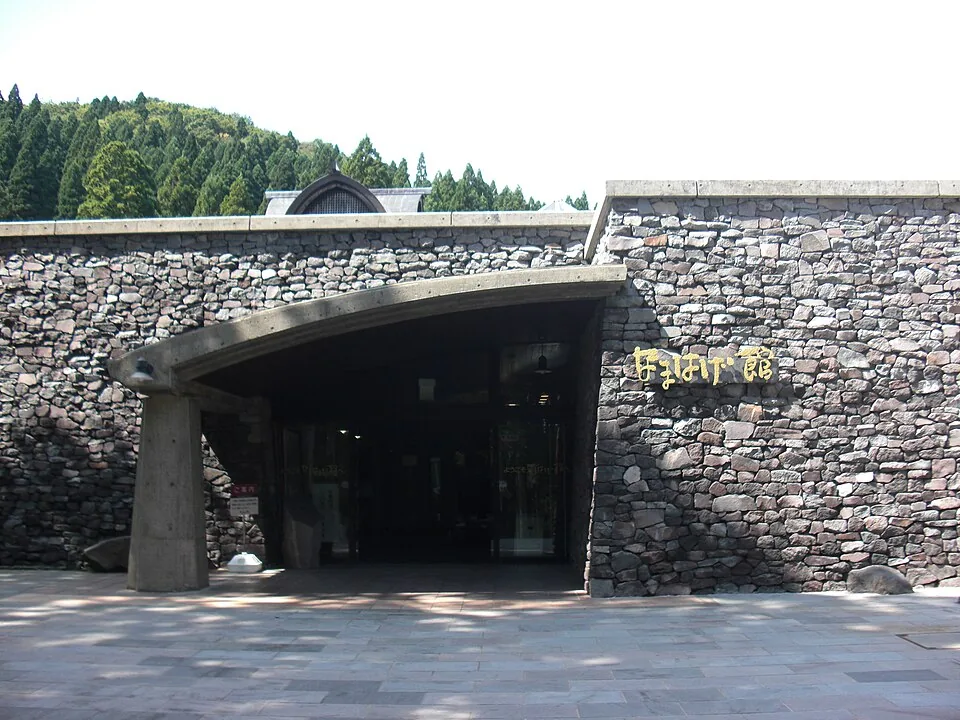
なまはげ館
秋田県男鹿市にある資料館
写真:Kumpei Shiraishi / CC BY 4.0(resized and reformatted)
Photo source ·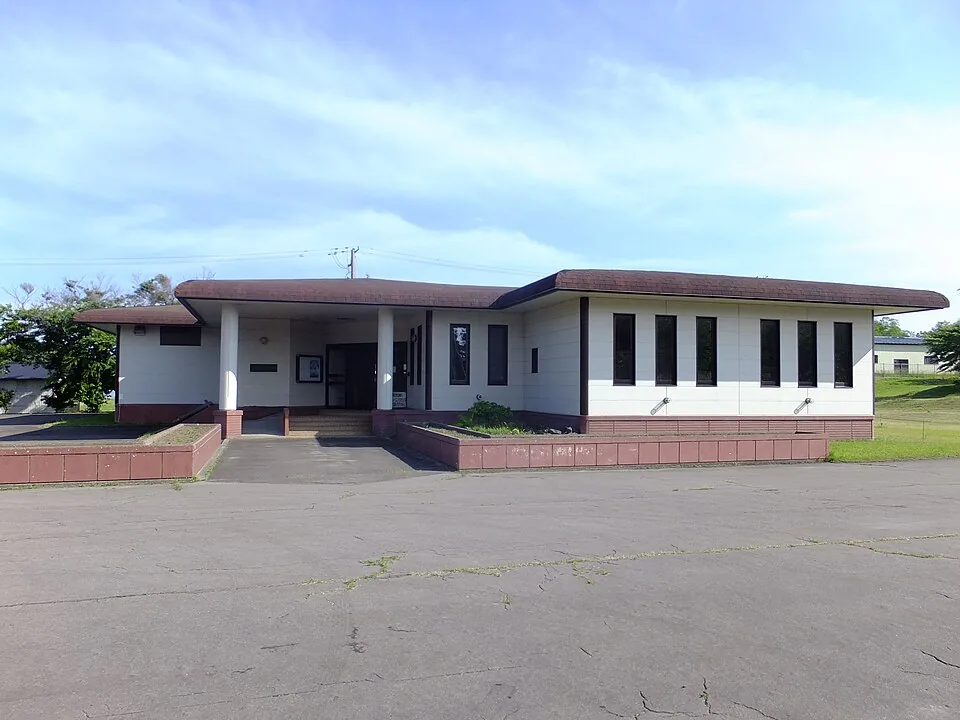
男鹿市若美ふるさと資料館
秋田県の博物館・美術館のスポットです。
写真:掬茶 / CC BY-SA 4.0(resized and reformatted)
Photo source ·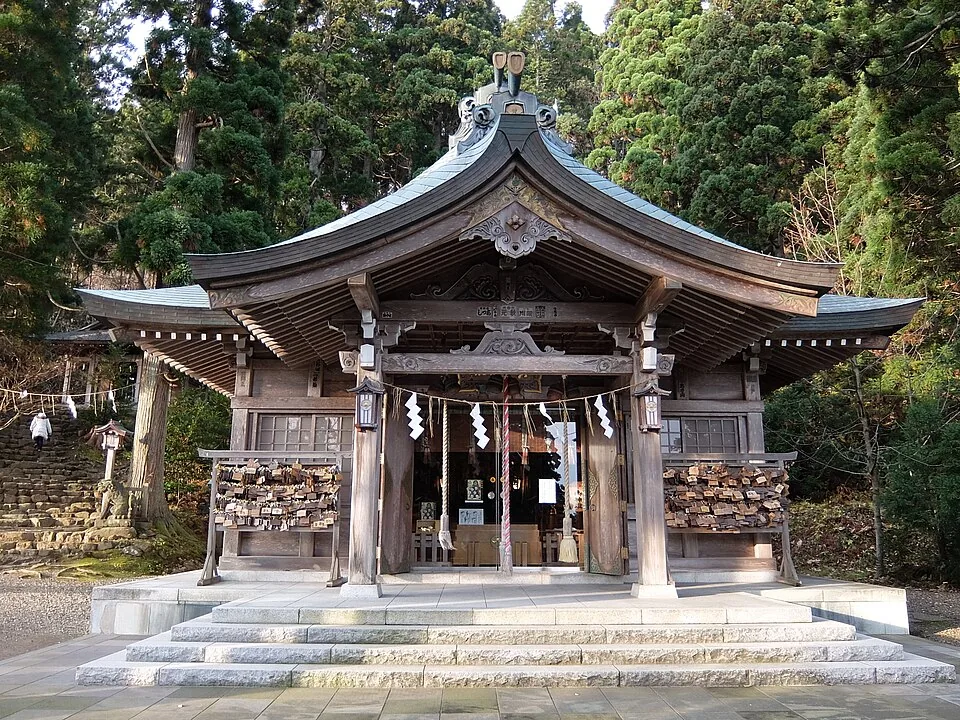
Mayama Shrine
秋田県男鹿市にある神社
写真:らんで / CC BY-SA 4.0(resized and reformatted)
Photo source ·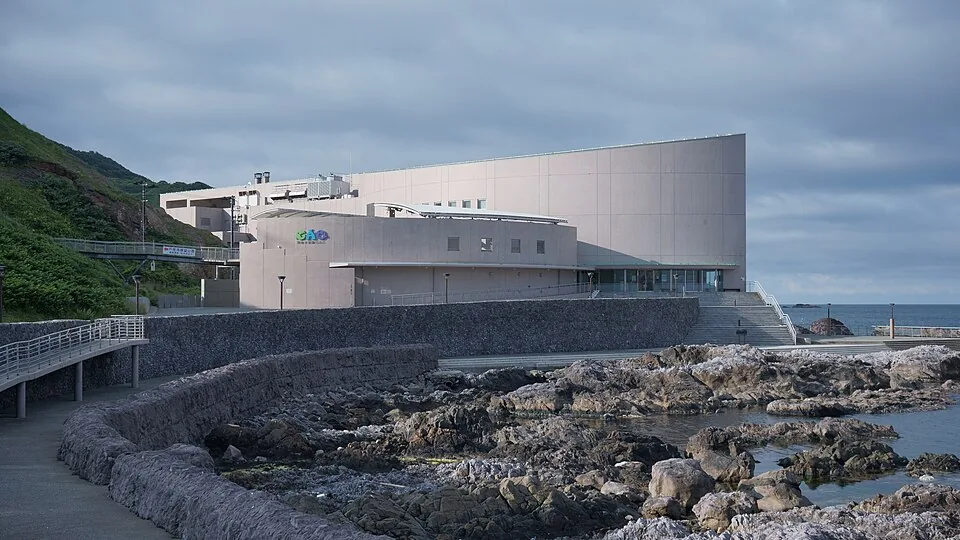
秋田県立男鹿水族館
秋田県男鹿市にある水族館
写真:掬茶 / CC BY-SA 4.0(resized and reformatted)
Photo source ·Origins and History of Namahage Sedo Festival
The Namahage Sedo Festival began in Showa 39 (1964).
It was established as a tourism event combining the Sedo Festival held at Mayama Shrine with the traditional event “Oga no Namahage,” passed down in the Oga region.
The Namahage Dance originated in Showa 36 (1961), while Namahage Daiko took shape as a performing art following its conception in the 1970s and subsequent formalization by a preservation society.
Official information
The official guide provides information about the event dates and times, venue, program, and precautions for visitors.
For information about admission applications and fees, see the Namahage Sedo Festival advance application and admission fee guide.
For inquiries, contact the Namahage Sedo Festival Organizing Committee.
Namahage Sedo Festival at a Glance
The Namahage Sedo Festival is a traditional cultural event in Oga, featuring purification kagura, the Namahage Dance, Namahage Daiko, and Namahage descending from the mountain, all set against the saitō fire at Mayama Shrine.
A major highlight is seeing them descend from the snowy mountain with torches held aloft and parade through the shrine grounds.
The specific date of the 2027 event is currently being confirmed, and advance registration is required for admission.
Japanese Festivals.jp Editorial Team
Celebrating local culture and helping you discover a side of Japan you never knew.
Article updated: 2026/10/19
Articles about Namahage Sedo Festival


Submit information or a correction Submit photos of this festival