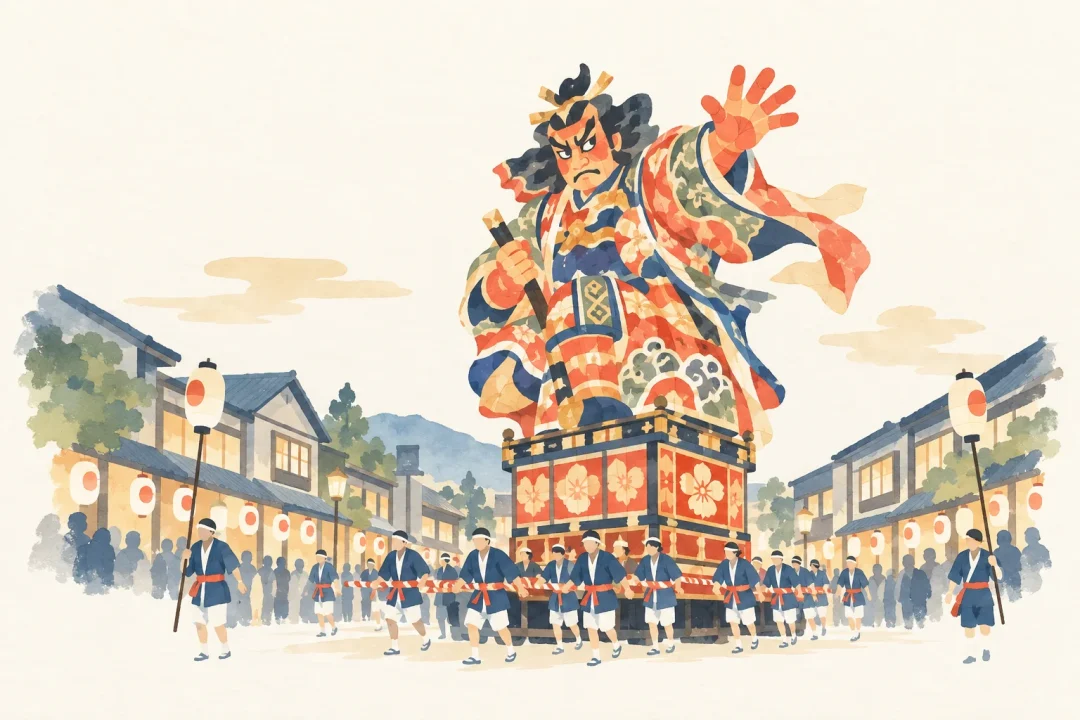
Kurita’s autumn mikoshi festival, where teams vie for the front carrying pole on a sandy beach ring
Kurita Festival
Festival information
EVENT INFORMATION- Season / frequency
- Every year, the 2nd Saturday and Sunday of October / Every year
- Location
- Sumiyoshi Shrine
- Area
- Kyoto Prefecture・Miyazu City(From Tokyo: approx. 2 h 10 min–2 h 40 min · bullet train)Prefecture-level estimate to a main station or airport, not the venue. Airport access, check-in and onward travel are extra; remote areas and islands can take much longer.
- Wishes behind the festival
- Last updated
- 2026/11/11
An autumn festival passed down across the Kurita area of Miyazu City. At Sumiyoshi Shrine, the Kamitsukasa and Kotera districts compete for the front carrying pole of the in a fighting mikoshi contest.
About Kurita Festival
The Kurita Festival (Kunda Matsuri) is the collective name for autumn festivals held at almost the same time at more than ten shrines and other sites in the Kurita area, in eastern Miyazu City.
At Sumiyoshi Shrine, from the Kamitsukasa and Kotera districts take part in a fighting mikoshi contest for the right to lead the procession.
Fishing is a major industry in the Kurita area, and festivals with distinct styles have been passed down in different communities.
Festival highlights
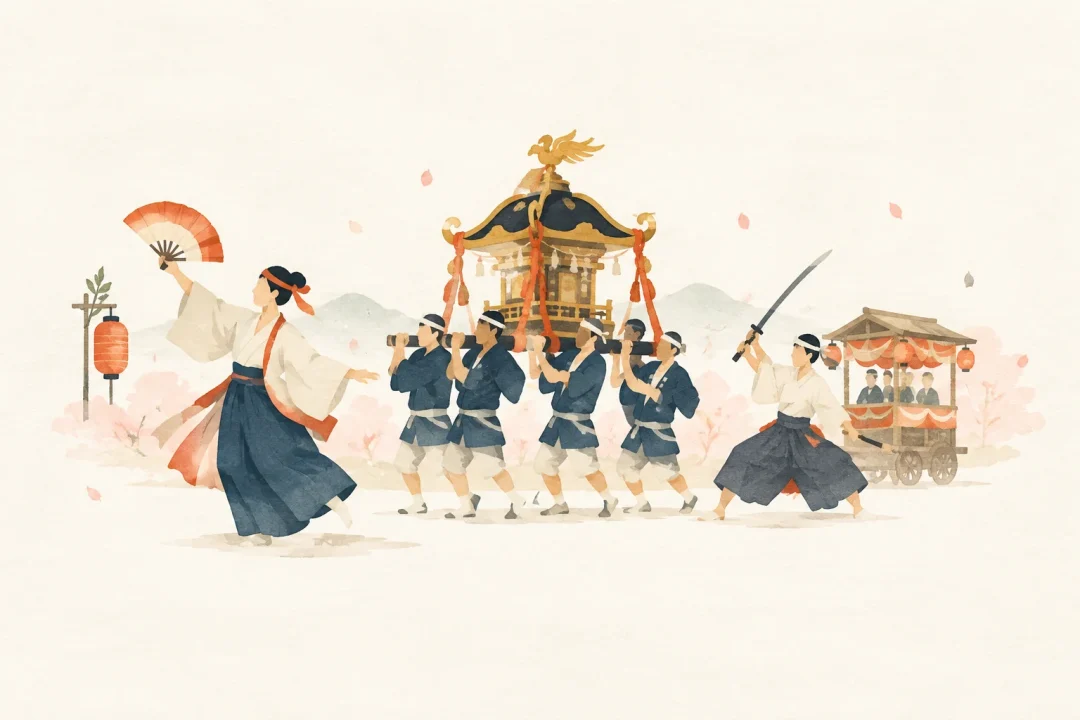
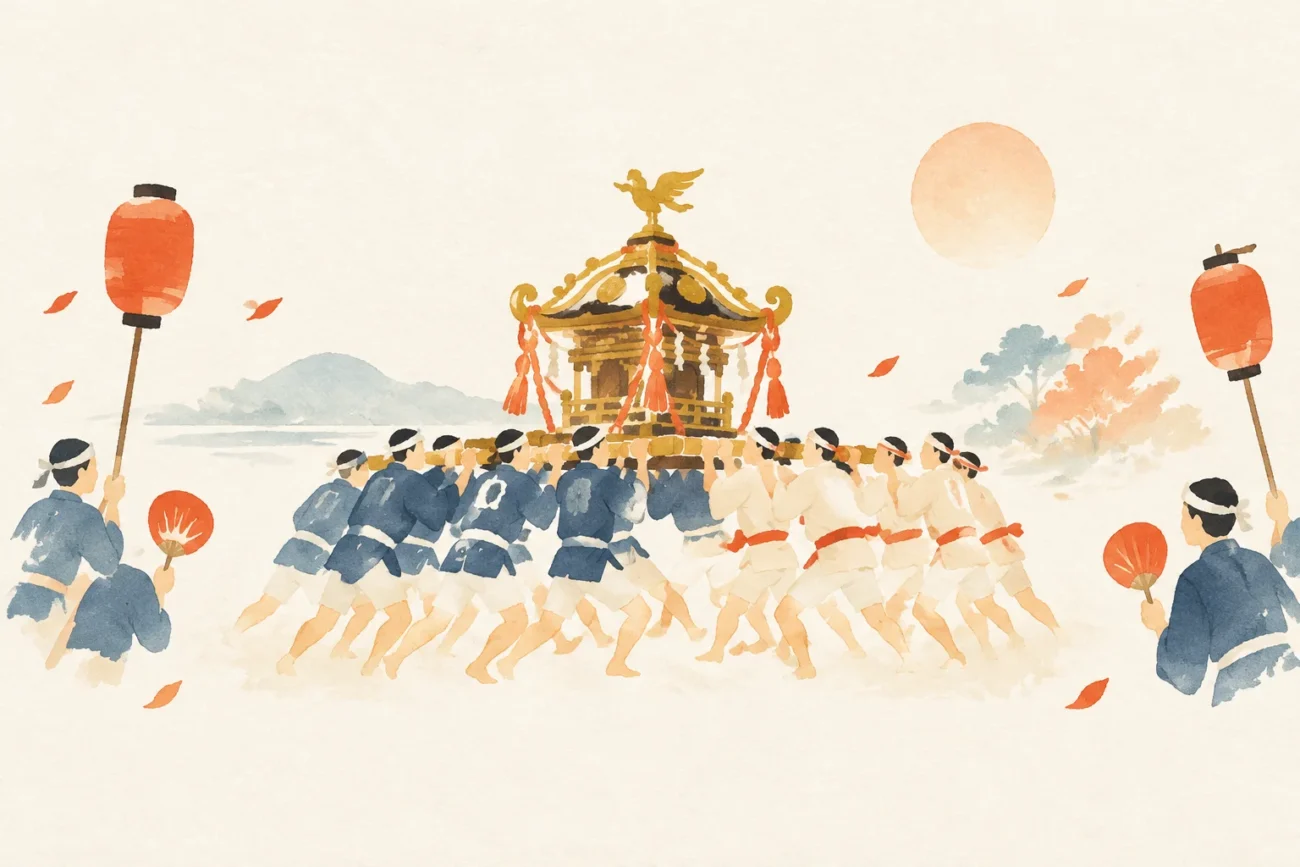
At the fighting mikoshi event at Sumiyoshi Shrine, the mikoshi makes 7 and a half round trips between the shrine and the beach. The teams vie for the front pole in a circular sandy area near the beach called the “dohyō.”
The rules say that a team wins by taking the front carrying pole of the mikoshi and raising it above shoulder height. The two districts struggle against each other, pushing and grabbing as they compete.
Another feature of this is that shrine representatives determine the winner and mediate disputes.
Kurita’s autumn mikoshi festival, where teams vie for the front carrying pole on a sandy beach ring
What to expect
On the festival day, ujiko visit homes throughout the area early in the morning and perform with as a .
After the fighting mikoshi, the two districts share drinks at a naorai gathering. Then children join in to perform Tachi-furi as a hono.
In the Tachi-furi sword dance, performers hold long swords with blades and dance to flute and music. After performing it as a hono at the shrine, they visit homes throughout the area.
Location and access
- Venue and address
住吉神社 京都府宮津市字上司/電車・バス:京都丹後鉄道宮舞線「栗田」駅下車、徒歩3分/車:京都縦貫自動車道綾部宮津道路「宮津天橋立」ICから車で20分
Address Kamitsukasa, Miyazu City, Kyoto Prefecture
Dates and season
- Season
Every year, the 2nd Saturday and Sunday of October
- Frequency
Every year
Accommodation and hotels PR
Showing nearby accommodation.
Prices and availability are current at the time of retrieval. For multi-night stays, only the first night’s price is shown. Confirm the final price and directions to the venue with the booking provider. Select your dates again when using the area search link. Search area: within 3 km of Central Kyoto Prefecture / Miyazu City (the search is not centered on the festival venue)
Nearby attractions
The Kurita Festival guide lists nearby attractions such as the Miyazu City Station-front Parking Lot, Miyazu History Museum, and Miyazu no Yu Yurayura Onsen.
The straight-line distances from Sumiyoshi Shrine are 3.4 km to the Miyazu City Station-front Parking Lot, 3.5 km to Miyazu History Museum, and 3.7 km to Miyazu no Yu Yurayura Onsen.
If you plan to visit nearby places alongside the festival, please check each facility’s opening status and terms of use separately.

山王宮日吉神社
京都府宮津市にある神社、旧郷社

籠神社
京都府宮津市にある神社
Origins and History of Kurita Festival
Paintings preserved at Sumiyoshi Shrine show that the Kurita Festival dates back at least to the Meiji period.
The fighting mikoshi is thought to have emerged against the backdrop of ongoing disputes over fishing grounds in Kurita, which prospered as a fishing town; people may have channeled their fighting spirit into the festival to avoid conflicts in the community.
The word “Fuwa” (不波) on the mikoshi bearers’ white garments expresses a wish for calm seas without waves—that is, for peace.
Official information
The Kyoto Prefecture Tourism Federation’s official “Kurita Festival” guide lists the venue, address, transportation, and time of year when the festival is held.
Kurita Festival at a Glance
The Kurita Festival is the collective name for autumn festivals held throughout the Kurita Peninsula. At Sumiyoshi Shrine, the Kamitsukasa and Kotera districts are known for their fighting mikoshi contest over the front carrying pole.
Kagura, the mikoshi procession, the naorai gathering, and Tachi-furi unfold over the course of the day, while shishimai and flute-and-taiko add to the festivities.
The festival is known to have existed in the Meiji period, and the community’s wishes for good harvests and peace have been passed down alongside its intense rituals.
Sources and references
Japanese Festivals.jp Editorial Team
Celebrating local culture and helping you discover a side of Japan you never knew.
Article updated: 2026/11/11