Kumata Shrine’s Otaue: praying for a good harvest with the main hall floor representing a rice paddy
Kumata Shrine’s Otaue
Festival information
EVENT INFORMATION- Season / frequency
- April 13
- Location
- Main hall of Kumata Shrine
- Area
- Osaka Prefecture(From Tokyo: approx. 2 h 30 min–3 h · bullet train)Prefecture-level estimate to a main station or airport, not the venue. Airport access, check-in and onward travel are extra; remote areas and islands can take much longer.
- Highlights and activities
- Wishes behind the festival
- Required number of participants
- There are 7 performers, and 4–5 singers who lead the chants.
- Last updated
- 2026/10/19
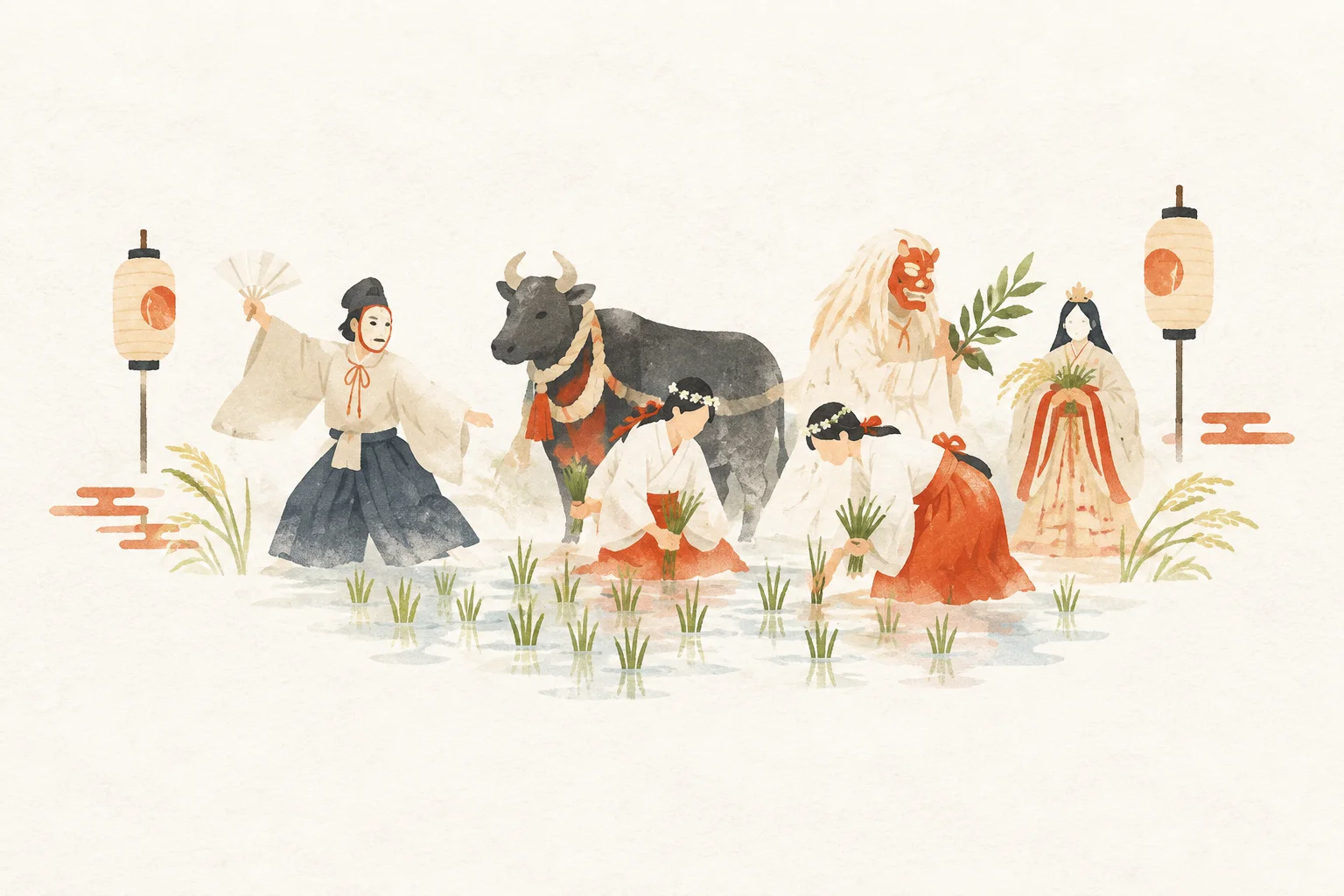
Kumata Shrine’s Otaue is a folk performance in which the floor of the main hall represents a rice paddy, and the process from the start of rice cultivation through rice planting is enacted. Masked performers, a performer playing an ox, young women planting rice, and dolls appear in the performance, which is held to pray for a good harvest.
About Kumata Shrine’s Otaue
Kumata Shrine’s Otaue is a folk performance held to pray for a good harvest, in which the process of rice cultivation is enacted before the actual farming season begins.
The floor of the shrine’s main hall represents a rice paddy, and the performance depicts the process from preparing the field through planting rice.
A masked performer takes the lead, and a doll believed to be the deity of rice also appears.
The event conveys the region’s hopes for its rice harvest through ritual and performance.
Source: 国指定文化財等データベース
Festival highlights
A highlight is the sequence in which the floor of the main hall represents a rice paddy and the stages of rice cultivation are enacted in order.
The masked shite, a performer playing an ox, and young women planting rice appear, along with a ji who performs the chants.
Another distinctive feature is the appearance of a doll believed to be the deity of rice, along with chants, gestures, and costumes that evoke the influence of Noh.
This distinctive Otaue brings together the reenactment of farm work and artistic expression.
Kumata Shrine’s Otaue: praying for a good harvest with the main hall floor representing a rice paddy
What to expect
The performance proceeds through “Kuwa,” preparing the field; “Karasuki,” plowing the field with an ox; “Bo,” leveling the field; “Tanemaki,” sowing rice seeds in the nursery bed; and “Uetsuke,” planting the rice.
In the final segment, “Uetsuke,” the shite performs a gesture of feeding rice to a doll with chopsticks.
Afterward, the young women perform the motions of planting rice.
Rather than taking place in an actual paddy, this is a Shinto rite that represents the process of rice cultivation with the floor of the main hall standing in for a rice field.
How to take part
必要人数:出演者は7名、唱えを受け持つ地方は4〜5名
Location and access
- Venue and address
Main hall of Kumata Shrine (Kumata Shrine).
Source: 杭全神社について – 杭全神社
Event venue 大阪府 杭全神社拝殿
This map uses the venue name. Check the official guide for the event area and entrances.
Dates and season
The ceremony will be held on April 13.
The Otaue is performed before rice cultivation begins, depicting the rice-growing work for that year.
Source: 大阪府神社庁のホームページ
Origins and History of Kumata Shrine’s Otaue
Kumata Shrine’s Otaue has been passed down as a folk performance held to pray for a good harvest, in which the stages of rice cultivation are enacted in advance.
It was selected on March 13, 2008 as an example of the transition of performing arts and of regional characteristics.
Chants and gestures that suggest the influence of Noh, the use of masks in the performance, and the appearance of dolls are recorded as historical and performing-arts characteristics.
Official information
Kumata Shrine’s event information lists the Otaue Shinto rite as an event on April 13.
The Agency for Cultural Affairs’ cultural property database describes the content of Kumata Shrine’s Otaue, its performers, and how the stages of rice cultivation are enacted.
Kumata Shrine’s Otaue at a Glance
Kumata Shrine’s Otaue is a folk performance in which the floor of the main hall represents a rice paddy, and stages of rice cultivation—including hoeing, plowing, sowing seeds, and planting—are enacted.
The masked shite, a performer playing an ox, young women planting rice, and dolls appear in the performance. Its gestures and chants, which suggest the influence of Noh, are also highlights.
The rite is held on April 13 and embodies a prayer for a good harvest.
Japanese Festivals.jp Editorial Team
Celebrating local culture and helping you discover a side of Japan you never knew.
Article updated: 2026/10/19
Submit information or a correction Submit photos of this festival