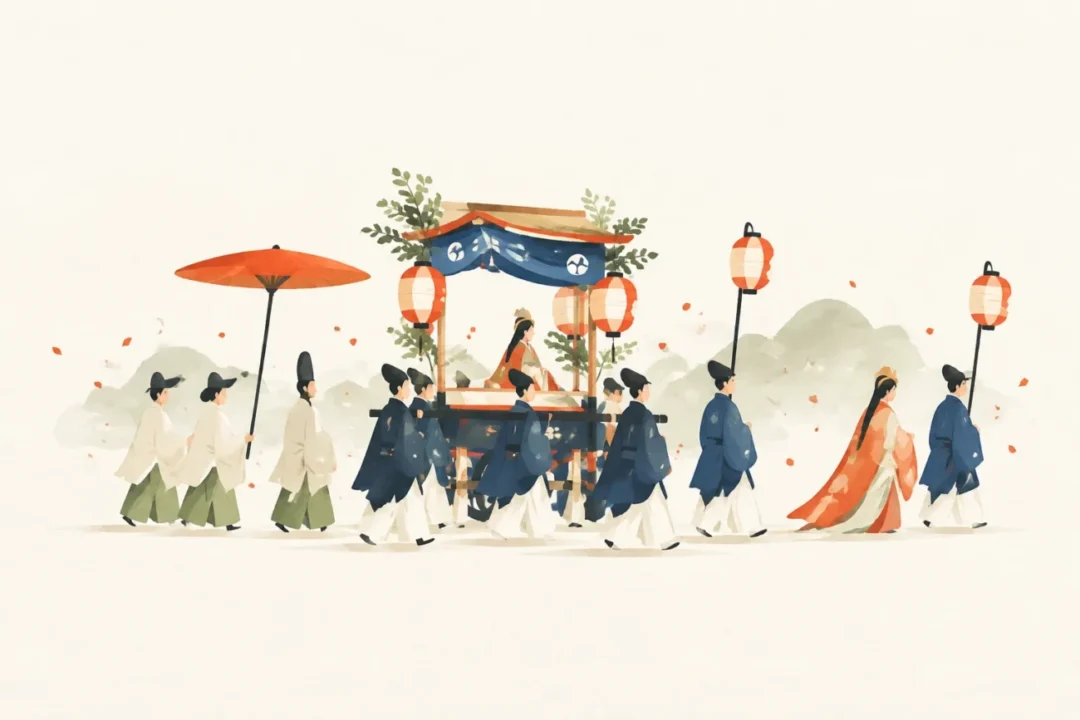
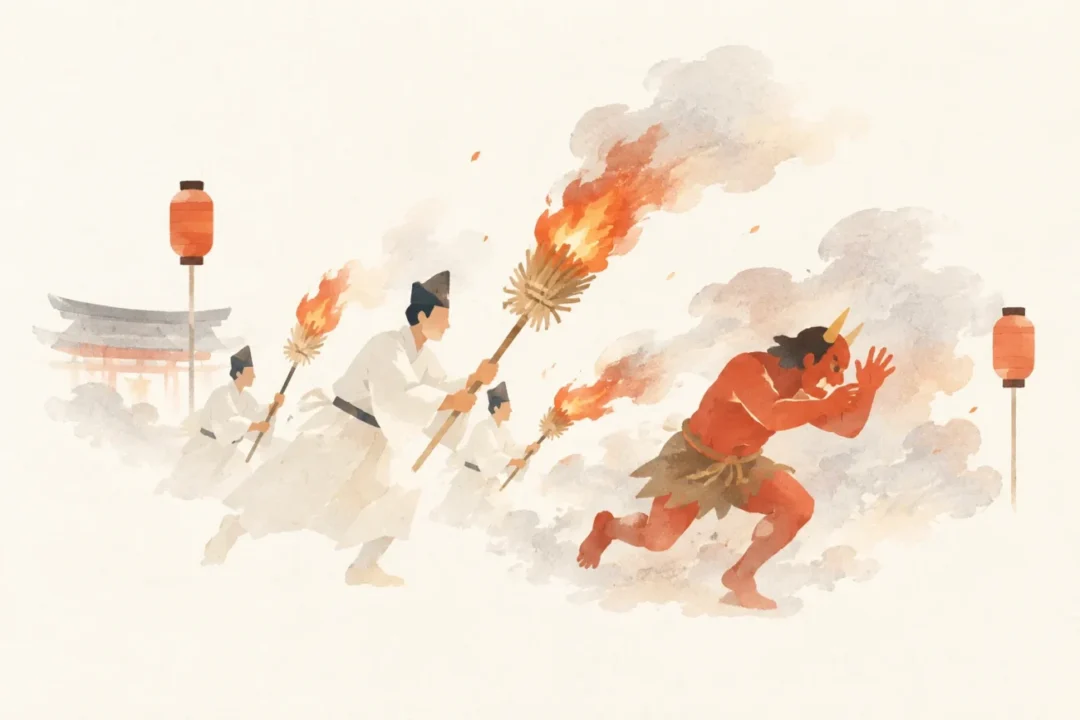
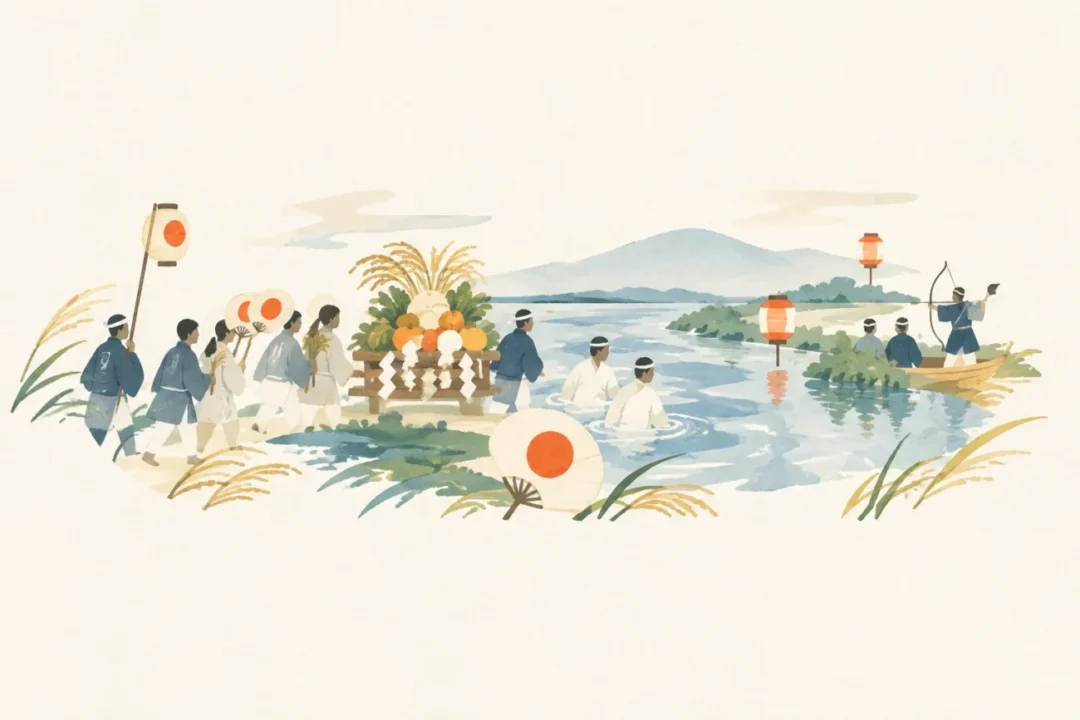
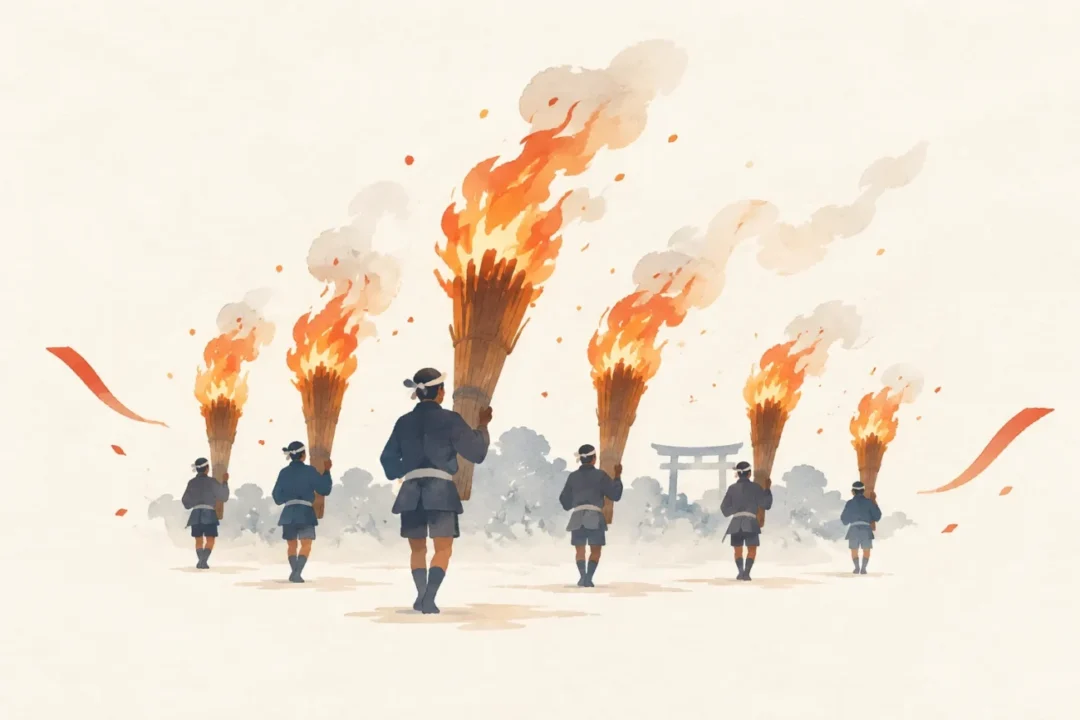
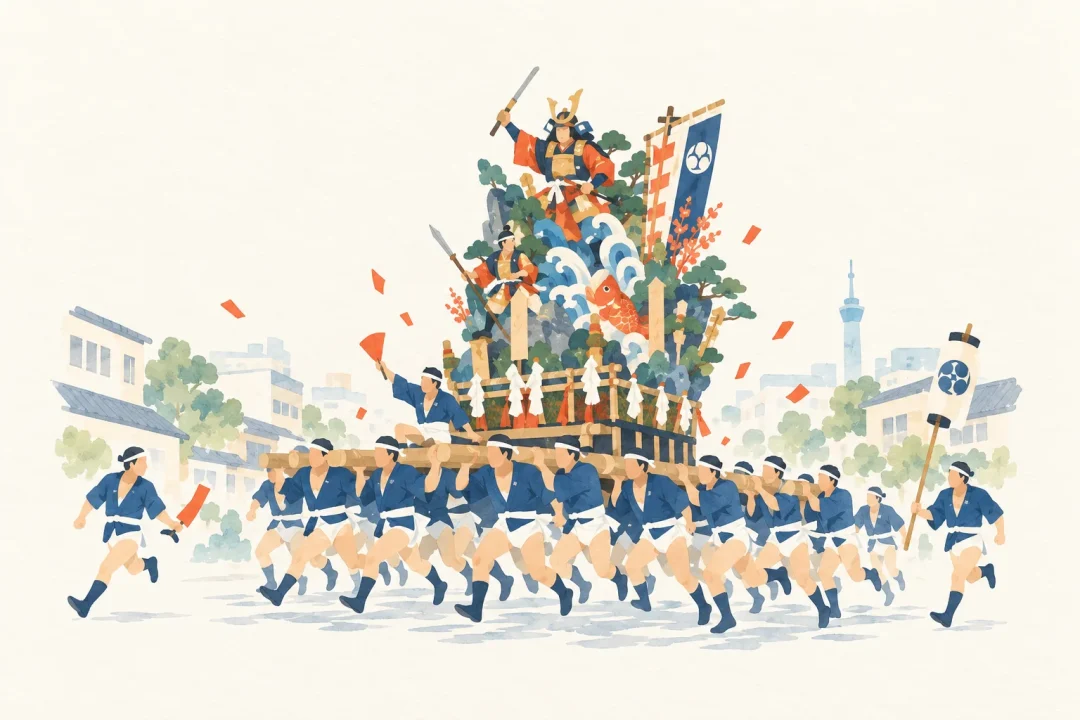
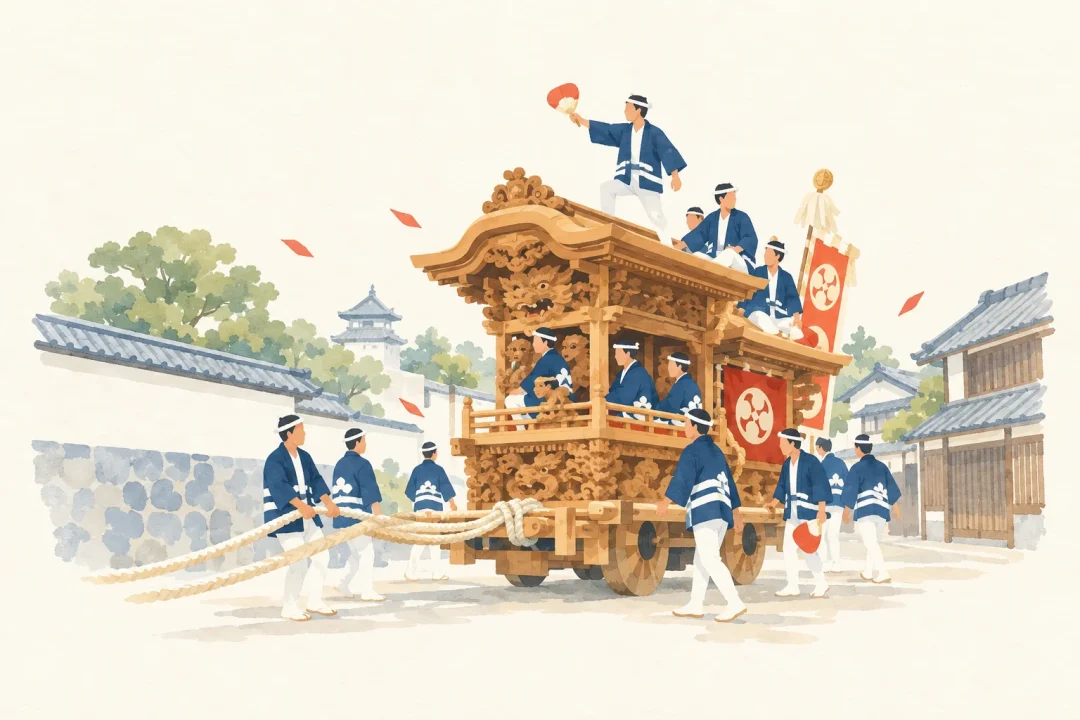
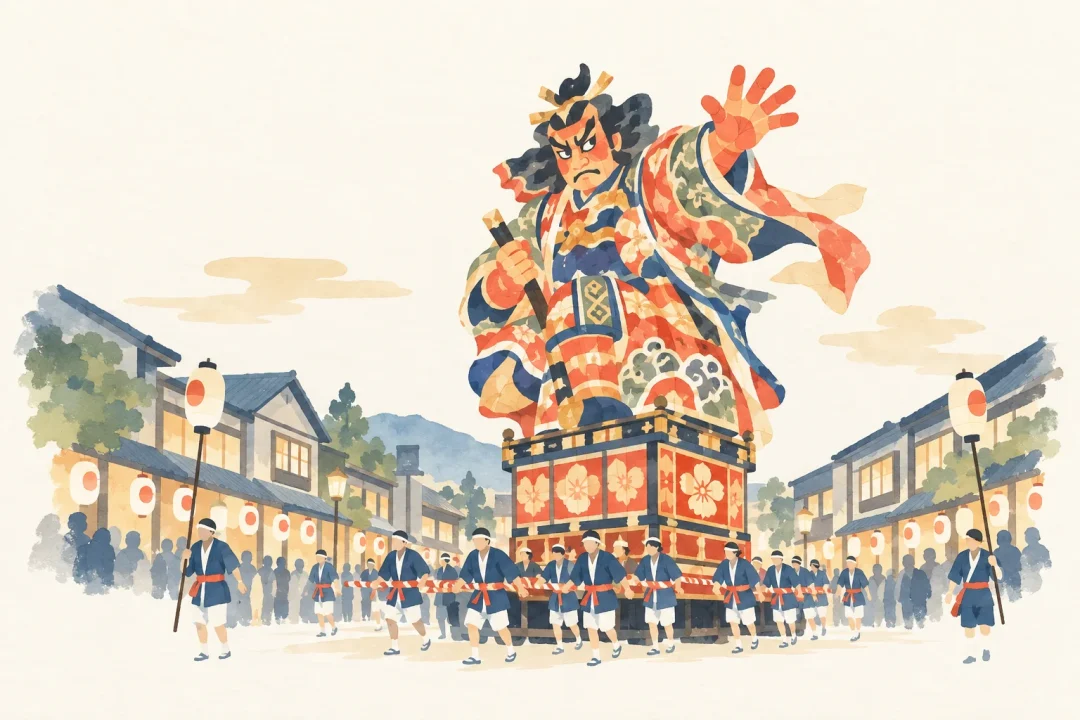
Kitano’s traditional shinko festival, with furyu performers and a mikoshi procession
Kitano Tenman Jinja Shinko Festival
The 2026 edition of Kitano Tenman Shinko Festival has ended.
Festival information
EVENT INFORMATION- Dates
- 2026/10/18Ended
- Location
- Kitano Tenmangu Shrine
- Area
- Fukuoka Prefecture・Kurume City(From Tokyo: approx. 1 h 50 min–2 h 10 min · flight time only)Prefecture-level estimate to a main station or airport, not the venue. Airport access, check-in and onward travel are extra; remote areas and islands can take much longer.
- Highlights and activities
- Wishes behind the festival
- Required number of participants
- 5 people
- Last updated
- 2026/11/22
The Kitano Tenman Jinja Shinko Festival is a traditional event in Kitano-machi, Kurume City, where a travels between the main shrine and the lower shrine, led by furyu performers and the yakko group.
About Kitano Tenman Jinja Shinko Festival
The Kitano Tenman Jinja Shinko Festival, commonly known as “Kitano Kunchi,” is an event in which the deity leaves the shrine and visits the people.
The is placed in the mikoshi, followed by furyu performers—said to be incarnations of kappa—and a yakko group, a procession marshal, bearers of sacred treasures, and others, in a procession modeled on a daimyo procession.
The procession travels along the between the main shrine and the lower shrine, where people in the community welcome the deity.
It was designated a Fukuoka Prefecture Intangible Folk Cultural Property in Showa 38.
Festival highlights
A highlight is the modeled on a daimyo procession, led by furyu performers.
follow the mikoshi carrying the shintai, including the yakko group, the procession marshal, and bearers of sacred treasures, escorting the deity to the lower shrine.
Dances and furyu performances are also offered at the .
Along the route, people praying for good health pass beneath the mikoshi, linking the festival’s religious beliefs with the procession.
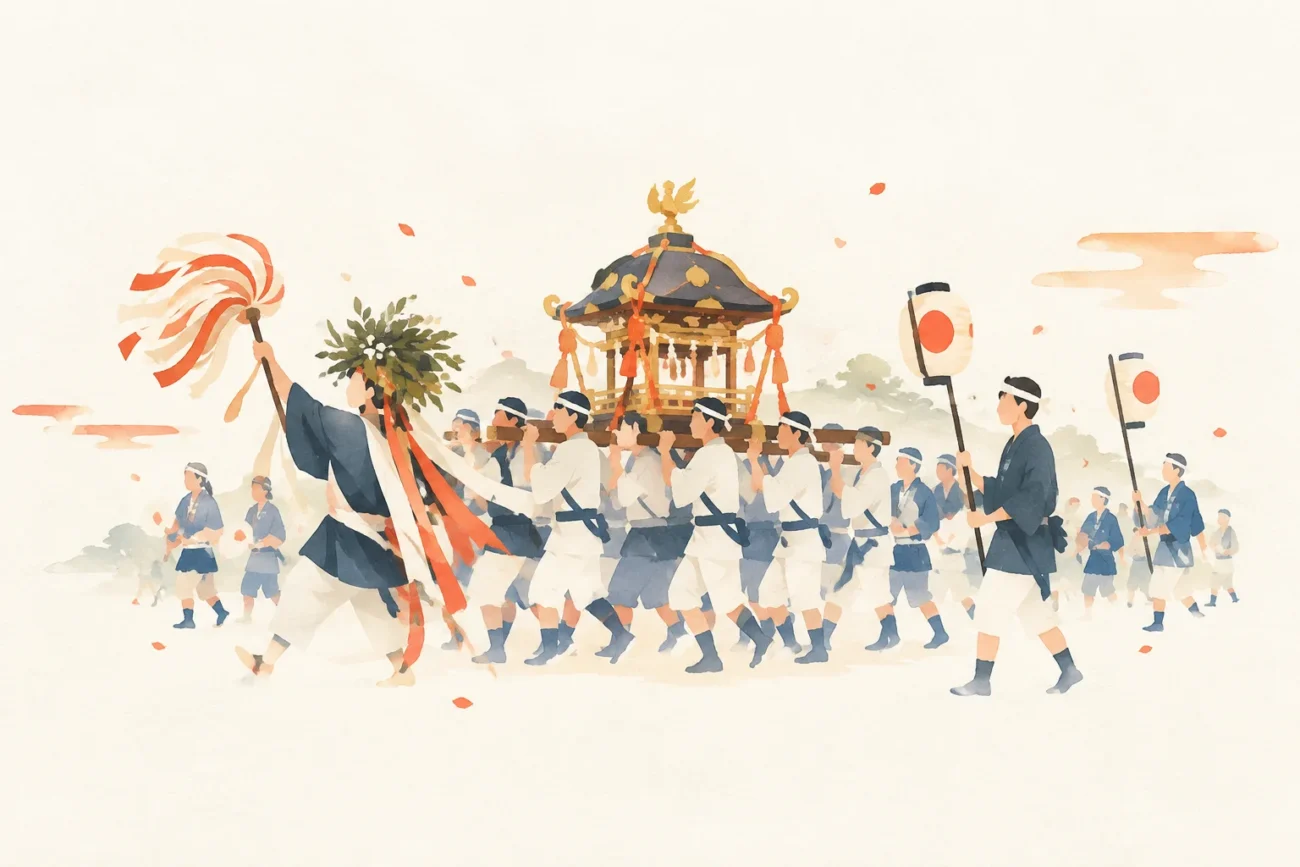
Kitano’s traditional shinko festival, with furyu performers and a mikoshi procession
What to expect
During the event, the mikoshi carrying the shintai and the procession travel from the main shrine to the lower shrine and back along the sando.
The procession proceeds in this order: furyu performers, yakko, procession marshal, bearers of sacred treasures, mikoshi, and chief priest.
The mikoshi stops in places with many worshippers so people can pray.
Along the sando, worshippers also pass beneath the mikoshi to pray for good health.
How to take part
For 2026, the event support volunteer recruitment was for 5 men to help pull the mikoshi cart.
Participants changed into hakucho robes to take part, and the application period ran from September 1, 2026 to October 5.
Applications are no longer being accepted.
Location and access
- Venue and address
Kitano Tenmangu Shrine, 3267 Naka, Kitano-machi, Kurume City
- Train and bus
5 minutes on foot from Kitano Station on the Nishitetsu Amagi Line / 2 minutes on foot from the Nishitetsu Bus Kitano stop
- By car
Driving not required
- Parking
Parking at the Kitano Lifelong Learning Center Main Building or the IM Parking lot.
Parking for festival participants is prohibited at Cosmo Smile Kitano, north of the shrine.
Address 3267 Naka, Kitano-machi, Kurume City
Dates and season
2026 event information (the listed dates have passed)
According to the 2026 information, participants were scheduled to meet at 9 a.m. on October 18, change clothes at 9:30 a.m., depart from the main shrine at 11 a.m., arrive at the lower shrine at 2 p.m., leave the lower shrine at 3 p.m., and return to the main shrine at 4 p.m.
The event runs from October 18, 2026.
Accommodation and hotels PR
Showing nearby accommodation.
Prices and availability are current at the time of retrieval. For multi-night stays, only the first night’s price is shown. Confirm the final price and directions to the venue with the booking provider. Select your dates again when using the area search link. Search area: within 3 km of Central Fukuoka Prefecture / Kurume City (the search is not centered on the festival venue)
Tips for your visit
The 2026 event support information stated that the event would go ahead in light rain, and that the organizing group would contact participants by 8 a.m. on the day if there was heavy rain.
Participants need comfortable walking shoes because they will pull the mikoshi and walk a total of 4 km there and back.
Participants wearing hakucho are provided with costumes. Light clothing that allows you to keep valuables on your person is recommended.
Nearby attractions

久留米市美術館
福岡県久留米市にある美術館

水天宮
福岡県久留米市にある神社

高良大社
福岡県久留米市の高良山にある神社
Origins and History of Kitano Tenman Jinja Shinko Festival
The Kitano Tenman Jinja Shinko Festival was designated a Fukuoka Prefecture Intangible Folk Cultural Property in Showa 38.
The event is described as one in which the deity leaves the shrine and visits the people, and the shinko procession includes a mikoshi, furyu performers, the yakko group, and bearers of sacred treasures.
The available information does not provide details about the event’s origins, how it came about, or how it has changed since its designation.
Official information
Information about the 2026 event is posted on the application page for the Regional Traditional Events Support Team.
Information is provided about the venue, schedule, procession details, and requirements for event support volunteers for the Kitano Tenman Jinja Shinko Festival.
Kitano Tenman Jinja Shinko Festival at a Glance
The Kitano Tenman Jinja Shinko Festival is a traditional event in Kitano-machi, Kurume City, in which the deity leaves the shrine and visits the people.
A shinko procession modeled on a daimyo procession travels between the main shrine and the lower shrine, led by furyu performers and followed by the yakko group, bearers of sacred treasures, and a mikoshi.
Along the route, worshippers pass beneath the mikoshi to pray for good health.
It was designated a Fukuoka Prefecture Intangible Folk Cultural Property in Showa 38.
Sources and references
Japanese Festivals.jp Editorial Team
Celebrating local culture and helping you discover a side of Japan you never knew.
Article updated: 2026/11/22