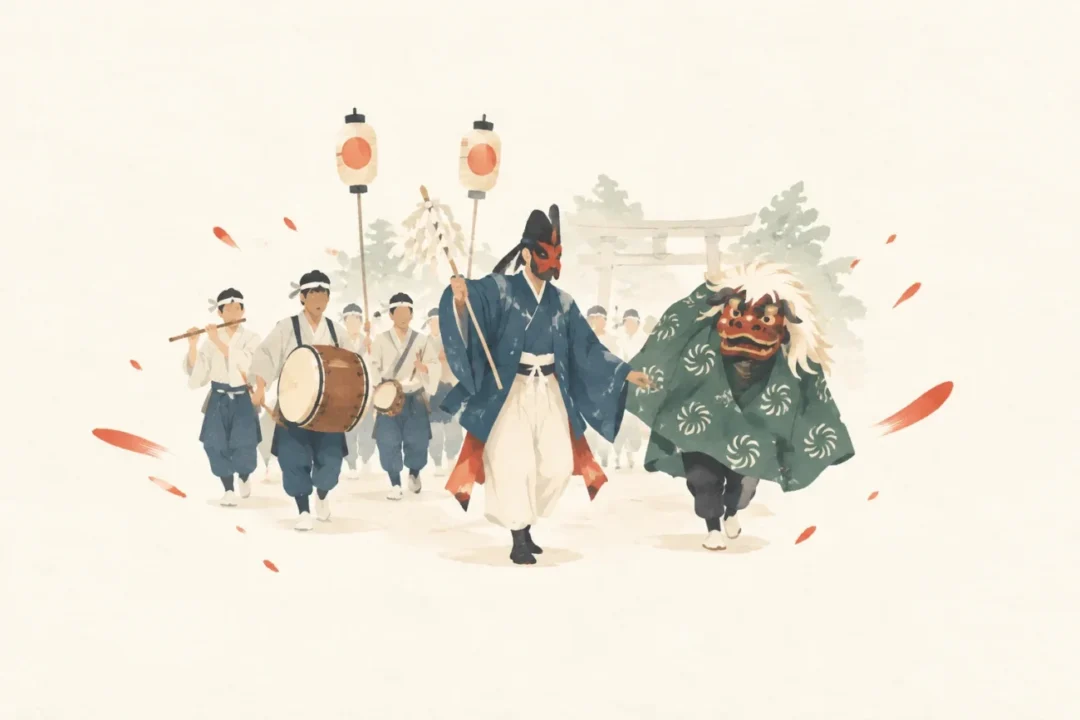
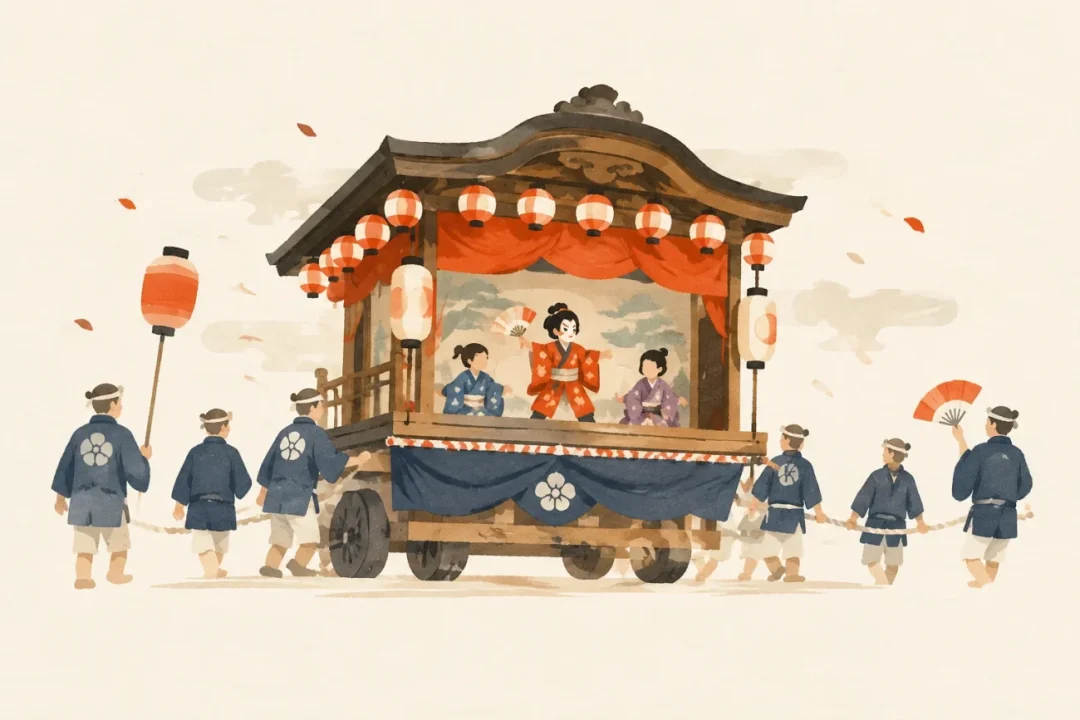
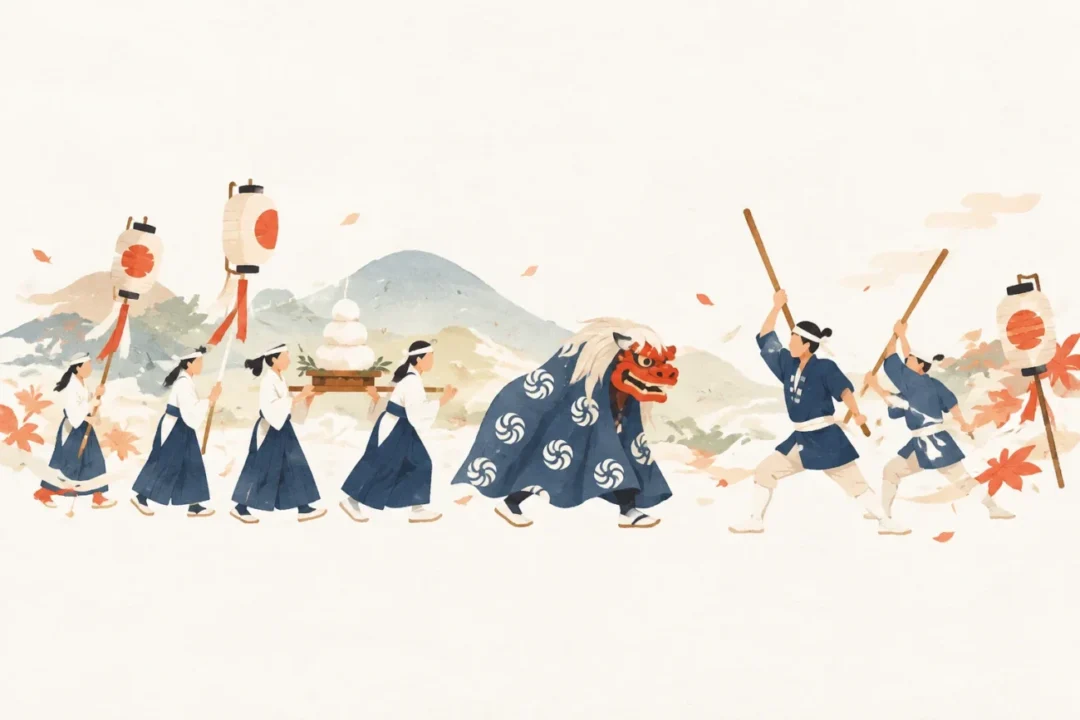
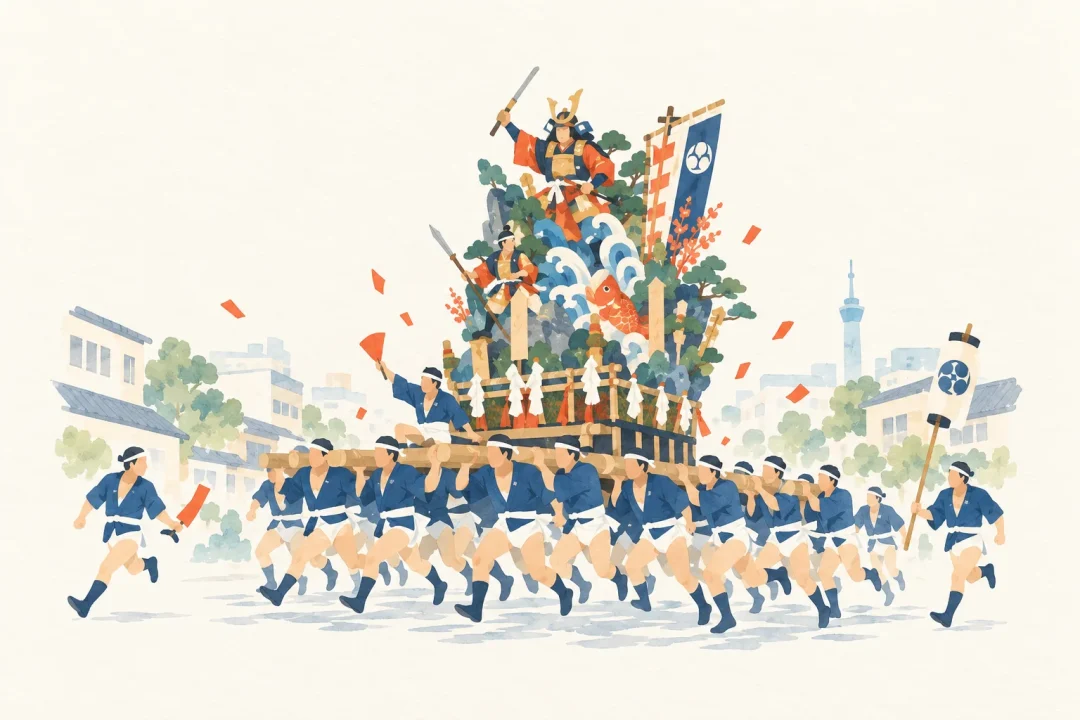
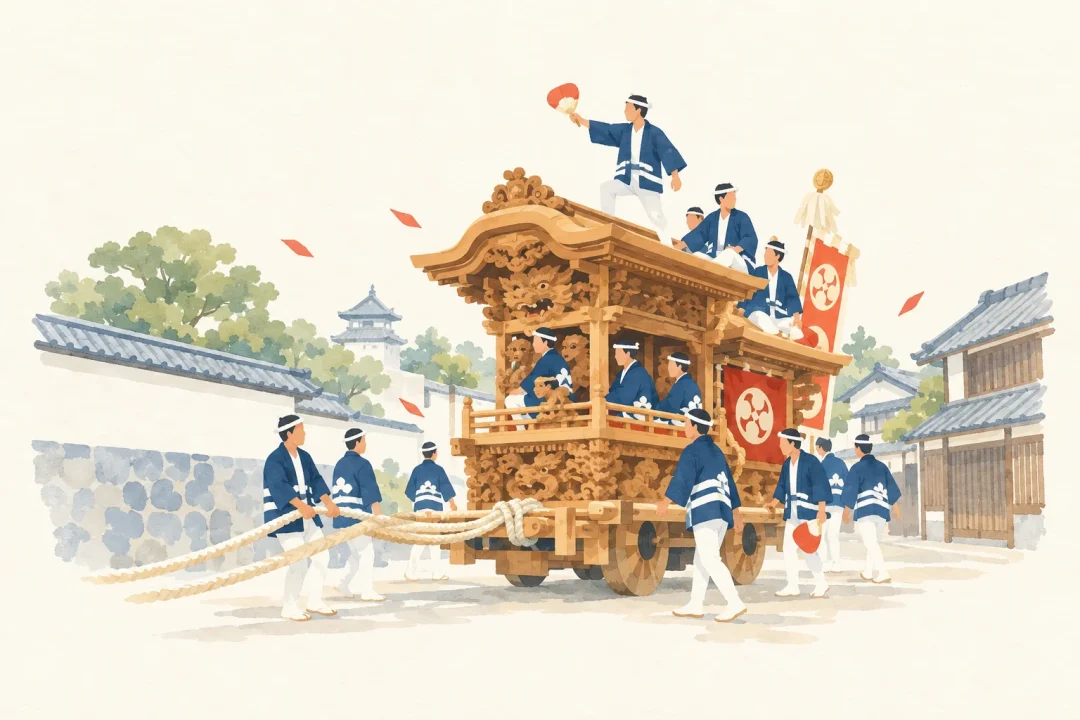
A nighttime ritual as a madake-bamboo goza-bune travels through a mountain village and concludes with prayers before the deities
Goza-bune Ritual at Kameo-yama Shrine
Festival information
EVENT INFORMATION- Season / frequency
- The night of day 17 of lunar month 6
- Location
- Kameo-yama Shrine
- Area
- Hiroshima Prefecture・Akitakata City(From Tokyo: approx. 3 h 50 min–4 h 20 min · bullet train)Prefecture-level estimate to a main station or airport, not the venue. Airport access, check-in and onward travel are extra; remote areas and islands can take much longer.
- Features
- Highlights and activities
- Required number of participants
- 30 people (the young men responsible for building and taking the goza-bune in procession)
- Last updated
- 2026/11/11
The goza-bune, reminiscent of Itsukushima Shrine’s sea-based Kangen Festival, is taken in procession to a mountain-village shrine, its frame made of madake bamboo and its procession carried out by the shrine’s .
About Goza-bune Ritual at Kameo-yama Shrine
The Goza-bune Ritual at Kameo-yama Shrine is a performed by the shrine’s ujiko.
The deities enshrined are the same three goddesses as at Itsukushima Shrine, and the ritual is held on the night of day 17 of lunar month 6, the same night as Itsukushima Shrine’s Kangen Festival.
It is introduced as a small-scale form of the Kangen Festival, traditionally held at sea, that has been carried on in a mountain village.
Festival highlights
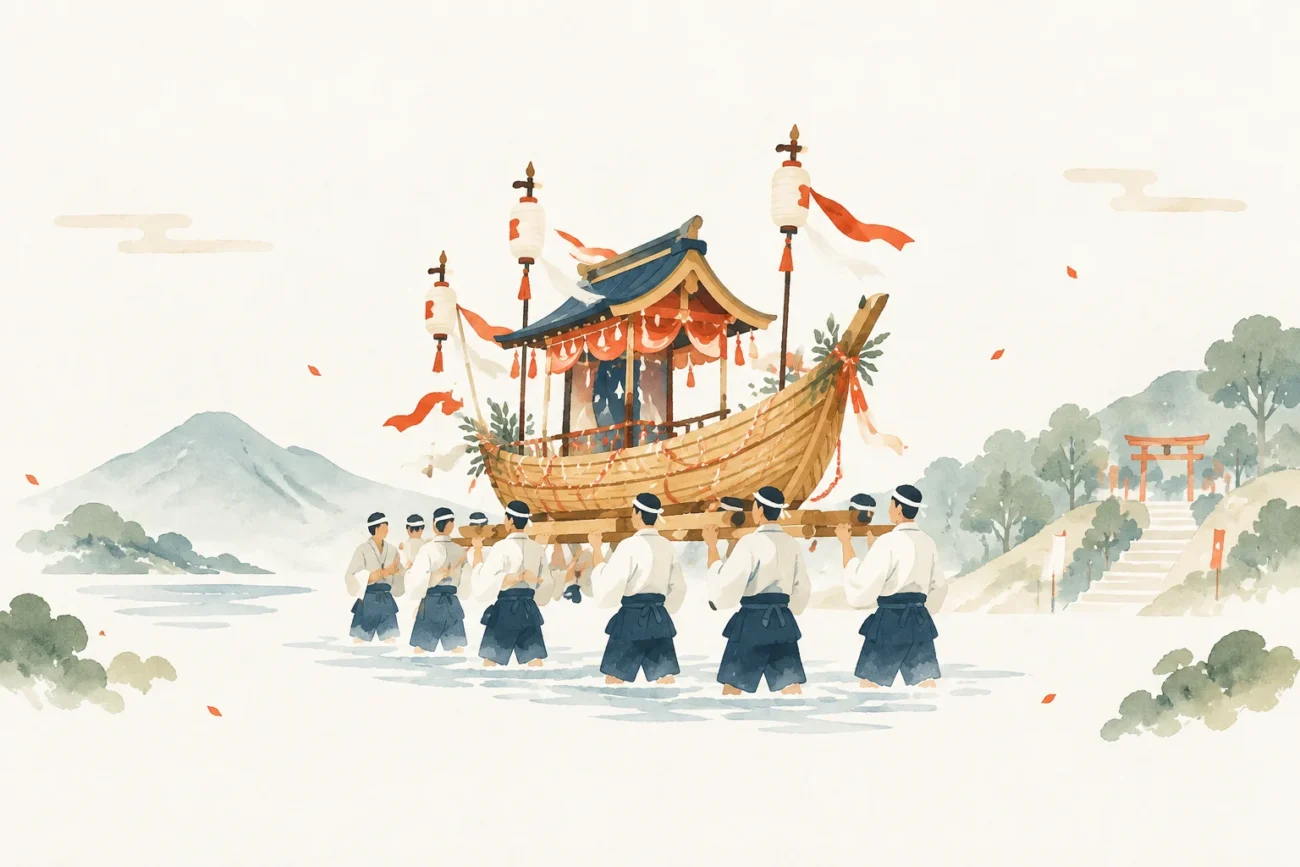
The highlight is the goza-bune assembled from madake bamboo.
The boat is 1.5 meters wide and 7.5 meters long. It is mounted on a wheeled platform and decorated.
On arrival at the , the carried on the boat is offered, and the ritual ends with the goza-bune circling before the deities.
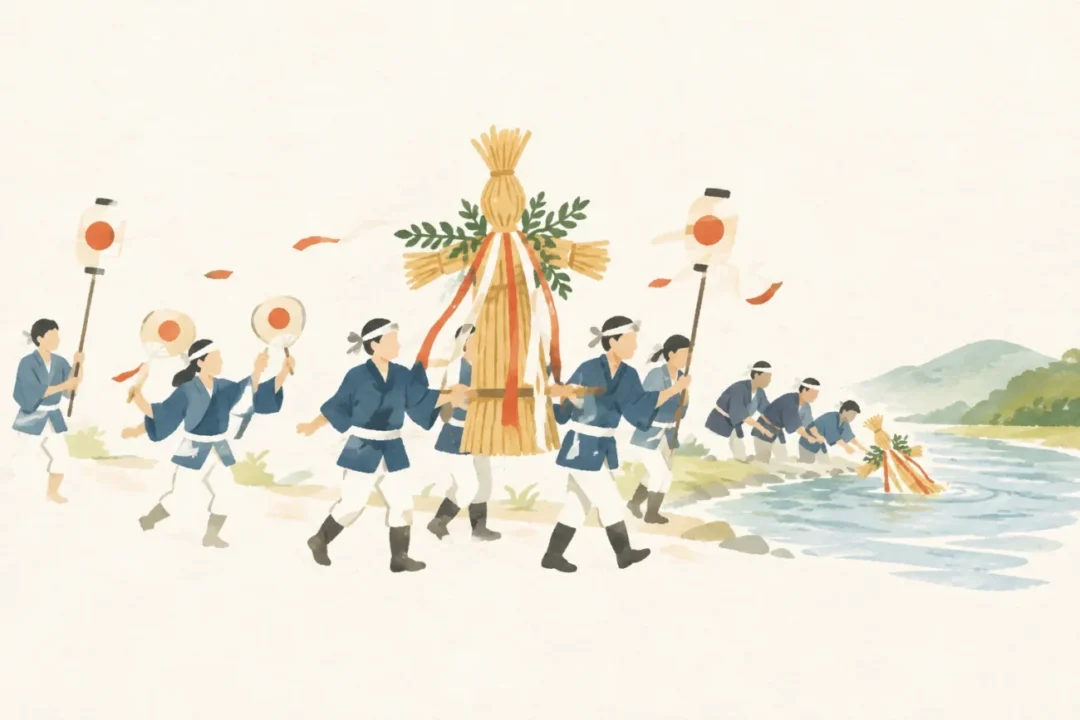
A nighttime ritual as a madake-bamboo goza-bune travels through a mountain village and concludes with prayers before the deities
What to expect
The goza-bune is built and taken in procession by 30 young men from among the shrine’s ujiko.
They assemble the boat’s frame from large pieces of madake bamboo, mount it on a wheeled platform, decorate it, and take it to Kameo-yama Shrine.
At the honden, a gohei is offered, and the boat is circled before the deities to complete the ritual.
How to take part
必要人数:30人(御座船の製作と渡御を担う若連中)
Location and access
- Venue and address
Kameo-yama Shrine (Kawane, Takamiya-cho, Akitakata City)
Event venue 広島県安芸高田市 亀尾山神社
This map uses the venue name. Check the official guide for the event area and entrances.
Dates and season
- Season
The night of day 17 of lunar month 6
Accommodation and hotels PR
Showing nearby accommodation.
Prices and availability are current at the time of retrieval. For multi-night stays, only the first night’s price is shown. Confirm the final price and directions to the venue with the booking provider. Select your dates again when using the area search link. Search area: within 3 km of Central Hiroshima Prefecture / Akitakata City (the search is not centered on the festival venue)
Origins and History of Goza-bune Ritual at Kameo-yama Shrine
This ritual is held at Kameo-yama Shrine, which enshrines the same three goddesses as Itsukushima Shrine, and is modeled on the Kangen Festival.
Its distinctive feature is its portrayal of a sea ritual through the construction, procession, offering, and circling of a goza-bune.
It was designated in Heisei 12 January 17, and the Kawane Jūshichiya Executive Committee serves as its preservation group.
Official information
The official Akitakata City page provides information about the Goza-bune Ritual at Kameo-yama Shrine, its cultural-property designation, and its preservation group.
For inquiries, contact the Akitakata City Board of Education Secretariat.
Goza-bune Ritual at Kameo-yama Shrine at a Glance
The Goza-bune Ritual at Kameo-yama Shrine is a ritual performed by the shrine’s ujiko on the night of day 17 of lunar month 6.
Thirty young men build the goza-bune from madake bamboo, mount and decorate it on a wheeled platform, and take it in procession to Kameo-yama Shrine.
The ritual’s connection to Itsukushima Shrine’s Kangen Festival is reflected in the sequence of offering a gohei at the honden and circling the goza-bune before the deities.
Sources and references
Japanese Festivals.jp Editorial Team
Celebrating local culture and helping you discover a side of Japan you never knew.
Article updated: 2026/11/11