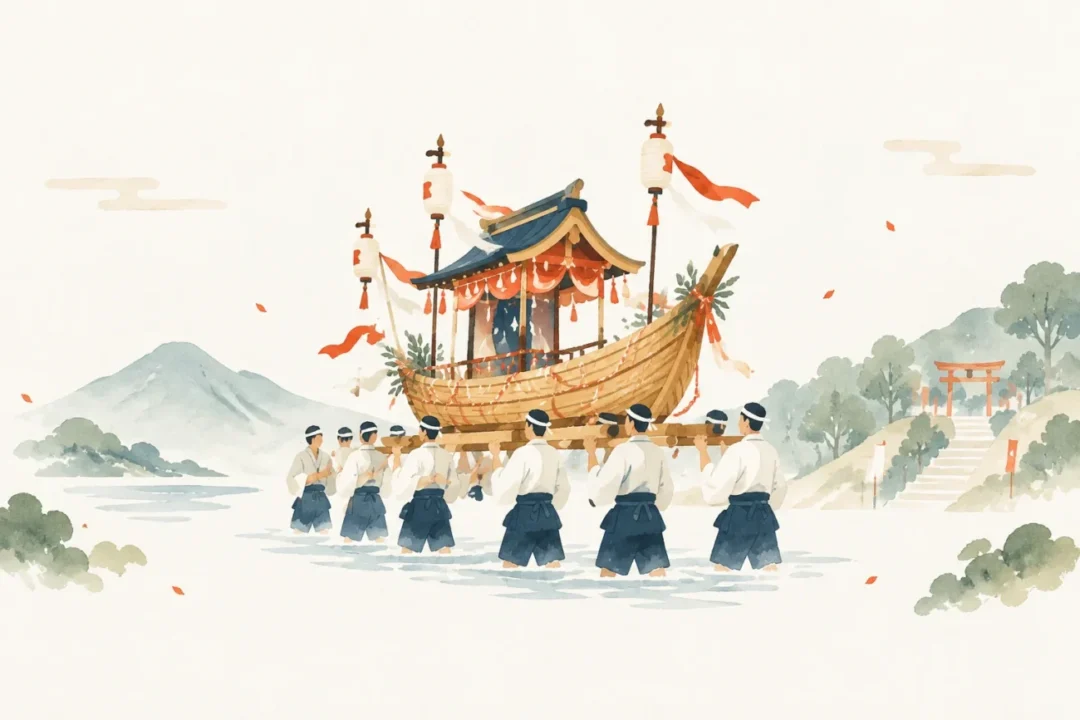
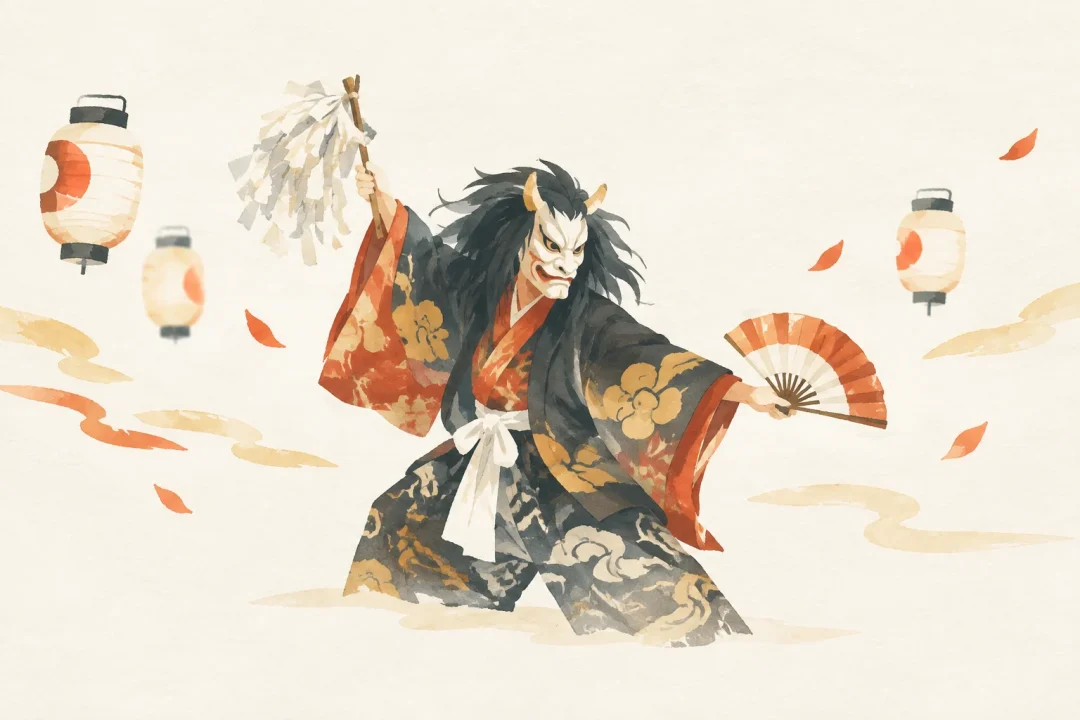
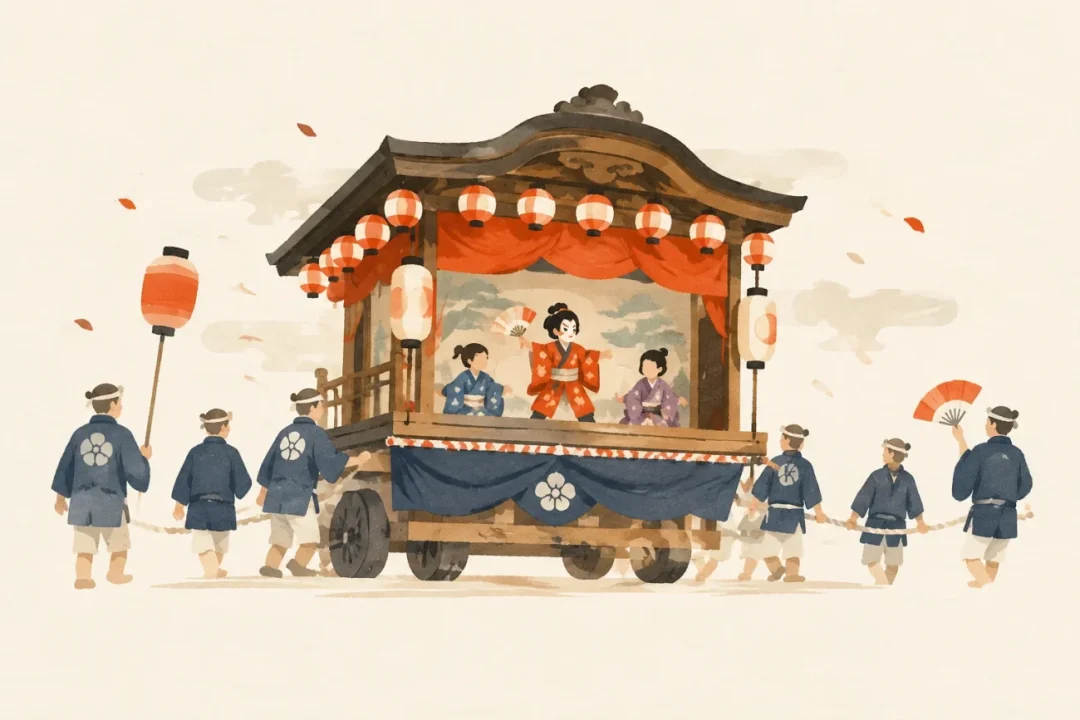
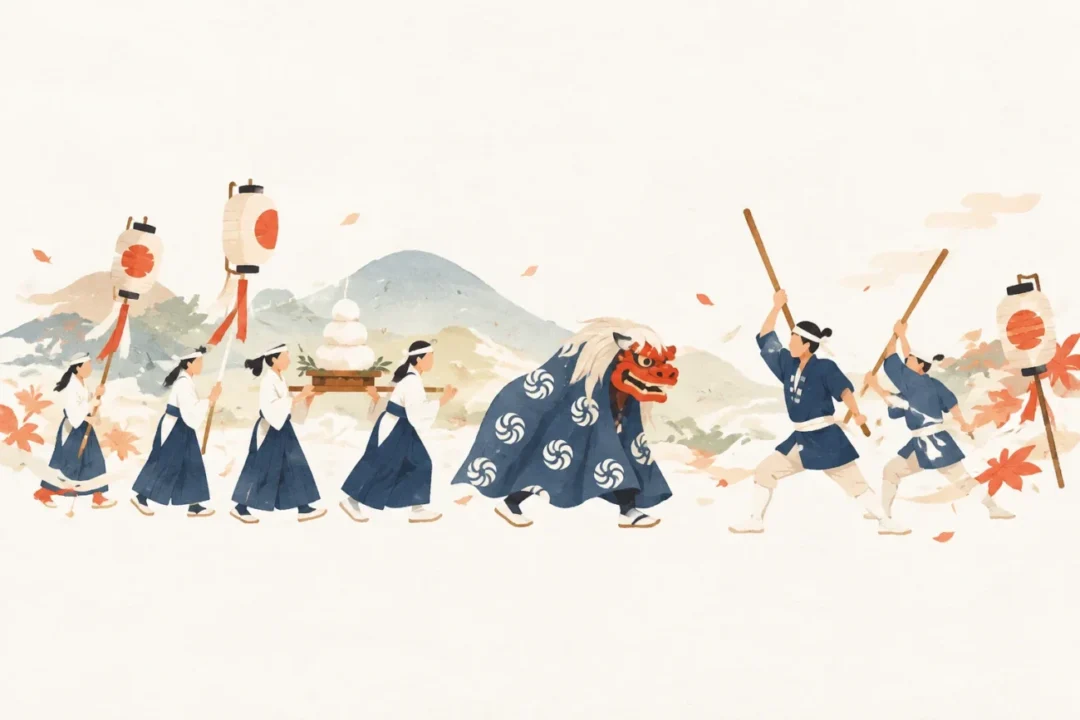
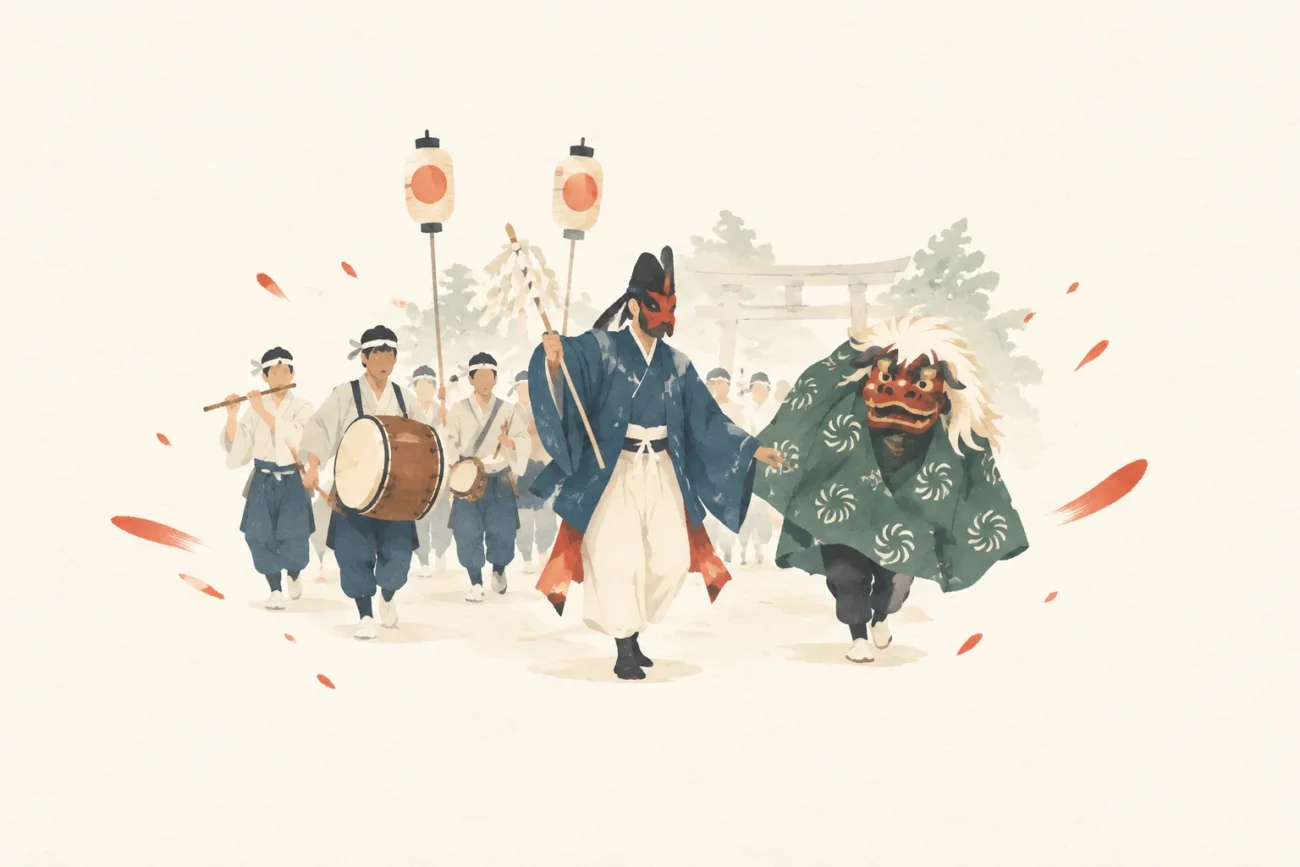
Shingi conveyed through a procession of flutes and drums, and dances by Sarutahiko and the shishi
Kasuga Shrine’s Shingi
Festival information
EVENT INFORMATION- Season / frequency
- Every year on November 3 (Culture Day) / Every year
- Location
- Kasuga Shrine
- Area
- Hiroshima Prefecture・Akitakata City(From Tokyo: approx. 3 h 50 min–4 h 20 min · bullet train)Prefecture-level estimate to a main station or airport, not the venue. Airport access, check-in and onward travel are extra; remote areas and islands can take much longer.
- Highlights and activities
- Last updated
- 2026/11/11
At Kasuga Shrine in Takadahara, Koda-cho, Akitakata City, offer the Shingi ceremony. Its distinctive features are a procession accompanied by flutes and drums, and dances by Sarutahiko and the shishi.
About Kasuga Shrine’s Shingi
Kasuga Shrine’s Shingi is a ceremony offered by ujiko at Kasuga Shrine in Takadahara, Koda-cho, Akitakata City.
It was traditionally held on September 29, but is now held every year on November 3 (Culture Day).
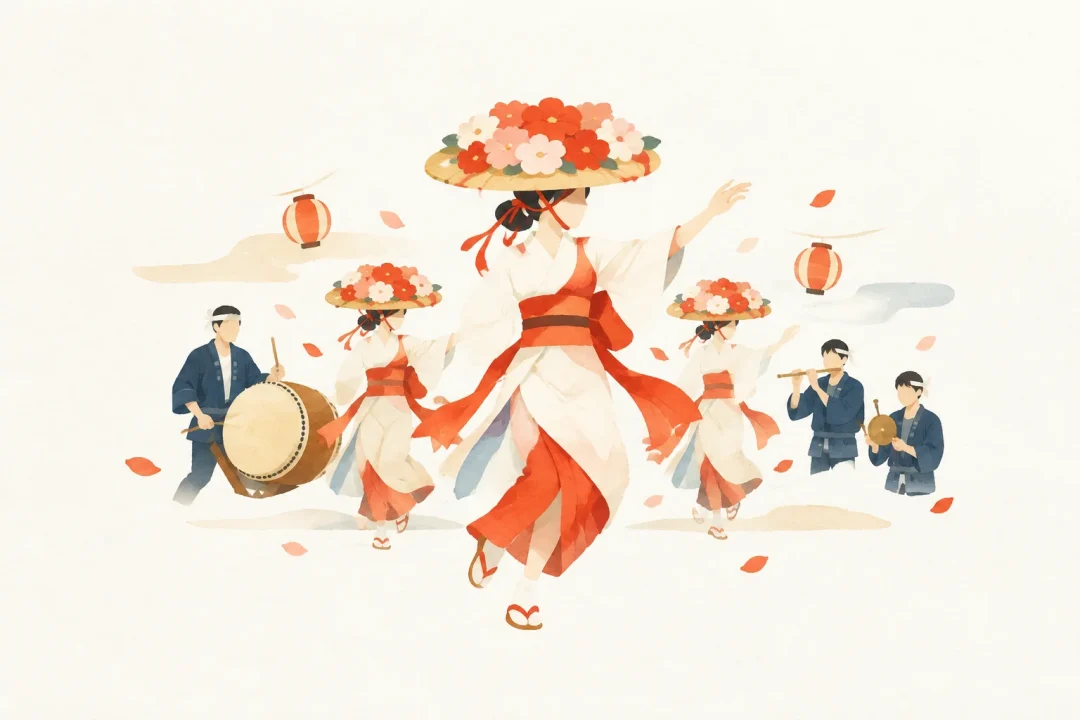
Tradition holds that a procession accompanied by flutes, drums, gongs, and hand-struck bells visits the shrine, circles the sanctuary, and makes offerings and recites prayers before dances are performed in the open courtyard.
An intangible folk cultural property designated in Showa 49 September 1.
Festival highlights
Highlights include the festival procession arranged by the ujiko, and played on flutes, drums, gongs, and hand-struck bells.
At the shrine gate, Sarutahiko dances as he proceeds to the accompaniment of shishi hayashi, then circles the shrine sanctuary once and makes offerings.
Afterward, a recites norito prayers, followed by two rounds of dancing in the open courtyard.
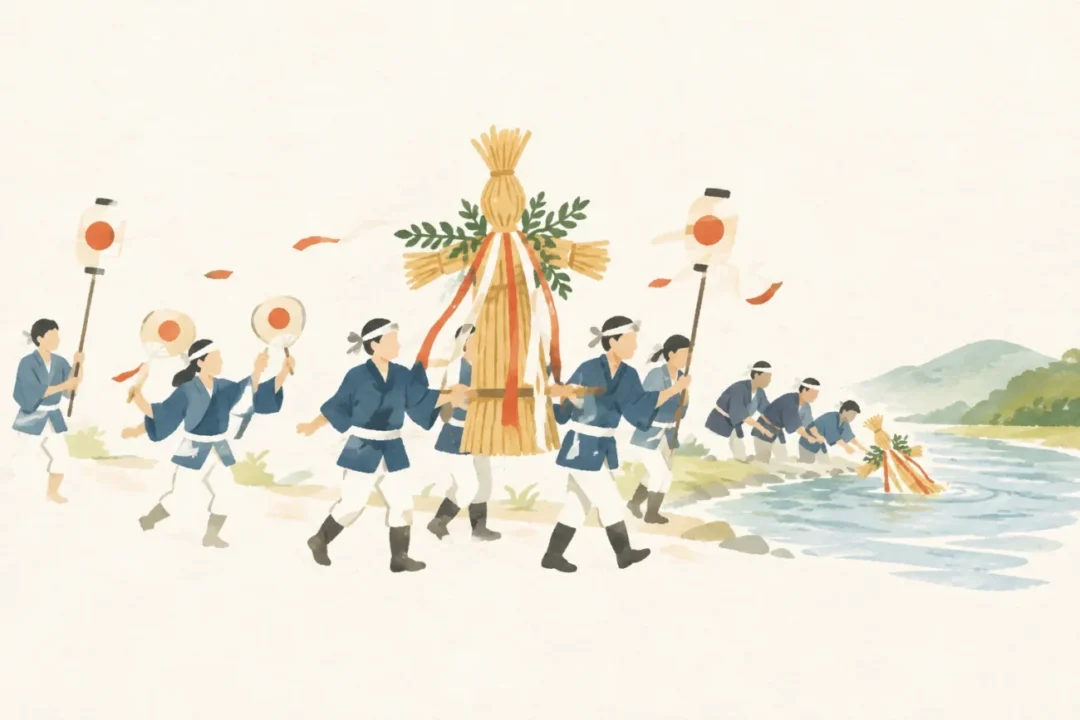
The procession includes a leader, a white sword, , offerings, Sarutahiko, a shishi, musicians, ujiko representatives, and all the ujiko.
Shingi conveyed through a procession of flutes and drums, and dances by Sarutahiko and the shishi
What to expect
The day begins with the first rice offerings contributed by the ujiko being arranged on a sanbo offering stand.
In the early afternoon, the procession assembles and visits the shrine to the accompaniment of hayashi played on flutes, drums, and hand-struck bells.
The procession proceeds from the shrine gate to the sanctuary and circles it once. After the offerings are made, a shinshoku recites norito prayers.
Next, two rounds of dancing are performed in the open courtyard, then the participants drink sacred sake and depart.
Location and access
- Venue and address
Kasuga Shrine, Takadahara, Koda-cho, Akitakata City
Address Takadahara, Koda-cho, Akitakata City
Dates and season
- Season
Every year on November 3 (Culture Day)
- Frequency
Every year
Accommodation and hotels PR
Showing nearby accommodation.
Prices and availability are current at the time of retrieval. For multi-night stays, only the first night’s price is shown. Confirm the final price and directions to the venue with the booking provider. Select your dates again when using the area search link. Search area: within 3 km of Central Hiroshima Prefecture / Akitakata City (the search is not centered on the festival venue)
Origins and History of Kasuga Shrine’s Shingi
Kasuga Shrine’s Shingi was traditionally held on September 29, but it is now held on November 3 (Culture Day).
The form of Shingi varies by region. The 1967 edition of the Koda Town History records one example that includes a procession, a visit to the shrine, offerings, norito prayers, dances, and sacred sake.
Kasuga Shrine’s Shingi was designated in Showa 49 September 1, and the Kasuga Shrine Shingi Preservation Society serves as its preservation group.
Official information
Akitakata City official website, “Kasuga Shrine’s Shingi (Koda-cho)”
Kasuga Shrine’s Shingi at a Glance
Kasuga Shrine’s Shingi is an intangible folk cultural property offered by ujiko at Kasuga Shrine in Takadahara, Koda-cho, Akitakata City.
The ceremony proceeds from preparing the first rice offerings to a procession accompanied by flutes, drums, and other instruments, dances by Sarutahiko and the shishi, a visit to the shrine, offerings, norito prayers, and dances in the open courtyard.
It was traditionally held on September 29, but is now held every year on November 3.
Sources and references
Japanese Festivals.jp Editorial Team
Celebrating local culture and helping you discover a side of Japan you never knew.
Article updated: 2026/11/11