A torchlit imperial festival comes to life in the ancient capital: Yawata’s imperial festival
Iwashimizu Festival
The 2026 edition of Iwashimizu Festival has ended.
Festival information
EVENT INFORMATION- Dates
- 2026/09/15Ended
- Season / frequency
- Every year on September 15 / Every year
- Location
- Iwashimizu Hachimangu Shrine (the main shrine on the mountaintop to the area around Togu at the foot of the mountain)
- Area
- Kyoto Prefecture・Yawata City(From Tokyo: approx. 2 h 10 min–2 h 40 min · bullet train)Prefecture-level estimate to a main station or airport, not the venue. Airport access, check-in and onward travel are extra; remote areas and islands can take much longer.
- Wishes behind the festival
- Participation / viewing
- Open to public participation / spectators welcome
- Participation fee
- A contribution of ¥5,000 is requested to attend the ceremony.
- Last updated
- 2026/10/19
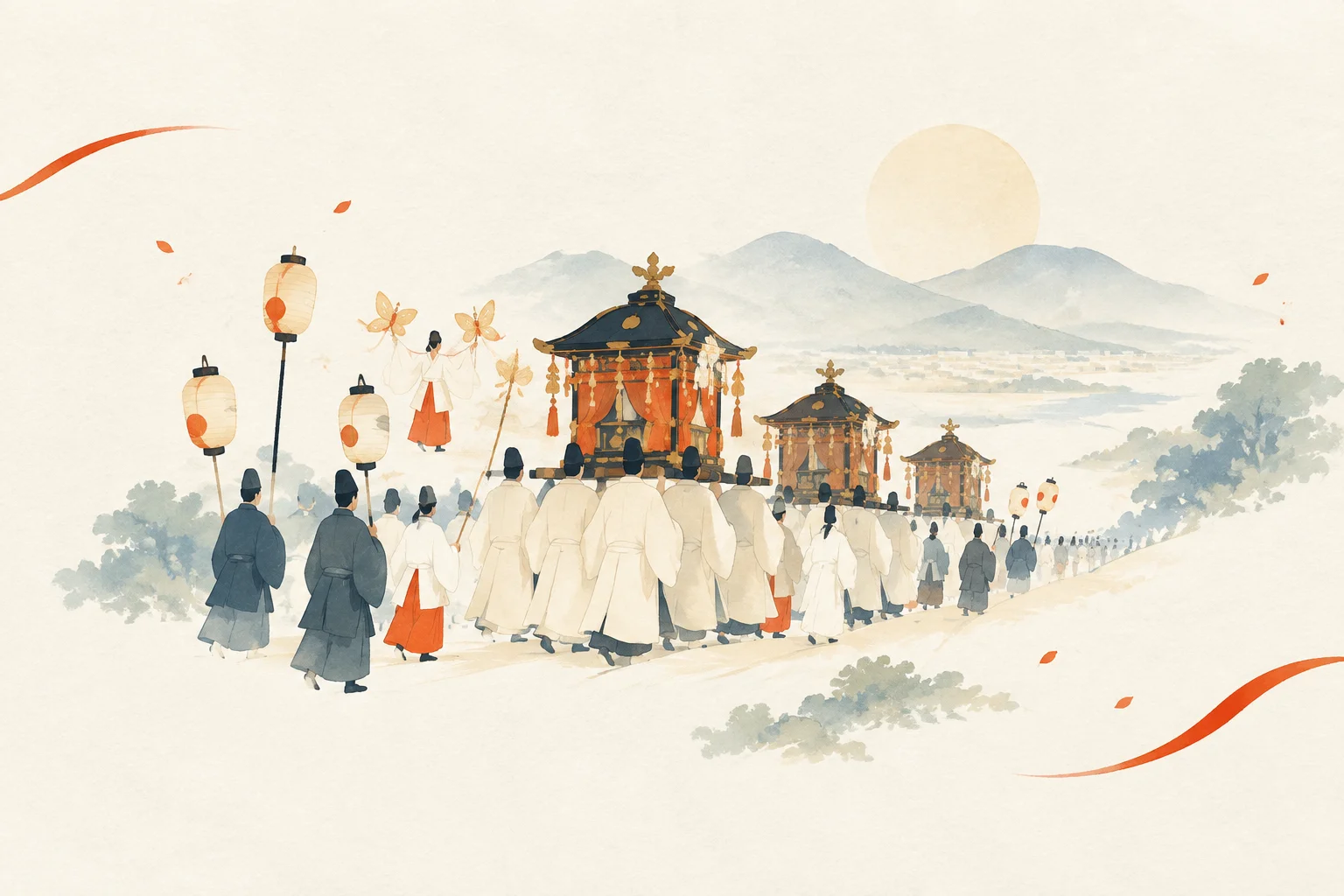
At the Iwashimizu Festival, 3 processions and about 500 attendants travel from the mountaintop to the foot of the mountain in the middle of the night. The rites preserve practices passed down since the Heian period, including the Hobei rite, the Kocho no Mai butterfly dance, and the Hojo event.
About Iwashimizu Festival
The Iwashimizu Festival is an imperial festival held at Iwashimizu Hachimangu Shrine in Yawata City, Kyoto Prefecture.
The festival carries on the Iwashimizu Hojoe, which began during the Jogan era as a rite praying for peace and happiness for all living things.
One of the Three Great Imperial Festivals, alongside the Kamo Festival and the Kasuga Festival, it features the , the Hobei rite, and the Hojo event, all conducted according to ancient rites.
Source: 祭典行事|石清水八幡宮 / 石清水八幡宮MAP | 八幡ストーリー
Festival highlights
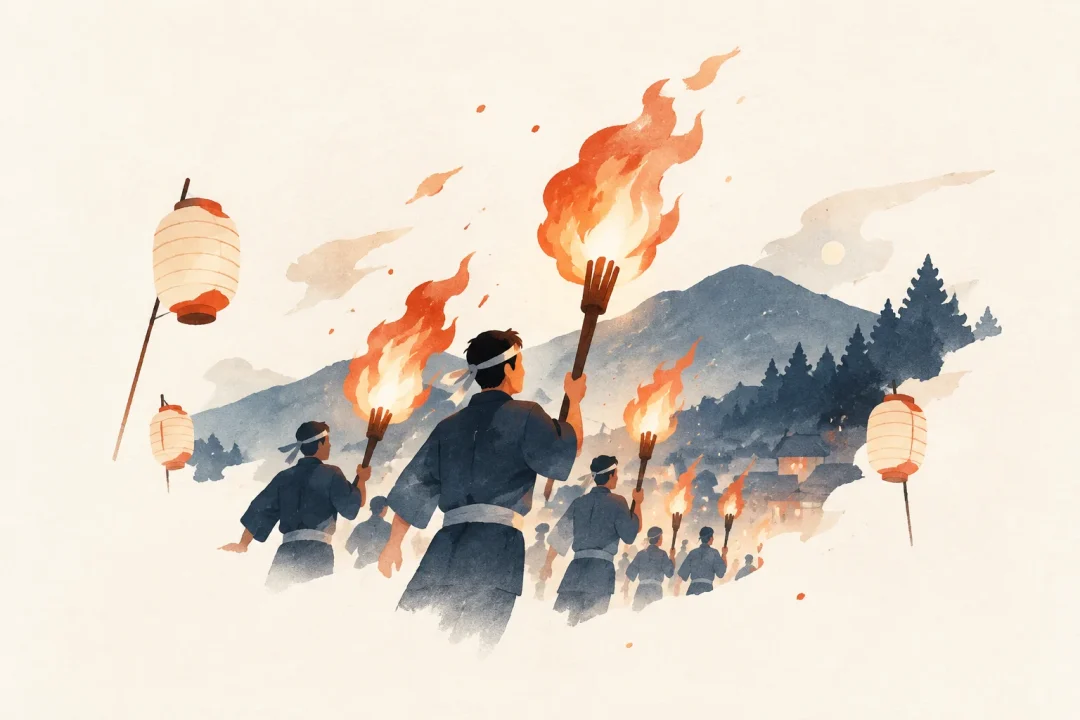
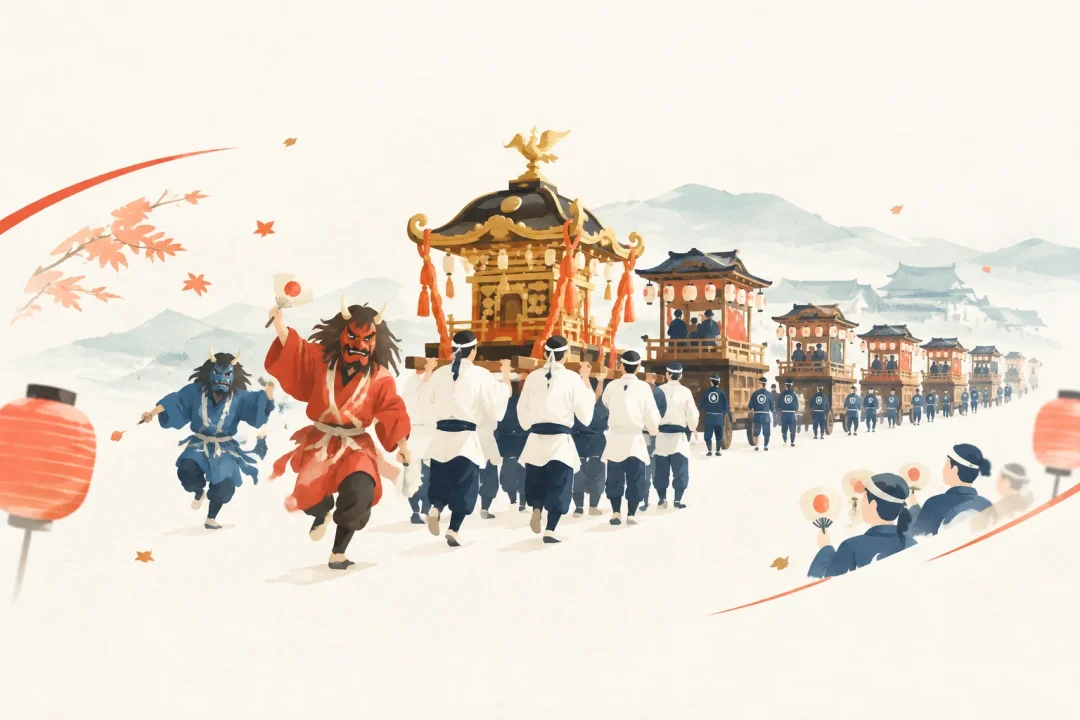
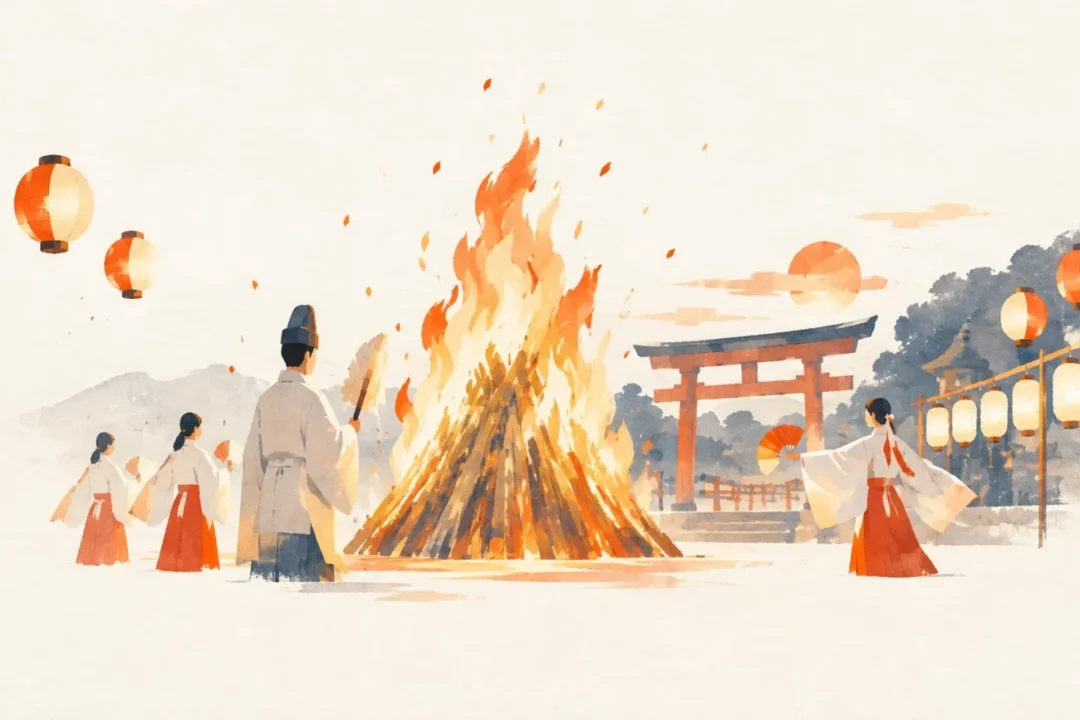
The highlight is the Shinko procession, in which 3 mikoshi palanquins leave the main shrine on the mountaintop in the middle of the night and travel to the foot of the mountain with about 500 attendants.
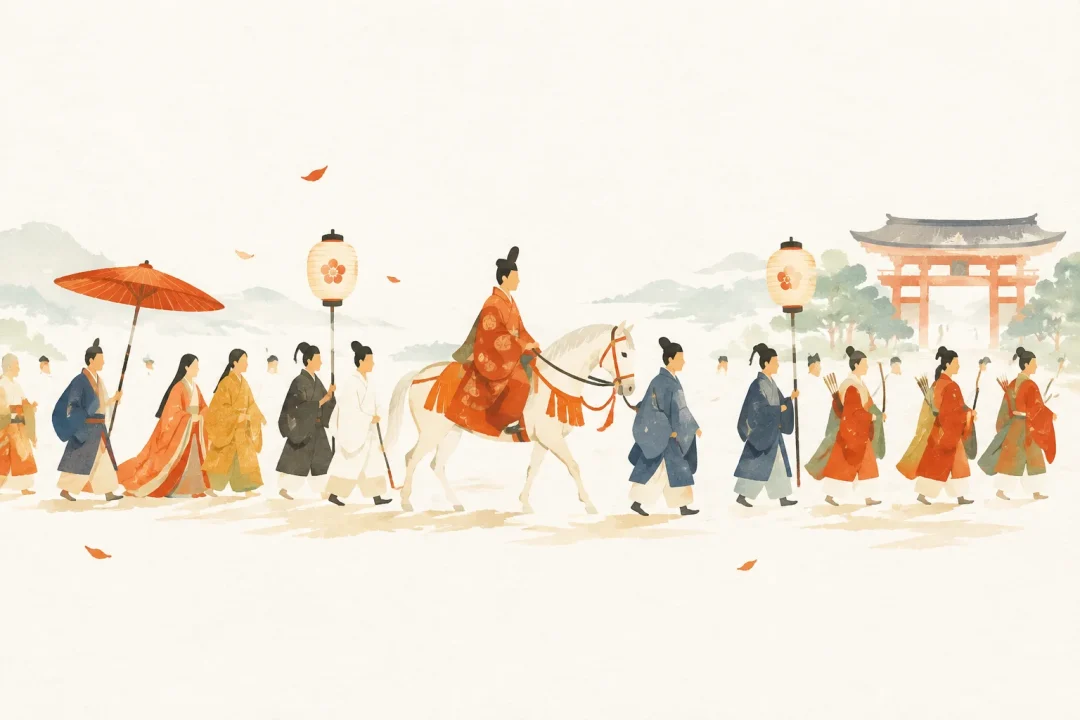
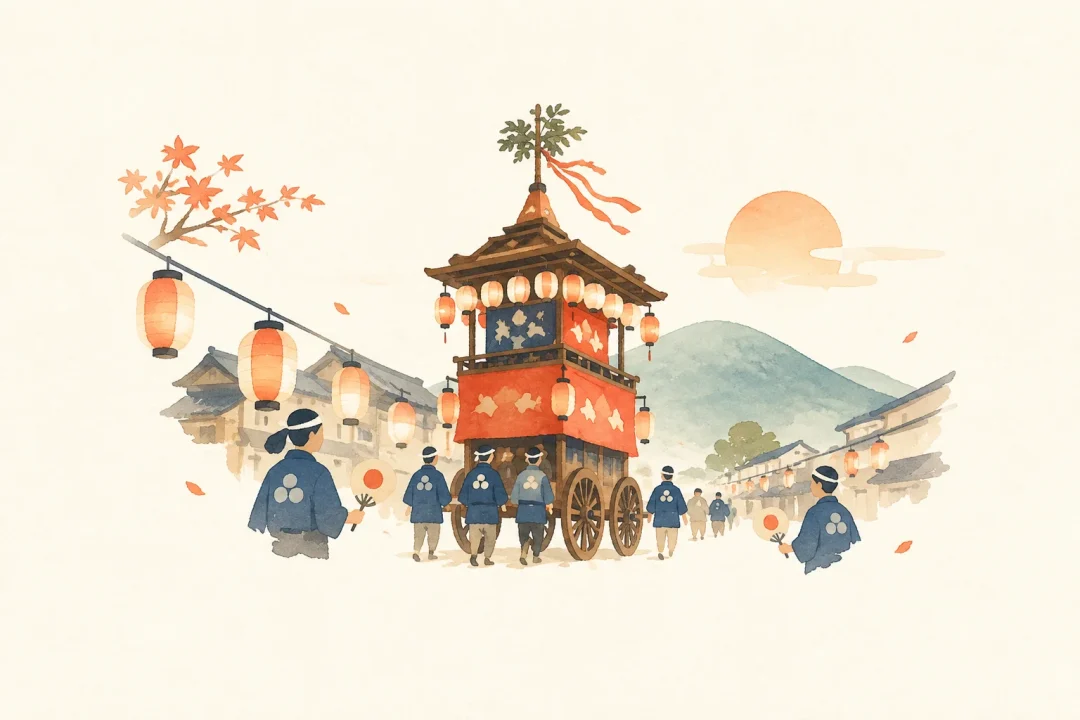
The procession, dressed in courtly attire from the imperial era, advances along a route lit only by torches and lanterns.
The Hobei rite at dawn, the Kocho no Mai butterfly dance, and the Hojo event, in which fish and birds are released, are also evocative scenes steeped in ancient tradition, like a picture scroll from the Heian period.
Source: 2026年石清水祭 斎行のお知らせ|八幡市観光協会
A torchlit imperial festival comes to life in the ancient capital: Yawata’s imperial festival
What to expect
The rites proceed with the mikoshi palanquins departing from the main shrine on the mountaintop and descending the Omote approach toward Kinuyadono and Togu.
At Togu, sacred food offerings, gagaku court music, floral offerings, the Hobei rite, and the leading of sacred horses are performed. Then, around Anjoki Bridge, the Kocho no Mai butterfly dance and the release of fish and birds are offered.
In the evening, the Kanko no Gi marks the return of the mikoshi palanquins to the main shrine on the mountaintop.
How to take part
The Shinko and Kanko processions, the Kocho no Mai butterfly dance, and the Hojo event are open for the general public to watch.
Attendance at the Hobei no Gi and the Kanko no Gi requires advance registration, separately from public viewing.
If you want to see some of the rites up close, it is a good idea to plan separately for the ceremonies you can attend and the events you can watch freely.
According to the 2026 information, advance registration is required to attend the Hobei no Gi and the Kanko no Gi.
Iwashimizu Hachimangu Shrine directs visitors to contact the shrine office for details about attending.
The application period is said to run from mid-August to early September.
Location and access
- Venue and address
Iwashimizu Hachimangu Shrine (around the Main Shrine on the mountain and the Tongu Shrine at the foot of the mountain), 30 Yawata Takabo, Yawata City, Kyoto Prefecture
- Train and bus
Get off at Iwashimizu Hachimangu Station on the Keihan Railway. Take the Sando Cable from Hachimangu-guchi Station to Hachimangu-sanjo Station, then walk 5 minutes.
For buses, get off at the nearest stop, Iwashimizu Hachimangu Station.
- By car
Follow the designated route from the Kumiyama-Yodo IC or Oyamazaki IC, among other routes, to Iwashimizu Hachimangu Shrine.
- Parking
The shrine parking lot accommodates approximately 60 standard cars. The maximum fee is ¥500 from 9 a.m. to 4 p.m.
The facility may be unavailable on some days due to festival events.
Source: 交通アクセス|石清水八幡宮
Address 30 Yawata Takabo, Yawata, Kyoto Prefecture
Dates and season
2026 Event Information (The listed dates have passed)
The 2026 ceremony was scheduled for September 15 (Tuesday).
The schedule included the Shinko no Gi at 3 a.m., the Kinuyadono Chogyo no Gi at around 3:40 a.m., the Hobei no Gi at 5:30 a.m., the Hojo event at 8 a.m., and the Kanko no Gi at 5 p.m.
Ceremony times may vary, and the schedule may change in the event of rain.
Accommodation and hotels PR
Showing nearby accommodation.
Prices and availability are current at the time of retrieval. For multi-night stays, only the first night’s price is shown. Confirm the final price and directions to the venue with the booking provider. Select your dates again when using the area search link. Search area: within 3 km of Central Kyoto Prefecture / Yawata City (the search is not centered on the festival venue)
Tips for your visit
The Shinko no Gi is scheduled for 3 a.m., the Hojo event for 8 a.m., and the Kanko no Gi for 5 p.m.; what you can see varies by time of day.
If you plan to watch events from the middle of the night through the early morning, wear clothing suited to a long stay.
The schedule may change in the event of rain, and advance registration is required to attend.
Nearby attractions
Around the venue are places where you can experience the history of Mount Otokoyama, which is closely connected with Iwashimizu Hachimangu Shrine.
The Kyoto Prefecture Tourism Federation lists Aitsuchi Shrine and Taisho-ji Temple at 0.3 km in a straight line from Iwashimizu Hachimangu Shrine, and Otokoyama Recreation Center at 0.4 km.
Hiko Shrine, Zenpō-ji Temple, and Tanden-an are also mentioned as nearby attractions.
Source: 勅祭石清水祭 | イベント一覧 | 京都府観光連盟公式サイト

相槌神社
京都府八幡市にある神社

石清水八幡宮
京都府八幡市にある神社

飛行神社
京都府八幡市にある神社
Origins and History of Iwashimizu Festival
The Iwashimizu Festival began in 863 as the Iwashimizu Hojoe and became an imperial festival in 948, when an imperial envoy was dispatched.
It was discontinued around 1469 due to warfare, but was revived in 1679.
Following institutional reforms in the Meiji period, it has been held since 1884 as a festival incorporating the old rites on the new-calendar September 15. Since 1949, Iwashimizu Hachimangu Shrine has maintained and conducted it according to the old rites.
Official information
Official information is available on the “Festivals and Events” page of Iwashimizu Hachimangu Shrine.
It includes the festival’s origins, the sequence of rituals, and information for attendees; for details about attending, visitors are directed to contact the shrine office.
Information about the 2026 ceremony schedule and events open to the public is also available from the Yawata City Tourism Association.
Iwashimizu Festival at a Glance
The Iwashimizu Festival is one of the Three Great Imperial Festivals, preserved at Iwashimizu Hachimangu Shrine in Yawata City.
Ancient attire and rituals are still alive in the sequence of the nighttime Shinko procession, the Hobei rite at dawn, the Kocho no Mai butterfly dance and Hojo event, and the Kanko procession in the evening.
The 2026 ceremony was listed for September 15, with public viewing distinguished from attendance requiring advance registration.
Japanese Festivals.jp Editorial Team
Celebrating local culture and helping you discover a side of Japan you never knew.
Article updated: 2026/10/19
Submit information or a correction Submit photos of this festival