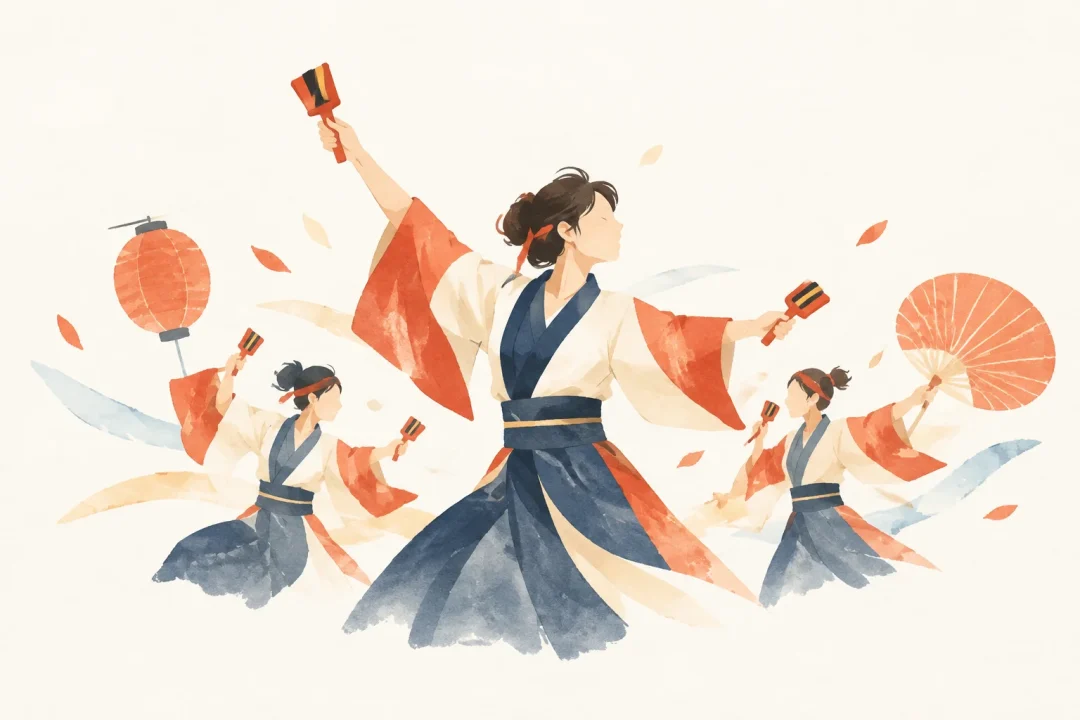
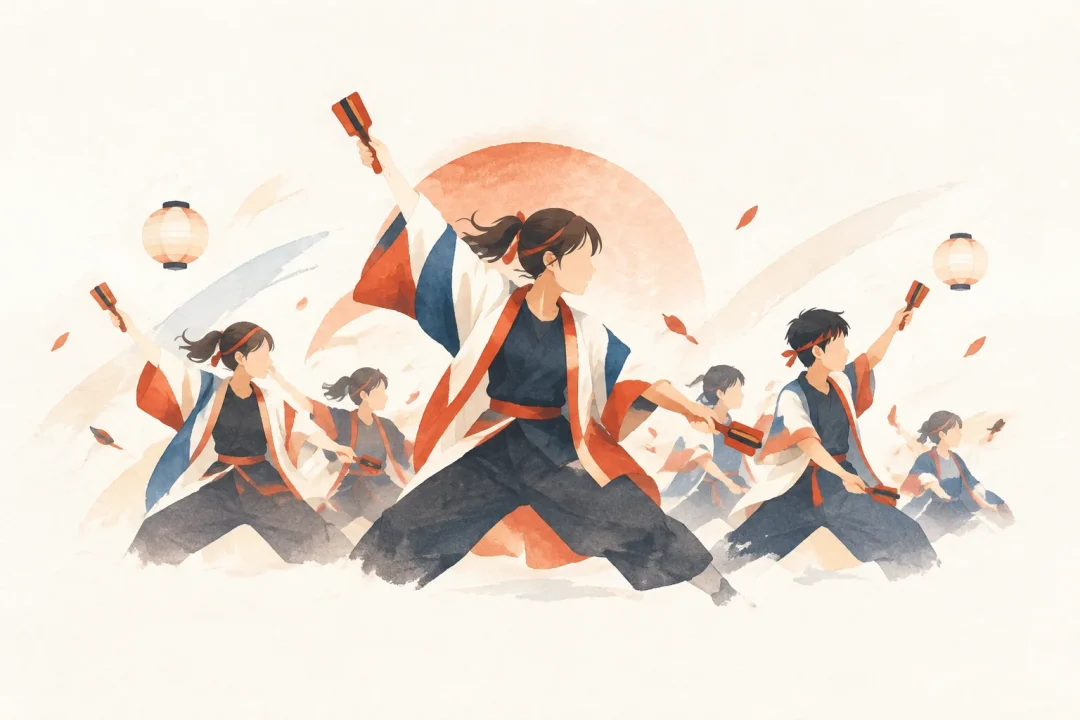
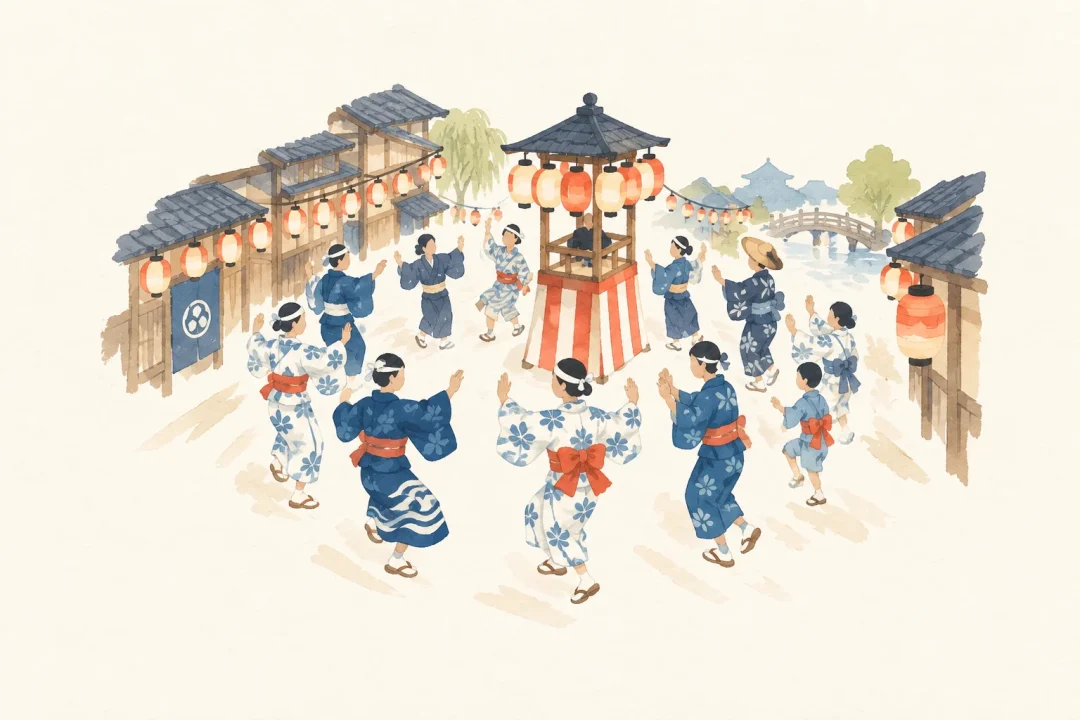
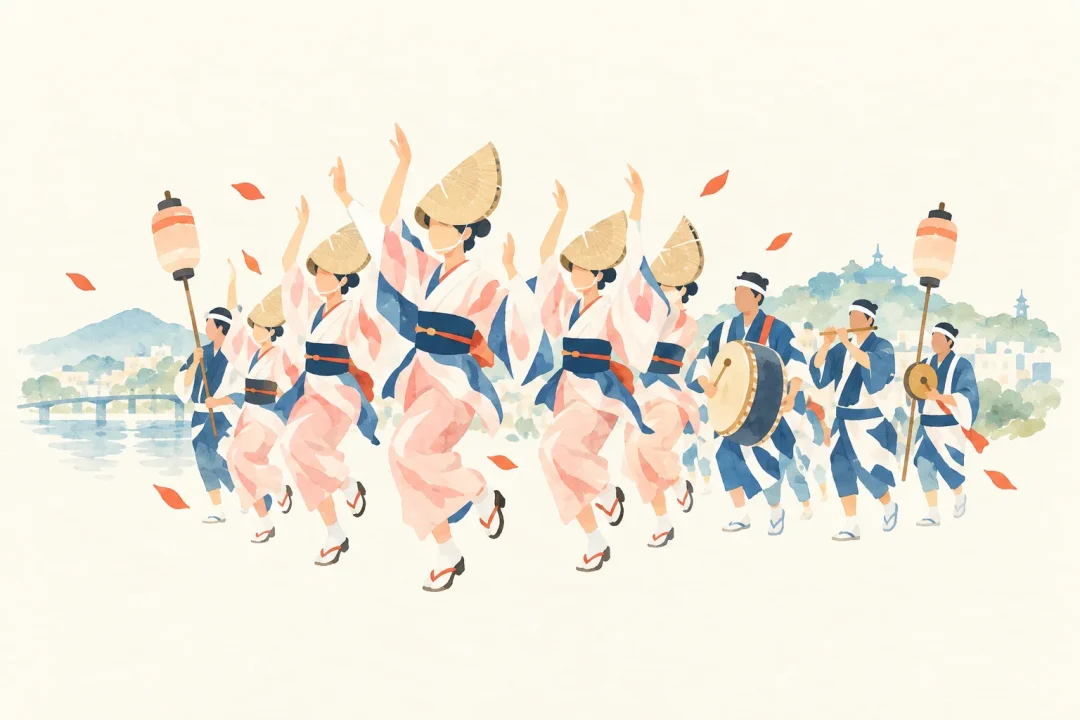
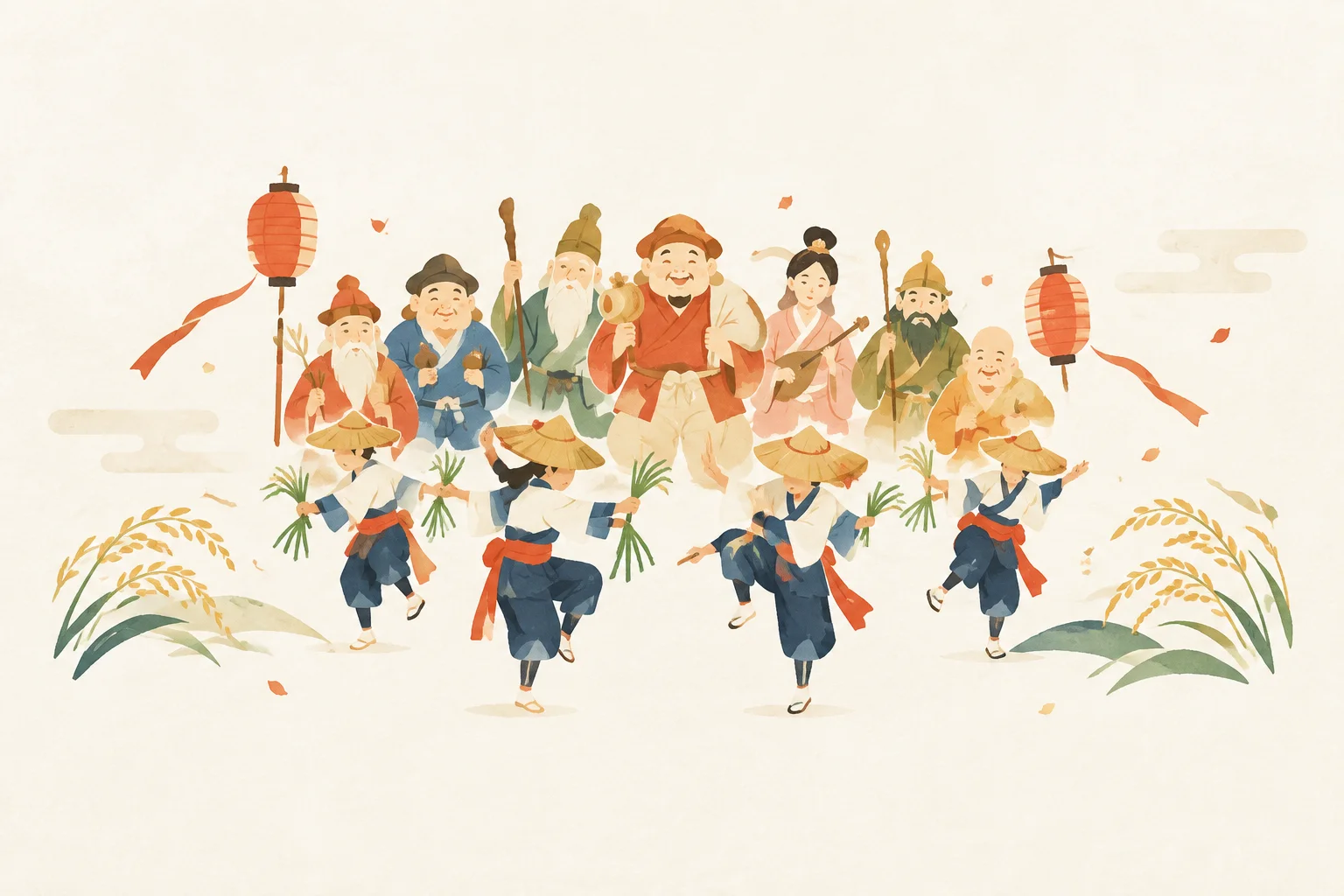
A tradition of Taue Odori praying for abundant harvests, beginning with the Seven Lucky Gods dancing in
Ishii’s Seven Lucky Gods and Taue Odori
Festival information
EVENT INFORMATION- Season / frequency
- Early spring / Irregular
- Location
- Former Ishii Village, Nihonmatsu City (Suzuishi Higashimachi, Nishikimachi, and Kita-Toromi)
- Area
- Fukushima Prefecture・Nihonmatsu City(From Tokyo: approx. 1 h 20 min–1 h 40 min · bullet train)Prefecture-level estimate to a main station or airport, not the venue. Airport access, check-in and onward travel are extra; remote areas and islands can take much longer.
- Highlights and activities
- Wishes behind the festival
- Last updated
- 2026/10/19
Ishii’s Seven Lucky Gods and Taue Odori is a folk performing art passed down in the former village of Ishii, Nihonmatsu City, Fukushima Prefecture. In early spring, the Seven Lucky Gods dance their way into the village, followed by a Taue Odori troupe that performs gestures associated with rice cultivation through dance. As a celebratory performance praying for abundant rice harvests and successful sericulture, it is designated a National Important Intangible Folk Cultural Property.
About Ishii’s Seven Lucky Gods and Taue Odori
Ishii’s Seven Lucky Gods and Taue Odori is one of the distinctive Tohoku-style Taue Odori dances passed down in the former village of Ishii, Nihonmatsu City.
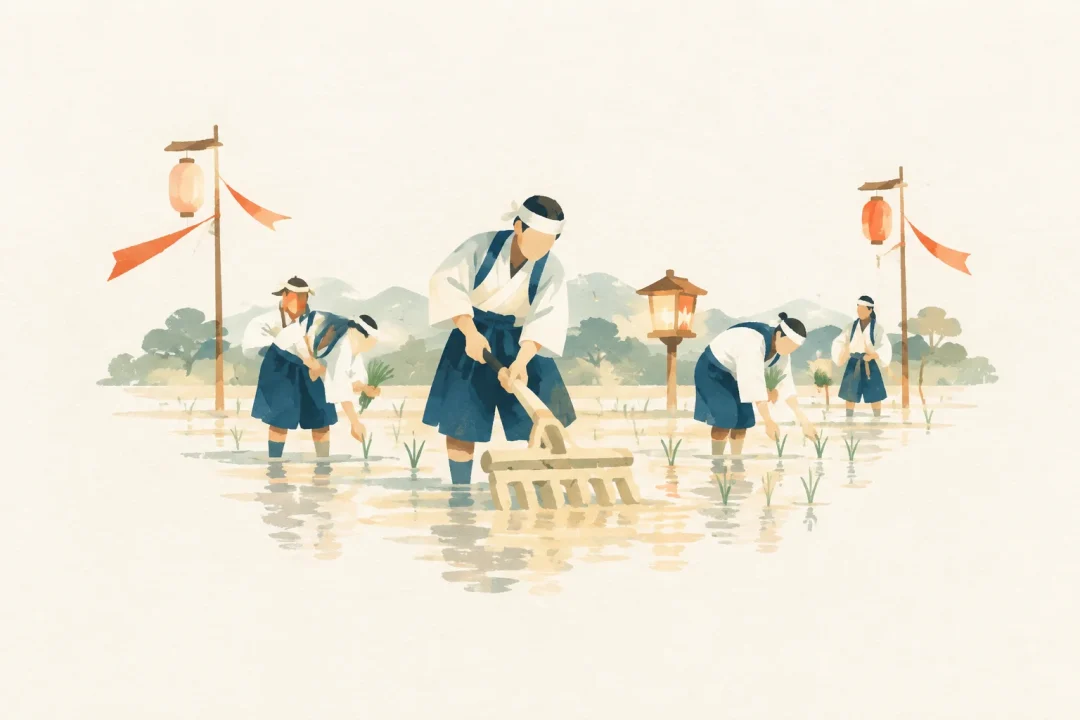
In early spring, performers visit homes, praying for a successful rice harvest and sericulture that year, and use dance to depict farming processes such as rice planting.
The sequence, in which Taue Odori follows the appearance of the Seven Lucky Gods, is a distinctive local feature, and the Ishii Performing Arts Preservation Association safeguards the tradition.
Source: 石井の七福神と田植踊 | 二本松市公式ウェブサイト
Festival highlights
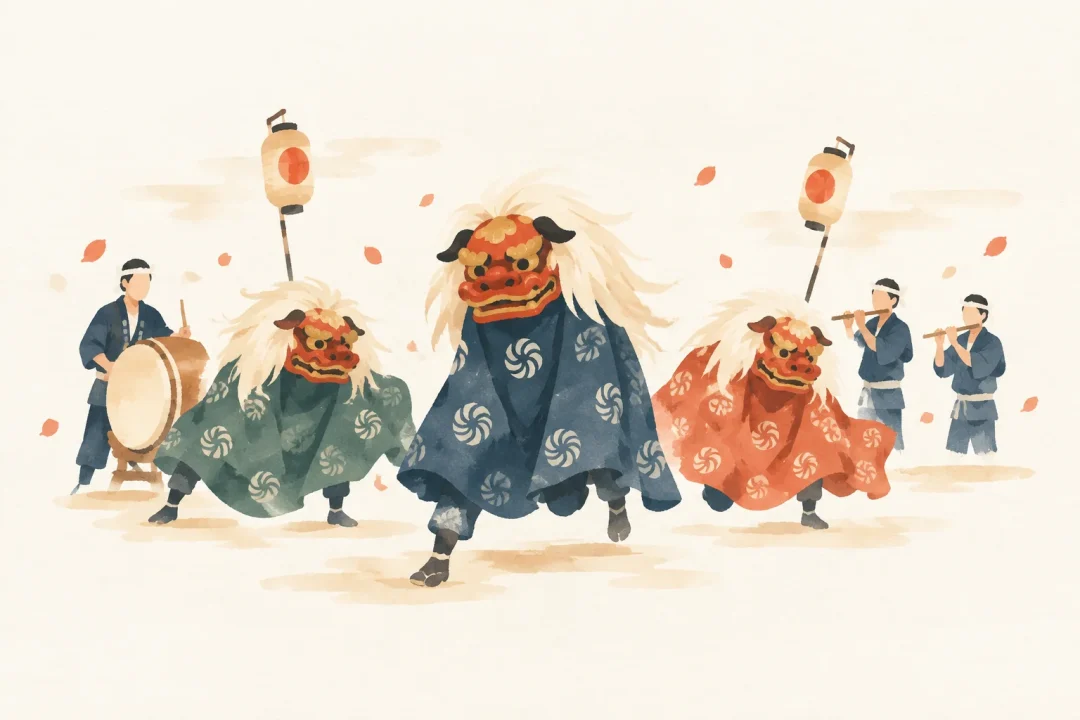
A highlight is the scene in which the Seven Lucky Gods, including Bishamonten and Benzaiten, dance into the village one after another behind the Inari figure leading the procession.
Two performers wearing Hyottoko masks and playing comic roles demonstrate the motions of weaving and silkworm egg sheets, praying for successful rice cultivation and sericulture.
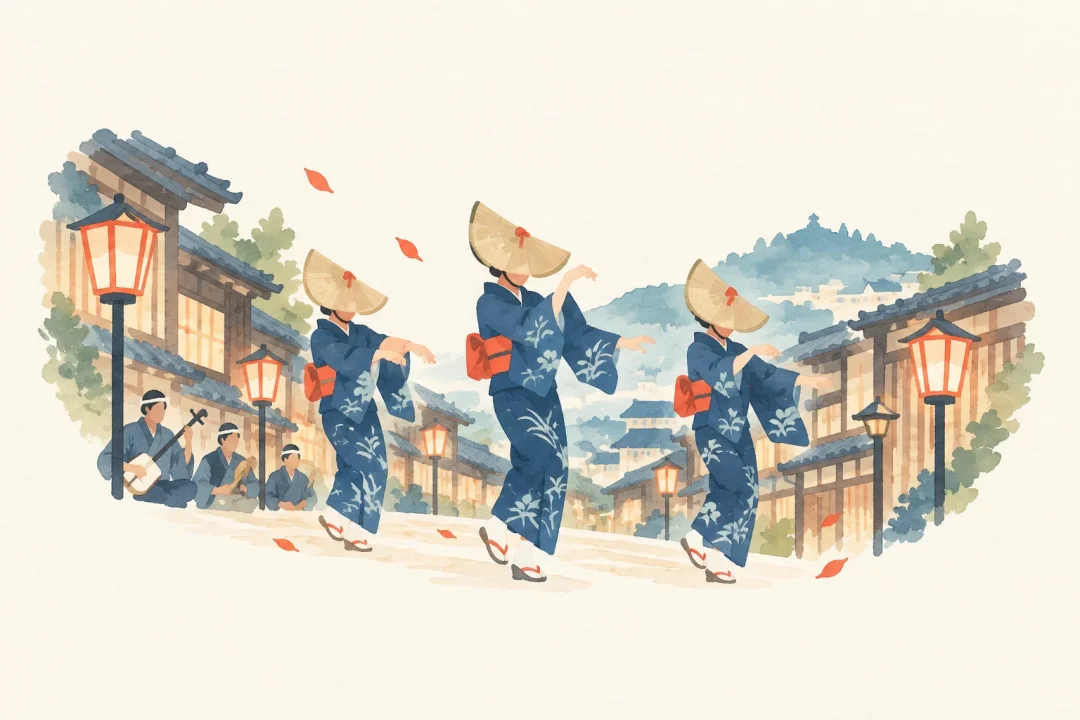
Afterward, young women wearing flower hats and performers carrying military fans appear and dance scenes from the rice-growing process.
A tradition of Taue Odori praying for abundant harvests, beginning with the Seven Lucky Gods dancing in
What to expect
The performance begins with the Seven Lucky Gods dancing in and offering blessings, then moves on to comic performers’ prayers for an abundant harvest.
Next, under Kyuroku’s direction, the young women and performers dance New Year’s celebratory dances such as “Kanagase,” “Goyomatsu,” and “Iwai no Taue.”
The performance includes dances depicting the farming process from plowing the fields to pounding rice, and concludes with “Tsuru-dono Kame-dono,” a celebration of the autumn harvest. There may also be small-song dances for entertainment.
Location and access
- Venue and address
Throughout the former village of Ishii, in Suzuishi Higashimachi, Nishikimachi, and Kita-Toromi, Nihonmatsu City, Fukushima Prefecture.
Source: 国指定文化財等データベース / 石井の七福神と田植踊|文化デジタルライブラリー
Address Suzuishi Higashimachi, Nishikimachi, and Kita-Toromi, Nihonmatsu City, Fukushima Prefecture
Dates and season
It is traditionally held in early spring, and on the Little New Year according to the old lunar calendar, performers went from house to house throughout the village.
The current performance date is irregular. It is sometimes performed at celebrations marking the New Year and the passing of another year, when invited to do so.
Accommodation and hotels PR
Showing nearby accommodation.
Prices and availability are current at the time of retrieval. For multi-night stays, only the first night’s price is shown. Confirm the final price and directions to the venue with the booking provider. Select your dates again when using the area search link. Search area: within 3 km of Central Fukushima Prefecture / Nihonmatsu City (the search is not centered on the festival venue)
Nearby attractions

Nihonmatsu Shrine
福島県二本松市本町にある神社

東北サファリパーク
福島県二本松市の動物園
Origins and History of Ishii’s Seven Lucky Gods and Taue Odori
Ishii’s Seven Lucky Gods and Taue Odori has been passed down in Suzuishi Higashimachi, Nishikimachi, and Kita-Toromi in the former village of Ishii, Nihonmatsu City.
Originally, the performers visited homes throughout the settlement during Koshogatsu (the Little New Year) on the old calendar. Today, they perform by request at occasions such as New Year celebrations marking the beginning of another year of age.
On December 26, 1995, it was designated a National Important Intangible Folk Cultural Property in recognition of its value as a celebratory performance and its local character, exemplified by the Seven Lucky Gods dancing in.
Official information
The cultural properties information on the official Nihonmatsu City website provides an overview of Ishii’s Seven Lucky Gods and Taue Odori, its location and designation details, and the organization responsible for its preservation.
For inquiries, contact the Cultural Promotion Section of the Cultural Affairs Division, Nihonmatsu City.
Ishii’s Seven Lucky Gods and Taue Odori at a Glance
Ishii’s Seven Lucky Gods and Taue Odori is a traditional performing art in Nihonmatsu City that prays for abundant rice harvests and successful sericulture through the Seven Lucky Gods’ dance-in and Taue Odori.
Young women, performers, Kyuroku, and others appear, dancing the stages of rice cultivation from plowing the fields to pounding rice.
It is designated a National Important Intangible Folk Cultural Property, and its performance date is irregular.
Japanese Festivals.jp Editorial Team
Celebrating local culture and helping you discover a side of Japan you never knew.
Article updated: 2026/10/19
Submit information or a correction Submit photos of this festival