A New Year’s ritual in Nihonmatsu, performing a year of rice cultivation to pray for a good harvest
Otaue at Hirose Kumano Shrine
Festival information
EVENT INFORMATION- Season / frequency
- Every year January (usually January 3) / Every year
- Area
- Fukushima Prefecture・Nihonmatsu City(From Tokyo: approx. 1 h 20 min–1 h 40 min · bullet train)Prefecture-level estimate to a main station or airport, not the venue. Airport access, check-in and onward travel are extra; remote areas and islands can take much longer.
- Features
- Highlights and activities
- Wishes behind the festival
- Last updated
- 2026/10/19
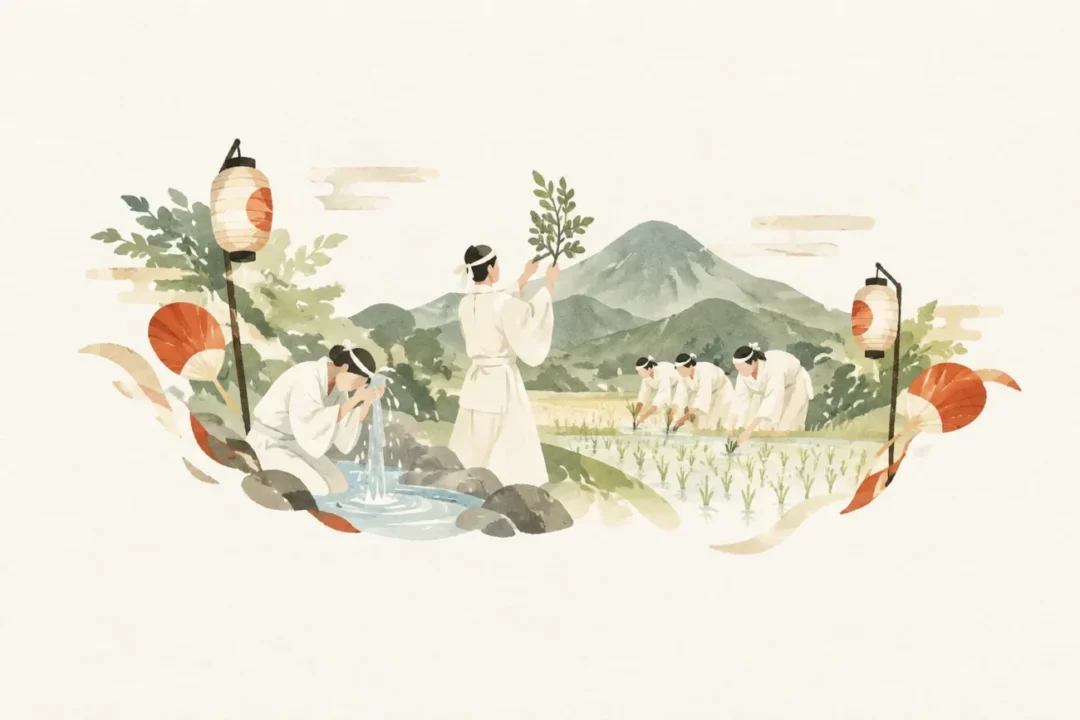
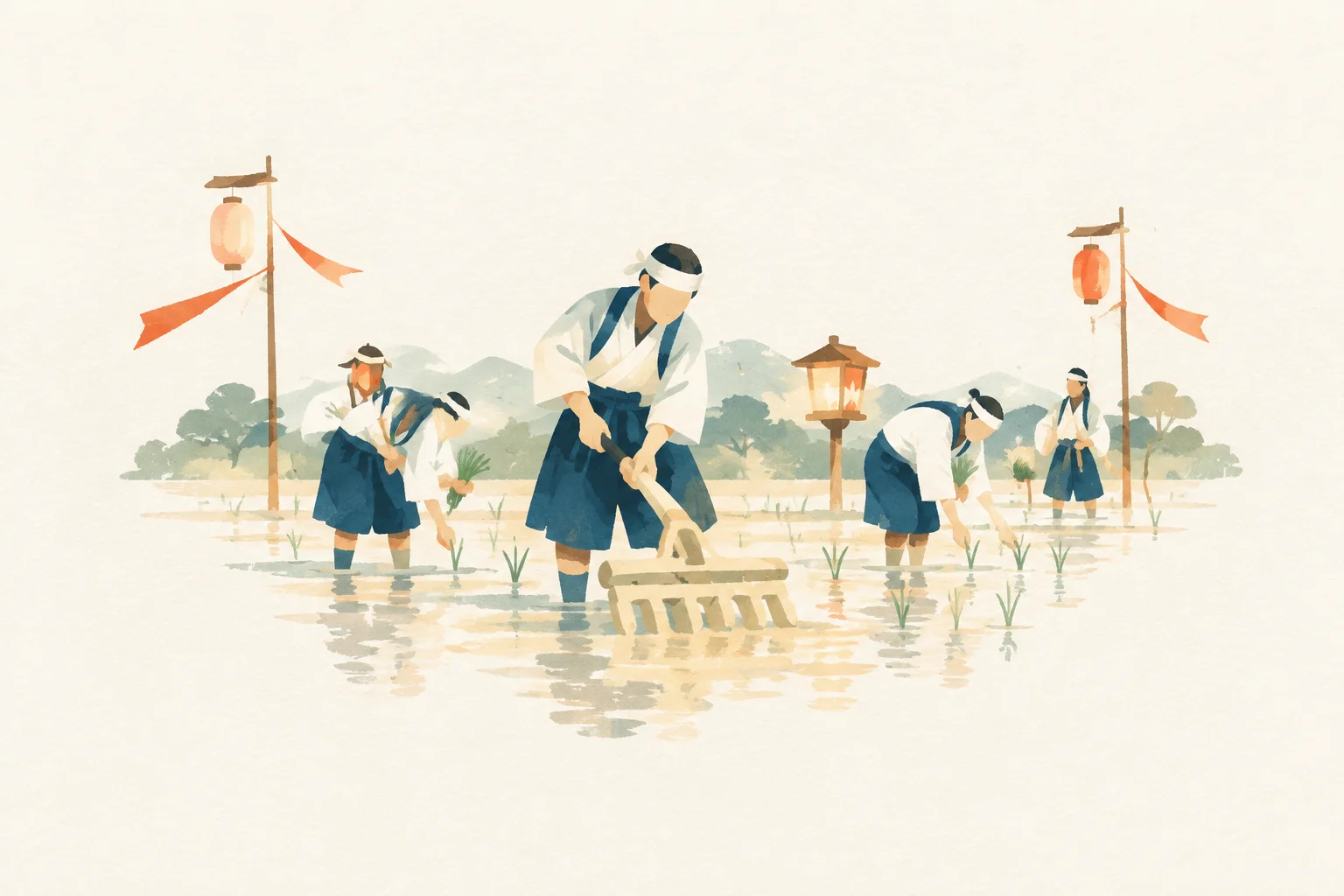
At Hirose Kumano Shrine in Kamita, Nihonmatsu City, parishioners perform Otaue, acting out the stages of rice cultivation as they pray for a bountiful harvest in the coming year. Ancient agricultural culture lives on in the rice-field performance, lit by the dim glow of lanterns and featuring farm tools made from mochi.
About Otaue at Hirose Kumano Shrine
Otaue at Hirose Kumano Shrine is a folk performing art in the ta-asobi tradition, in which the year’s rice cultivation is symbolically enacted at the start of the year to pray in advance for a good harvest.
act out scenes of farm work and divine the year’s rice harvest.
This shrine ritual, passed down at Hirose Kumano Shrine in Kamita, Nihonmatsu City, is closely tied to the area’s agricultural culture.
Source: 広瀬熊野神社の御田植 | 二本松市公式ウェブサイト / 国指定文化財等データベース
Festival highlights
One highlight is the sequence of farm work scenes performed under the dim glow of lanterns.
The performance moves through yosegari, seki-hori-harai, ta-unai, hane-kuwa, nawashiro-kaki, nawashiro-shime, tane-maki, and harvesting, expressing the progression of rice cultivation.
The custom of making hoes, harrows, and pack saddles from mochi is another distinctive feature of this Otaue.
A New Year’s ritual in Nihonmatsu, performing a year of rice cultivation to pray for a good harvest
What to expect
Each parishioner contributes 5 go of rice, which is used to make mochi at the lodging.
After making farm tools out of mochi, the Otaue begins at dusk in the , sanctuary, and front courtyard of Kumano Shrine.
Wearing farm work clothes, parishioners perform each stage of rice cultivation in order, and a harvest divination is also held in the main sanctuary.
Source: 雪降る中、伝統の御田植祭「ことしも豊作」|お知らせ|二本松市|にほんまつDMO|〜菊と日本酒と温泉と… いま東北から新たな発信を〜
How to take part
Women are prohibited from attending on the day of the , and their participation is not permitted.
The areas and ways in which visitors may observe also need to be confirmed in advance.
Location and access
- Venue and address
Hirose Kumano Shrine (293 Aza Hirose, Kamita, Nihonmatsu City)
- Train and bus
Take a Fukushima Kotsu bus from JR Nihonmatsu Station and get off at the Ota Kominkan bus stop.
Buses from Nihonmatsu Station toward Obama and Tazawa take about 20 minutes.
- By car
It is 10 km east of Nihonmatsu IC on the Tohoku Expressway, about 15 minutes away.
It is 15 km east of Motomiya IC, about 20 minutes away.
- Parking
Parking is available at the nearby Kamita Fureai Center.
Source: 広瀬熊野神社の御田植祭り | 岩代観光協会 / 文化伝統検索 | うつくしま電子事典
Event venue 福島県二本松市 広瀬熊野神社
This map uses the venue name. Check the official guide for the event area and entrances.
Dates and season
- Season
Every year January (usually January 3)
- Frequency
Every year
Accommodation and hotels PR
Showing nearby accommodation.
Prices and availability are current at the time of retrieval. For multi-night stays, only the first night’s price is shown. Confirm the final price and directions to the venue with the booking provider. Select your dates again when using the area search link. Search area: within 3 km of Central Fukushima Prefecture / Nihonmatsu City (the search is not centered on the festival venue)
Tips for your visit
Women are not permitted on the day of the annual festival, and an unwritten rule prohibits sharing any details of the ritual, even with close relatives.
When visiting, please respect the solemnity of the ritual and the customs upheld by the local community.
Follow the guidance provided on the day regarding event times and areas open to visitors.
Nearby attractions

Nihonmatsu Shrine
福島県二本松市本町にある神社

東北サファリパーク
福島県二本松市の動物園
Origins and History of Otaue at Hirose Kumano Shrine
Otaue at Hirose Kumano Shrine is said to have begun before advances in crop breeding and agricultural techniques, when ancestors prayed for an abundant harvest of the five grains. It has been passed down to the present day.
The ritual preserves its ancient form and is considered valuable from a folkloristic perspective.
It was designated an Important Intangible Folk Cultural Property of Fukushima Prefecture in 1972, and selected in 1976 as an Intangible Folk Cultural Property for which the national government should take measures such as creating a record.
Official information
The Nihonmatsu City official website introduces Otaue at Hirose Kumano Shrine as an Important Intangible Folk Cultural Property designated by the prefecture.
It is also listed in the Database of National Cultural Properties as a folk performing art and .
You can also check the festival information from the Iwashiro Tourism Association for event details.
Otaue at Hirose Kumano Shrine at a Glance
Otaue at Hirose Kumano Shrine is a New Year’s shrine ritual passed down in Nihonmatsu City, in which people pray for a good harvest through a rice-field performance.
Farm tools are made from mochi, and the stages of rice cultivation are performed in order as a way of divining the year’s harvest.
With rules barring women and prohibiting discussion of the ritual, this is a festival to approach with respect for local traditions and customs.
Japanese Festivals.jp Editorial Team
Celebrating local culture and helping you discover a side of Japan you never knew.
Article updated: 2026/10/19
Submit information or a correction Submit photos of this festival