A traditional Inaba performing art, alive with a kirin head and gentle music
Inaba Kirin Lion Dance
Festival information
EVENT INFORMATION- Season / frequency
- Mainly in spring and autumn, from March to July and from September to November / Almost year-round (primarily at spring and autumn festivals)
- Area
- Tottori Prefecture・Tottori City, Iwami Town, Wakasa Town, Chizu Town, Yazu Town(From Tokyo: approx. 1 h 15 min–1 h 30 min · flight time only)Prefecture-level estimate to a main station or airport, not the venue. Airport access, check-in and onward travel are extra; remote areas and islands can take much longer.
- Highlights and activities
- Wishes behind the festival
- Required number of participants
- 2 adults (1 kirin )
- Last updated
- 2026/10/19
This folk performing art from the Inaba region is distinguished by a lion head shaped like a kirin, a dance performed by two people, a Shōjō leading the way, and gentle musical accompaniment.
About Inaba Kirin Lion Dance
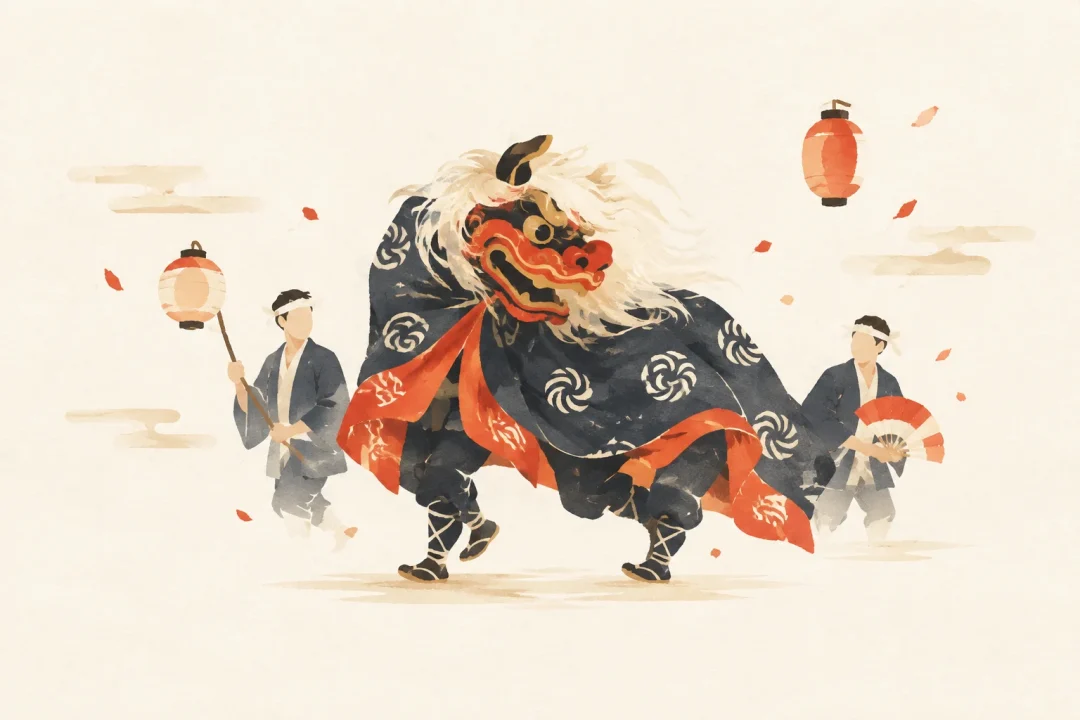
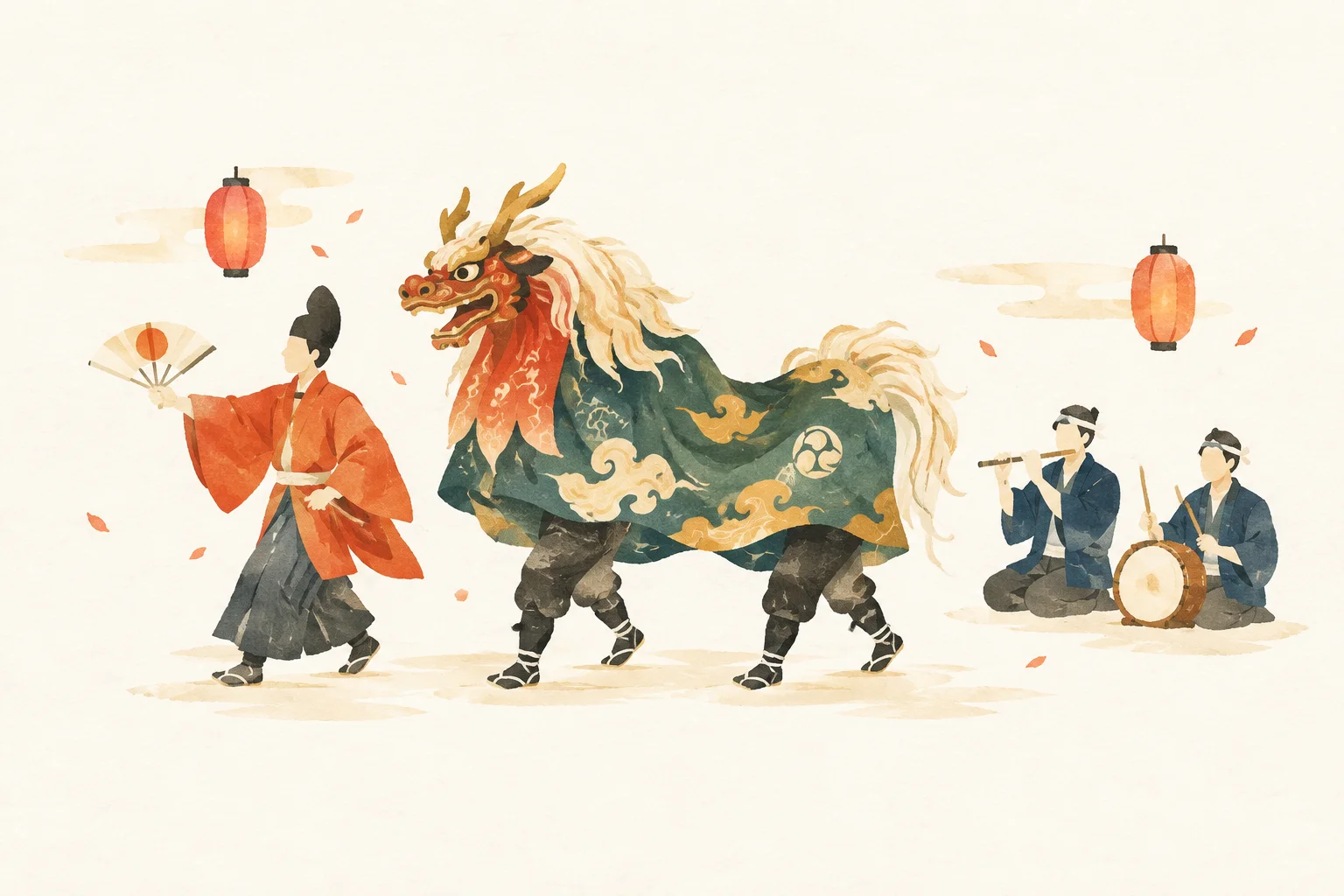
Inaba Kirin Shishimai is a folk performing art in which performers wear a shishi head shaped like a kirin, with 2 adults inside the body cloth dancing together as a single kirin.
Centered on the Inaba region in eastern Tottori Prefecture, it is performed at festivals, where the dance is offered before the kami, and the performers visit the homes of .
Its regional features include the kirin head, its graceful movements, and the gentle played on , flutes, and gongs.
Festival highlights
A highlight is its distinctive dance: the head turns slowly as if crawling along the ground, twists, then rises as though stretching upward.
The kirin lion is often danced alone, accompanied by a Shōjō with a red mask, costume, and hair, who acts as a guide or playful attendant.
The relatively gentle music, including the calm strikes of the gong, is another defining feature of this Inaba tradition.
Source: 例祭の暦 ~麒麟獅子を巡る~|特集|鳥取市観光サイト【公式】 - 鳥取市のおすすめ観光・旅行情報
A traditional Inaba performing art, alive with a kirin head and gentle music
What to expect
At festivals, the dance is traditionally first performed before the deity at the shrine, followed by visits to parishioners’ homes.
In the dance, two adults inside a body cloth form a single kirin, slowly turning and twisting its head and raising it as if stretching upward.
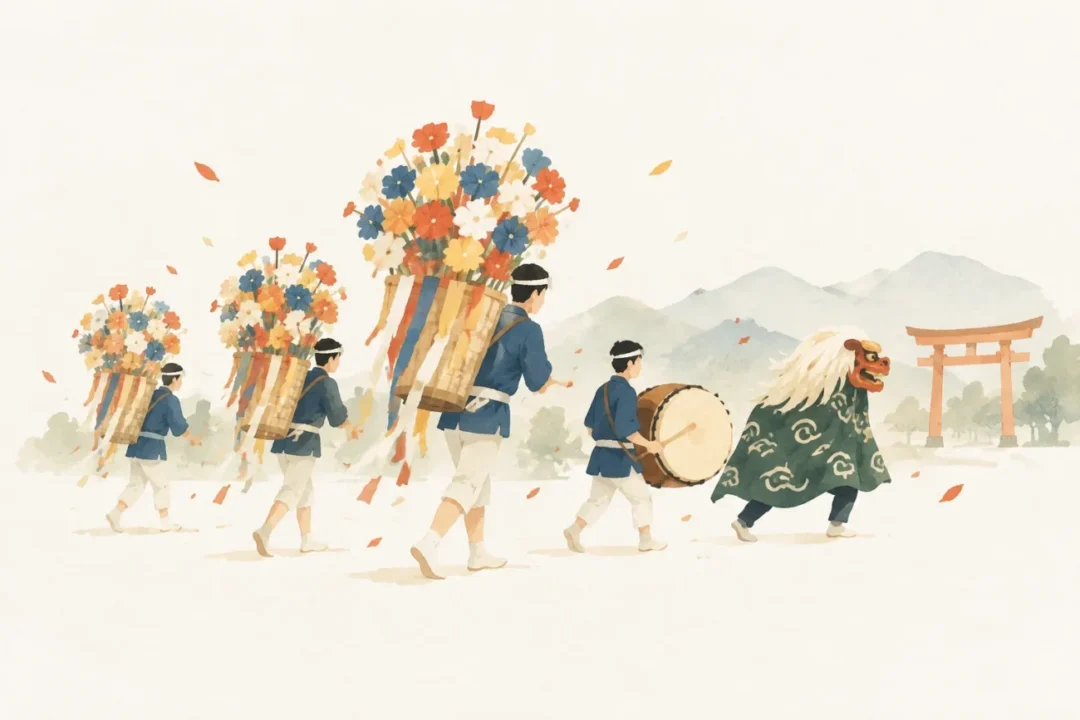
In some areas, a Shōjō leads the kirin, while music played on drums, flutes, and gongs supports the dance.
How to take part
必要人数:大人二人(麒麟獅子一頭)
Location and access
- Address
Tottori City, Iwami Town, Wakasa Town, Chizu Town, Yazu Town
Host municipality 鳥取県鳥取市、岩美町、若桜町、智頭町、八頭町
This map shows the surrounding area, not the exact venue location.
Dates and season
Kirin shishimai has been passed down mainly through jinja held in spring and autumn.
Festival dates vary by area, and in eastern Tottori Prefecture it can be seen in many places from March to July and from September to November.
For the specific reisai dates and venues in 2026, check the information provided by each area.
Origins and History of Inaba Kirin Lion Dance
As for its origins, it is thought to have begun when Mitsunaka Ikeda, the first lord of the Tottori domain, established Tottori Toshogu Shrine in 1650 and introduced the Kirin Lion Dance into the festival procession in 1652.
One explanation for the use of a kirin head is that the kirin, seen as a symbol of good governance, represented Mitsunaka’s resolve and his connection with Ieyasu.
The dance is said to have later spread throughout Inaba and into the Tajima region through domain festivals.
Official information
The official Tottori City website introduces the characteristics and origins of the Kirin Lion Dance in Inaba and Tajima, when and where it is performed, and efforts to preserve and pass it on.
The Tottori City tourism website features a guide to visiting festivals that include the Kirin Lion Dance.
The National Database of Cultural Properties also provides information on the distribution and dance characteristics of the Inaba Kirin Lion Dance.
Source: 国指定文化財等データベース
Inaba Kirin Lion Dance at a Glance
The Inaba Kirin Lion Dance is a folk performing art from the Inaba region, passed down through its kirin-shaped lion head and a leisurely dance performed by two people.
Through performances at shrine festivals and visits to parishioners’ homes, the dance has become part of local life.
Enjoy a distinctive tradition woven from the kirin lion, Shōjō, and gentle music at festivals held throughout the region.
Japanese Festivals.jp Editorial Team
Celebrating local culture and helping you discover a side of Japan you never knew.
Article updated: 2026/10/19
Submit information or a correction Submit photos of this festival