A traditional performing art in Koshiji, carrying prayers for rain and gratitude through dance
Koshiji Rain-Calling Dance

Festival information
EVENT INFORMATION- Season / frequency
- Autumn in years when rain has been granted (irregular) / Irregular
- Location
- Koshiji Shrine
- Area
- Tottori Prefecture・Tottori City(From Tokyo: approx. 1 h 15 min–1 h 30 min · flight time only)Prefecture-level estimate to a main station or airport, not the venue. Airport access, check-in and onward travel are extra; remote areas and islands can take much longer.
- Highlights and activities
- Wishes behind the festival
- Participation / viewing
- Spectators welcome
- Last updated
- 2026/10/19
The Koshiji Rain-Calling Dance, passed down in Koshiji, Tottori City, is a traditional performing art featuring a procession and dances that pray for rain and express gratitude for its blessings.
About Koshiji Rain-Calling Dance
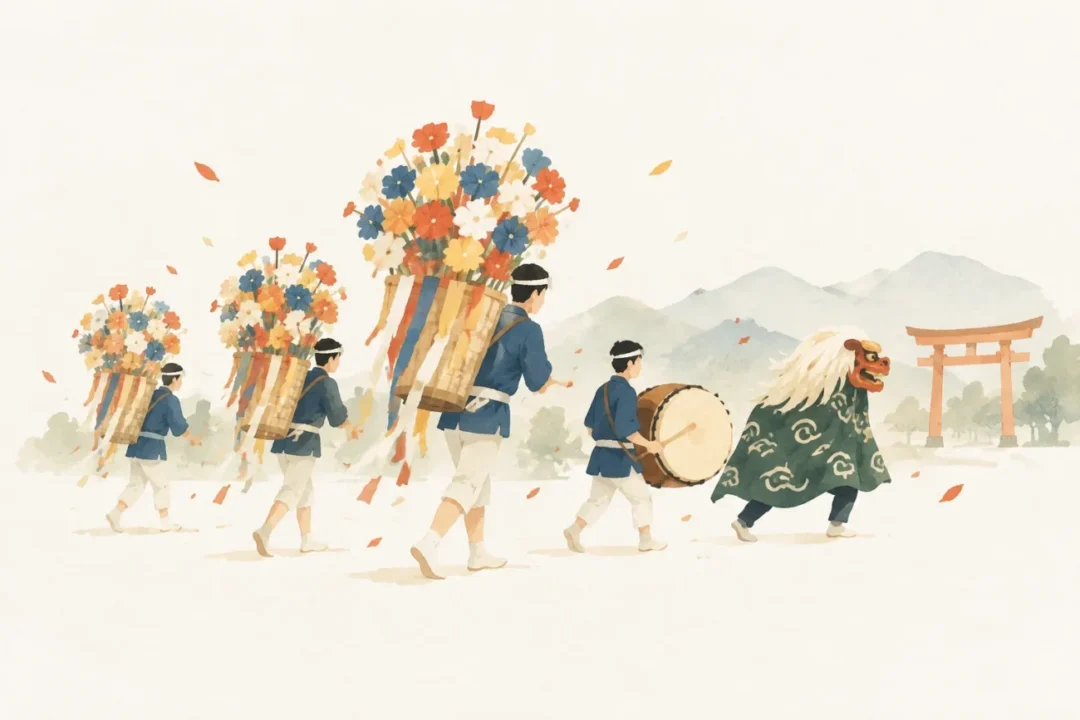
The Koshiji Rain-Calling Dance is a procession of dancers passed down at Koshiji Shrine in Koshiji, Tottori City, expressing prayers for rain and gratitude for rainfall.
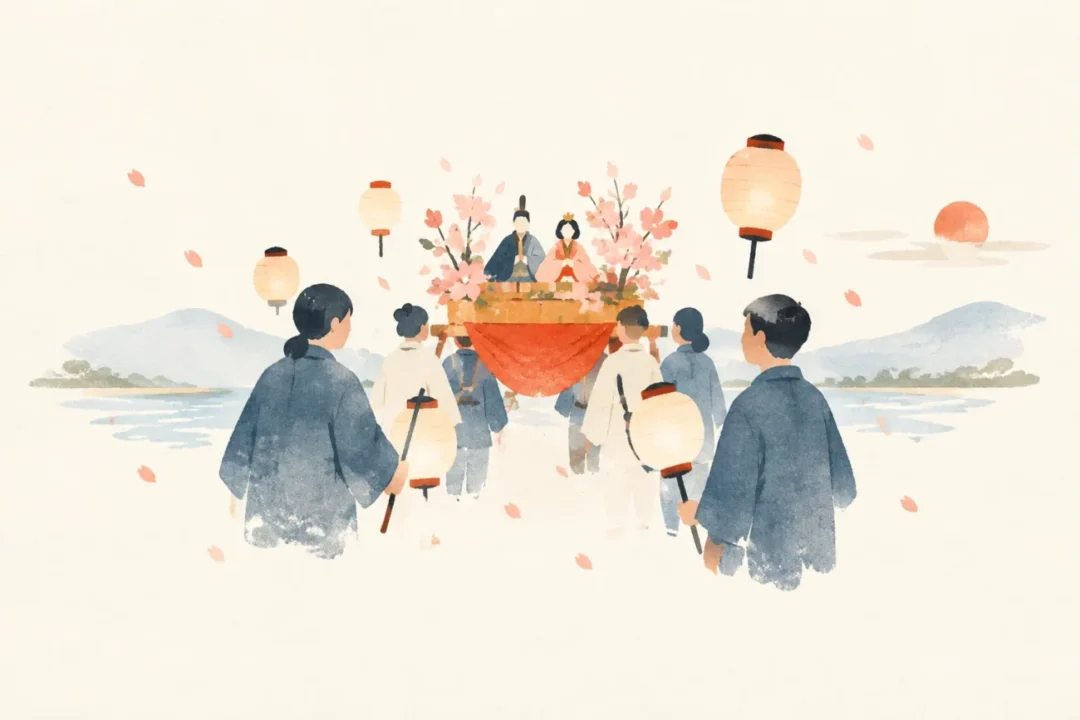
Sasara-zuri performers, stick dancers, child dancers, flute players, Shinpachi, the main dancers, and local musicians join the procession as it makes its way from the dance lodge to the shrine.
At the shrine, the dancers form a circle and perform, carrying on a tradition in which community prayers and performing arts come together.
It is designated an Intangible Folk Cultural Property by Tottori Prefecture and has also been selected as an Intangible Folk Cultural Property by the national government.
Source: 国指定文化財等データベース / 越路雨乞踊 - とっとりデジタルコレクション
Festival highlights
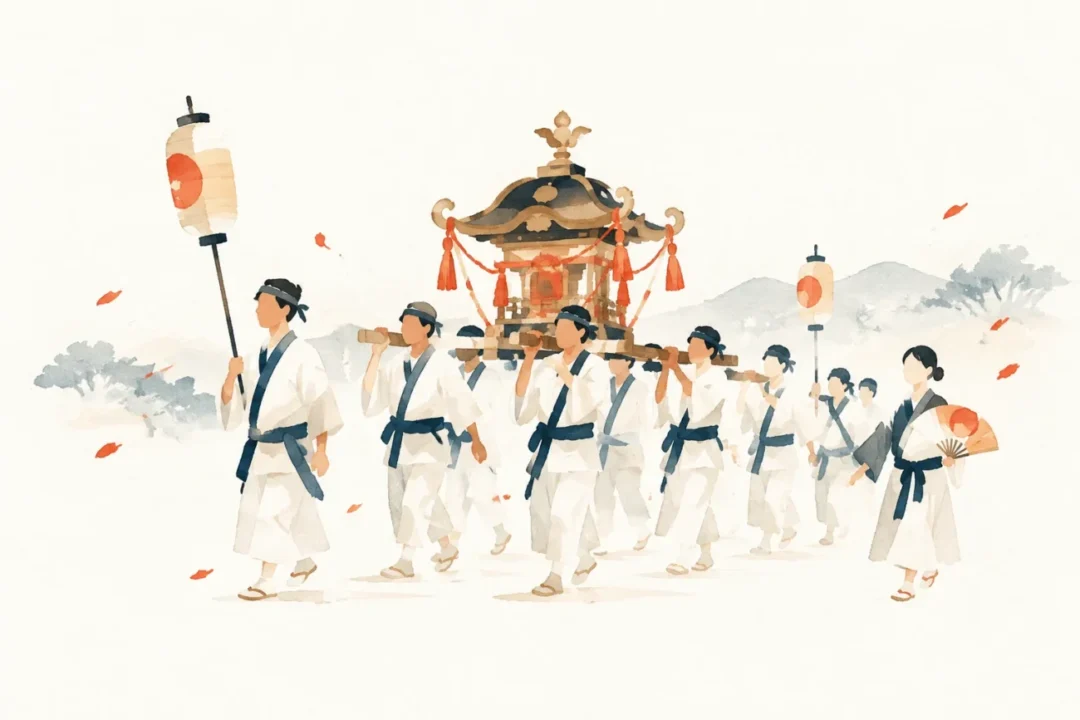
One of the main highlights is the “Iriha,” when a procession of about 40–50 people, led by the Sasara-zuri performers, makes its way to the shrine.
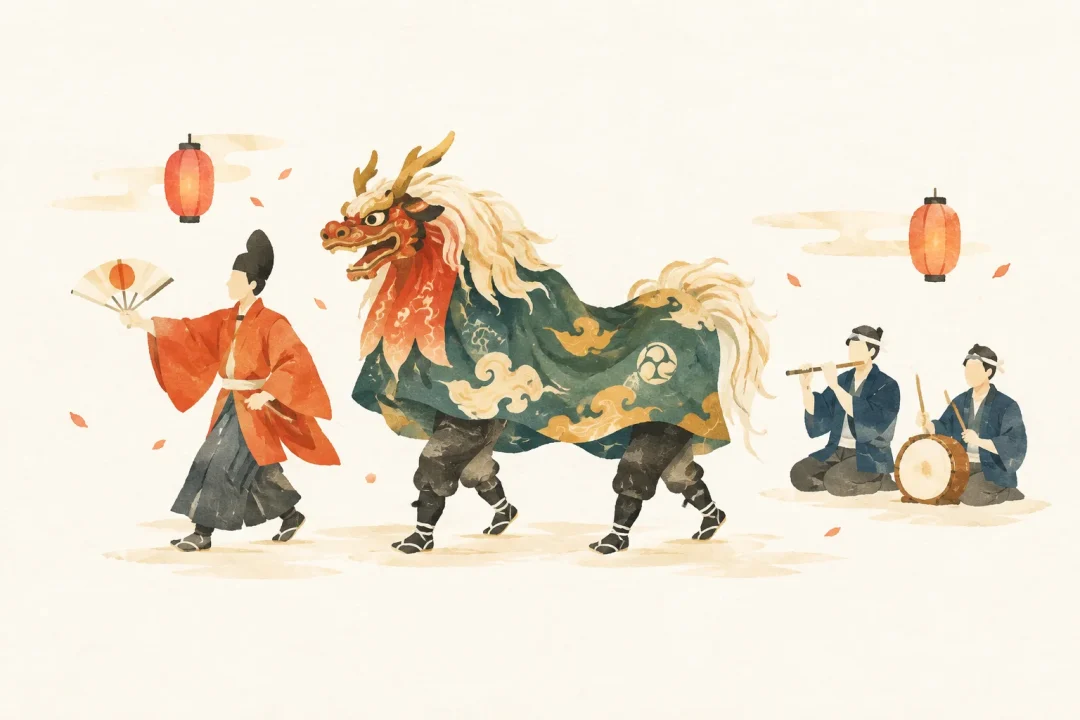
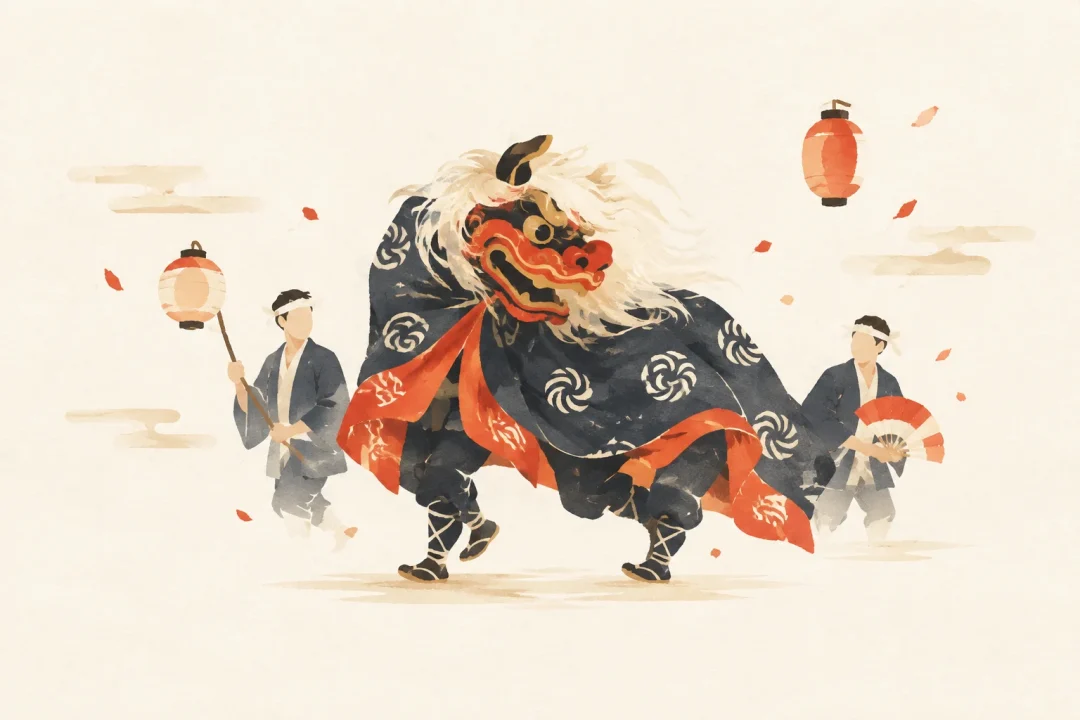
The masked Sasara-zuri performers are followed by stick dancers who wave poles wrapped in red-and-white cloth, and child dancers carrying Japanese-flag fans. Their matching costumes add color to the procession.
At the shrine, the main dancers, wearing flower hats, form a circle and dance clockwise to songs and drums.
Another distinctive feature is that Shinpachi delivers a speech between dances.
Source: 越路雨乞踊 : 鳥取伝統芸能アーカイブス
A traditional performing art in Koshiji, carrying prayers for rain and gratitude through dance
What to expect
The procession proceeds in this order: Sasara-zuri performers, stick dancers, child dancers, flute players, Shinpachi, the main dancers, and local musicians. It makes its way from the shrine approach to the area before the deities.
At the shrine, the main dancers form a circle and perform dances such as “Shinobu,” “Hato Kobune,” “Ito-take,” and “Kamakura.”
Shinpachi delivers a speech between dances, and the performance concludes with “Joden (Deha),” as the procession forms again and leaves the shrine.
The performance consists of 10 types of dances.
How to take part
Visitors can watch the event.
Location and access
- Venue and address
Koshiji Shrine (Koshiji, Tottori City).
- Train and bus
About 10 minutes by taxi from Tsunoi Station on the JR Inbi Line.
Take the Yonesato Line from Tottori Station, get off at Koshiji bus stop, and walk for 5 minutes.
- By car
From the direction of Tottori Station, take the Tottori-Minami Bypass toward Okayama. At Miyagacho Intersection, take Prefectural Route 292; at Kurata Intersection, take Prefectural Route 226; then take Prefectural Route 293 at Nenbutsu Intersection. Turn right after 2 km.
- Parking
近隣に越路公民館があります。
The roads around the shrine are narrow, so take care when passing through.
Address 654 Koshiji, Tottori, Tottori Prefecture
Dates and season
The Koshiji Rain-Calling Dance is said to be offered in autumn in years when rain comes after prayers for rain.
The offering at Koshiji Shrine takes place irregularly, after rainfall, so it is not an event held on a set date every year.
Accommodation and hotels PR
Showing nearby accommodation.
Prices and availability are current at the time of retrieval. For multi-night stays, only the first night’s price is shown. Confirm the final price and directions to the venue with the booking provider. Select your dates again when using the area search link. Search area: within 3 km of Central Tottori Prefecture / Tottori City (the search is not centered on the festival venue)
Tips for your visit
The roads around Koshiji Shrine are narrow, so please be considerate of other traffic when visiting by car.
It is unclear whether parking is available at nearby Koshiji Community Center, so avoid planning your visit on the assumption that you can park there.
The offering takes place irregularly, in autumn in years when rain has been granted, so it is important to check whether it will be held and confirm the date and time before visiting.
When watching the procession or the offering at the shrine, please do so quietly and avoid disrupting the proceedings.
Nearby attractions

かにっこ館
鳥取県鳥取市賀露町にある水族館

わらべ館
鳥取県鳥取市にある童謡・唱歌・おもちゃがテーマの博物館

因幡万葉歴史館
鳥取県鳥取市にある博物館

宇倍神社
鳥取県鳥取市国府町宮下に位置する神社

河原城
鳥取県鳥取市河原町谷一木にあった城、および同地に建てられた模擬天守

流しびなの館
鳥取県鳥取市用瀬町にあるひな人形の展示施設
写真:Original uploader was KASEI (Edited by 663h ) / CC BY-SA 3.0
Photo source ·
渡辺美術館
鳥取県鳥取市にある博物館

白兎神社
鳥取県鳥取市にある神社

砂の美術館
鳥取県鳥取市にある美術館

鳥取城
鳥取県の城

鳥取市あおや郷土館
鳥取県の博物館・美術館のスポットです。

鳥取市歴史博物館
鳥取県の博物館・美術館のスポットです。
Origins and History of Koshiji Rain-Calling Dance
It is said that people in the Koshiji district have long prayed for rain during droughts because water was scarce and rice cultivation depended on rainfall.
There is also a tradition that Gozu Tenno was enshrined here from Yasaka Shrine in Kyoto about 1000 years ago.
When rain was granted, people held acts of gratitude, such as dances and sumo, in response to a divine message received through a fortune slip. Records of the dance date back to 1756 (Horeki 6).
Official information
Basic information about the cultural property can be found in the Agency for Cultural Affairs’ “Database of Nationally Designated Cultural Properties.”
Its origins, dance programs, offering schedule, and travel information are available in the Tottori Traditional Performing Arts Archives, supervised by the Tottori Prefectural Board of Education.
Koshiji Rain-Calling Dance at a Glance
The Koshiji Rain-Calling Dance is a traditional performing art passed down at Koshiji Shrine in Koshiji, Tottori City, expressing prayers for rain and gratitude for rainfall.
A procession featuring a variety of roles, led by the Sasara-zuri performers, makes its way to the shrine, where the dancers perform in a circle before the deities.
Records date back to 1756 (Horeki 6), and the dance has been passed down as both a Tottori Prefecture Intangible Folk Cultural Property and a nationally selected Intangible Folk Cultural Property.
The offering takes place irregularly, in autumn in years when rain has been granted.
Japanese Festivals.jp Editorial Team
Celebrating local culture and helping you discover a side of Japan you never knew.
Article updated: 2026/10/19
Submit information or a correction Submit photos of this festival