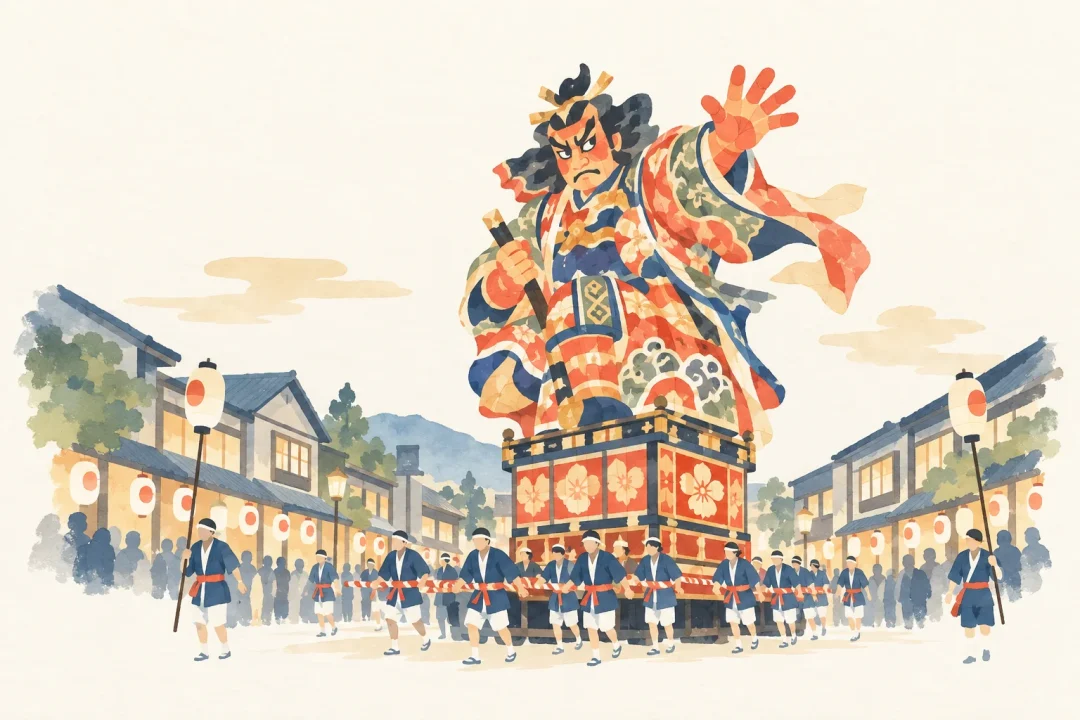
A festival of the ancient capital, with mikoshi and kenhoko halberds traveling through Nishijin
Imamiya Matsuri

Festival information
EVENT INFORMATION- Season / frequency
- Every year in May / Every year
- Location
- Imamiya Shrine, the , and the communities
- Area
- Kyoto Prefecture・Kyoto City(From Tokyo: approx. 2 h 10 min–2 h 40 min · bullet train)Prefecture-level estimate to a main station or airport, not the venue. Airport access, check-in and onward travel are extra; remote areas and islands can take much longer.
- Highlights and activities
- Wishes behind the festival
- Participation / viewing
- Spectators welcome
- Participation fee
- Free
- Required number of participants
- Approximately 50 people (to lift 1 )
- Last updated
- 2026/10/19
Beginning with the Murasaki-no Goryoe, Imamiya Matsuri has been passed down alongside the Nishijin community. Its 3 mikoshi and kenhoko halberds travel through the ujiko communities, with powerful scenes of bearers lifting the mikoshi.
About Imamiya Matsuri
Photo credits and terms of use
Photographer: Shinmaebashi File:玉の輿.jpg / Wikimedia Commons / CC BY-SA 4.0 Own work by the contributorDisplay size only adjusted.May differ from the event currently featured.Imamiya Matsuri is a festival centered on Imamiya Shrine in Kita Ward, Kyoto City.
It originated with the Murasaki-no Goryoe in the Heian period and began as a prayer to quell epidemics and calamities.
As Nishijin developed, the festival flourished with support from local people, and its traditions have been passed down to the present day.
It is one of Kyoto’s leading urban festivals, with mikoshi, kenhoko halberds, and festival processions traveling through the ujiko communities.
Source: 今宮祭 - Wikipedia / 今宮祭【今宮神社】|【京都市公式】京都観光Navi
Festival highlights
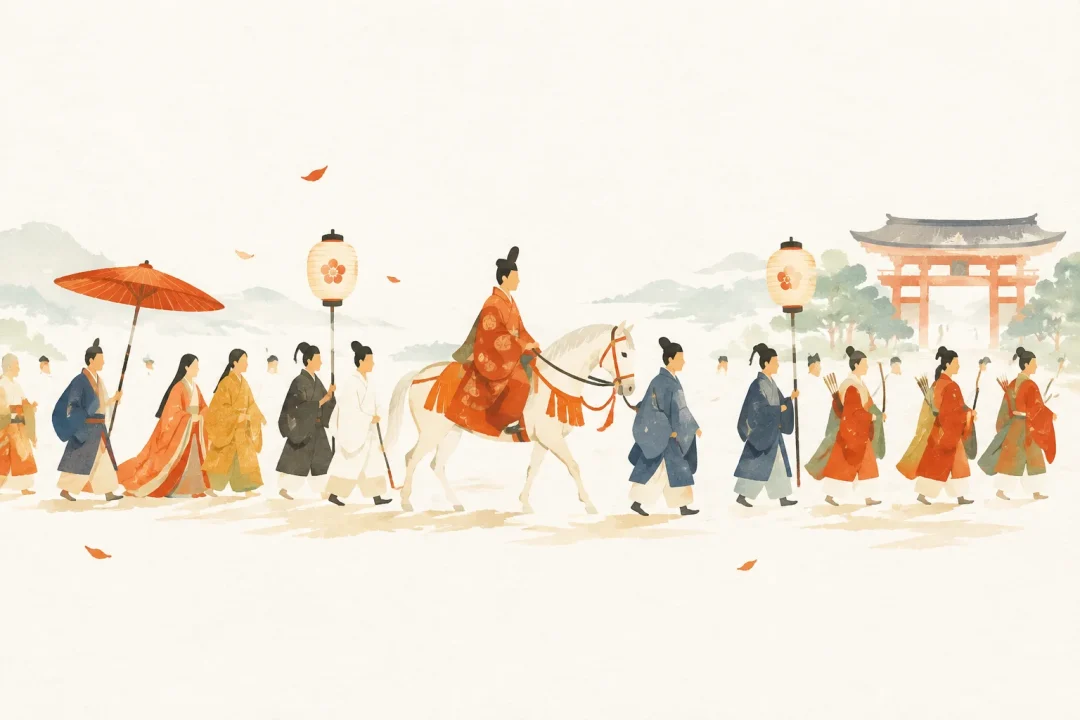
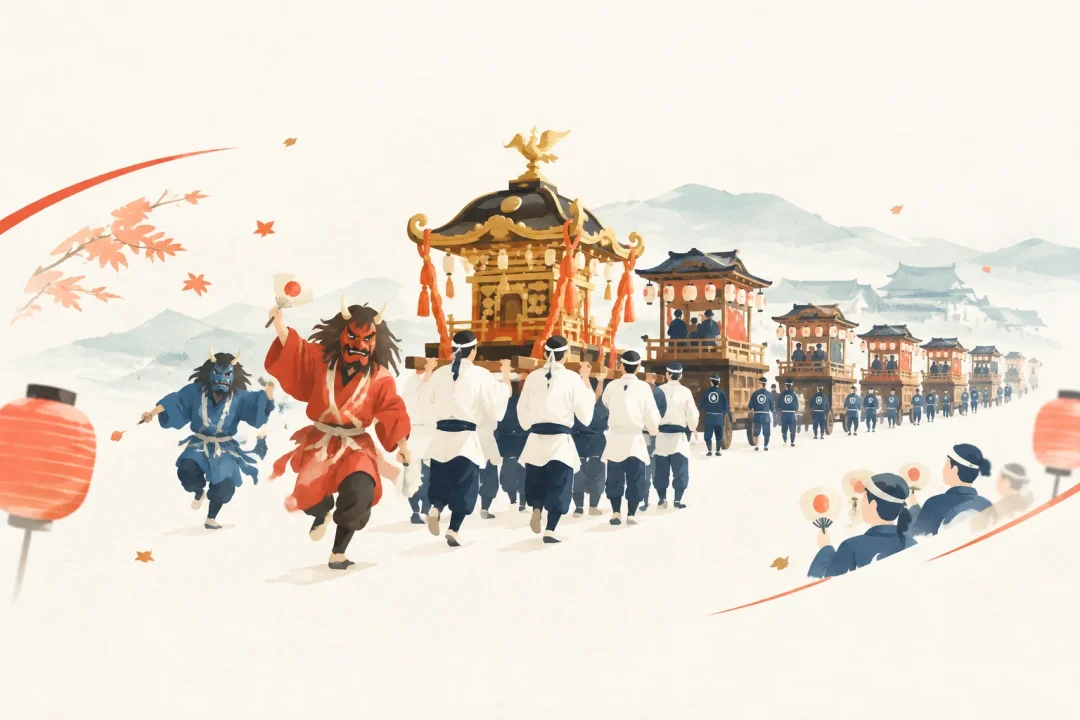
Highlights include a festival procession led by 3 mikoshi, followed by kuruma-daiko drums, kenhoko halberds, flags, flower floats, shishi lions, and ceremonial carriages.
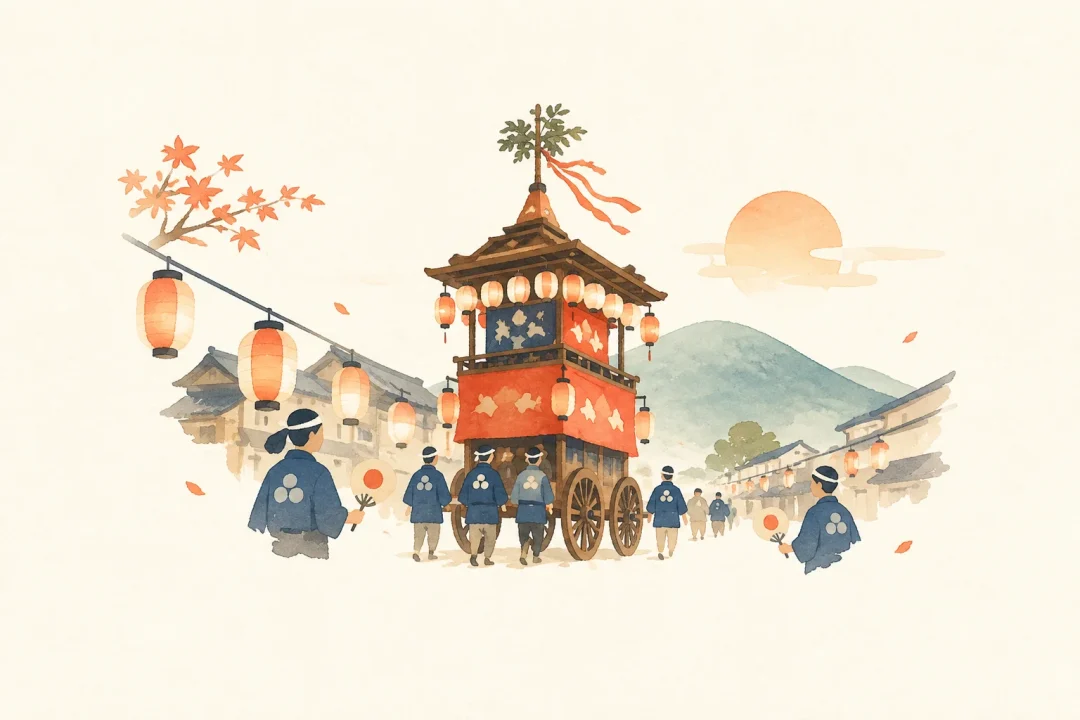
During the Shinkō-sai and -sai, bearers lift the mikoshi mounted on wheeled platforms and work together to turn them.
The procession of kenhoko halberds, the Yaotome maiden dances, and the procession making its way through the neighborhoods all add to the distinctive splendor of Imamiya Matsuri.
A festival of the ancient capital, with mikoshi and kenhoko halberds traveling through Nishijin
What to expect
The festival includes mikoshi removal, the Shinkō-sai, ceremonies at the otabisho, the Kangyo-sai, and the return of the mikoshi.
During the Shinkō-sai, the mikoshi travel from Imamiya Shrine to the otabisho. During the Kangyo-sai, the procession returns from the otabisho to the main shrine, traveling through the ujiko communities.
The Yudate-sai is also held during the festival period, with a custom of shrine maidens sprinkling hot water on worshippers to purify them.
How to take part
The festival procession is supported by people from the ujiko communities, and many bearers take part in the mikoshi procession.
However, no information is provided on whether general visitors may carry a mikoshi or take part in organizing the festival.
The main way to enjoy the event is to watch the procession and ceremonies as a spectator and pay your respects at places such as the otabisho.
Location and access
- Venue and address
The procession sets out from Imamiya Shrine, travels through the ujiko communities, and heads to places such as the otabisho.
The otabisho is at 136 Wakamiya Yokochō, Kamigyō Ward, Kyoto City, Kyoto Prefecture.
- Train and bus
It is a 6-minute walk from the Funaokayama bus stop, served by Kyoto City Bus routes 205 and 206.
Another route listed is to take a bus from Kitaoji Station to Daitokuji-mae, then walk 2 minutes after getting off.
- Parking
Parking is listed as available for 44 vehicles, for a fee.
Address 136 Wakamiya Yokochō, Kamigyō Ward, Kyoto City, Kyoto Prefecture (otabisho)
Dates and season
Imamiya Matsuri is held every year in May.
For 2026, one notice lists the festival period as May 1 through the 19th, while Kyoto City’s official event information lists it as May 5 through the 10th.
The main Shinkō-sai is scheduled for May 5, and the Kangyo-sai for May 10; both are listed as starting at 1 p.m.
Source: 今宮祭|そうだ 京都、行こう。
Accommodation and hotels PR
Showing nearby accommodation.
Prices and availability are current at the time of retrieval. For multi-night stays, only the first night’s price is shown. Confirm the final price and directions to the venue with the booking provider. Select your dates again when using the area search link. Search area: within 3 km of Central Kyoto Prefecture / Kyoto City (the search is not centered on the festival venue)
Tips for your visit
For the Shinkō-sai and Kangyo-sai, the starting and ending locations differ, and the processions travel through the ujiko communities.
Since mikoshi are lifted at places such as intersections, if there is a particular scene you want to see, check the festival schedule and procession route before going.
The 2026 information lists both the Shinkō-sai and Kangyo-sai as starting at 1 p.m., but arrival times and the procession’s location depend on how events unfold that day.
Nearby attractions

京都タワー
京都府京都市下京区にある塔

京都国立博物館
京都市にある国立博物館

京都国立近代美術館
京都市左京区岡崎にある美術館

京都国際マンガミュージアム
日本の京都府京都市中京区にある日本最大の漫画博物館

京都市美術館
京都市左京区岡崎にある美術館

京都府立植物園
京都市左京区にある植物園

京都鉄道博物館
京都府京都市下京区にある鉄道博物館

Fushimi Inari Taisha
京都市伏見区にある神社

元離宮二条城
京都市にある城郭及び元皇室関連施設

Yasaka Shrine
京都市東山区にある神社

円山公園
京都市にある公園

Kitano Tenmangu Shrine
京都市上京区にある神社
Origins and History of Imamiya Matsuri
Imamiya Matsuri is said to have originated with the Murasaki-no Goryoe, held in 994 to quell an epidemic.
In 1001, a shrine building and mikoshi were prepared at a shrine dedicated to the pestilence deity, and it was named Imamiya Shrine.
Although the festival later declined or was suspended for a time, it was revived and, in the early modern period, developed into an urban festival run by Nishijin neighborhood associations.
Official information
今宮神社の公式ホームページは、今宮神社の公式ホームページ です。
You can use it to check festival dates, details of the mikoshi procession, and any changes on the day.
Imamiya Matsuri at a Glance
Imamiya Matsuri is a Kyoto festival that originated with the Murasaki-no Goryoe and has long been closely connected to the local culture of Nishijin.
Processions featuring 3 mikoshi, kenhoko halberds, and kuruma-daiko drums travel through the ujiko communities, and the powerful scenes of bearers lifting the mikoshi are a highlight.
For 2026, the main events listed are the Shinkō-sai on May 5 and the Kangyo-sai on May 10.
Japanese Festivals.jp Editorial Team
Celebrating local culture and helping you discover a side of Japan you never knew.
Article updated: 2026/10/19
Submit information or a correction Submit photos of this festival