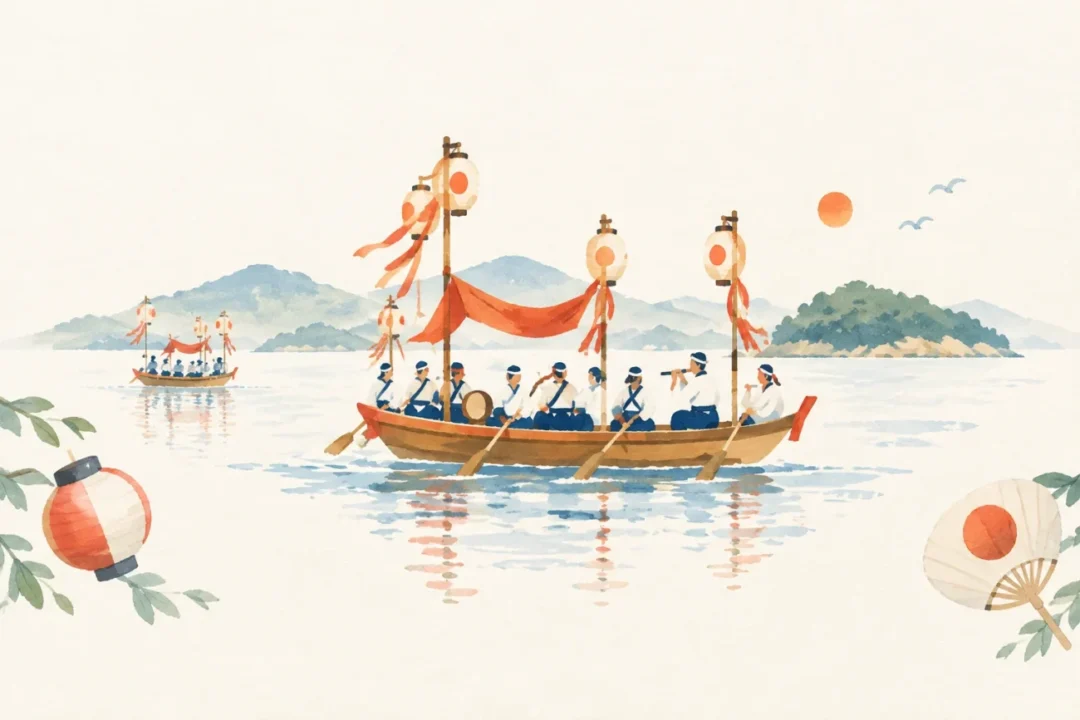
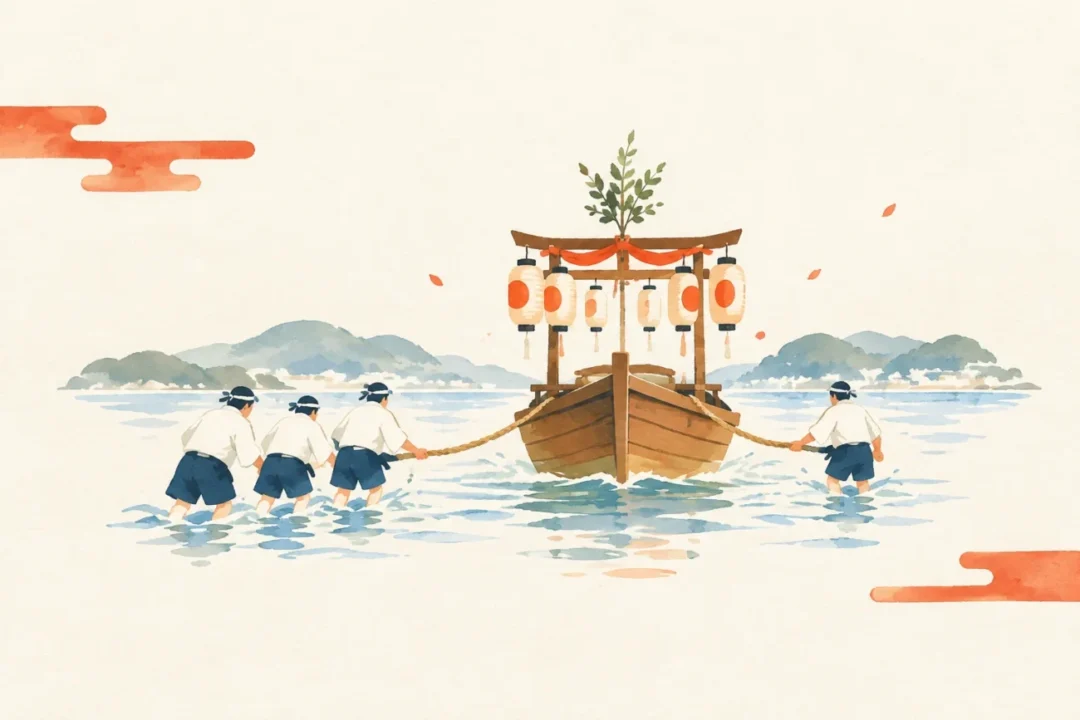
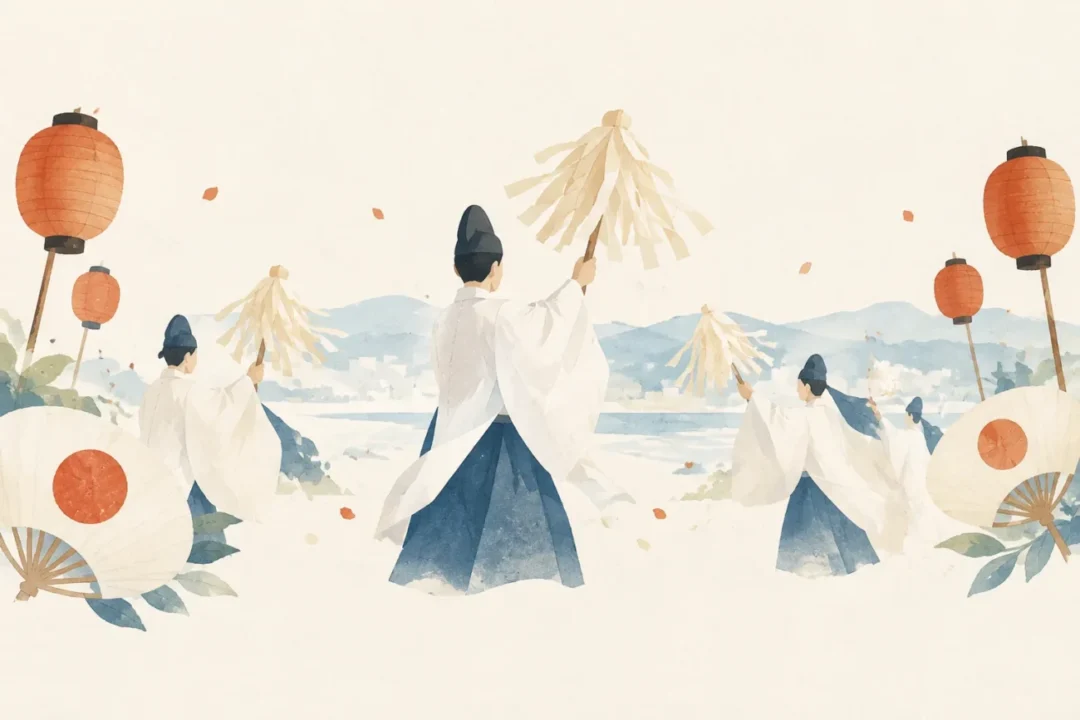
Inaga’s shrine procession, illuminated by pole-top lanterns and accompanied by michiyuugaku
Inaga Hachiman Shrine festival events
Festival information
EVENT INFORMATION- Season / frequency
- Festival events held on the eve and the main festival day
- Location
- Inaga Hachiman Shrine
- Area
- Hiroshima Prefecture・Fuchu City(From Tokyo: approx. 3 h 50 min–4 h 20 min · bullet train)Prefecture-level estimate to a main station or airport, not the venue. Airport access, check-in and onward travel are extra; remote areas and islands can take much longer.
- Features
- Highlights and activities
- Last updated
- 2026/11/11
The Inaga Hachiman Shrine festival events are a festival designated as an Intangible Folk Cultural Property of Fuchu City. It is characterized by the shrine procession on the eve of the main festival day and the offering of shingi on the main festival day.
About Inaga Hachiman Shrine festival events
The Inaga Hachiman Shrine festival events are a festival passed down in Fuchu City, Hiroshima Prefecture, and designated as an Intangible Folk Cultural Property of Fuchu City.
The owner is the Inaga Shingi Preservation Society.
A shrine procession takes place on the eve of the main festival day, and shingi is offered on the main festival day.
The festival consists of two scenes, the eve and the main festival day, and is characterized by a shrine procession accompanied by music and a parade.
Festival highlights
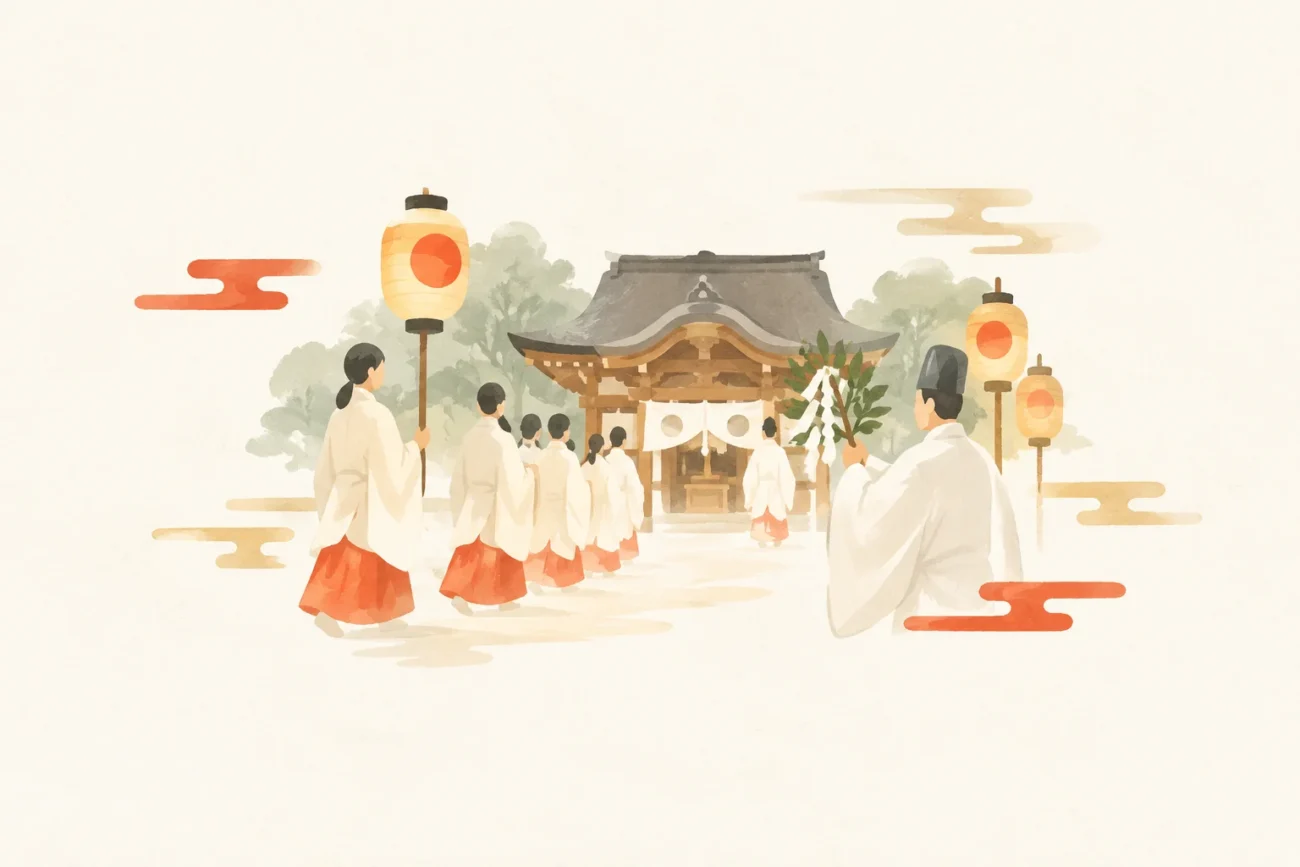
A highlight is the shrine procession held on the eve of the main festival day.
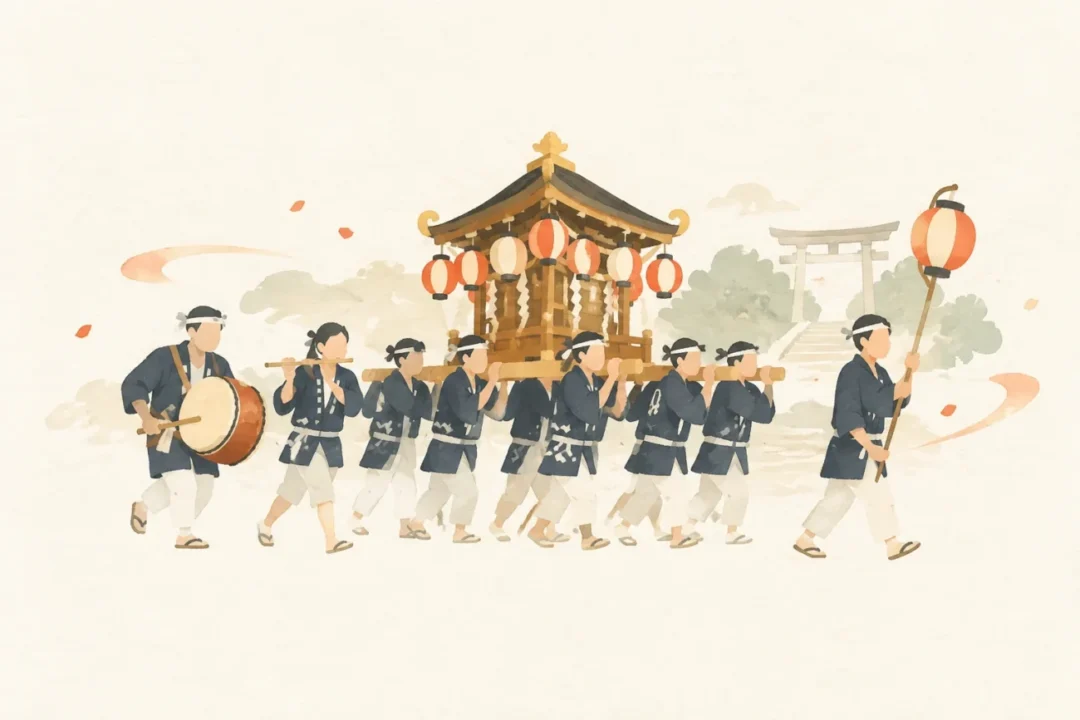
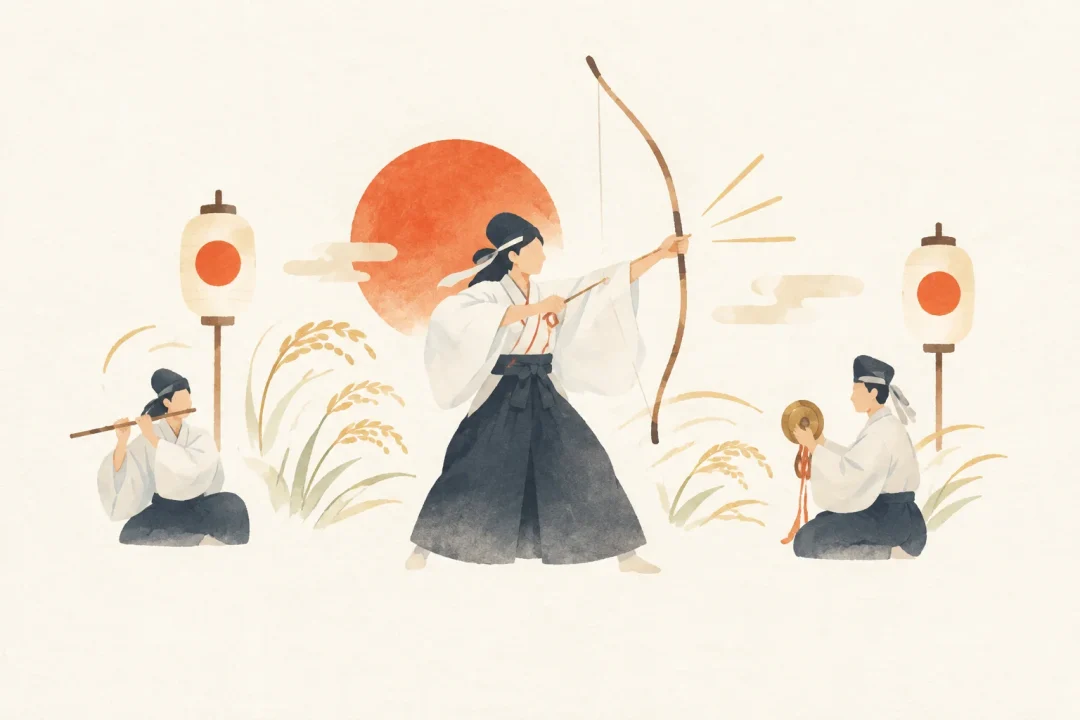
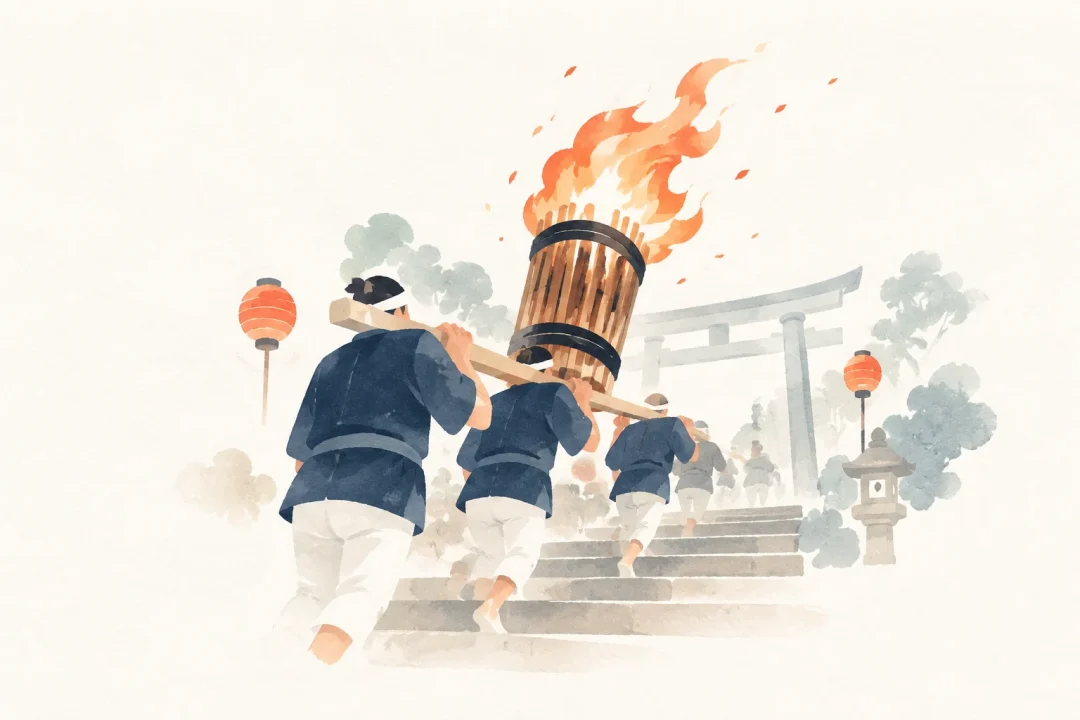
With pole-top lanterns in a row, they enter the shrine precincts while playing michiyuugaku on drums, bronze cymbals, and flutes, then perform niwa-uchi.
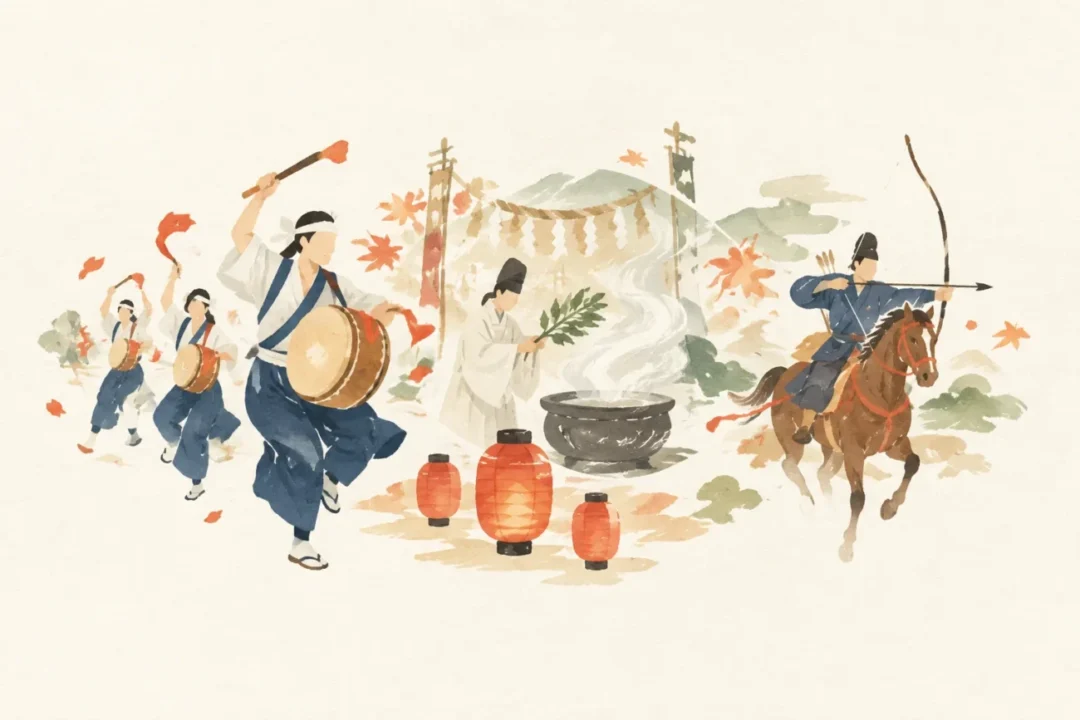
On the main festival day, shingi is offered, and and flower floats join the procession as it enters the shrine precincts.
The combination of lights, music, and procession is a defining feature of this festival.
Inaga’s shrine procession, illuminated by pole-top lanterns and accompanied by michiyuugaku
What to expect
The festival begins with the shrine procession on the eve of the main festival day.
With pole-top lanterns in a row, they enter the shrine precincts while playing michiyuugaku on drums, bronze cymbals, and flutes, then perform niwa-uchi.
On the main festival day, shingi is offered, and yatai and flower floats join the procession as it enters the shrine precincts.
The events differ between the eve and the main festival day.
Location and access
- Venue and address
Inaga Hachiman Shrine (Fuchu City)
Event venue 広島県府中市 井永八幡神社
This map uses the venue name. Check the official guide for the event area and entrances.
Dates and season
- Season
Festival events held on the eve and the main festival day
Accommodation and hotels PR
Showing nearby accommodation.
Prices and availability are current at the time of retrieval. For multi-night stays, only the first night’s price is shown. Confirm the final price and directions to the venue with the booking provider. Select your dates again when using the area search link. Search area: within 3 km of Central Hiroshima Prefecture / Fuchu City (the search is not centered on the festival venue)
Origins and History of Inaga Hachiman Shrine festival events
The Inaga Hachiman Shrine festival events are designated as an Intangible Folk Cultural Property of Fuchu City.
The designation date is Showa 51December 17.
The origins and development of the festival, and the changes leading up to its designation, are not explained, but the Inaga Shingi Preservation Society is listed as its owner.
Official information
Information about the cultural property designation of the Inaga Hachiman Shrine festival events is posted on the official Fuchu City website.
The Cultural Property Section, Cultural Property Office, Education Policy Division, Fuchu City Board of Education is listed as the contact.
電話:0847-44-9024。
Inaga Hachiman Shrine festival events at a Glance
The Inaga Hachiman Shrine festival events are a festival designated as an Intangible Folk Cultural Property of Fuchu City.
On the eve of the main festival day, a shrine procession takes place with pole-top lanterns and michiyuugaku, moving on to the shrine procession and niwa-uchi.
On the main festival day, shingi is offered, and yatai and flower floats join the procession as it enters the shrine precincts.
The main highlights are the music and lanterns on the eve, and the offering and procession on the main festival day.
Sources and references
Japanese Festivals.jp Editorial Team
Celebrating local culture and helping you discover a side of Japan you never knew.
Article updated: 2026/11/11