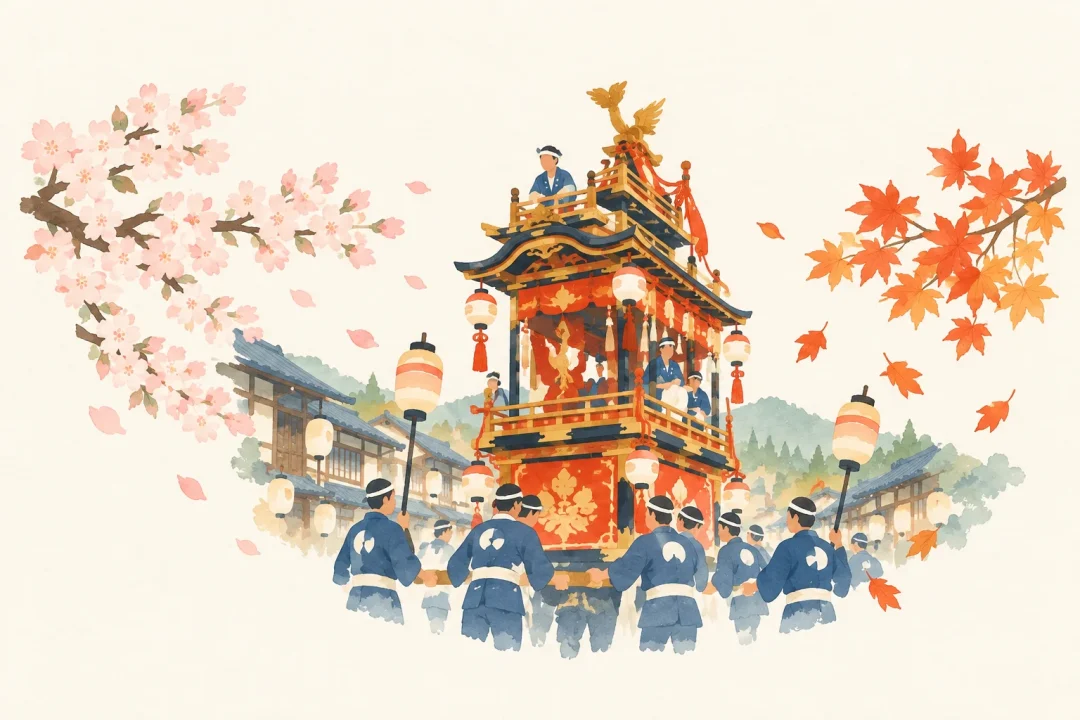
An autumn festival that fills Tsurugi’s streets with giant floats and a mikoshi
Hōrai Festival
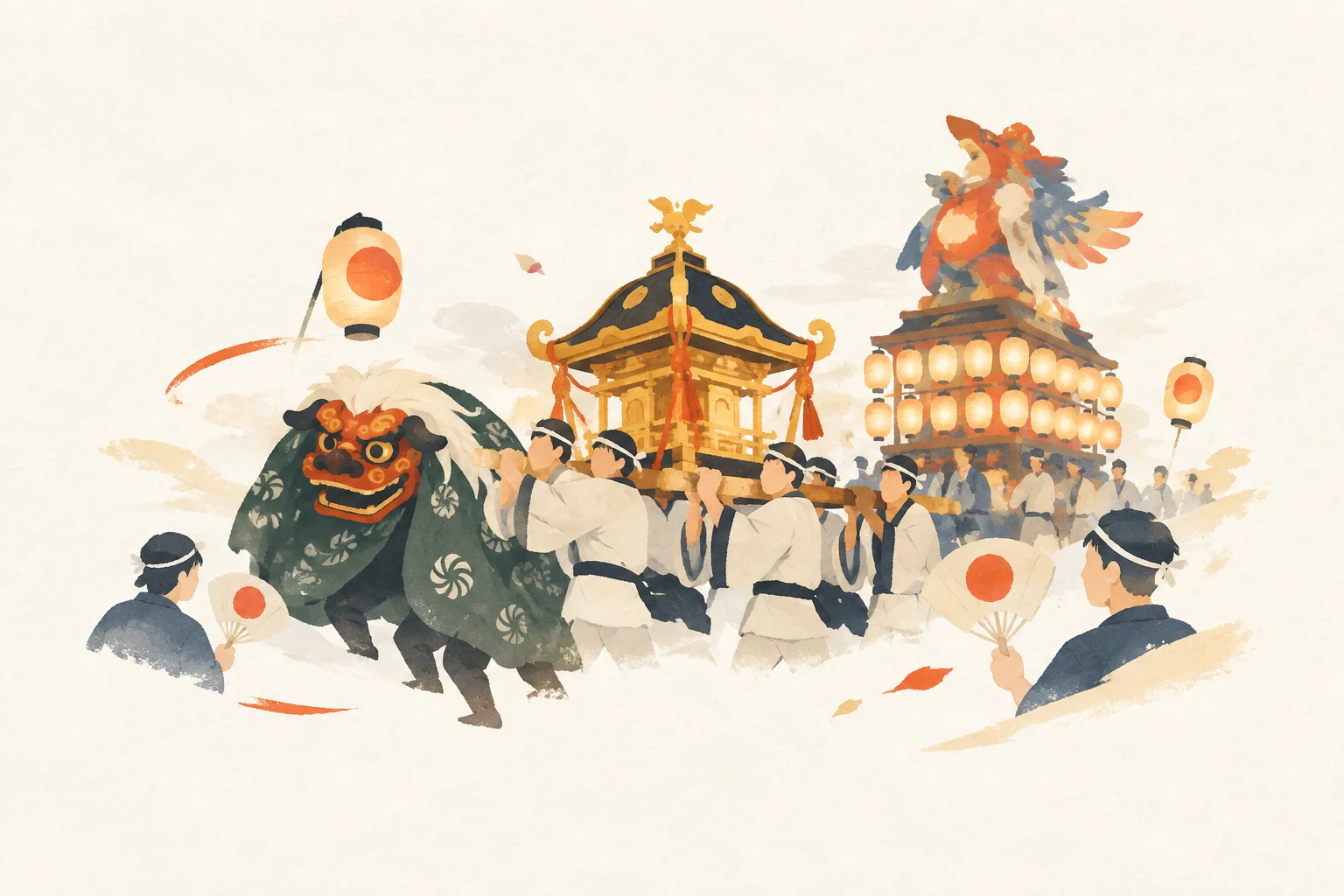
The 2026 edition of Hōrai Festival has ended.
Festival information
EVENT INFORMATION- Dates
- 2026/10/03 〜 2026/10/04Ended
- Season / frequency
- A Saturday and Sunday in early October each year / Every year
- Location
- Within the Tsurugi district of Hakusan City
- Area
- Ishikawa Prefecture・Hakusan City(From Tokyo: approx. 2 h 30 min–3 h · bullet train)Prefecture-level estimate to a main station or airport, not the venue. Airport access, check-in and onward travel are extra; remote areas and islands can take much longer.
- Highlights and activities
- Wishes behind the festival
- Participation / viewing
- Spectators welcome
- Last updated
- 2026/10/19
An autumn festival in the Tsurugi district of Hakusan City, where Kinkengu Shrine’s , the lion-dance troupe, and enormous floats make their way through the neighborhoods. It is said to have a history of about 800 years and is held on a Saturday and Sunday in early October each year. The illuminated floats are another highlight in the evening.
About Hōrai Festival
Photo credits and terms of use
Photographer: 兜差 File:Tukurimon of Hourai Festival.JPG / Wikimedia Commons / CC BY-SA 3.0 photo taken by 兜差Display size only adjusted.May differ from the event currently featured.Photo credits and terms of use
Photographer: 兜差 File:Tukurimon of Hourai Festival2009.JPG / Wikimedia Commons / CC BY-SA 3.0 photo taken by 兜差Display size only adjusted.May differ from the event currently featured.Photo credits and terms of use
Photographer: 兜差 File:HouraiBakumen.jpg / Wikimedia Commons / CC BY-SA 3.0 photo taken by 兜差Display size only adjusted.May differ from the event currently featured.The Hōrai Festival is a procession ritual accompanying the autumn festival of Kinkengu Shrine, the ujigami deity of the Tsurugi district in Hakusan City.
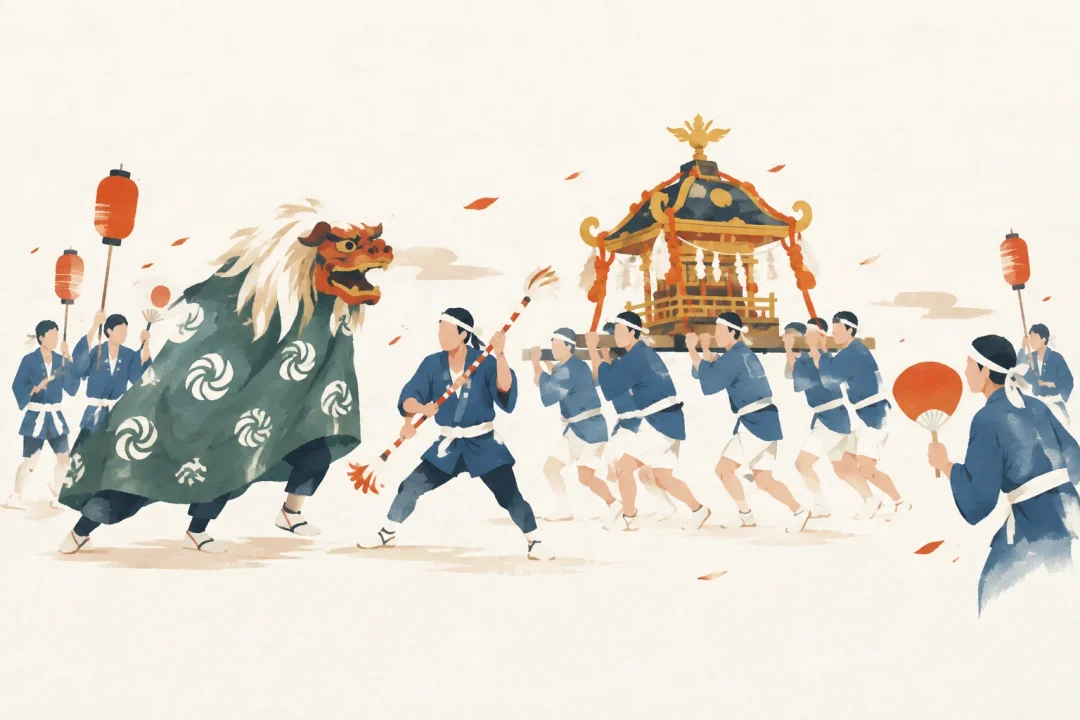
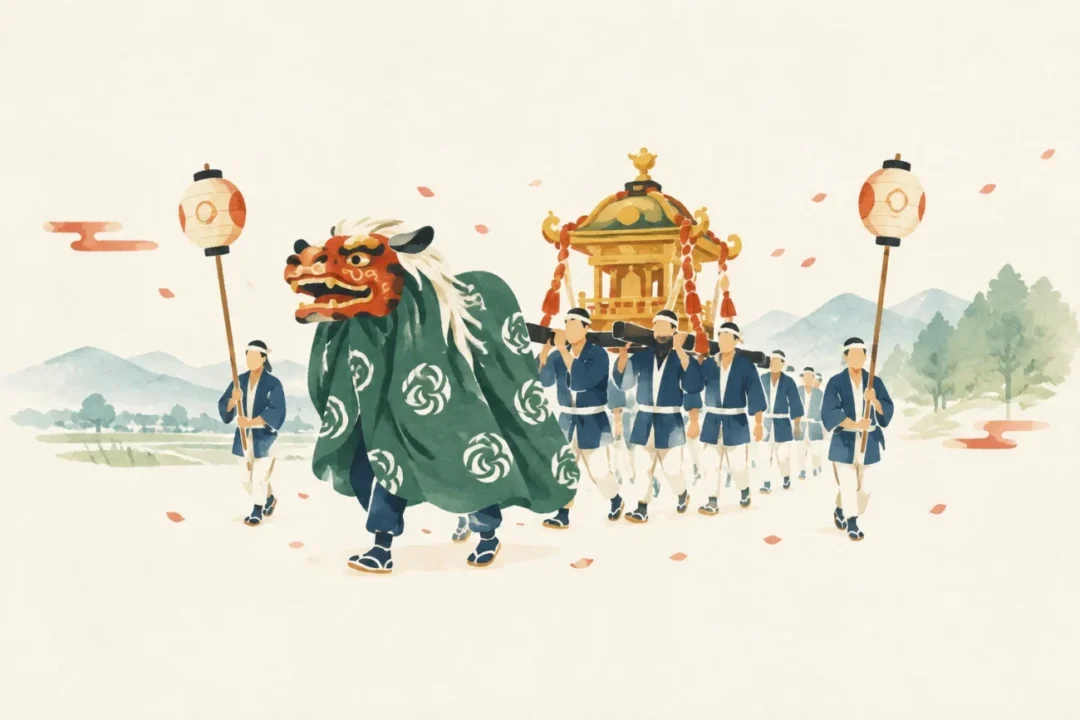
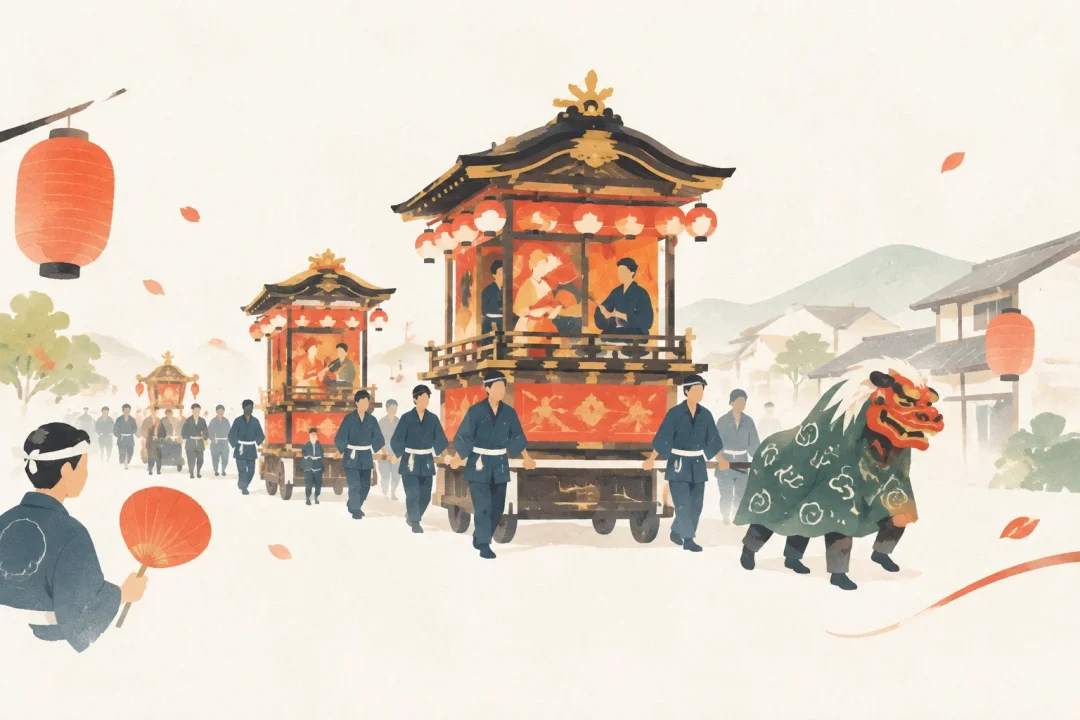
Led by the mikoshi, the lion-dance troupe and floats from each neighborhood make their way through the streets.
Traditional events passed down by local residents, including the floats and stick-swinging dances, come together to enliven downtown Tsurugi.
It is also designated as an Intangible Folk Cultural Property of Hakusan City.
Source: ほうらい祭り|【公式】白山市観光・旅行情報サイト|うらら白山人 / ほうらい祭り - Wikipedia
Festival highlights
The main highlight is the approximately 5-meter-tall floats, designed and built each year by the local neighborhoods.
Giant figures depicting samurai commanders, kabuki plays, and other subjects join the procession and make their way through town.
The lion-dance troupe performs stick-swinging dances, and in the evening the illuminated floats take on a different appearance from their daytime look.
The mikoshi climbing and descending the steep stone steps is another iconic sight of the festival.
An autumn festival that fills Tsurugi’s streets with giant floats and a mikoshi
What to expect
The festival’s procession travels through the Tsurugi district, led by Kinkengu Shrine’s mikoshi and accompanied by the lion-dance troupe and floats.
On the first day, white-clad men observing the maeyaku yakudoshi custom carry the mikoshi from the shrine, visit the purification sites, and spend the night at the temporary shrine in the town center.
On the second day, white-clad men observing the yakudoshi custom carry the mikoshi through the northern district, then return to the shrine after the okuri-jishi lion dance.
Along the route, visitors can watch the stick-swinging dances and the procession of floats.
How to take part
Visitors can watch the event.
Location and access
- Venue and address
Within the Tsurugi district of Hakusan City.
The address is 118 Mi, Hizume-machi, Hakusan City, Ishikawa Prefecture (the address listed for Kinkengu Shrine).
- Train and bus
Tsurugi Station on the Hokuriku Railroad Ishikawa Line is listed.
- By car
30 minutes south from Hakusan IC via National Route 157.
As traffic restrictions will be in place, visitors are advised to use public transportation whenever possible.
Address 118 Mi, Hizume-cho, Hakusan City, Ishikawa Prefecture
Dates and season
2026 event information (the listed dates have passed)
The 2026 festival was announced as scheduled to run from October 3 (Sat) through October 4 (Sun).
It runs from 12 p.m. to 10 p.m.
It is typically held on a Saturday and Sunday in early October.
Accommodation and hotels PR
Showing nearby accommodation.
Prices and availability are current at the time of retrieval. For multi-night stays, only the first night’s price is shown. Confirm the final price and directions to the venue with the booking provider. Select your dates again when using the area search link. Search area: within 3 km of Central Ishikawa Prefecture / Hakusan City (the search is not centered on the festival venue)
Tips for your visit
The procession travels through the streets of the Tsurugi district, so what you see will vary depending on where you watch.
Information is available for checking the real-time locations of the mikoshi and floats.
Traffic restrictions are planned for 2026, so allow extra travel time if visiting by car.
Along the route, follow instructions from staff and other guidance so as not to obstruct the procession.
Nearby attractions
Kinkengu Shrine, which marks the festival venue, is also said to be the origin of the place name Tsurugi.
Seven shrines, including the main hall, are scattered throughout the grounds, making it possible to visit them in turn.
You can visit alongside watching the procession to learn about the relationship between Kinkengu Shrine and Tsurugi’s temple-town, which forms the festival’s historical backdrop.
Admission is listed as free.
Source: 金劔宮 | 【公式】白山市鶴来の観光情報サイト-ご加護のある街つるぎ

白山比咩神社
石川県白山市にある神社
写真:dennis bloodnok (bloodnok) / CC BY 2.0
Photo source ·
石川県ふれあい昆虫館
石川県白山市にある博物館
Origins and History of Hōrai Festival
The Hōrai Festival is said to have begun in its original form about 800 years ago as a procession ritual accompanying Kinkengu Shrine’s autumn grand festival.
One account of its origins says that, during the Hakusan Incident, Kinkengu Shrine’s mikoshi joined a petitioning mission to Kyoto and that the festival began to celebrate its return.
It has been held in autumn, the harvest season, to pray for abundant grain harvests.
From 1970, the popular name “Hōrai Festival” came into use to promote tourism.
Official information
Dates, venue, transportation information, and traffic restriction materials are provided on Hakusan City’s tourism and travel information website, “Urara Hakusan.”
The phone number for the Tsurugi Autumn Festival Organizing Committee is listed for inquiries.
Hōrai Festival at a Glance
The Hōrai Festival is a traditional event in which the mikoshi, lion-dance troupe, and floats travel through the Tsurugi district as part of Kinkengu Shrine’s autumn festival.
The main highlights are the approximately 5-meter-tall floats, stick-swinging dances, and the mikoshi moving along the stone steps.
In 2026, the festival was held on October 3 and 4, and the illuminated floats can also be enjoyed in the evening.
Traffic restrictions apply around the venue, so visitors are advised to come from Tsurugi Station.
Japanese Festivals.jp Editorial Team
Celebrating local culture and helping you discover a side of Japan you never knew.
Article updated: 2026/10/19
Submit information or a correction Submit photos of this festival