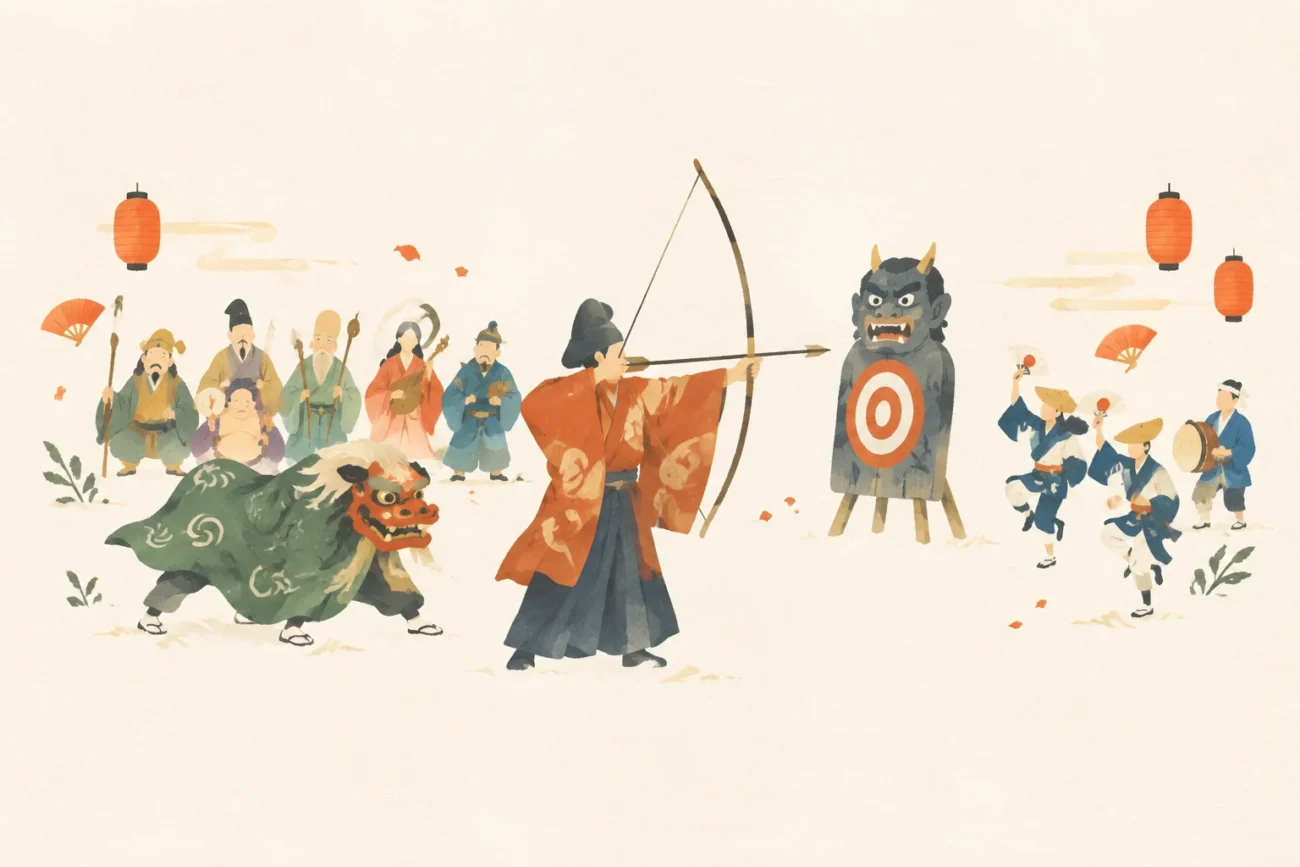
A traditional Hれケ崎 event where arrows are shot at an oni target to pray for a good harvest
Hれケ崎 Obisha Festival
Festival information
EVENT INFORMATION- Season / frequency
- Every January third Sunday / Every year
- Location
- Kaminari Shrine
- Area
- Chiba Prefecture・Nagareyama City(From Tokyo: approx. 40 min–1 h · train)Prefecture-level estimate to a main station or airport, not the venue. Airport access, check-in and onward travel are extra; remote areas and islands can take much longer.
- Highlights and activities
- Wishes behind the festival
- Last updated
- 2026/11/23
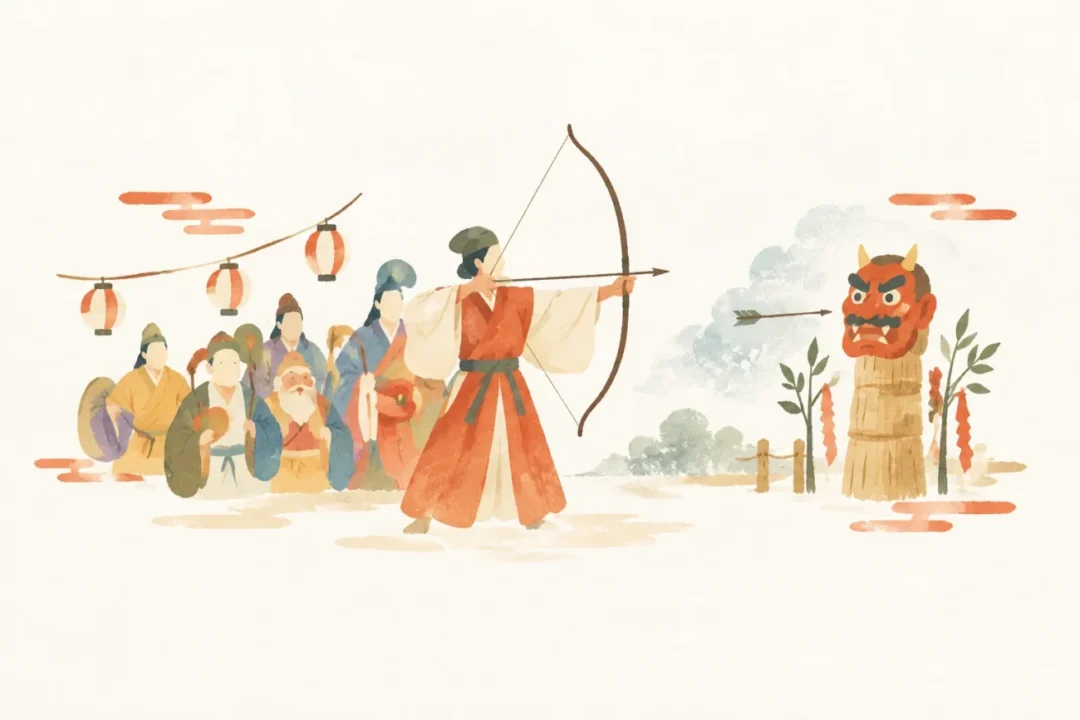
The Hれケ崎 Obisha Festival, passed down at Kaminari Shrine, is a New Year’s religious rite in which bows and arrows are used to pray for the expulsion of evil and a good harvest. Attendants dressed as the Seven Lucky Gods shoot arrows at an oni target, and , the Tagosaku dance, , and other performances are also held.
About Hれケ崎 Obisha Festival
The Hれケ崎 Obisha Festival is a bow ritual derived from the New Year’s “bisha” tradition found throughout the Kanto region.
Prayers for the expulsion of evil and a good harvest are made with bows and arrows. The event is held at Kaminari Shrine every January third Sunday.
In Hれケ崎, 7 households take turns serving as the group in charge, overseeing shrine events and the entire Obisha festival for 1 year.
It is also designated an Intangible Folk Cultural Property of Nagareyama City.
Festival highlights
On the day, attendants dress as the Seven Lucky Gods, and religious rites and the passing of the to are held at Kaminari Shrine.
Afterward, arrows are shot from the shrine building at targets depicting red and blue oni set up near the . It is considered auspicious if an arrow hits an oni in the eye.
Shishimai and the Tagosaku dance are also performed as part of the ceremony, with the bow ritual and performing arts together forming a sequence of events.
A traditional Hれケ崎 event where arrows are shot at an oni target to pray for a good harvest
What to expect
The festival begins with prayers led by the chief priest, followed by religious rites and the passing of the to. Then, attendants and officers dressed as the Seven Lucky Gods shoot arrows at a target depicting an oni.
Today, the procession to the home of the next group in charge takes place first, followed by a naorai feast and the handover of duties at the shrine office.
A feast is served at the naorai, and kagura is performed.
Location and access
- Venue and address
Kaminari Shrine, 1767 Hれケ崎, Nagareyama City
- Train and bus
Tsukuba Express Line: 15-minute walk from Minami-Nagareyama Station / Ryutetsu Line: walk from Hれgasaki Station
Address 1767 Hれケ崎, Nagareyama City, Chiba Prefecture
Dates and season
- Season
Every January third Sunday
- Frequency
Every year
Accommodation and hotels PR
Showing nearby accommodation.
Prices and availability are current at the time of retrieval. For multi-night stays, only the first night’s price is shown. Confirm the final price and directions to the venue with the booking provider. Select your dates again when using the area search link. Search area: within 3 km of Central Chiba Prefecture / Nagareyama City (the search is not centered on the festival venue)
Origins and History of Hれケ崎 Obisha Festival
The Hれケ崎 Obisha Festival is said to have begun during the Kyoho era (1716–1736) and has a tradition spanning more than 300 years.
In Showa 52, it was designated an Intangible Folk Cultural Property of Nagareyama City.
The venue, Kaminari Shrine, has no known founding date. It is a former village shrine rebuilt in Hoei 5 (1708), and six shrines were enshrined together there in Meiji 6 (1873).
Official information
Official Nagareyama City Tourism Association: “Hれケ崎 Obisha Festival (Kaminari Shrine), Intangible Folk Cultural Property”
Hれケ崎 Obisha Festival at a Glance
The Hれケ崎 Obisha Festival is a bow ritual passed down at Kaminari Shrine.
Attendants and officers dressed as the Seven Lucky Gods shoot arrows at targets depicting red and blue oni. It is considered auspicious if an arrow hits an oni in the eye.
From shishimai, Tagosaku dance, and kagura to the naorai feast and the handover of duties, this is a sequence of events that ties community roles to prayers.
Sources and references
Japanese Festivals.jp Editorial Team
Celebrating local culture and helping you discover a side of Japan you never knew.
Article updated: 2026/11/23