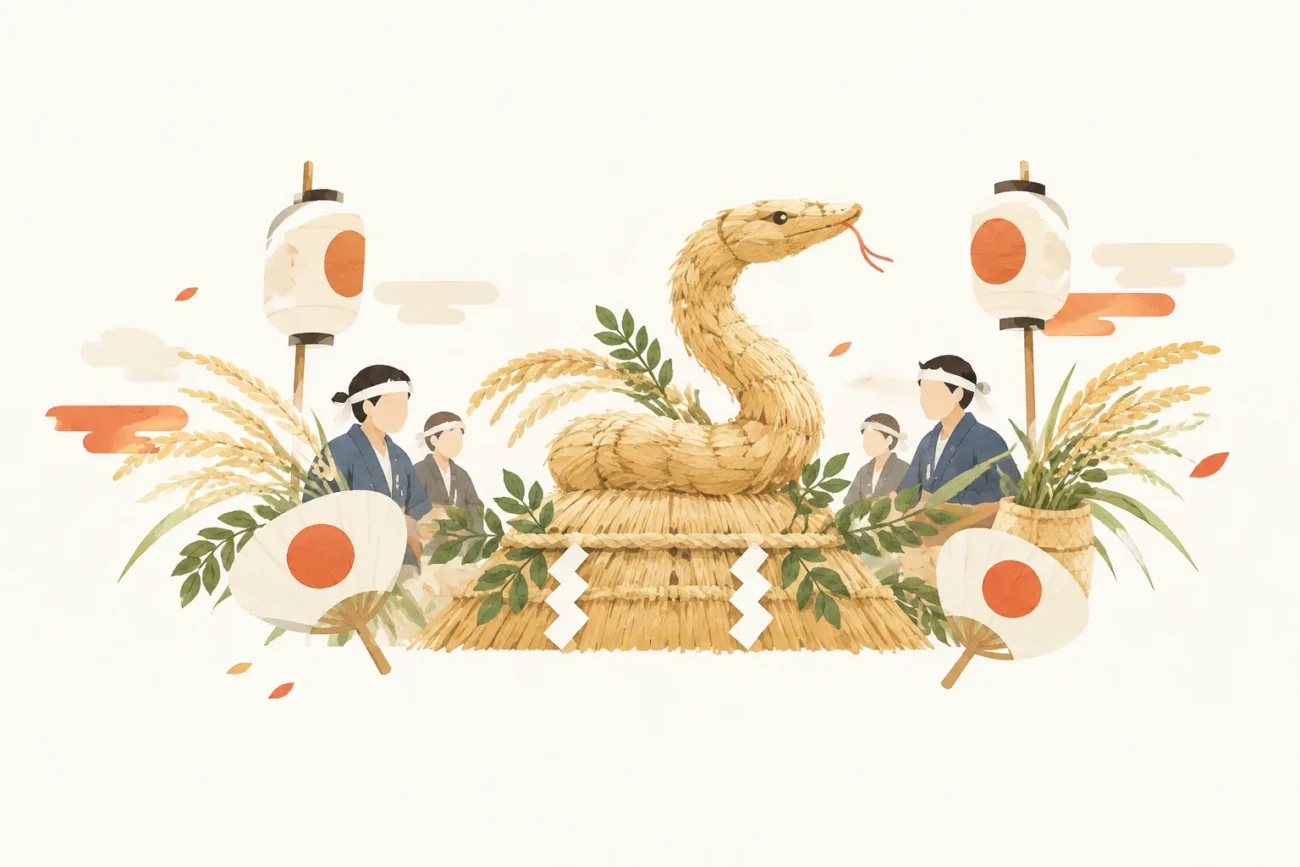
A festival at Ohhiroto that entrusts wishes for abundant harvests and good health to a rice-straw snake
Misato City’s Obisha
Festival information
EVENT INFORMATION- Season / frequency
- Every year January 10 / Every year
- Location
- Katori (Ohhiroto)
- Area
- Saitama Prefecture・Misato City(From Tokyo: approx. 30 min–1 h · train)Prefecture-level estimate to a main station or airport, not the venue. Airport access, check-in and onward travel are extra; remote areas and islands can take much longer.
- Wishes behind the festival
- Last updated
- 2026/10/24
Misato City’s Obisha is a festival at Ohhiroto Katori Jinja, where a snake is made from rice straw to pray for abundant harvests and good health.
About Misato City’s Obisha
Misato City’s Obisha is a festival held at Ohhiroto Katori Jinja every year on January 10.
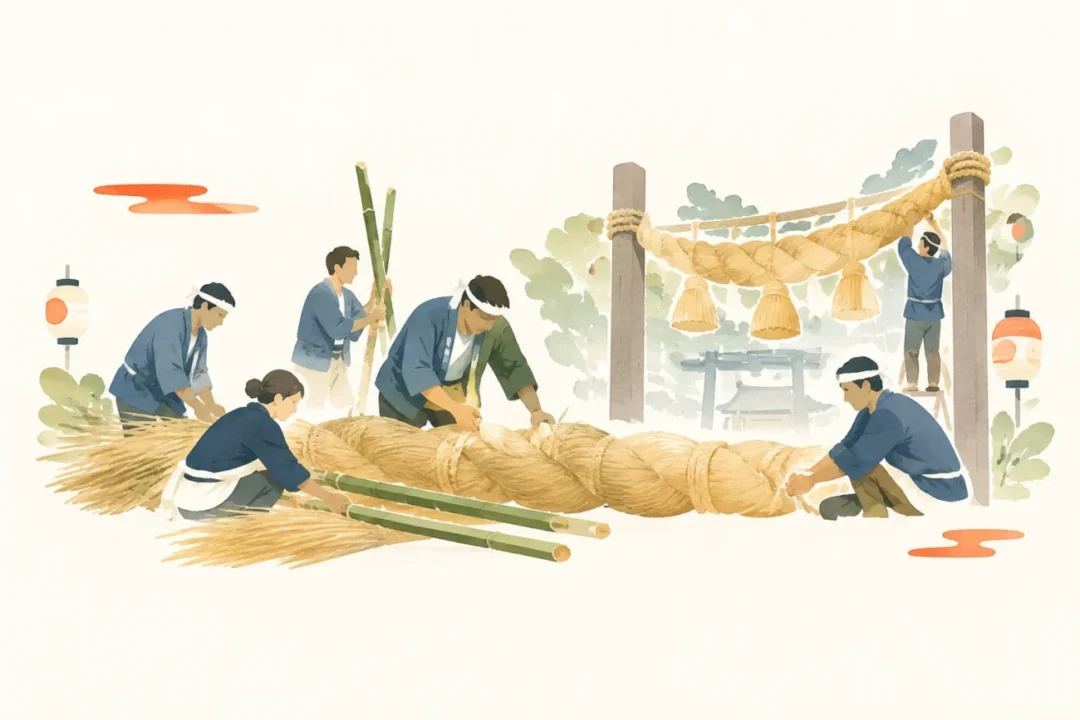
Along with praying for the ’s abundant harvests, people make a snake from rice straw to ward off illness and misfortune.
In recent years, it has also been called the “Snake Festival.” It has been passed down as an event that brings together local prayers and rice-straw craftsmanship.
It has also been designated a Prefectural Selected Cultural Property.
Source: 三郷市のオビシャ(大広戸の蛇祭り) | 三郷市観光協会
Festival highlights
The main highlight is making a snake from rice straw.
The finished snake is ritually burned in the jinja grounds on the same day.
It is said that bathing in the smoke from the ritual burning prevents colds. The wish to ward off misfortune is expressed in the entire process, from making the snake to sending it into the fire.
In recent years, the festival has also been called the “Ohhiroto Snake Festival.”
A festival at Ohhiroto that entrusts wishes for abundant harvests and good health to a rice-straw snake
What to expect
At the festival, a snake is made from rice straw to pray for the ujiko’s abundant harvests and good health.
The finished snake is ritually burned in the jinja grounds on the same day.
It is said that bathing in the smoke from the snake sent into the fire prevents colds.
The documented sequence of events is making the snake and ritually burning it in the jinja grounds.
Location and access
- Venue and address
Katori Jinja (Ohhiroto) / 3-14-5 Misato, Misato City, Saitama Prefecture
- Train and bus
5-minute walk from Misato Station on the JR Musashino Line
Address 3-14-5 Misato, Misato City, Saitama Prefecture
Dates and season
- Season
Every year January 10
- Frequency
Every year
Accommodation and hotels PR
Showing nearby accommodation.
Prices and availability are current at the time of retrieval. For multi-night stays, only the first night’s price is shown. Confirm the final price and directions to the venue with the booking provider. Select your dates again when using the area search link. Search area: within 3 km of Central Saitama Prefecture / Misato City (the search is not centered on the festival venue)
Nearby attractions

みさと公園
埼玉県三郷市にある県営公園
Origins and History of Misato City’s Obisha
Misato City’s Obisha is said to date back to the Kanbun era (1661–73).
In recent years, it has also been called the “Snake Festival.”
As presented today, the festival is characterized by praying for abundant harvests, making a snake from rice straw, and warding off illness and misfortune.
It has also been designated a Prefectural Selected Cultural Property.
Official information
Misato City Tourism Association, “Misato City’s Obisha (Ohhiroto Snake Festival)”
Misato City’s Obisha at a Glance
Misato City’s Obisha is a festival held at Ohhiroto Katori Jinja every year on January 10.
A snake is made from rice straw to pray for the ujiko’s abundant harvests, then ritually burned in the jinja grounds on the same day to ward off illness and misfortune.
The festival is said to date back to the Kanbun era (1661–73), and the venue is Katori Jinja (Ohhiroto).
Japanese Festivals.jp Editorial Team
Celebrating local culture and helping you discover a side of Japan you never knew.
Article updated: 2026/10/24
Submit information or a correction Submit photos of this festival