Yoshikawa’s Obisha: local customs express wishes for abundant harvests and good health
Obisha in Yoshikawa City
Festival information
EVENT INFORMATION- Season / frequency
- Usually held between January 3 and the first Horse Day of February, after the start of the year / Every year
- Location
- 24 areas within Yoshikawa City, including Yoshikawa Katori Shrine, Kumanozan Shrine, and Kyōkō Shrine
- Area
- Saitama Prefecture・Yoshikawa City(From Tokyo: approx. 30 min–1 h · train)Prefecture-level estimate to a main station or airport, not the venue. Airport access, check-in and onward travel are extra; remote areas and islands can take much longer.
- Features
- Wishes behind the festival
- Last updated
- 2026/11/11
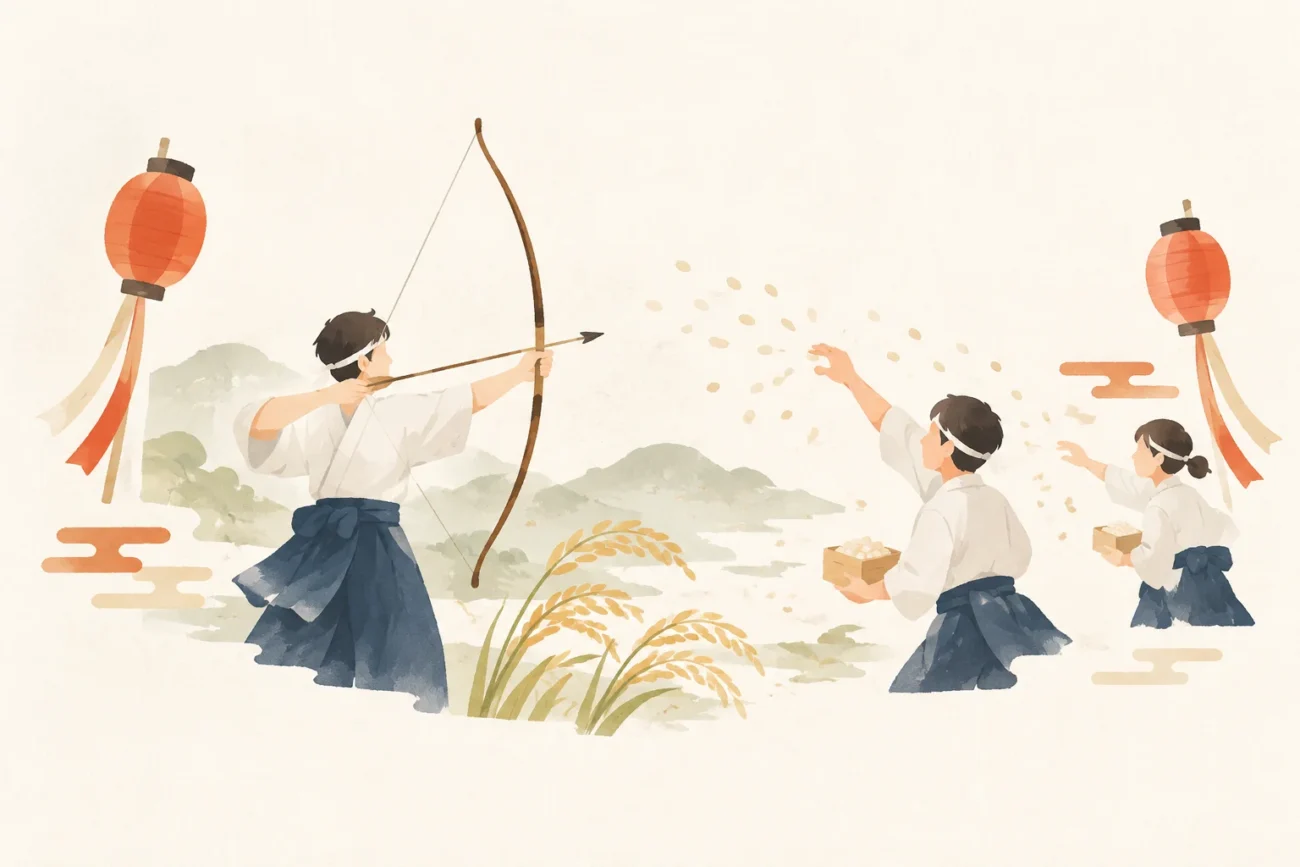
Obisha in Yoshikawa City is a rural shrine ritual with customs passed down differently in each area of the city. People pray for abundant harvests and good health through events such as archery and throwing arare made from rice at one another.
About Obisha in Yoshikawa City
Obisha in Yoshikawa City is a rural shrine ritual held in areas throughout the city.
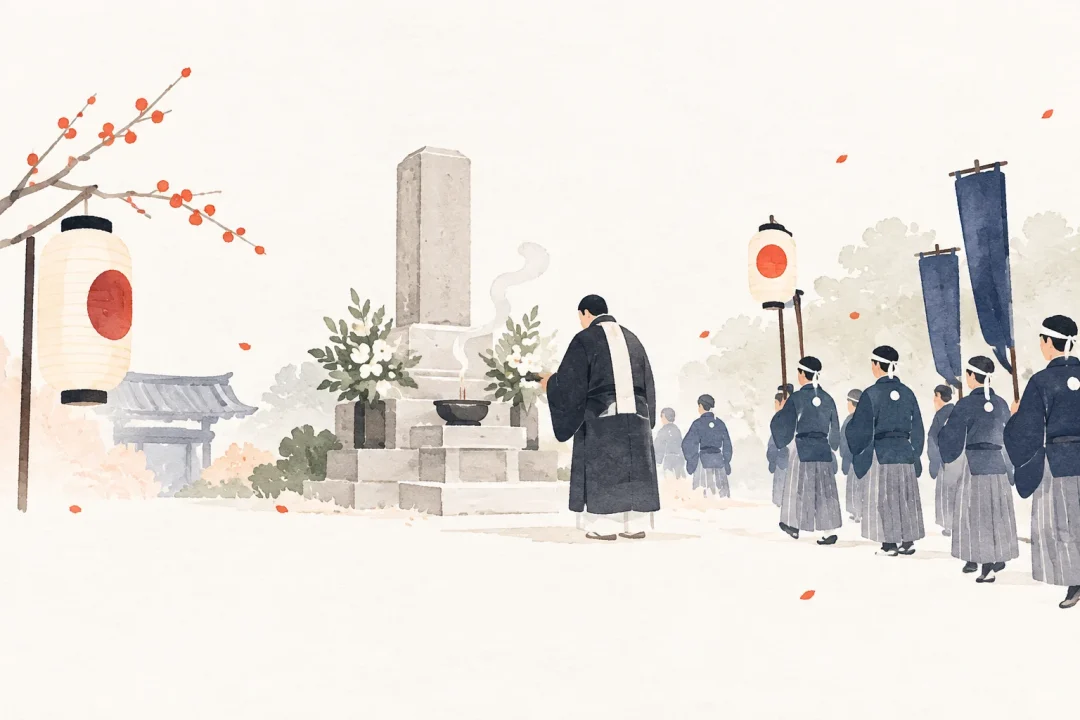
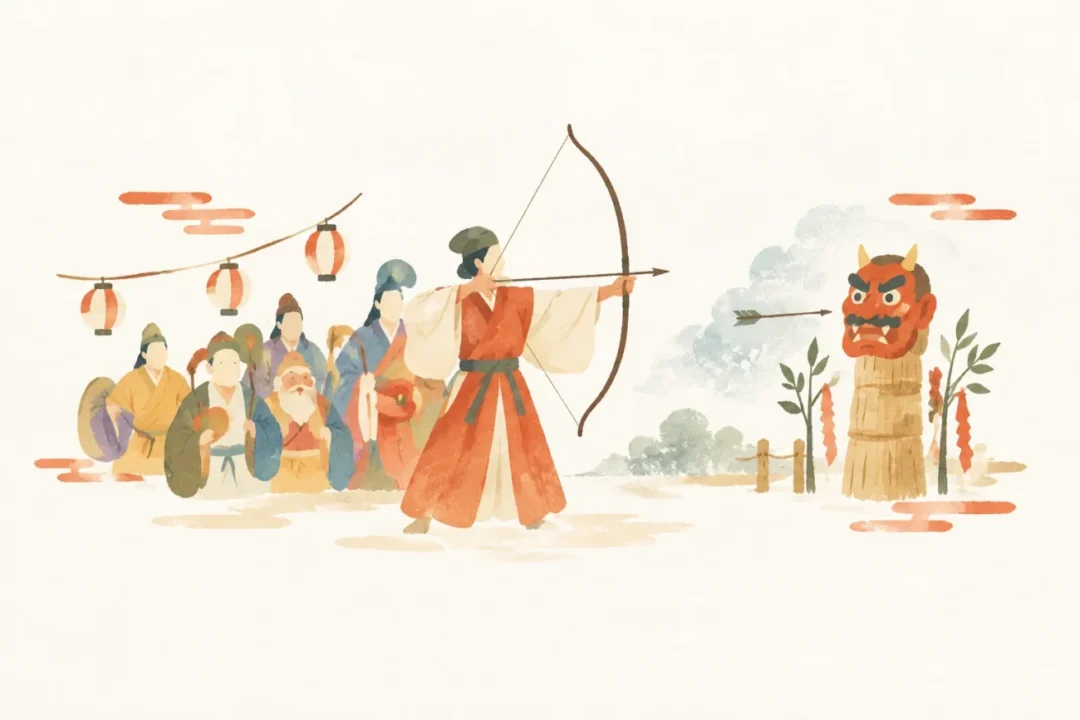
Obisha is a colloquial form of “obisha” (御歩射) and is described as a ritual in which people shoot arrows and divine good or bad fortune from how accurately they hit the target.
In Yoshikawa City, different Obisha events are held in 24 areas between January 3 and the first Horse Day of February, after the start of the year.
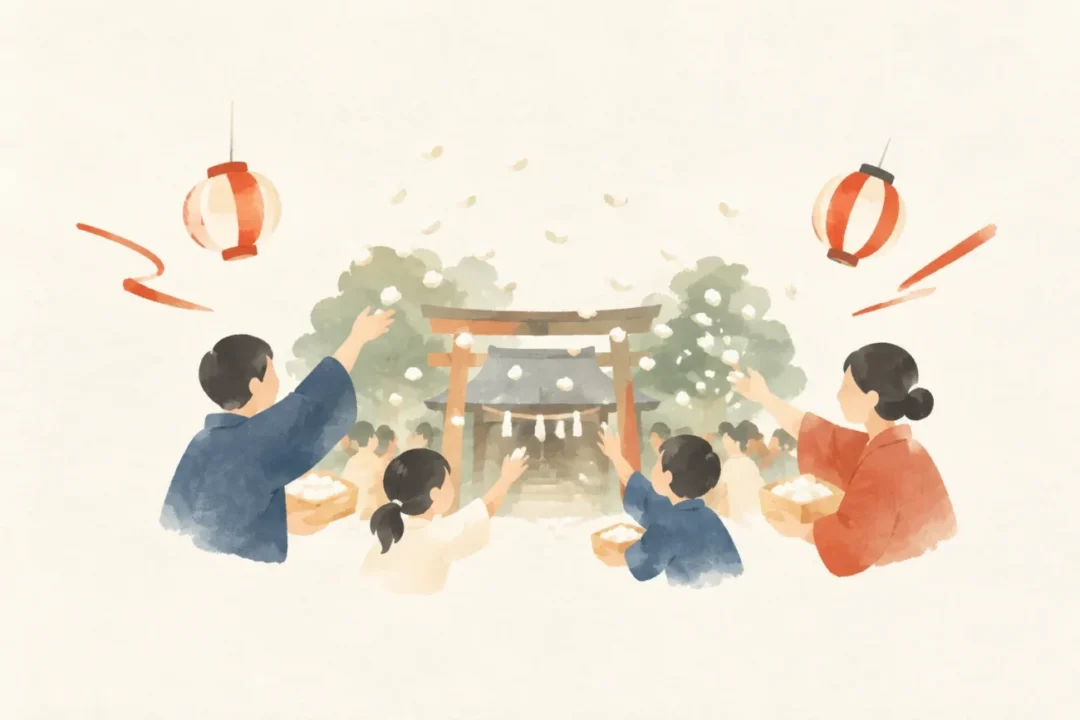
Local forms have been passed down, including yumitori-shiki at Yoshikawa Katori Shrine, miya-nage at Kumanozan Shrine, and arare-maki and arare-buttuke at Kyōkō Shrine.
Festival highlights
One highlight is how the form of the event varies by area, even though each is called Obisha.
At Yoshikawa Katori Shrine in the Yoshikawa area, yumitori-shiki is held, in which arrows are shot to pray for children’s growth. Miya-nage has been passed down at Kumanozan Shrine in the Kiuri area.
At Kyōkō Shrine in the Takatomi area, arare-maki is held; at Kyōkō Shrine in the Takaku area, arare-buttuke is held.
Some of these events have been designated as cultural properties.
Yoshikawa’s Obisha: local customs express wishes for abundant harvests and good health
What to expect
The events vary from area to area.
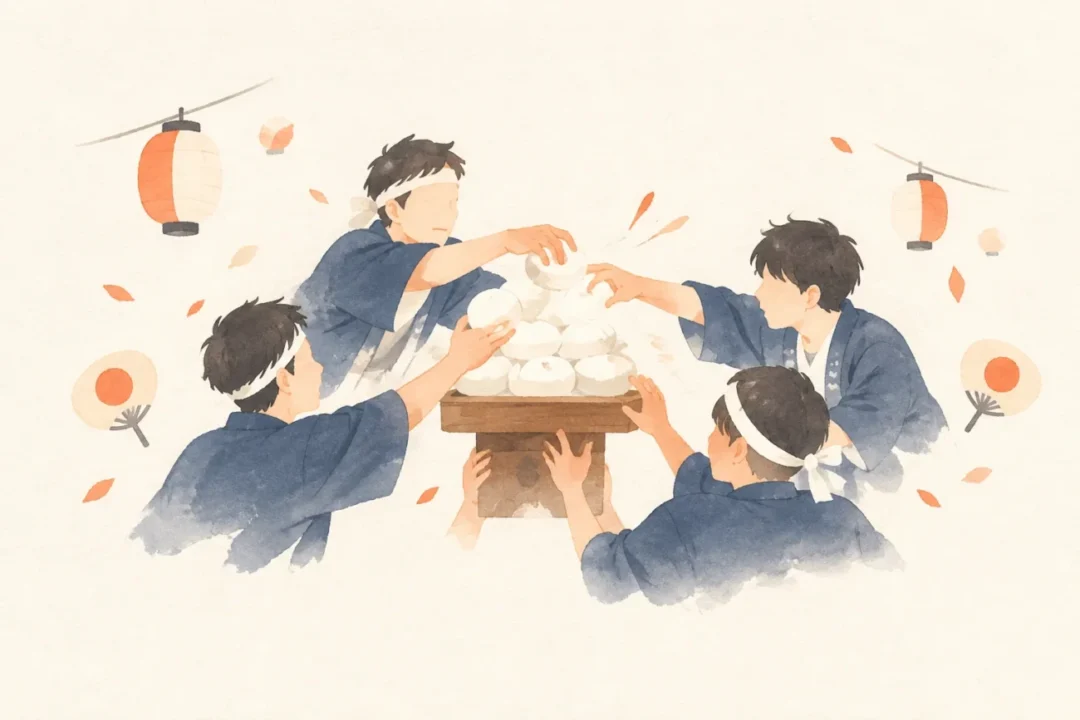
At the arare-buttuke at Kyōkō Shrine, people bring arare made from rice harvested the previous year, packed to the brim in jubako boxes. After prayers and a banquet, they throw the arare at one another.
This event is held to pray for abundant harvests and good health.
Other traditions involving bows or throwing have also been passed down, such as yumitori-shiki at Yoshikawa Katori Shrine and miya-nage at Kumanozan Shrine.
Location and access
- Venue
24 areas within Yoshikawa City, including Yoshikawa Katori Shrine, Kumanozan Shrine, and Kyōkō Shrine
Event venue 埼玉県吉川市 吉川市内の24地域
This map uses the venue name. Check the official guide for the event area and entrances.
Dates and season
- Season
Usually held between January 3 and the first Horse Day of February, after the start of the year
- Frequency
Every year
Accommodation and hotels PR
Showing nearby accommodation.
Prices and availability are current at the time of retrieval. For multi-night stays, only the first night’s price is shown. Confirm the final price and directions to the venue with the booking provider. Select your dates again when using the area search link. Search area: within 3 km of Central Saitama Prefecture / Yoshikawa City (the search is not centered on the festival venue)
Origins and History of Obisha in Yoshikawa City
Obisha is said to take its name from “obisha” (御歩射), a form of archery in which people shoot while standing or seated, as opposed to , in which archers shoot from horseback.
In the Kanto region, it is a rural shrine ritual found in the Tone River basin across Saitama, Chiba, and Ibaraki prefectures, and it has been passed down in several areas of Yoshikawa City.
In Yoshikawa City, local events such as yumitori-shiki, miya-nage, arare-maki, and arare-buttuke have been designated as cultural properties.
Obisha in Yoshikawa City at a Glance
Obisha in Yoshikawa City is a rural shrine ritual passed down in 24 areas of the city.
The name derives from “obisha” (御歩射). The basic form involves shooting arrows to divine good or bad fortune, with local events including yumitori-shiki, miya-nage, arare-maki, and arare-buttuke.
Some events involve throwing arare at one another to pray for abundant harvests and good health. They are said to take place between January 3 and the first Horse Day of February, after the start of the year.
Sources and references
Japanese Festivals.jp Editorial Team
Celebrating local culture and helping you discover a side of Japan you never knew.
Article updated: 2026/11/11