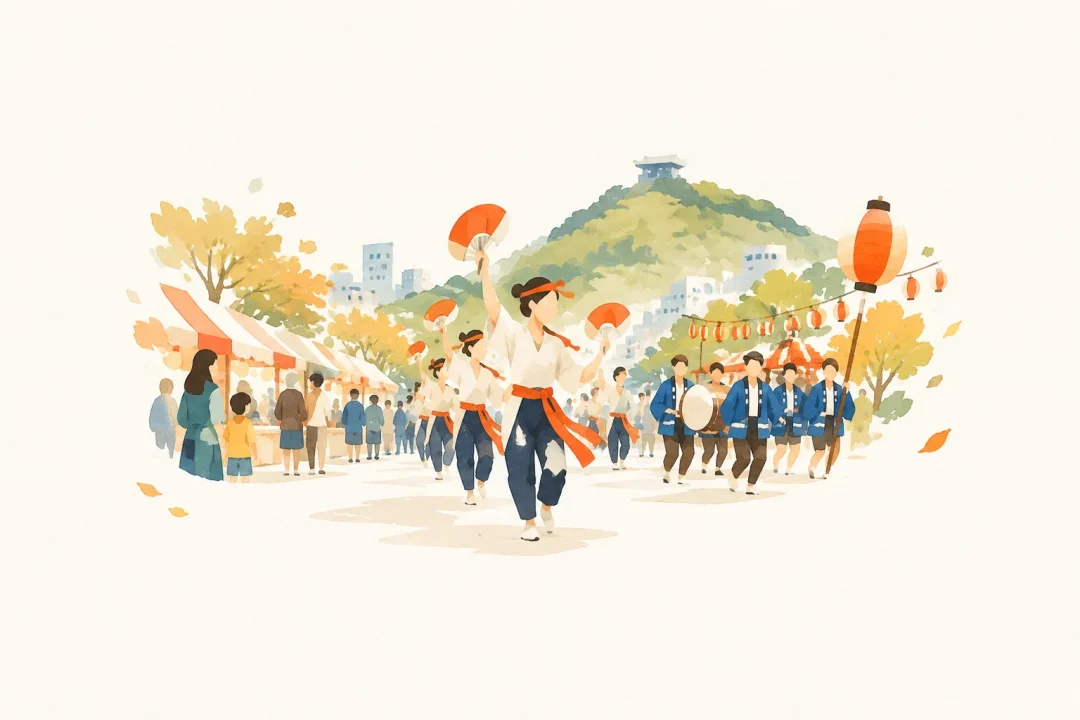
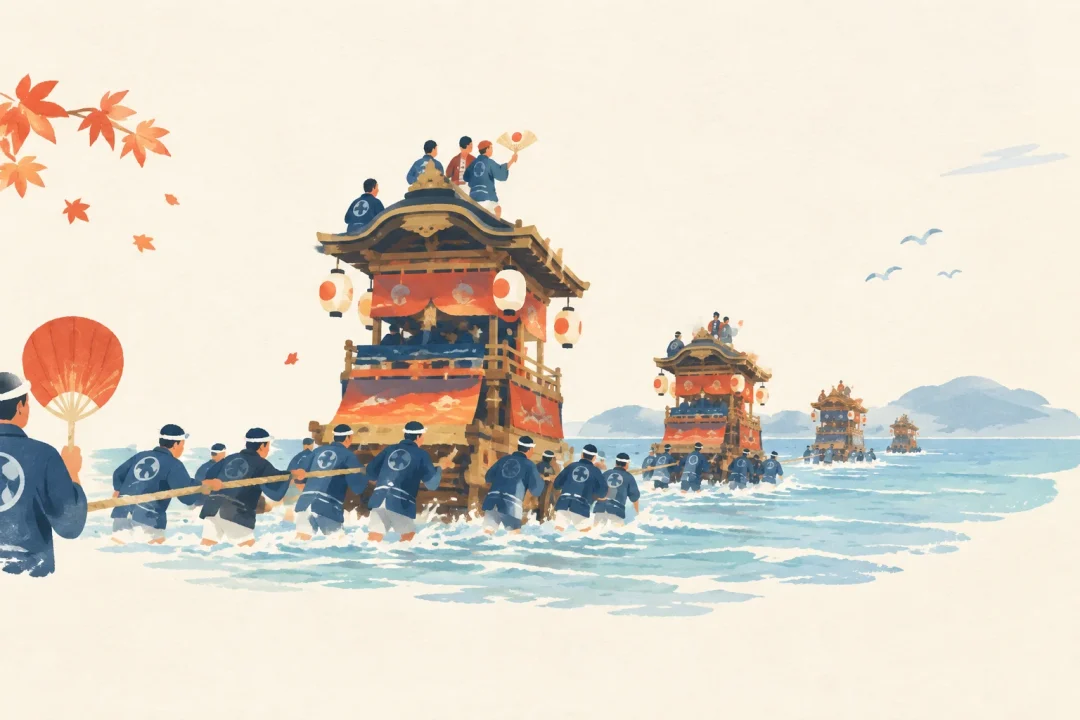
A traditional festival featuring dashi and karakuri puppets winding through Hira
The Hira Festival dashi event and Yutori Mikoshisha

Festival information
EVENT INFORMATION- Season / frequency
- It is said to be an autumn held on a Sunday in mid-October every year. The procession takes place once every 2 years. / Once every 2 years
- Location
- Rokusho Shrine
- Area
- Aichi Prefecture・Nagoya City(From Tokyo: approx. 1 h 40 min–2 h · bullet train)Prefecture-level estimate to a main station or airport, not the venue. Airport access, check-in and onward travel are extra; remote areas and islands can take much longer.
- Features
- Highlights and activities
- Participation / viewing
- Spectators welcome
- Last updated
- 2026/10/19
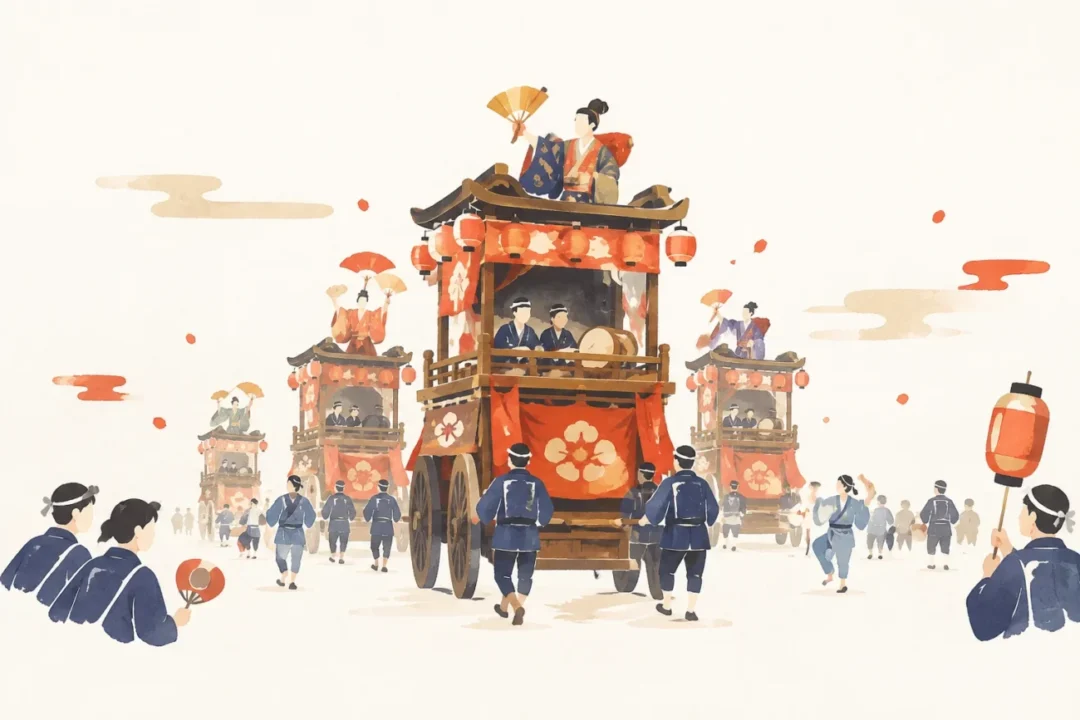
At the Hira Festival, handed down in Hira, Nishi Ward, Nagoya City, the Nifukujinsha and Yutori Mikoshisha, built during the Bunsei era, process through the neighborhood. Highlights include the gathering of the dashi in front of Rokusho Shrine and offerings featuring karakuri puppets and music.
About The Hira Festival dashi event and Yutori Mikoshisha
The Hira Festival is a dashi event carried on around Rokusho Shrine in Hira, Nishi Ward, Nagoya City.
The two dashi, Nifukujinsha and Yutori Mikoshisha, take part, with the local preservation association and residents supporting the festival.
The dashi are said to have been built during the Bunsei era, and the event continues to convey Hira’s history and local culture today.
Source: 比良学区(西区)の紹介|西区公式ウェブサイト / 湯取神子車 | 愛知県の山車まつりポータルサイト あいちの山車まつり
Festival highlights
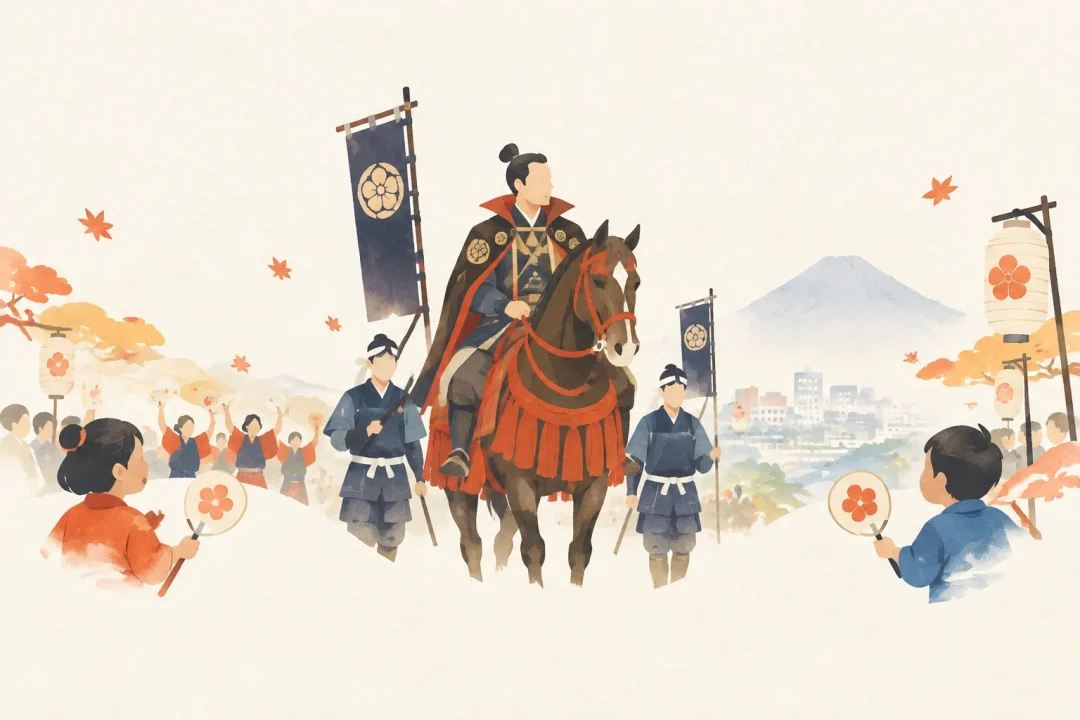
A highlight is the gathering of the two dashi, presented in front of Rokusho Shrine after processing through the neighborhood.
Scenes of the dashi facing one another and turning, along with hayashi music and offerings featuring karakuri puppets, are considered highlights of the festival.
The Yutori Mikoshisha is equipped with karakuri puppets representing a , a miko, and a flute player, among others.
A traditional festival featuring dashi and karakuri puppets winding through Hira
What to expect
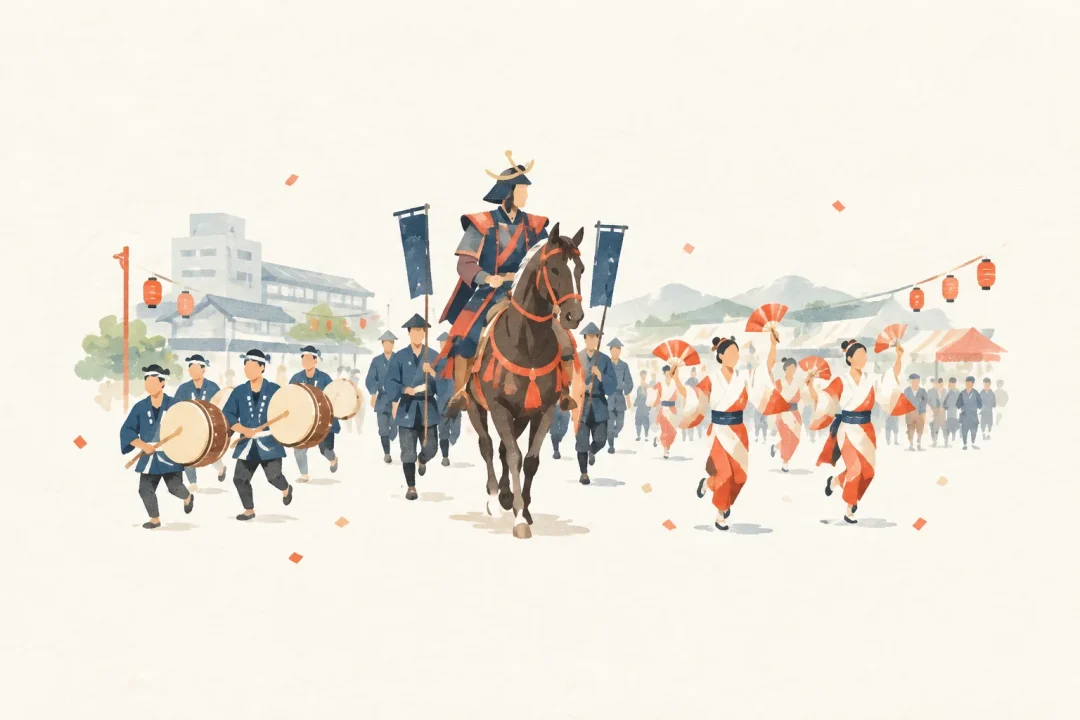
During the festival, the two dashi are pulled around the neighborhood, led by the preservation association, and gather in front of Rokusho Shrine.
At the event, you can enjoy the dashi facing one another and turning, along with hayashi music and offerings featuring karakuri puppets.
One feature of the event is that participants in the procession range from local elementary school students to middle-aged and older adults.
How to take part
The local preservation association and residents carry on the festival, with participants in the dashi procession ranging from elementary school students to middle-aged and older adults.
However, you will need to check the event guidance to find out whether visitors from outside the area can take part as dashi pullers.
Visitors can watch the procession through the neighborhood and the gathering of the dashi in front of Rokusho Shrine.
Location and access
- Venue and address
Rokusho Shrine (within Hira 3-chome, Nishi Ward, Nagoya City)
- Train and bus
The city bus stop “Hira” is right outside.
Address Within Hira 3-chome, Nishi Ward, Nagoya City, Aichi Prefecture
Dates and season
- Season
It is said to be an autumn reisai held on a Sunday in mid-October every year.
The dashi procession takes place once every 2 years.
- Frequency
Once every 2 years
Accommodation and hotels PR
Showing nearby accommodation.
Prices and availability are current at the time of retrieval. For multi-night stays, only the first night’s price is shown. Confirm the final price and directions to the venue with the booking provider. Select your dates again when using the area search link. Search area: within 3 km of Central Aichi Prefecture / Nagoya City (the search is not centered on the festival venue)
Tips for your visit
The dashi process through the neighborhood, so the scenes you see vary depending on where you watch.
In front of Rokusho Shrine, the dashi are said to gather, face one another and turn, and present offerings featuring karakuri puppets.
Please follow local guidance and the instructions of staff when watching, so as not to obstruct the procession or offerings.
Nearby attractions
Nearby, the cherry blossoms along Hebiike Embankment are introduced as part of the Hira school district’s traditions.
Hebiike Shrine is located below the Hebiike embankment, and the area holds spring and summer grand festivals.
Alongside Rokusho Shrine, the venue for the Hira Festival, you can experience Hira’s festival traditions and local scenery.

昭和美術館
愛知県名古屋市昭和区にある美術館
Pokémon The Park 2005
2005年に愛知県名古屋市のデ・ラ・ファンタジア内に開いていた遊園地

でんきの科学館
名古屋市中区栄の中部電力による企業博物館

トヨタ産業技術記念館
名古屋市西区の企業博物館

ノリタケの森
名古屋市西区にある複合施設

リニア・鉄道館
愛知県名古屋市港区にある鉄道博物館

レゴランド・ジャパン
愛知県名古屋市港区にあるテーマパーク

名古屋城
愛知県の城

名古屋市博物館
名古屋市瑞穂区に所在する歴史博物館

名古屋市科学館
愛知県名古屋市中区の白川公園内にある科学館

名古屋市美術館
愛知県名古屋市にある美術館

名古屋港水族館
名古屋市港区の水族館
Origins and History of The Hira Festival dashi event and Yutori Mikoshisha
The Hira Festival dashi are said to have been built during the Bunsei era and have been passed down for more than 180 years.
The Yutori Mikoshisha was built in Bunsei 5 and is described as modeled on the Yutori car of the former Kuwanamachi district’s Tōshōgū Festival.
Thanks to the efforts of the local preservation association and residents, the dashi procession is carried on every 2 years.
Official information
You can find information about the dashi names, festival locations, decorations, and karakuri puppets on Aichi Prefecture’s Dashi Festival Portal.
The official Nishi Ward, Nagoya City introduction describes the Hira Festival procession, the gathering of the dashi, and how the event is carried on in the community.
Nagoya City also includes the Hira Festival dashi event and the Yutori car in its list of images of city-designated cultural properties.
Source: 市指定文化財画像(無形民俗文化財)一覧|名古屋市公式ウェブサイト
The Hira Festival dashi event and Yutori Mikoshisha at a Glance
The Hira Festival is a traditional event in the Hira district, where two dashi passed down since the Bunsei era are pulled around Rokusho Shrine.
Highlights include the procession through the neighborhood, the gathering of the dashi, the dashi facing one another and turning, hayashi music, and offerings featuring karakuri puppets.
The local preservation association and residents protect the festival, with participants in the dashi procession ranging from elementary school students to middle-aged and older adults.
Japanese Festivals.jp Editorial Team
Celebrating local culture and helping you discover a side of Japan you never knew.
Article updated: 2026/10/19
Submit information or a correction Submit photos of this festival