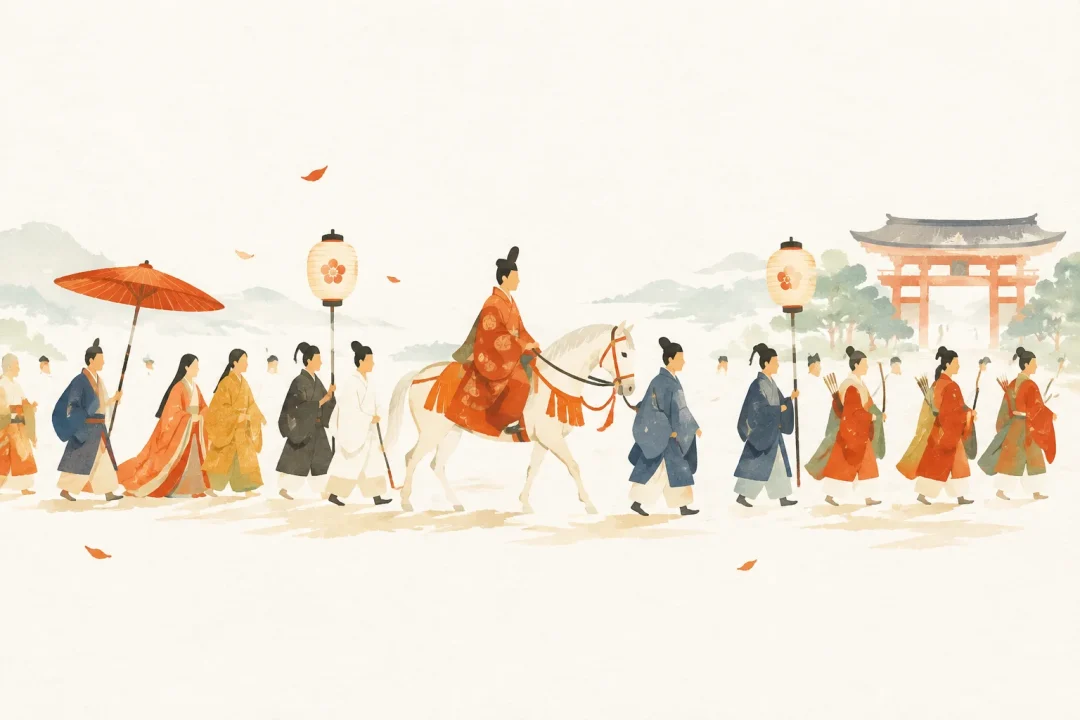
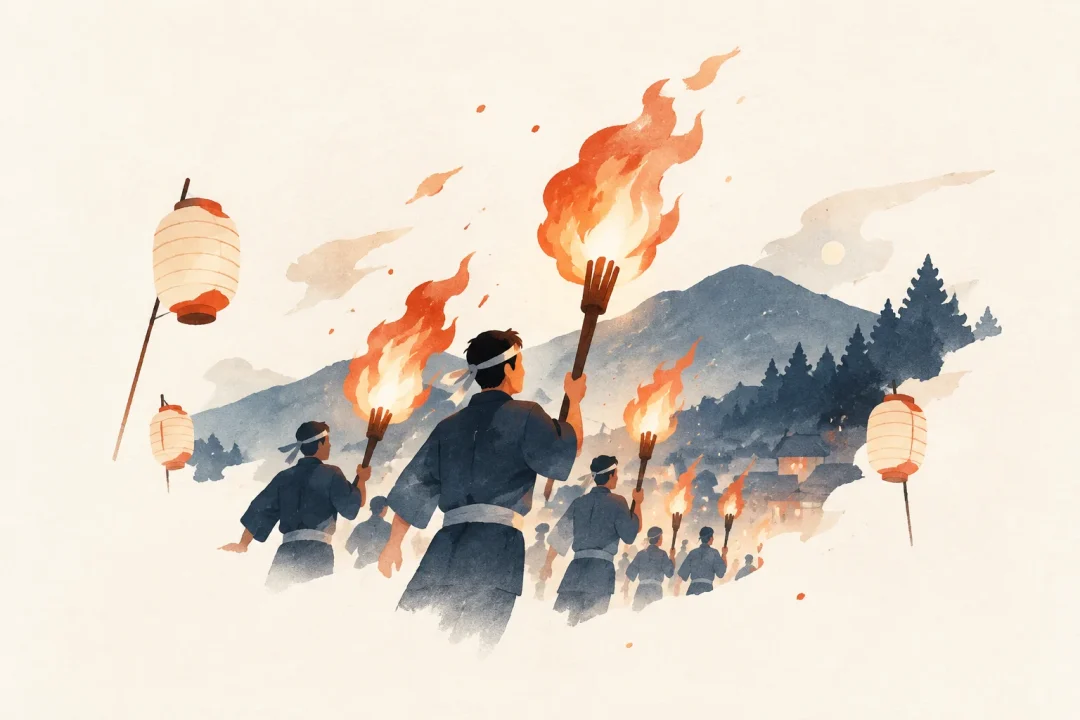
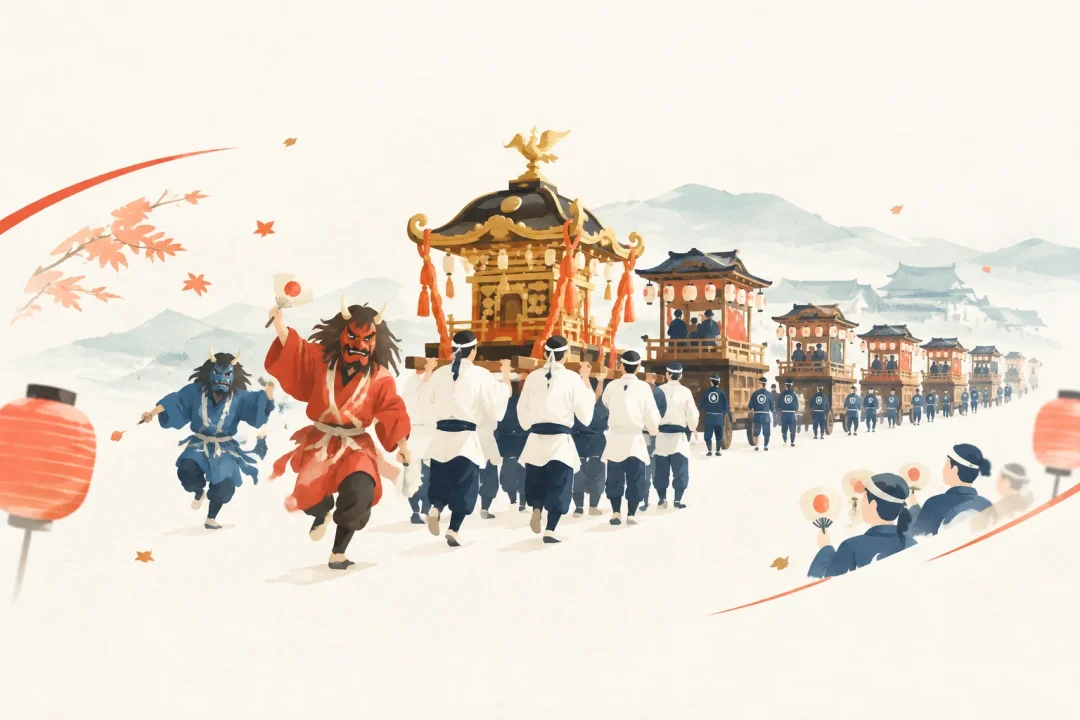
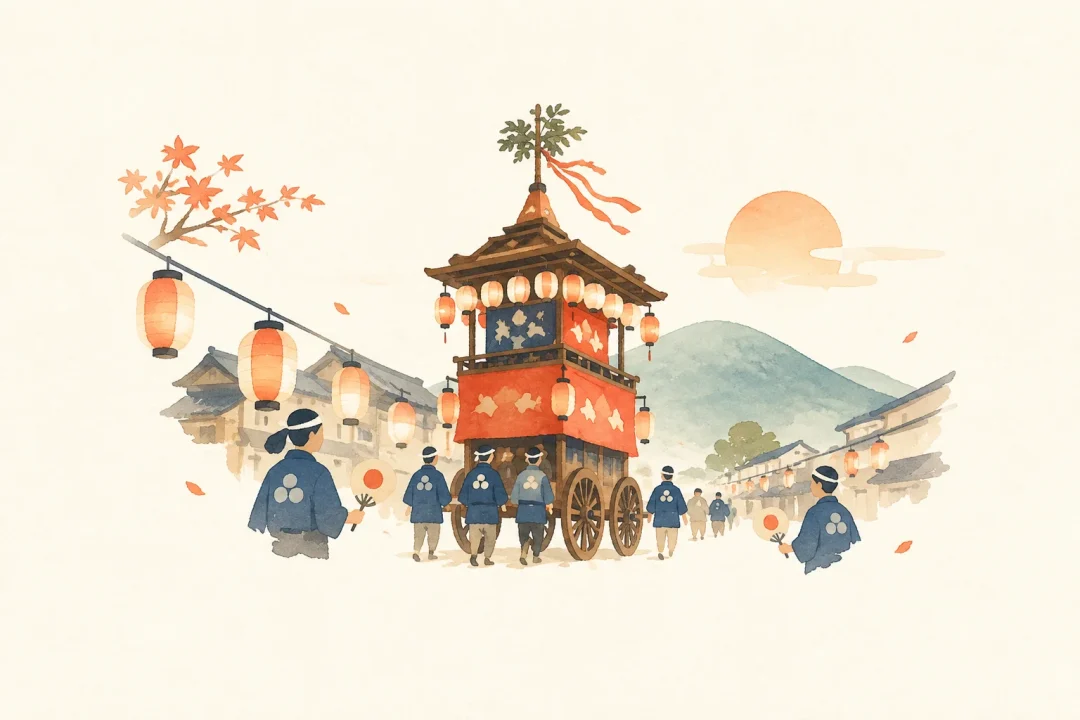
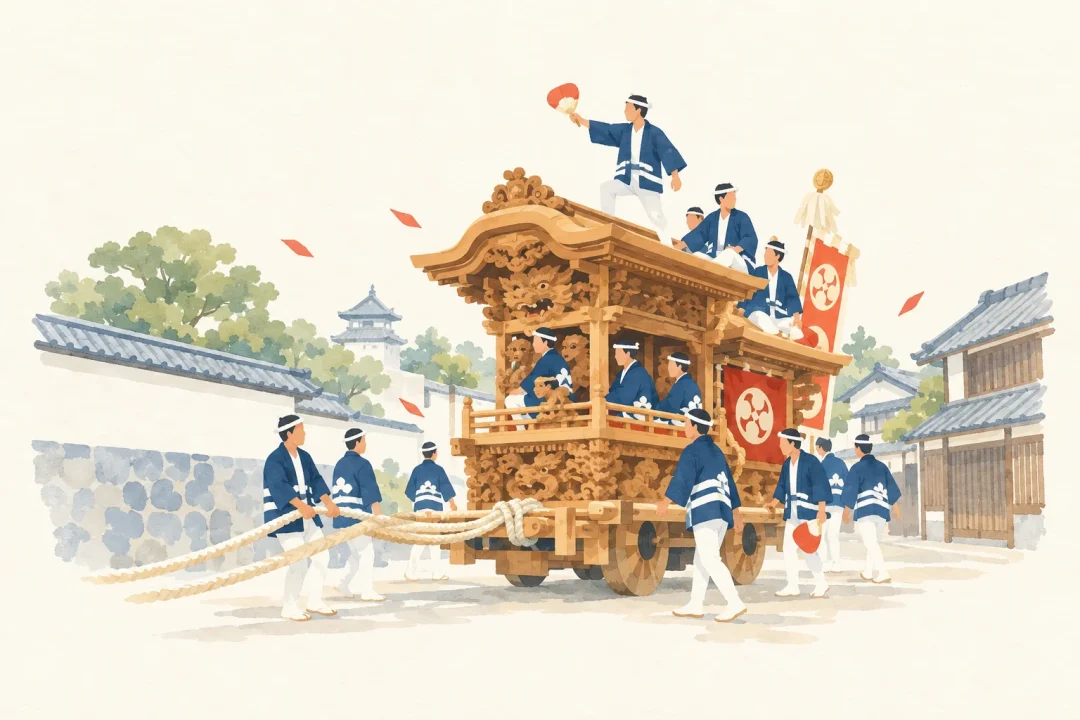
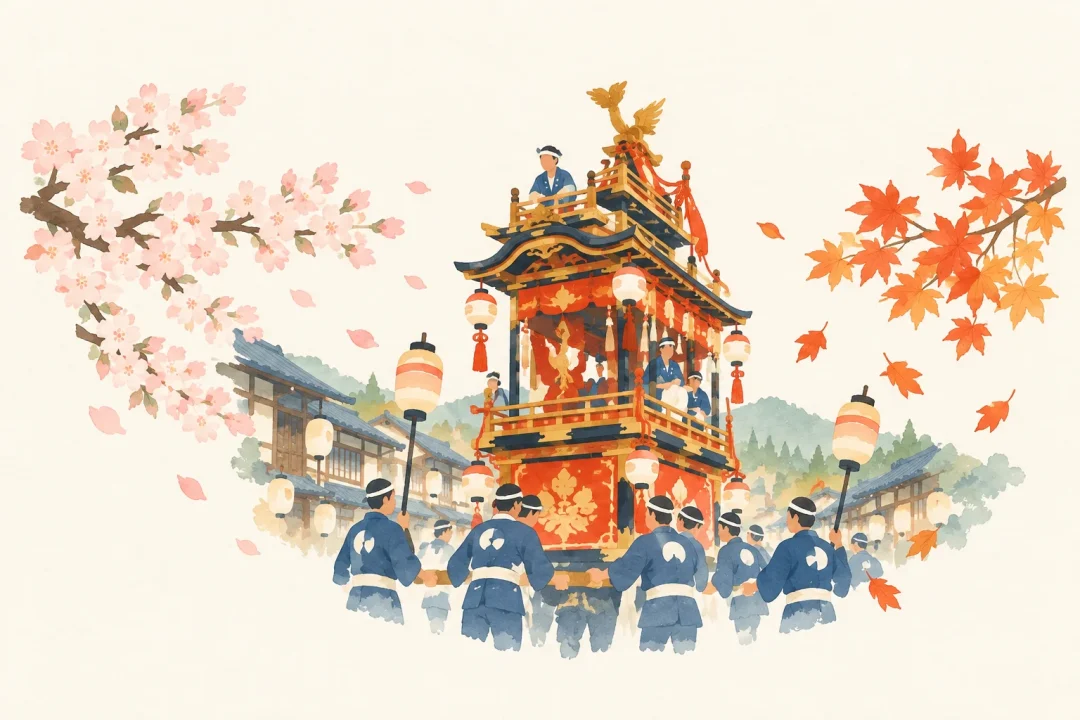
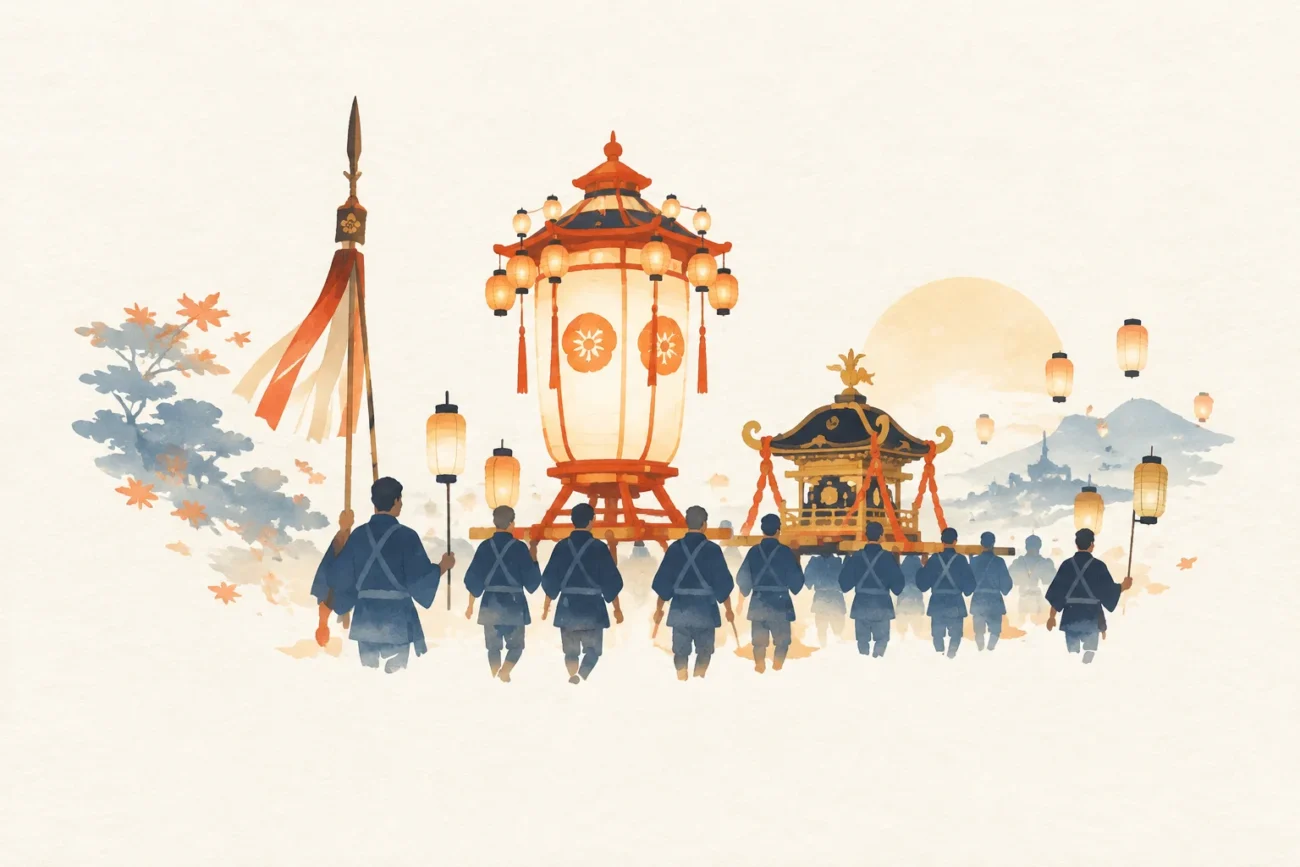
The ancient festival of Higashiyama, illuminated by the ringing bells of the kenhoko and the Daitoro
Awata Matsuri
The 2026 edition of Awata Matsuri has ended.
Festival information
EVENT INFORMATION- Dates
- 2026/10/10 〜 2026/10/15Ended
- Season / frequency
- Held every year from around Sports Day through the 15th in October. / Every year
- Location
- Awata Shrine and the surrounding parishioner districts
- Area
- Kyoto Prefecture・Higashiyama Ward, Kyoto(From Tokyo: approx. 2 h 10 min–2 h 40 min · bullet train)Prefecture-level estimate to a main station or airport, not the venue. Airport access, check-in and onward travel are extra; remote areas and islands can take much longer.
- Features
- Highlights and activities
- Participation / viewing
- Spectators welcome
- Last updated
- 2026/10/19
This autumn grand festival centers on Awata Shrine, with the kenhoko, , and Awata Daitoro processing through the parishioner districts. The lights of the night and traditional processions bring the spirit of a festival with more than 1,000 years of history into the present.
About Awata Matsuri
Awata Matsuri is an autumn grand festival held at Awata Shrine.
Kenhoko—said to be the prototype for the hoko floats of Gion Matsuri—process during the Shinko Festival, while the Awata Daitoro proceed through the parishioner districts during the Yo-watari .
The De-go Festival, Yo-watari Shinto Ritual, Shinko and Kanko Festivals, and Grand Festival take place on separate days, bringing the festivities beyond the and into the surrounding area.
Source: 粟田神社大祭(粟田祭)|【京都市公式】京都観光Navi
Festival highlights
Highlights include the kenhoko procession, with people supporting and walking with the long poles, and the Awata Daitoro moving through the town at night.
With a distinctive motion, the kenhoko bend the tips of their poles and ring bells attached to the shafts as they lead the mikoshi.
The Daitoro are floats that can reach 4 m in height, and their designs change every year.
Source: 京都市東山区役所:市民しんぶん東山区版「こちら東山」(平成25年9月15日号) / 粟田神社【粟田祭2026】見どころ,混雑-剣鉾は祇園祭の山鉾原形 - 京都観光旅行ガイド
The ancient festival of Higashiyama, illuminated by the ringing bells of the kenhoko and the Daitoro
What to expect
The festival consists of several Shinto rituals, and the program varies by day.
During the Yo-watari Shinto Ritual, the Daitoro process through the parishioner districts. During the Shinko Festival, the kenhoko lead the way, followed by the mikoshi procession.
On the final day, a ceremony is held in the main shrine building for the Grand Festival; offerings of ceremonial knife skills and court dance are also said to take place.
How to take part
Visitors can watch the event.
Location and access
- Venue and address
Awata Shrine (1 Awataguchi Kajicho, Higashiyama Ward, Kyoto, Kyoto Prefecture).
The processions also pass through the parishioner districts.
- Train and bus
Take Kyoto City Bus Route 5 to Jingu-michi and walk about 5 minutes.
About a 7-minute walk from Higashiyama Station on the Kyoto Municipal Subway Tozai Line.
Source: 粟田祭 | イベント一覧 | 京都府観光連盟公式サイト / 粟田神社大祭(粟田祭) | コヨミチ
Address 1 Awataguchi Kajicho, Higashiyama Ward, Kyoto, Kyoto Prefecture
Dates and season
2026年の開催案内(掲載日程は終了しています)
2026年は10月10日(土)から15日(木)まで開催される予定として案内されていました。
On the 10th, the De-go Festival is scheduled to begin at around 5:30 p.m.; on the 11th, the Yo-watari Shinto Ritual at 5 p.m.; on the 12th, the Shinko Festival at 10:30 a.m. and the Kanko Festival at around 5 p.m.; and on the 15th, the Grand Festival at 11 a.m.
Accommodation and hotels PR
Showing nearby accommodation.
Prices and availability are current at the time of retrieval. For multi-night stays, only the first night’s price is shown. Confirm the final price and directions to the venue with the booking provider. Select your dates again when using the area search link. Search area: within 3 km of Central Kyoto Prefecture / Higashiyama Ward, Kyoto (the search is not centered on the festival venue)
Tips for your visit
In 2026, choosing a day based on what you would like to see can make your visit easier to plan.
To see the Awata Daitoro, the main event is the Yo-watari Shinto Ritual on October 11. To see the kenhoko and mikoshi processions, focus on the Shinko Festival on October 12.
Nearby attractions
Nearby are Shoren-in Temple, Chion-in Temple, Murin-an, and the Lake Biwa Canal.
The Shinko Festival procession at Awata Matsuri is described as entering the grounds through Shoren-in’s four-legged gate with the mikoshi, highlighting the festival’s ties to nearby temples.
When sightseeing, it may be helpful to plan the festival procession and visits to cultural sites as separate activities.

京都タワー
京都府京都市下京区にある塔

京都国立博物館
京都市にある国立博物館

京都国立近代美術館
京都市左京区岡崎にある美術館

京都国際マンガミュージアム
日本の京都府京都市中京区にある日本最大の漫画博物館

京都市美術館
京都市左京区岡崎にある美術館

京都府立植物園
京都市左京区にある植物園

京都鉄道博物館
京都府京都市下京区にある鉄道博物館

Fushimi Inari Taisha
京都市伏見区にある神社

元離宮二条城
京都市にある城郭及び元皇室関連施設

Yasaka Shrine
京都市東山区にある神社

円山公園
京都市にある公園

Kitano Tenmangu Shrine
京都市上京区にある神社
Origins and History of Awata Matsuri
Awata Matsuri is said to have begun in the Heian period and has a history of more than 1,000 years.
It is also said that when Gion Matsuri could not be held during the Muromachi period, Awata Matsuri took its place as the Gion Goryoe.
The Awata Daitoro was discontinued once around the end of the Edo period, but was revived in Heisei 20 with the enthusiasm of the local community and the support of Kyoto University of Art and Design.
Official information
Official information about Awata Shrine is available on the Awata Shrine website.
問い合わせ先として粟田神社の電話番号075-551-3154とメールアドレスinfo@awatajinja.jp is listed.
Information on the 2026 dates and times of each Shinto ritual is also available through Kyoto City’s official tourism information.
Source: 粟田神社|【京都市公式】京都観光Navi
Awata Matsuri at a Glance
Awata Matsuri is an autumn grand festival at Awata Shrine, with the kenhoko, mikoshi, and Awata Daitoro appearing on different days.
2026年は10月10日から15日まで、出御祭、夜渡り神事、神幸祭・還幸祭、例大祭が行われる予定として案内されていました。
The main viewing days are the 11th for the Daitoro and the 12th for the kenhoko and mikoshi. The venues are Awata Shrine and the surrounding parishioner districts.
Japanese Festivals.jp Editorial Team
Celebrating local culture and helping you discover a side of Japan you never knew.
Article updated: 2026/10/19
Submit information or a correction Submit photos of this festival