A purification rite of arrows and dance, passed down in the darkness
Akumabarai
Festival information
EVENT INFORMATION- Season / frequency
- Mid-September / Every year
- Location
- Mukaimotori Hakusan Shrine
- Area
- Ishikawa Prefecture・Komatsu City(From Tokyo: approx. 2 h 30 min–3 h · bullet train)Prefecture-level estimate to a main station or airport, not the venue. Airport access, check-in and onward travel are extra; remote areas and islands can take much longer.
- Features
- Highlights and activities
- Wishes behind the festival
- Last updated
- 2026/10/24
Akumabarai, passed down in Mukaimotori-machi, Komatsu City, is a type of sato- in which masked dancers perform henbai and the shichigosan dance, along with gestures of shooting arrows toward the four corners and the kimon direction.
About Akumabarai
Akumabarai is a type of sato-kagura passed down at Mukaimotori Hakusan Shrine in Mukaimotori-machi, Komatsu City, Ishikawa Prefecture.
The event is rooted in a legend that, in a region once plagued by flooding caused by Imiega Lagoon overflowing and by epidemics, a beautiful woman calling herself the Hakusan deity appeared and performed a purification dance.
The dance has been passed down and is performed each year on the night the shrine's autumn festival ends in September.
It is said to date back at least to the Muromachi period and has been designated an Intangible Folk Cultural Property of Komatsu City as an event that preserves old techniques.
Source: PDF資料
Festival highlights
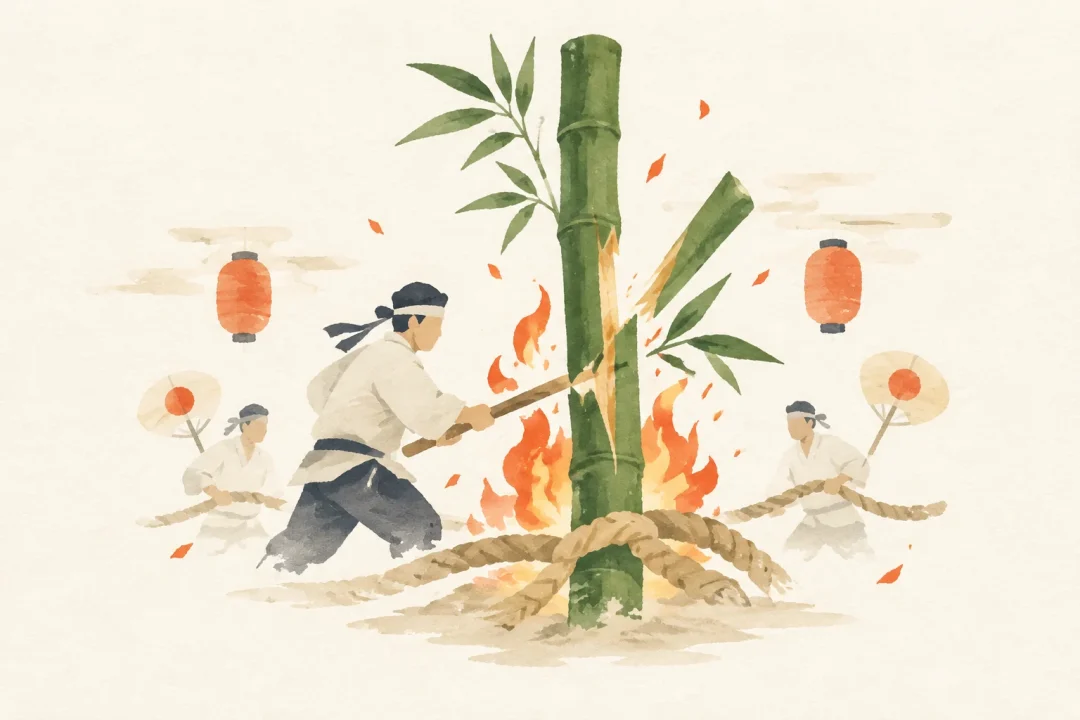
In the evening, 4 green bamboo poles are set up in front of the , and a square performance area is formed with a .
After offerings of and , the lights in the are turned off, and a male-masked dancer appears, led by 4 lantern bearers.
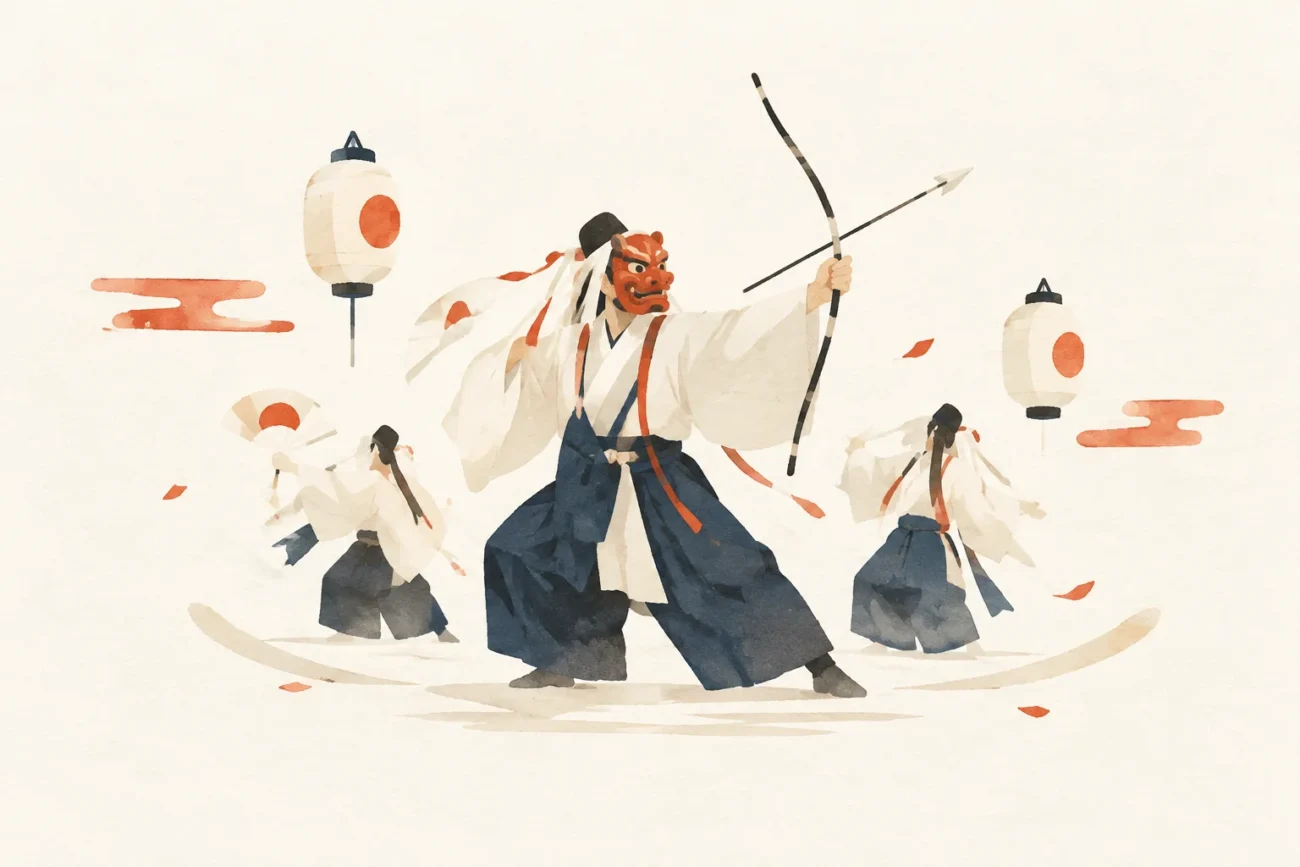
The dancer performs gestures of shooting arrows toward the four corners while stamping his feet in henbai and performing the shichigosan dance, then shoots an arrow toward the kimon direction.
A masked dancer representing a woman then appears, and the two dancers silently repeat the same movements.
A purification rite of arrows and dance, passed down in the darkness
What to expect
The event begins with preparing the performance area in the evening.
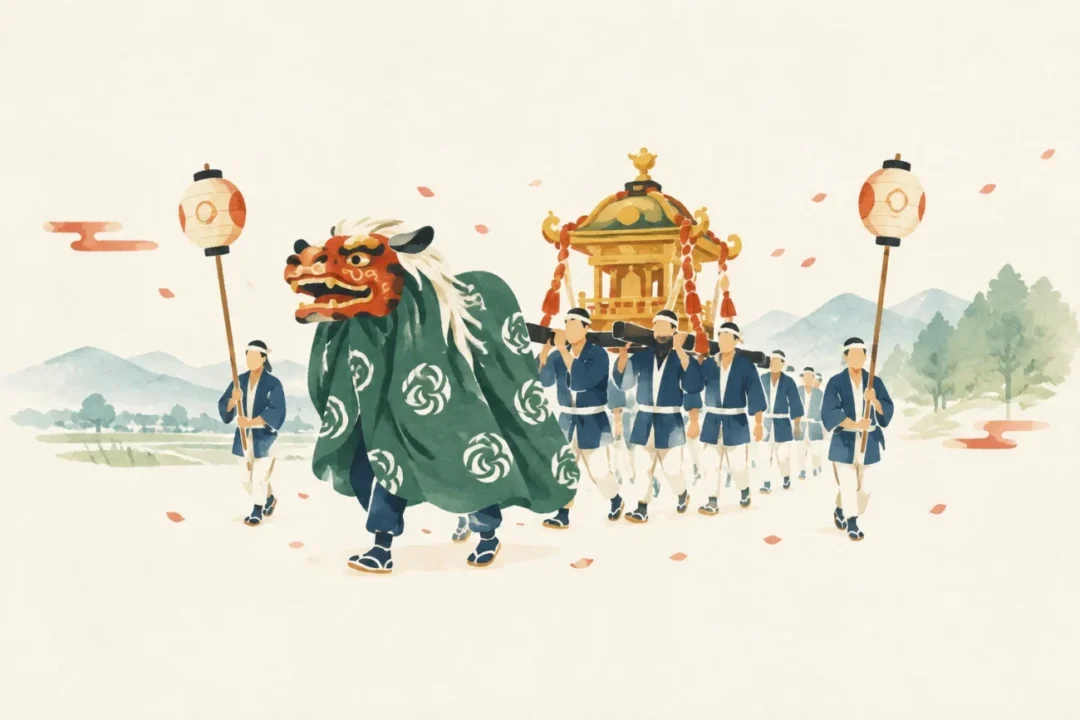
When the offerings of taiko and shishimai are over, the shrine grounds are darkened, and a male-masked dancer appears, led by lantern bearers.
The male-masked dancer performs gestures of shooting arrows toward the four corners while stamping his feet in henbai and performing the shichigosan dance, then repeats the same movements alongside a female-masked dancer dressed as a pregnant woman.
At the end, an arrow is shot toward the kimon direction, the male-masked dancer snaps and discards an arrow, and the two dancers leave.
Location and access
- Venue and address
Mukaimotori Hakusan Shrine / Mukaimotori-machi, Komatsu City
Address Mukaimotori-machi, Komatsu City
Dates and season
- Season
Mid-September
- Frequency
Every year
Accommodation and hotels PR
Showing nearby accommodation.
Prices and availability are current at the time of retrieval. For multi-night stays, only the first night’s price is shown. Confirm the final price and directions to the venue with the booking provider. Select your dates again when using the area search link. Search area: within 3 km of Central Ishikawa Prefecture / Komatsu City (the search is not centered on the festival venue)
Nearby attractions

加賀 伝統工芸村 ゆのくにの森
石川県小松市粟津温泉にある伝統工芸のテーマパーク

小松市立ポッポ汽車展示館
石川県小松市にある鉄道保存展示施設

小松市立博物館
石川県小松市にある博物館

日本自動車博物館
石川県小松市にある博物館

石川県立航空プラザ
日本の石川県、小松市にある航空博物館
Origins and History of Akumabarai
Akumabarai is a type of sato-kagura said to date back at least to the Muromachi period.
The current event carries on a purification dance from a legend of the Hakusan deity, said to have calmed flooding of Imiega Lagoon and an epidemic that spread afterward.
The male mask represents an elderly man and the female mask a middle-aged woman. The masks are thought to be amateur works from the late early-modern period.
In Showa 38, November 3, it was designated an Intangible Folk Cultural Property of Komatsu City.
Official information
A cultural property record for Akumabarai is listed under “Cultural Properties of Komatsu City” on the Komatsu City website.
Details of its origins and dance sequence can be found in the “Akumabarai” PDF linked from that page.
Source: 小松市の文化財/小松市ホームページ
Akumabarai at a Glance
Akumabarai in Mukaimotori-machi, Komatsu City, is a type of sato-kagura rooted in a legend that it calmed flooding of Imiega Lagoon and an epidemic.
On the night the autumn festival at Mukaimotori Hakusan Shrine ends, masked dancers perform in an area enclosed by green bamboo and a shimenawa, following offerings of taiko and shishimai.
Its distinctive features include silent movements of stamping the feet and performing the shichigosan dance, as well as gestures of shooting arrows toward the four corners and the kimon direction.
It is said to date back at least to the Muromachi period and is a designated Intangible Folk Cultural Property of Komatsu City that preserves old techniques.
Japanese Festivals.jp Editorial Team
Celebrating local culture and helping you discover a side of Japan you never knew.
Article updated: 2026/10/24
Submit information or a correction Submit photos of this festival