A summer festival in Kibashi where a giant guzu parades through town, dispelling misfortune with fire and dance
Guzu-yaki Festival
Festival information
EVENT INFORMATION- Season / frequency
- 2 days, Saturday and Sunday in late August / Every year
- Location
- Around Furihashi Shrine and Kibashi Station
- Area
- Ishikawa Prefecture・Kaga City(From Tokyo: approx. 2 h 30 min–3 h · bullet train)Prefecture-level estimate to a main station or airport, not the venue. Airport access, check-in and onward travel are extra; remote areas and islands can take much longer.
- Features
- Highlights and activities
- Wishes behind the festival
- Participation / viewing
- Spectators welcome
- Last updated
- 2026/10/19
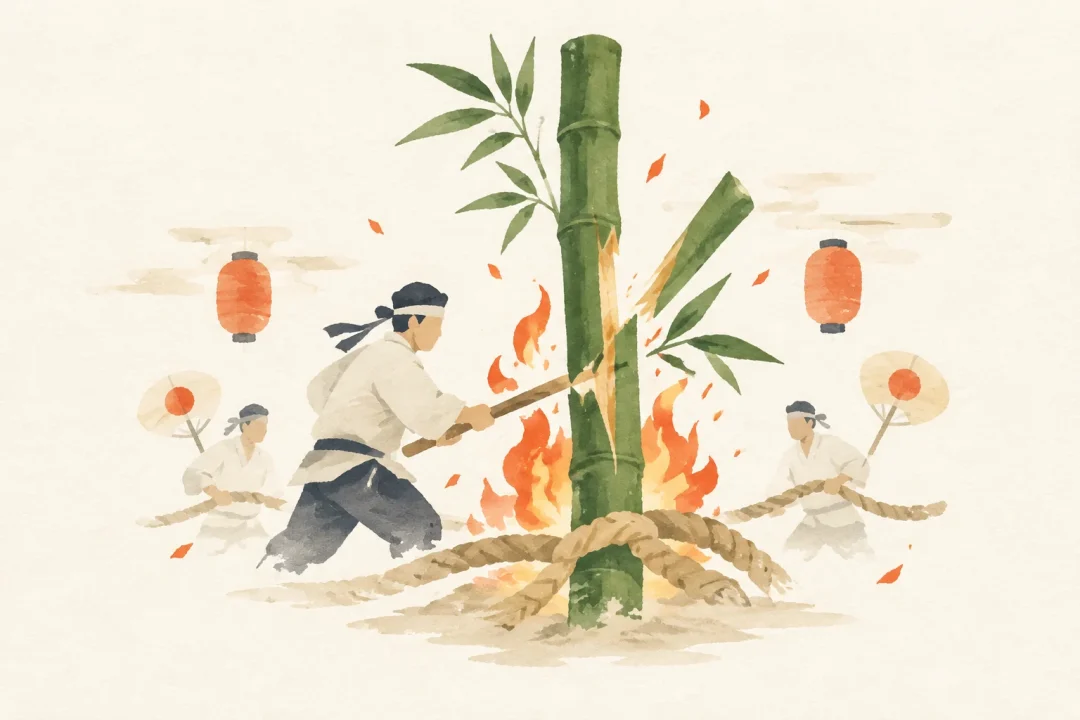
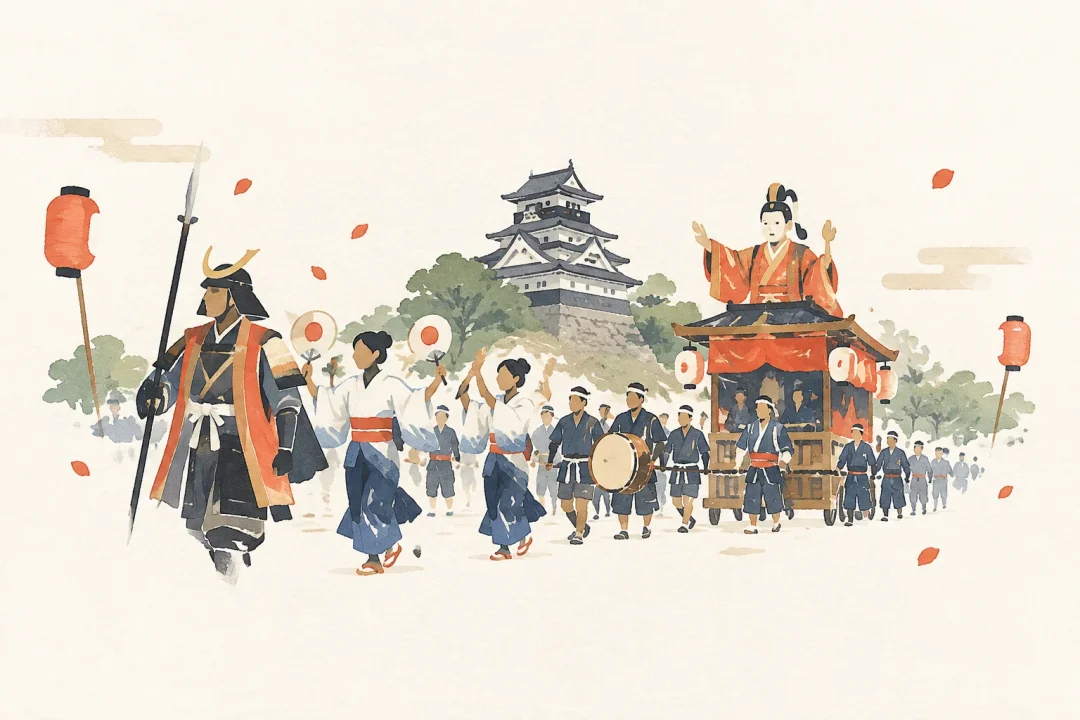
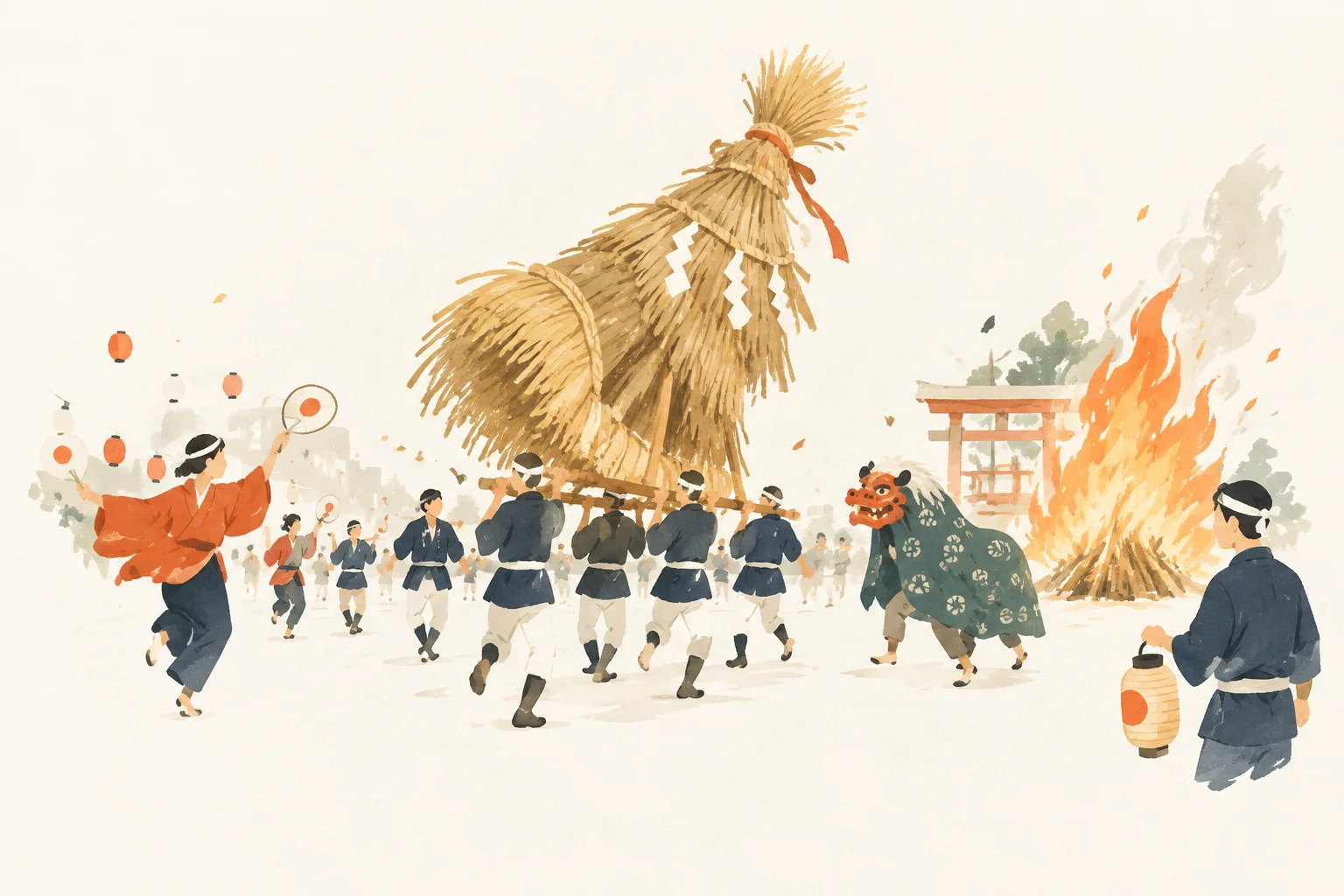
A traditional event in which people carry a giant guzu made of bamboo and straw through Kibashi before burning it at Furihashi Shrine. The festival is enlivened by the lively dance in front of the station, , and .
Photo credits and terms of use
Photographer: Hurohukidaikon File:Guzu going round the fire 4.jpg / Wikimedia Commons / CC BY-SA 4.0 Own work by the contributorDisplay size only adjusted.May differ from the event currently featured.Photo credits and terms of use
Photographer: おかかつお File:ぐず焼きまつり.jpg / Wikimedia Commons / CC BY-SA 4.0 Own work by the contributorDisplay size only adjusted.May differ from the event currently featured.Photo credits and terms of use
Photographer: Hurohukidaikon File:People dancing Furihashi-bushi 3.jpg / Wikimedia Commons / CC BY-SA 4.0 Own work by the contributorDisplay size only adjusted.May differ from the event currently featured.About Guzu-yaki Festival
The Guzu-yaki Festival is a traditional end-of-summer event held mainly at Furihashi Shrine in Kibashi Town, Kaga City, Ishikawa Prefecture.
People carry a large “guzu” made of bamboo and straw through the town, then burn it at the end while praying for good health, abundant harvests, and peace in the community.
Local residents support the festival, which unfolds around Kibashi Station and in the shrine precincts.
Source: ぐず焼まつり|イベント|【公式】石川県の観光/旅行サイト「ほっと石川旅ねっと」 / 8/29(土)・30(日) ぐず焼まつり 開催|お知らせ|【公式】加賀温泉郷|北陸・石川県加賀市の観光サイト
Festival highlights
The main highlight is the young men and boys in white tabi socks carrying a 7–8-meter-long guzu through the town to shouted calls.
Several guzu gather in front of Kibashi Station and perform a spectacular lively dance.
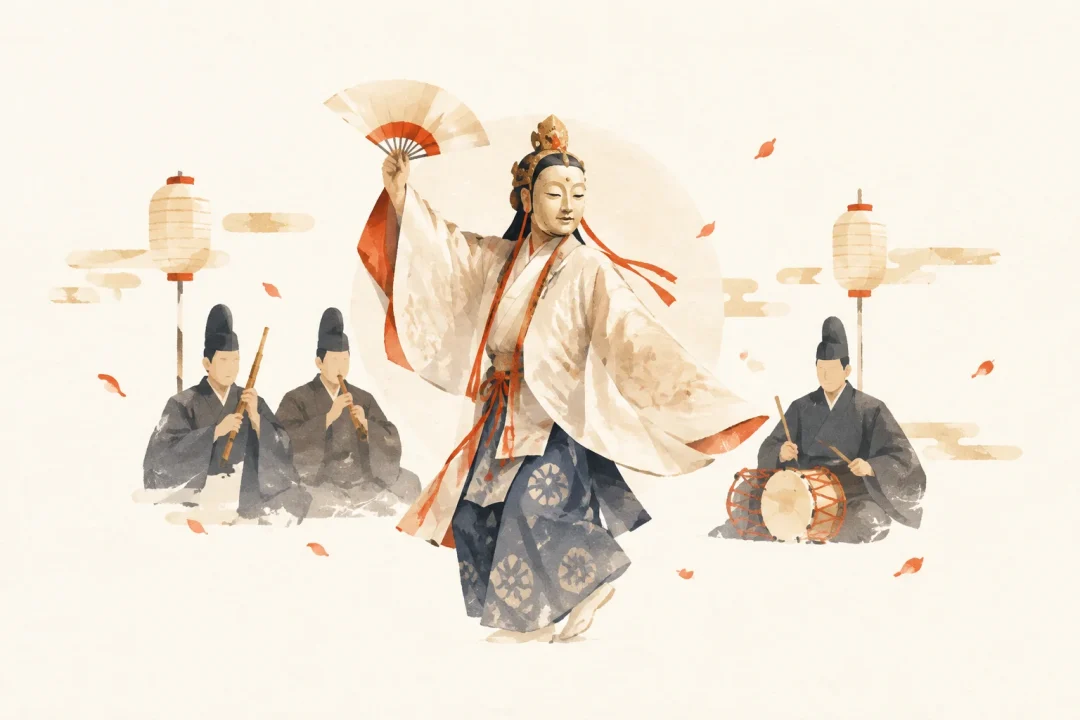
The guzu is then burned in the precincts of Furihashi Shrine, while people continue the Furihashi-bushi circle dance beside the flames.
A summer festival in Kibashi where a giant guzu parades through town, dispelling misfortune with fire and dance
What to expect
Ahead of the festival, local young people build a giant guzu by assembling bamboo and straw around a wooden frame.
On the festival day, carriers parade the guzu through town, perform a lively dance in front of the station, then return to the shrine precincts for the burning ritual.
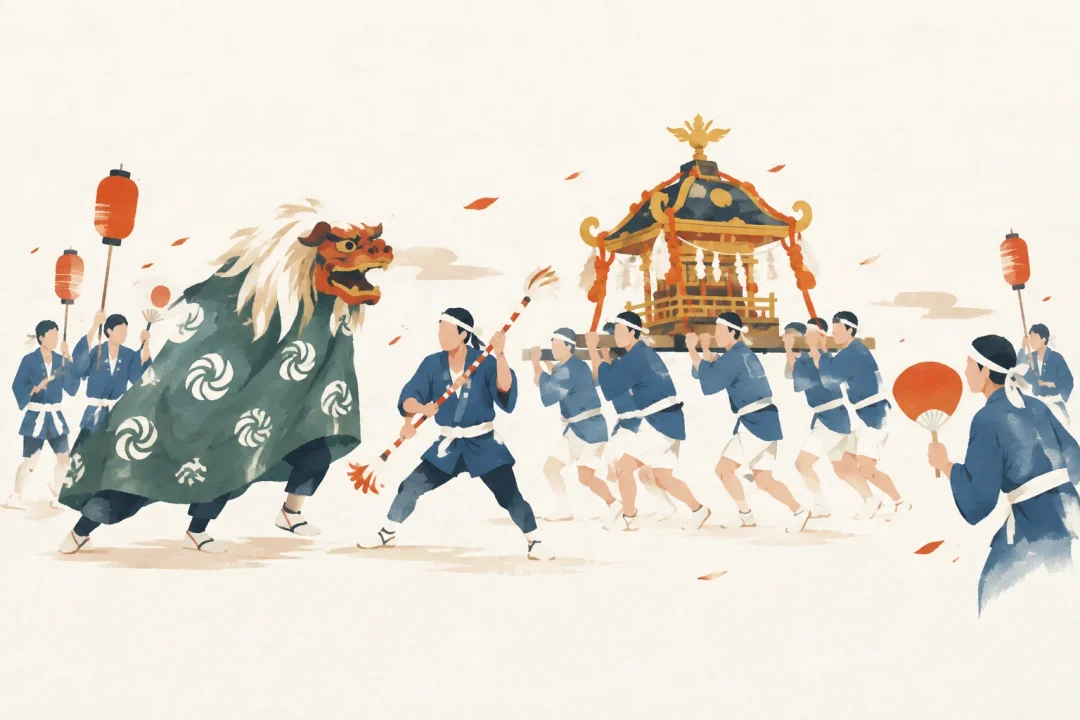
The program also includes lion dances, a children’s procession, Bon Odori, a festival market, and fireworks.
How to take part
The guzzu is carried by local participants, primarily young men and boys.
General visitors can watch the procession through the Togihashi area, the exuberant dancing in front of the station, and events within the .
Location and access
- Venue and address
Around Furihashi Shrine and Kibashi Station.
The address is Ru 180-1, Kibashi Town, Kaga City, Ishikawa Prefecture.
- Train and bus
Take a local train on the IR Ishikawa Railway Line from Kagaonsen Station for 3 minutes to Kibashi Station. Furihashi Shrine is about 650 m from Kibashi Station.
Another source says the shrine is about a 10-minute walk, or about 0.7 km, from Kibashi Station.
- By car
About 7.9 km from Katayamazu IC on the Hokuriku Expressway.
- Parking
Parking is listed as “none.”
Source: ぐず焼き祭り - Wikipedia
Address Ru 180-1, Kibashi Town, Kaga City, Ishikawa Prefecture 922-0331
Dates and season
- Season
2 days, Saturday and Sunday in late August
- Frequency
Every year
Accommodation and hotels PR
Showing nearby accommodation.
Prices and availability are current at the time of retrieval. For multi-night stays, only the first night’s price is shown. Confirm the final price and directions to the venue with the booking provider. Select your dates again when using the area search link. Search area: within 3 km of Central Ishikawa Prefecture / Kaga City (the search is not centered on the festival venue)
Tips for your visit
The guzu parade moves from the streets of Kibashi Town to the station area and Furihashi Shrine, so viewing locations vary depending on the event.
As the guzu is burned as part of a fire ritual in the shrine precincts, follow on-site instructions and watch from a safe distance.
The program may change due to weather and other conditions, so check the event status and transportation information on the day.
Nearby attractions

深田久弥山の文化館
石川県加賀市の博物館・美術館のスポットです。

石川県九谷焼美術館
石川県加賀市にある美術館
Origins and History of Guzu-yaki Festival
According to tradition at Furihashi Shrine, Ōnamuchi-no-Mikoto defeated a giant serpent that was attacking people, and the grateful people built a small shrine.
In the past, the “Kuzuyaki Festival,” in which firewood was burned in the shrine precincts, was held. The present form of the festival is said to have begun in the early Showa era, incorporating a legend about a giant serpent.
It is said that after large bonfires were prohibited in Showa 2, the tradition of making and carrying a guzu in place of firewood began in Showa 3.
Official information
For inquiries about the event, contact the Guzu-yaki Festival Organizing Committee (Kibashi Town Community Center).
The phone number is 0761-74-0715.
Related information is available on the official Kibashi Town website and the official Instagram account of the Kibashi Youth Association.
Guzu-yaki Festival at a Glance
The Guzu-yaki Festival is a distinctive traditional event in which people carry a large guzu made in Kibashi Town through the streets and burn it at the end.
The festival moves between the town and the shrine, with highlights including a lively dance in front of Kibashi Station, the burning at Furihashi Shrine, Bon Odori, and lion dances.
Information about the 2026 schedule conflicts, so check before visiting.
Japanese Festivals.jp Editorial Team
Celebrating local culture and helping you discover a side of Japan you never knew.
Article updated: 2026/10/19
Submit information or a correction Submit photos of this festival