Tajima’s Traditional Festival, Featuring the Nanagyoki Procession and Dashi-Float Kabuki
Aizu Tajima Gion Festival
The 2026 edition of Aizu Tajima Gion Festival has ended.
Festival information
EVENT INFORMATION- Dates
- 2026/07/22 〜 2026/07/24Ended
- Season / frequency
- July 22–24 / Every year
- Location
- Around Tadeuka Shrine and Kumano Shrine in the Tajima district of Minamiaizu Town
- Area
- Fukushima Prefecture・Minamiaizu Town(From Tokyo: approx. 1 h 20 min–1 h 40 min · bullet train)Prefecture-level estimate to a main station or airport, not the venue. Airport access, check-in and onward travel are extra; remote areas and islands can take much longer.
- Highlights and activities
- Participation / viewing
- Open to public participation / spectators welcome
- Last updated
- 2026/10/19
A traditional 3-day festival featuring religious rites and performing arts passed down in Tajima, including the Nanagyoki Procession, the procession, and -float kabuki.
Photo credits and terms of use
Photographer: Qwert1234 File:Aizu-tajima Gionsai, Oyatai-unkou.JPG / Wikimedia Commons / CC BY-SA 4.0 Qwert1234's fileDisplay size only adjusted.May differ from the event currently featured.About Aizu Tajima Gion Festival
The Aizu Tajima Gion Festival is a traditional event passed down in Tajima, Minamiaizu Town, as a festival of Tadeuka Shrine and Kumano Shrine.
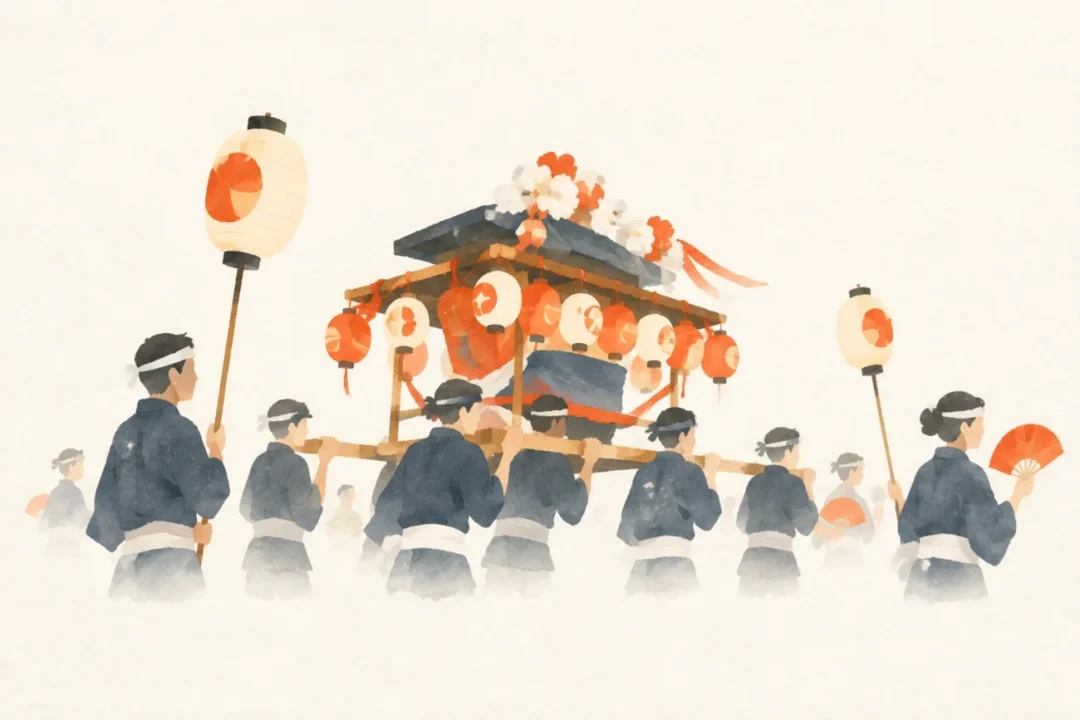
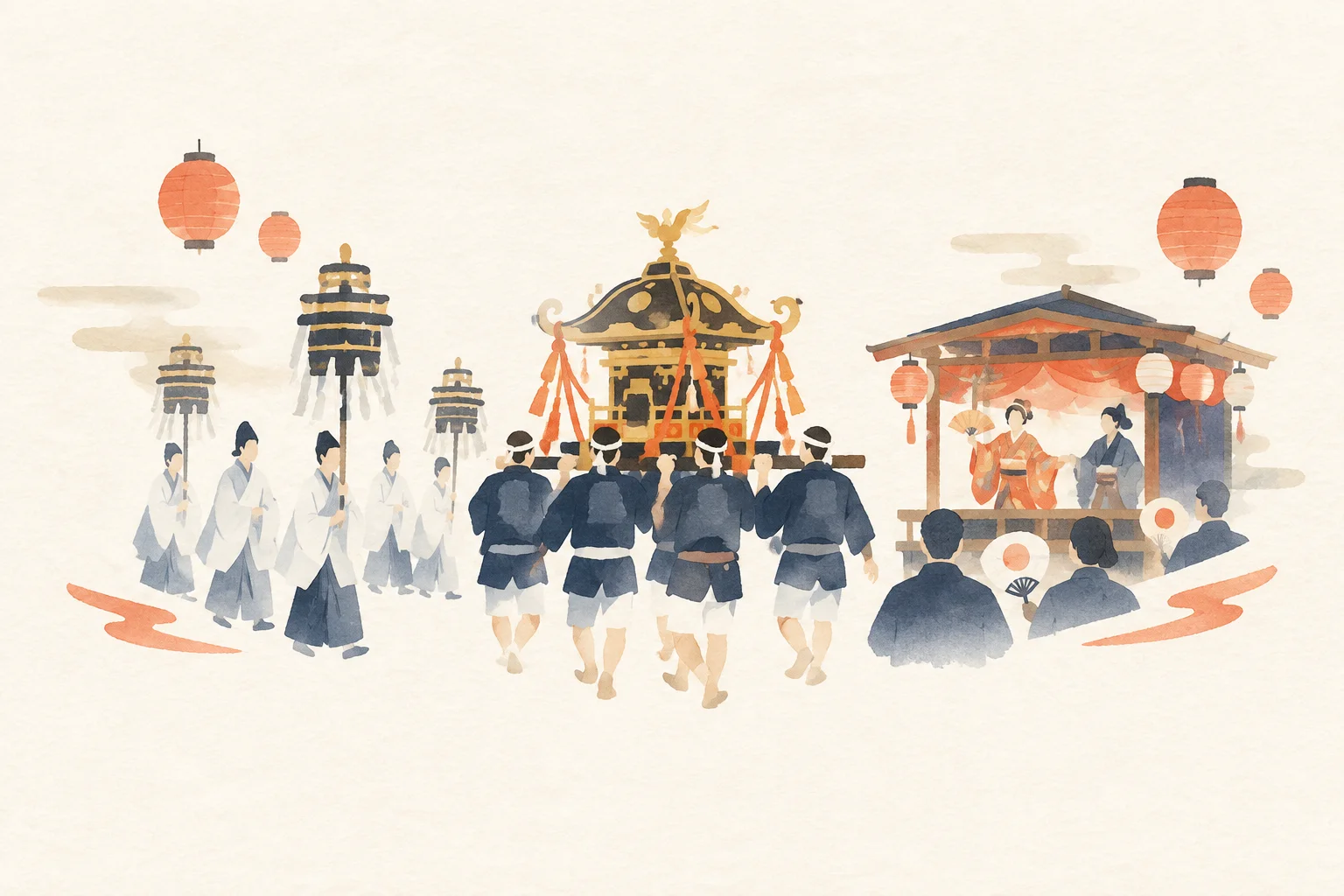
Centered on the Ontoya system, the festival features the mikoshi procession, the Nanagyoki Procession, large dashi floats, and Daidai .
The Ontoya-gumi, which supports the festival, prepares throughout the year, with the group on duty taking over responsibilities in turn.
It was designated a National Important Intangible Folk Cultural Property in Showa 56.
Festival highlights
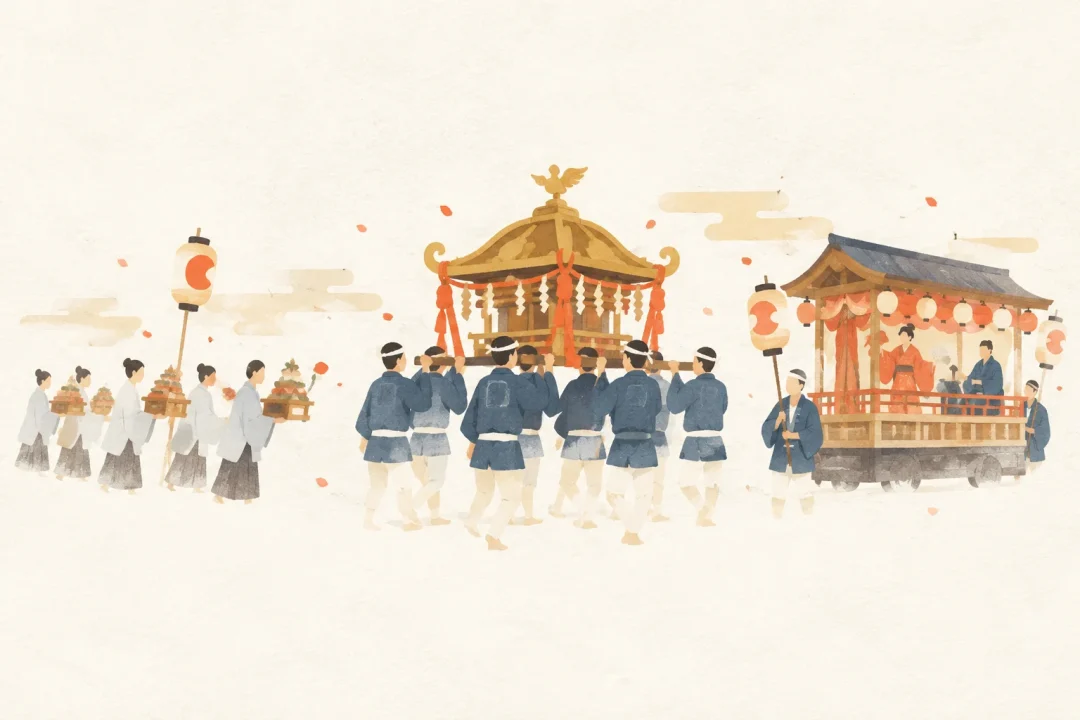
One of the festival’s highlights is the Nanagyoki Procession, in which sacred sake, sekihan, and mackerel are presented before the gods.
The procession, with its participants in formal attire, is also called the “bridal procession” and conveys the solemn atmosphere of the festival.
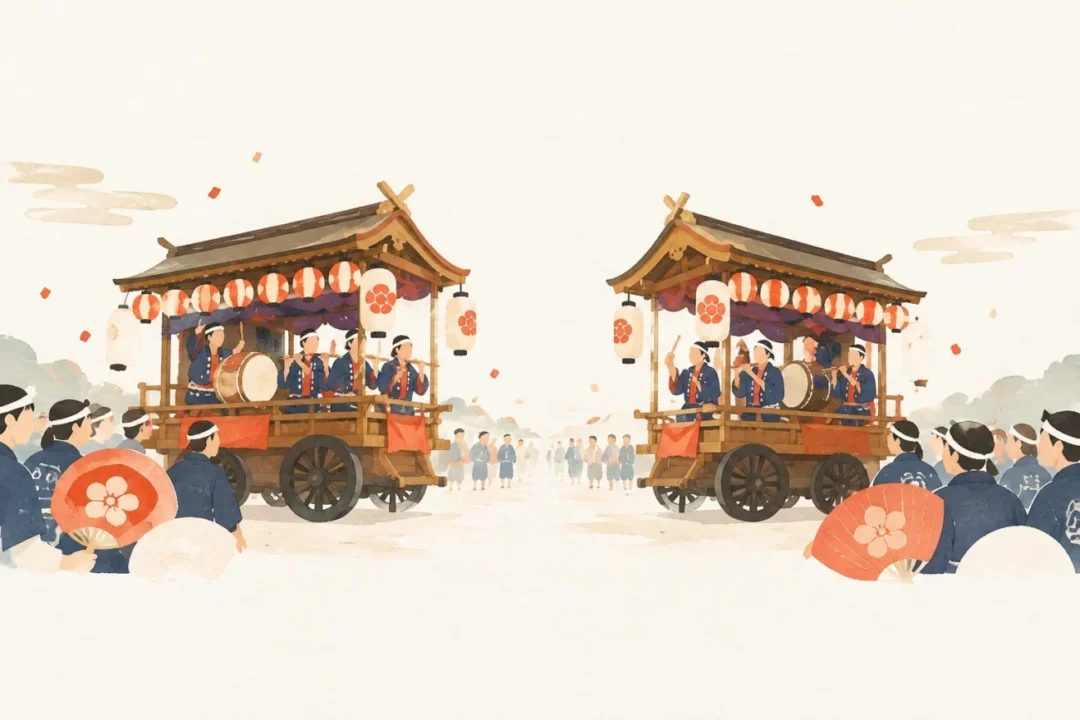
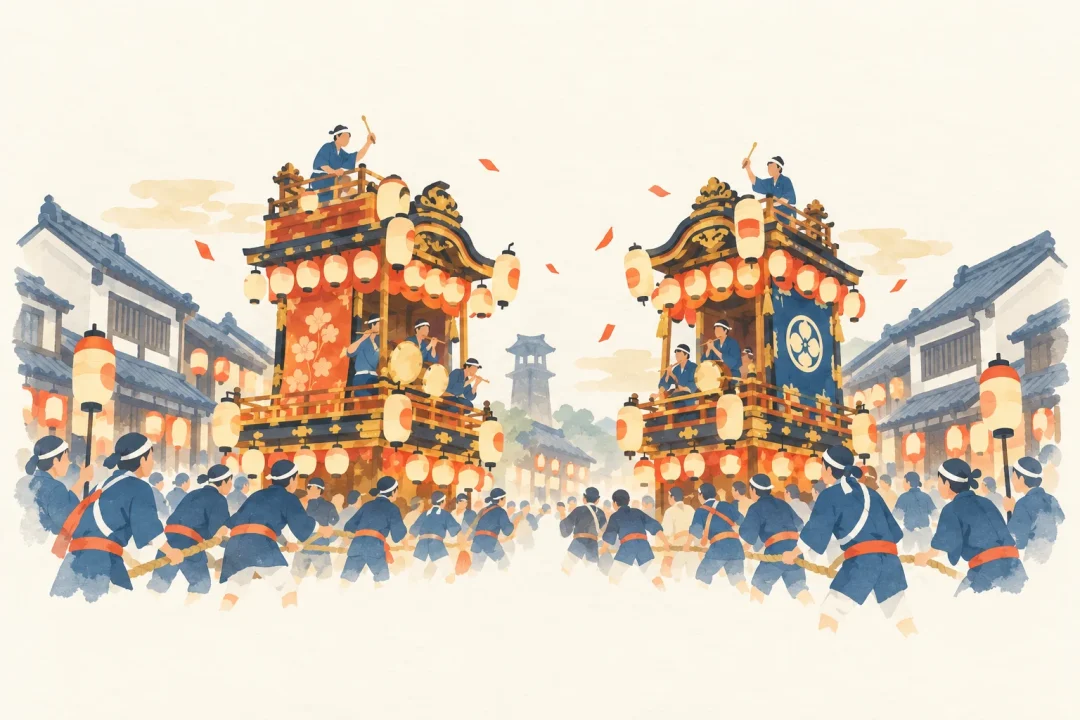
Children’s kabuki is performed on the large dashi floats, and 4 floats travel through town.
At night, lanterns along the shrine approach are lit, adding to the festival scenery.
Source: 会津田島祗園祭|南会津町観光物産協会
Tajima’s Traditional Festival, Featuring the Nanagyoki Procession and Dashi-Float Kabuki
What to expect
The festival runs for 3 days: the annual festival, the procession festival, and the Daidai Kagura Festival.
After offerings are presented in the Nanagyoki Procession, the mikoshi visits the town’s and other locations, while children’s kabuki is performed on the large dashi floats.
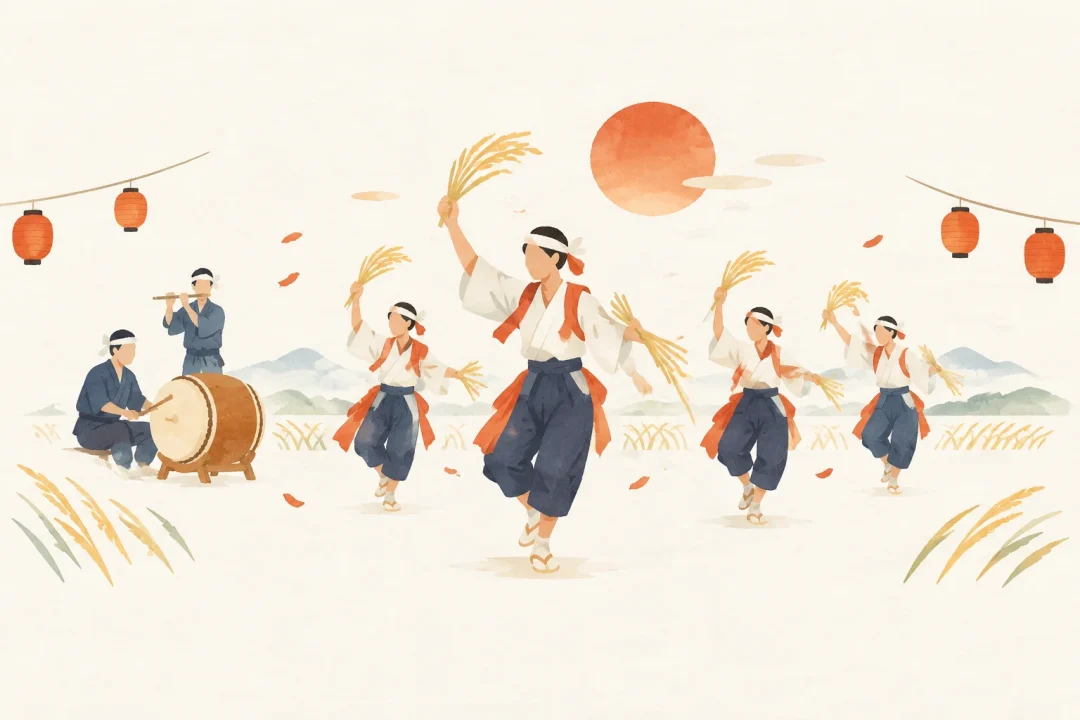
On the final day, Daidai Kagura is offered at Tadeuka Shrine, featuring dances based on mythology and agriculture.
The festival offers the opportunity to see the shrine’s religious rites and the town’s events in succession.
How to take part
The central religious rites of the festival and the role of the Ontoya-gumi are carried out by local and the group on duty.
In 2026, applications were invited for the bride’s role in the Nanagyoki Procession, offering an opportunity to take part as a procession attendant.
Applications have closed after reaching capacity, so this is not an event in which anyone can freely join the religious rites.
Anyone wishing to participate should check the requirements and application status for each event.
In 2026, applications were invited for the bride’s role in the Nanagyoki Procession.
The procession took place on July 23, 2026; participants were instructed to gather at the Hon-Oyatai Storage Facility at 6:30 a.m. and depart from the Ontoya Honjin at 7:50 a.m.
Applications for the bride’s role have closed after reaching capacity.
Source: 新着情報 | 南会津町観光物産協会
Location and access
- Venue and address
Within Tajima, Minamiaizu Town, Minamiaizu District, Fukushima Prefecture.
Events take place mainly around the town of the Tajima district, including the shrines, the Ontoya honjin, and the otabisho.
- Train and bus
About a 1-minute walk from Aizu-Tajima Station on the Aizu Railway.
On July 23, 2026, a special train was listed, departing Aizu-Wakamatsu at 5:54 a.m. and arriving at Aizu-Tajima at 7:11 a.m.
- By car
About 80 minutes from the Nishinasuno-Shiobara IC on the Tohoku Expressway.
Traffic restrictions were in place on Prefectural Route Takashima-Tajima (former National Route 121) during the festival.
Address Within Tajima, Minamiaizu Town, Minamiaizu District, Fukushima Prefecture
Dates and season
2026 Event Information (the listed dates have passed)
In 2026, the festival was held from July 22 through 24.
July 22 was the annual festival, and July 23 was the procession festival, featuring the Nanagyoki Procession, the mikoshi procession, and the large dashi floats moving through town.
July 24 was the Daidai Kagura Festival, during which Daidai Kagura was offered.
It is also described as a festival held annually over 3 days starting on July 22.
Accommodation and hotels PR
Showing nearby accommodation.
Prices and availability are current at the time of retrieval. For multi-night stays, only the first night’s price is shown. Confirm the final price and directions to the venue with the booking provider. Select your dates again when using the area search link. Search area: within 3 km of Central Fukushima Prefecture / Minamiaizu Town (the search is not centered on the festival venue)
Tips for your visit
In 2026, traffic restrictions will be in effect on Prefectural Route Takashima-Tajima Line (former National Route 121) on July 22 and 23. It has been announced that vehicles will not be able to enter or leave properties along the road during the restricted hours.
If you are visiting by car, be aware of road conditions due to the festival procession and the operation of festival floats.
The Nanagyoki Procession takes place early in the morning on July 23, so allow plenty of time if you plan to watch.
Nearby attractions
The Hosoi Family Museum is recommended as a nearby attraction in the Tajima area, where the festival is held.
The Aizu Tajima Gion Festival information page lists it as one of the historic sites and sightseeing spots in Tajima, Minamiaizu Town.
If you plan to visit before or after the festival, check opening hours and visitor requirements.
Source: 会津田島祇園祭 - Wikipedia

奥会津博物館
福島県南会津町にある博物館
Origins and History of Aizu Tajima Gion Festival
The festival is said to have originated during the Bunji era of the Kamakura period, when Lord Naganuma Munemasa’s devotion to Gion led to the enshrinement of the Gion deity and the adoption of the Gion Festival format for the festival of Tadeuka Shrine.
In Meiji 12, it was decided that the neighboring Kumano Shrine’s festival would be conducted in accordance with the formalities of the Gion Festival.
The tradition is supported by a system in which the Ontoya-gumi takes charge of festival duties throughout the year, and it was designated a National Important Intangible Folk Cultural Property in Showa 56.
Source: 会津田島祇園祭の歴史/南会津町
Official information
For the latest information on dates, traffic restrictions, and festival routes, see the Aizu Tajima Gion Festival guide from the Minamiaizu Town Tourism and Products Association.
The official Minamiaizu Town website also provides information on the event dates, locations, transportation, and an overview of the Ontoya system.
The 2026 information listed the events scheduled for each day from July 22 through 24.
Aizu Tajima Gion Festival at a Glance
The Aizu Tajima Gion Festival is a celebration in which shrine rites and traditional town events have been passed down together in Tajima, Minamiaizu Town.
The main highlights are the Nanagyoki Procession, the mikoshi procession, 4 large dashi floats with children’s kabuki, and Daidai Kagura.
In 2026, the festival was held from July 22 through 24, and the Nanagyoki Procession took place early in the morning on July 23.
Traffic restrictions are in place, so if you are traveling by car, take care with your timing and route.
Japanese Festivals.jp Editorial Team
Celebrating local culture and helping you discover a side of Japan you never knew.
Article updated: 2026/10/19
Submit information or a correction Submit photos of this festival