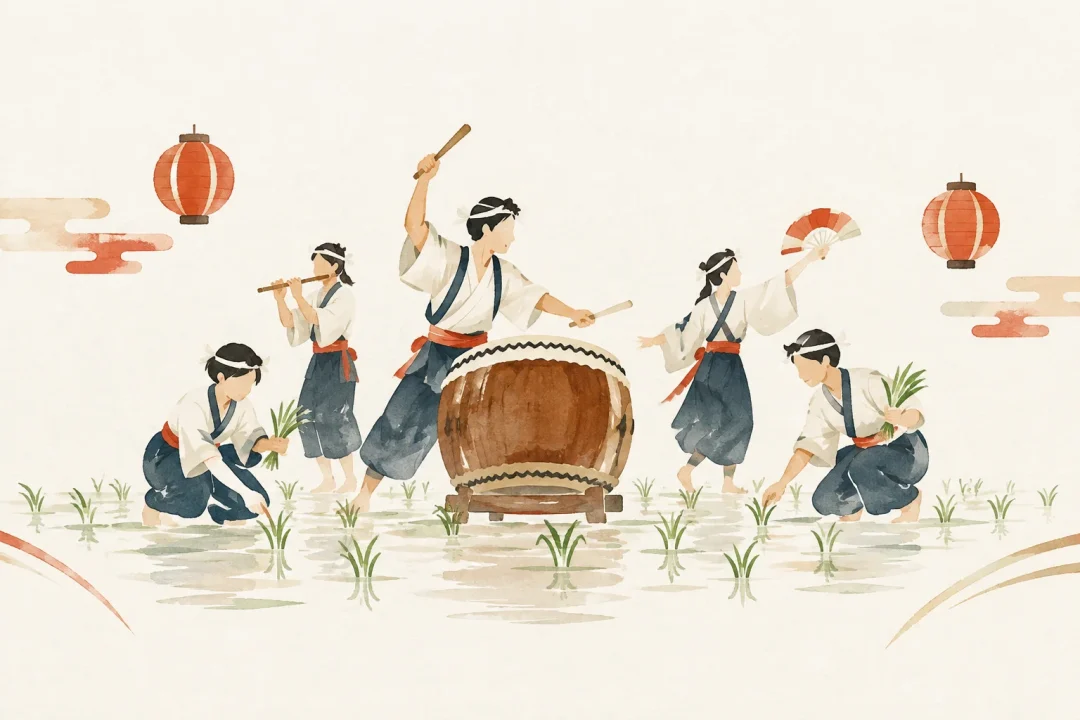
A traditional Kamihabuto performing art that prays for a good harvest and dances to Buddhist invocations and drums
Kamihabuto Tendo Nenbutsu Odori
Festival information
EVENT INFORMATION- Season / frequency
- Junefirst Sunday (after rice planting is complete) / Every year
- Location
- Open area in front of the Kamihabuto Community Center
- Area
- Fukushima Prefecture・Nishigo Village(From Tokyo: approx. 1 h 20 min–1 h 40 min · bullet train)Prefecture-level estimate to a main station or airport, not the venue. Airport access, check-in and onward travel are extra; remote areas and islands can take much longer.
- Highlights and activities
- Wishes behind the festival
- Last updated
- 2026/10/19
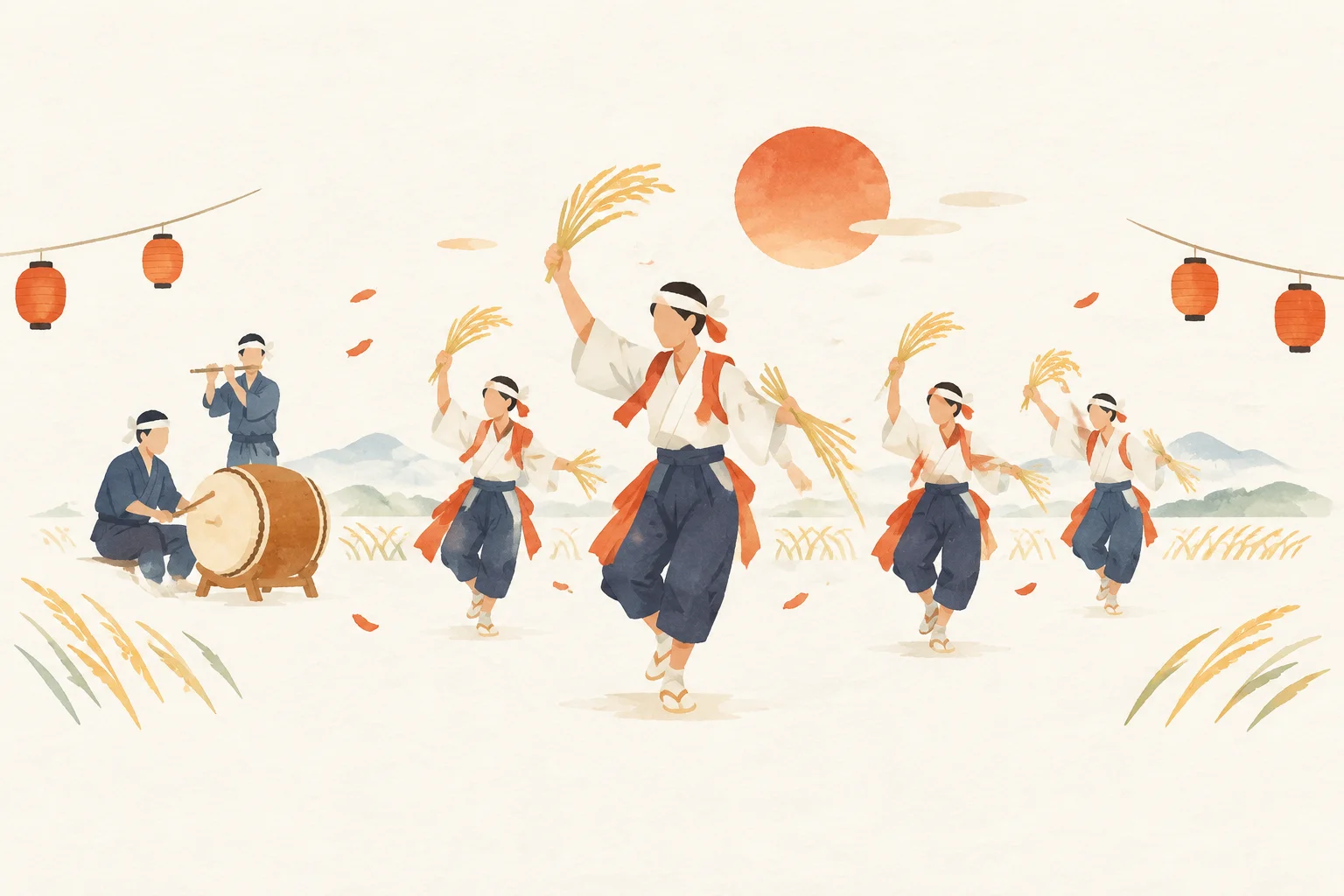
Kamihabuto Tendo Nenbutsu Odori is a local folk performing art that prays to the sun for a good harvest and portrays agricultural life to the songs of Buddhist invocations and the sounds of drums and flutes.
About Kamihabuto Tendo Nenbutsu Odori
Kamihabuto Tendo Nenbutsu Odori is a folk performing art of the Kamihabuto district, in which people pray to “tendo,” meaning the sun, for a good rice harvest.
Dancers perform to songs that include Buddhist invocations, beneath decorations shaped like the sun and a crescent moon.
It was passed down as a local event held after rice planting and was also a source of enjoyment for people in the district.
Today, dances portraying agricultural life are performed in front of the Kamihabuto Community Center.
Source: 上羽太天道念仏踊/西郷村 / 国指定文化財等データベース
Festival highlights
Place a mortar and bamboo with sasa leaves at each of the four corners of the dance area, and spread rice husks inside the sacred rope enclosure.
Offer streamers, vegetables, rice, and “flower decorations” on the shelf, and hang decorations of the sun and crescent moon under the eaves.
In the last of the 7 dances, “Sanjimosa (Harvest Drum),” 4 dancers face one another with drums tied around their waists and dance to the singing.
Toward the end, they carry the decorations to the shrine at Sumiyoshi Shrine and perform a dance as an offering.
A traditional Kamihabuto performing art that prays for a good harvest and dances to Buddhist invocations and drums
What to expect
The day begins with a ritual to the deities. The singers perform “Agenembutsu,” followed by “Sagenembutsu,” in which dancers perform while chanting Buddhist invocations, as they proceed through the 7 dances in order.
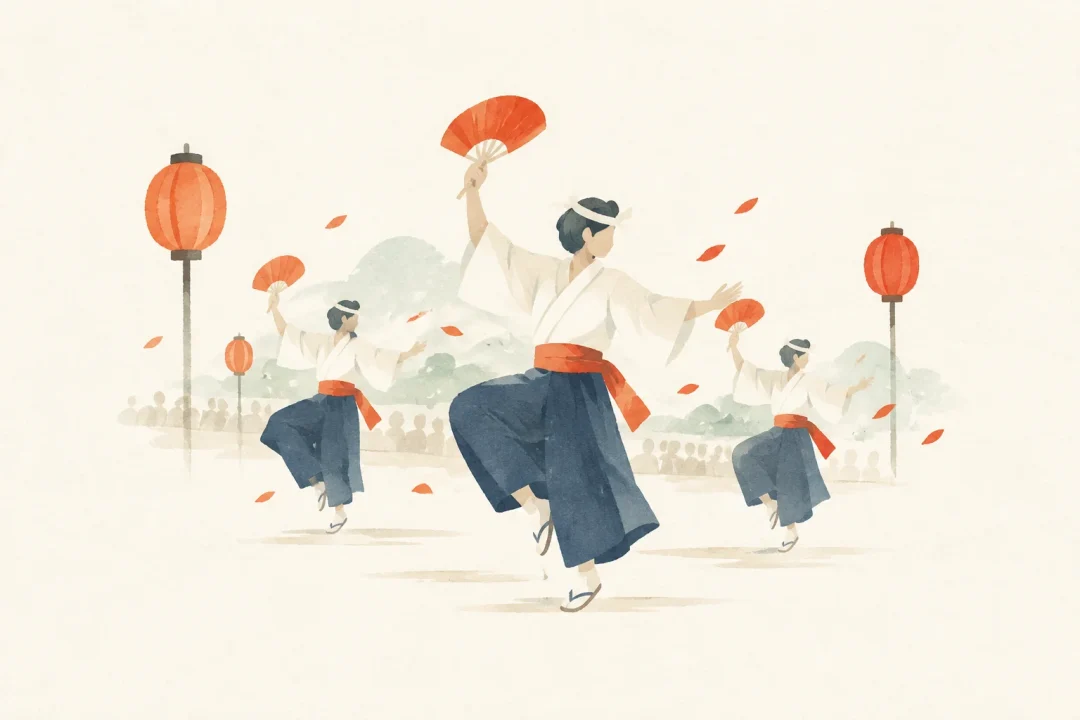
The singers sing while beating drums, and the dancers form a circle and dance to the sounds of flutes and drums.
The dance movements portray the year’s agricultural work, including tilling the soil, sowing seeds, and driving away birds.
After all 7 dances, the decorations are removed, and the dancers head to Sumiyoshi Shrine to perform an offering dance.
How to take part
This local folk performing art features singers, taiko players, and a dozen or so dancers.
Check the event information to see whether general visitors may join as dancers or whether participation is limited to watching.
Residents of Nishigo Village can join the preservation association, including those who live outside the Kamihada area.
Participation in the festival on the day and joining the preservation association are covered in separate announcements.
Check the event information to find out how to take part as a festival dancer and whether advance registration is required.
Applications to take part in preservation activities are accepted through an online form, by phone through the Culture and Sports Division, or in person at the Central Community Center desk inside the Village Cultural Center.
The preservation association plans to do more than teach the dances; it also intends to support children who take part in performances.
Source: 西郷村天道念仏踊り保存会/西郷村
Location and access
)
- By car
About 20 minutes by car from Shirakawa IC.
Source: 文化伝統検索 | うつくしま電子事典
Event venue 福島県西郷村 上羽太コミュニティセンター前の広場
This map uses the venue name. Check the official guide for the event area and entrances.
Dates and season
It is usually held on the June first Sunday after rice planting is finished.
Preparations such as decorating are said to begin in the morning, followed by a ritual and then 7 types of dances.
Accommodation and hotels PR
Showing nearby accommodation.
Prices and availability are current at the time of retrieval. For multi-night stays, only the first night’s price is shown. Confirm the final price and directions to the venue with the booking provider. Select your dates again when using the area search link. Search area: within 3 km of Central Fukushima Prefecture / Nishigo Village (the search is not centered on the festival venue)
Tips for your visit
At the dance area, the dancers enter a space enclosed by a mortar, green bamboo, and shimenawa sacred ropes.
At times, dancers head toward Sumiyoshi Shrine carrying sasa bamboo, shimenawa sacred ropes, and other items. To avoid disrupting the procession, it is important to watch from the designated viewing area.
The dance area is said to be covered with rice husks, and the dancers perform barefoot.
Nearby attractions
Local attractions associated with Kamihabuto Tendo Nenbutsu Odori include the Nishinosato Walking Trail, the male and female waterfalls at the source of the Abukuma River, the Tado-ga-iri skunk cabbage habitat, and Rakōkei Gorge.
Each is a place connected to Nishigo Village’s culture or natural environment, offering a way to learn about the area alongside the festival.
Check the individual visitor information for detailed locations, opening periods, and how to get from the festival venue to each facility.
Origins and History of Kamihabuto Tendo Nenbutsu Odori
Tendo Nenbutsu Odori appears in records of the Shirakawa domain compiled in 1817, during the Edo period. It is said to have been performed in various parts of the Shirakawa region, including Nishigo Village, at that time.
In the past, performers visited homes in the district in turn, using the garden or eaves of the host family’s home as the dance area.
Since a community hall was built in the district in Showa 51, performances have been centered around the hall. While the tradition died out in various places from the Meiji period onward, the dance passed down in Kamihabuto has survived.
Official information
You can find information about the festival’s origins, performances, venue, and season on the Nishigo Village official website’s “Kamihabuto Tendo Nenbutsu Odori / Nishigo Village” page.
Information about preservation activities and how to join is available on the Nishigo Village official website’s “Nishigo Village Tendo Nenbutsu Odori Preservation Society” page.
Kamihabuto Tendo Nenbutsu Odori at a Glance
Kamihabuto Tendo Nenbutsu Odori is a folk performing art in which people pray to the sun for a good harvest and portray the year’s agricultural work to the sounds of Buddhist invocations, drums, and flutes.
Highlights include decorations of the sun and crescent moon, 7 kinds of dance, and the offering at Sumiyoshi Shrine.
例年は田植え後の6月第1日曜日に上羽太コミュニティセンター前で行われます。
Japanese Festivals.jp Editorial Team
Celebrating local culture and helping you discover a side of Japan you never knew.
Article updated: 2026/10/19
Submit information or a correction Submit photos of this festival