A traditional Yoshikawa shinji colored by kagura songs, exchanges, and a mikoshi procession
Yaho Shinji at Yoshikawa Wakamiya Shrine
Festival information
EVENT INFORMATION- Season / frequency
- The first Sunday of every October / Every year
- Location
- Wakamiya Shrine (Inada)
- Area
- Hyogo Prefecture・Miki City(From Tokyo: approx. 2 h 40 min–3 h 10 min · bullet train)Prefecture-level estimate to a main station or airport, not the venue. Airport access, check-in and onward travel are extra; remote areas and islands can take much longer.
- Features
- Highlights and activities
- Wishes behind the festival
- Last updated
- 2026/10/23
Yaho at Yoshikawa Wakamiya Shrine is a shinji passed down through a procession led by songs, exchanges between a pole performer and children, and a procession. It is said to have begun in the Muromachi period and carries prayers for a bountiful harvest.
About Yaho Shinji at Yoshikawa Wakamiya Shrine
Yaho Shinji at Yoshikawa Wakamiya Shrine is held at Wakamiya Shrine on the first Sunday of every October.
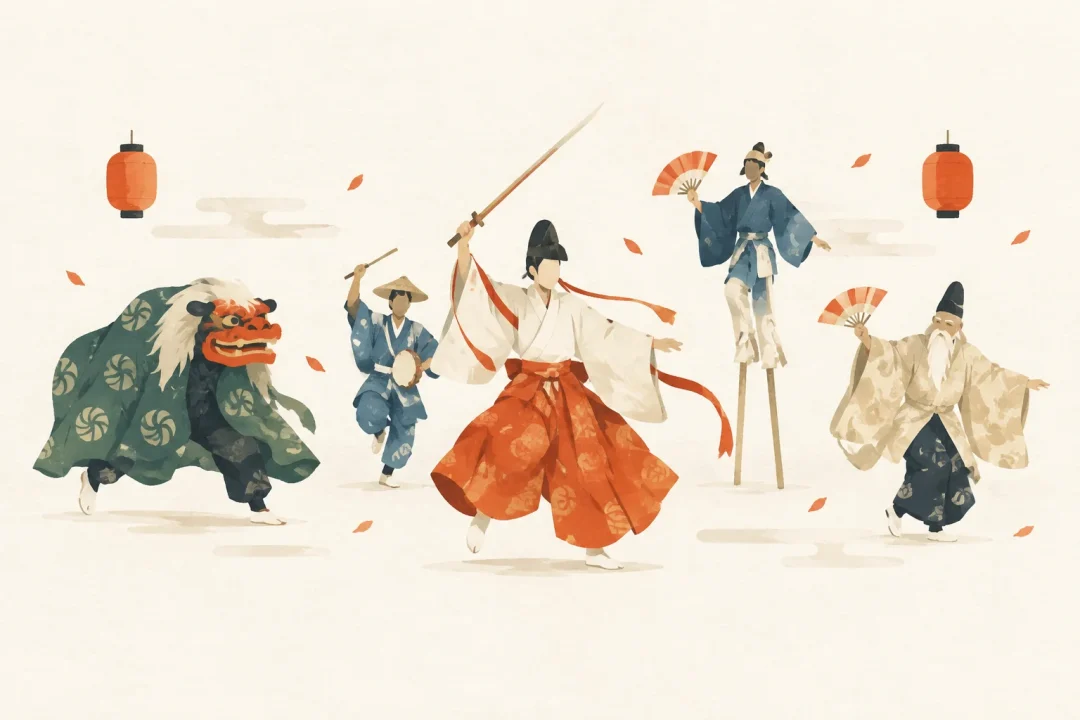
Everyone forms a procession led by a shishigashira and proceeds through the while singing kagura songs.
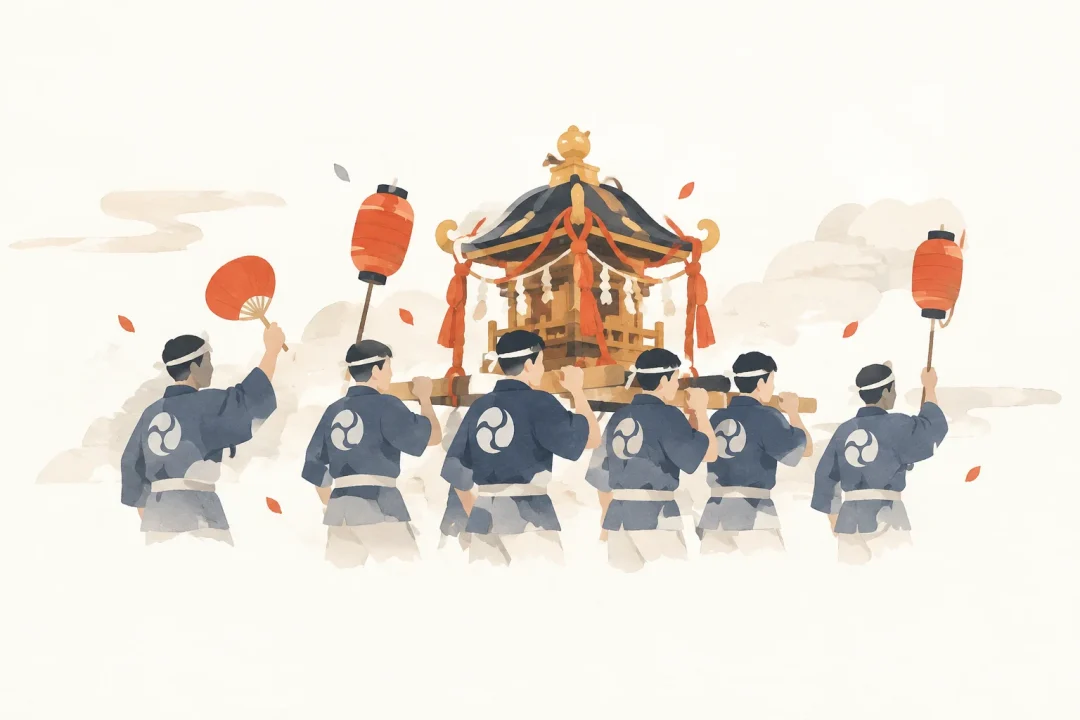
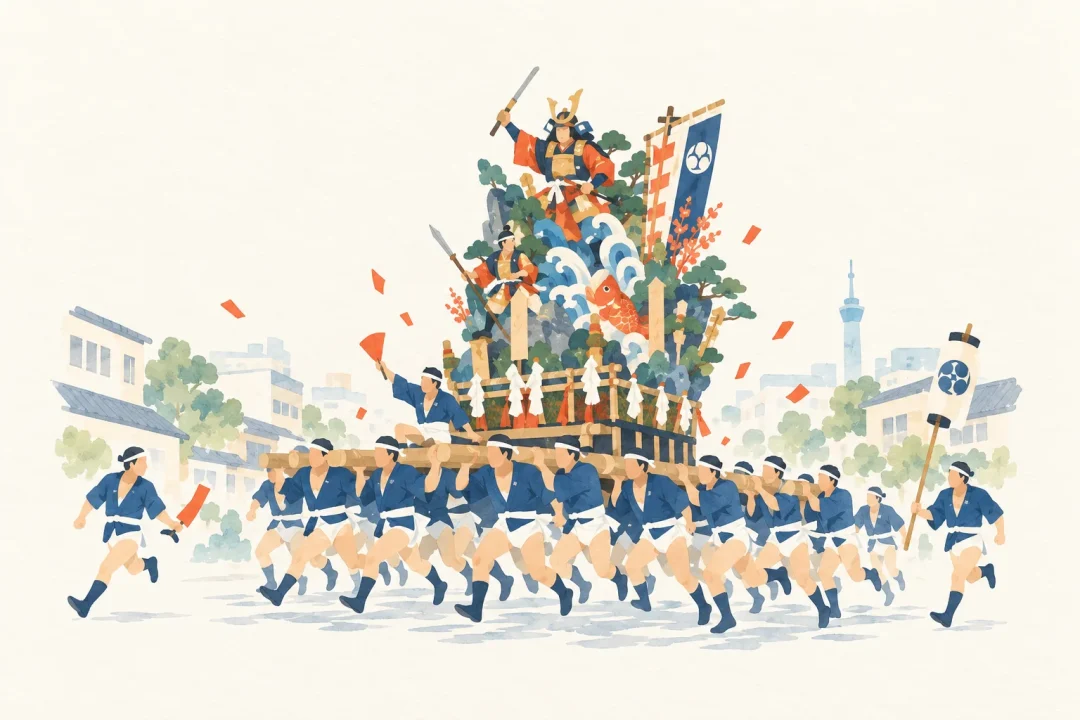
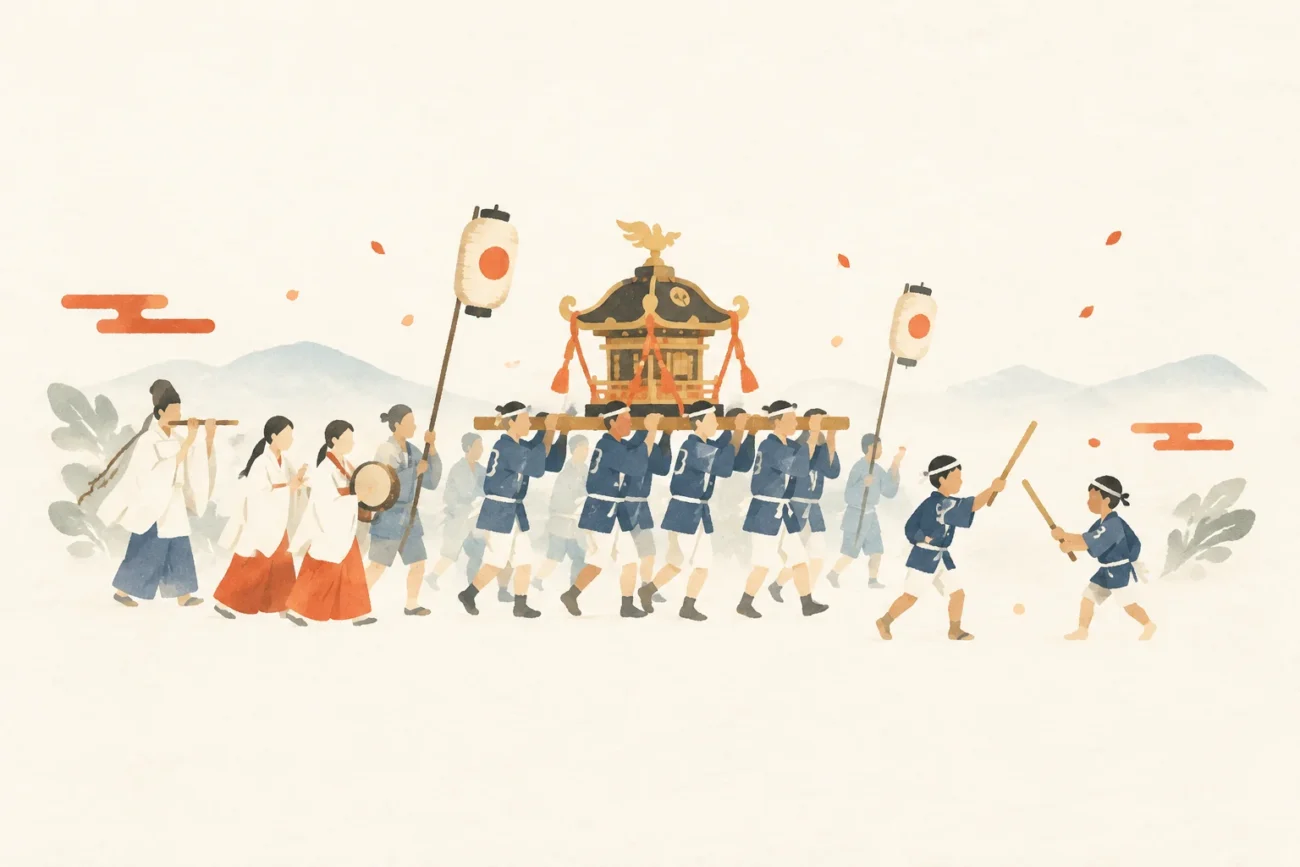
At the shrine, an exchange takes place between a pole performer, children riding horses, and children inside mosquito nets. The mikoshi, carried by , processes along the horse track to the .
It is an intangible folk cultural property designated by Hyogo Prefecture.
Source: 吉川若宮神社のヤホー神事(県指定文化財) - 三木市ホームページ
Festival highlights
A highlight is the procession led by a shishigashira as it moves through the shrine grounds to the accompaniment of kagura songs.
Before the deity, a pole performer wearing a reddish-brown costume patterned with uroko komon and a demon mask exchanges words with children riding horses and children inside mosquito nets.
In addition, the mikoshi carried by ujiko processes along the horse track with a tengu and an Otafuku, extending the festival scenes from the shrine grounds to the otabisho.
A traditional Yoshikawa shinji colored by kagura songs, exchanges, and a mikoshi procession
What to expect
During the shinji, everyone first forms a procession led by a shishigashira and proceeds through the shrine grounds while singing kagura songs.
After that, an exchange takes place before the deity between a pole performer and children.
In another scene, ujiko carry the mikoshi and process along the horse track to the otabisho with a tengu and an Otafuku.
The mikoshi procession carries prayers for a bountiful harvest.
Location and access
- Venue and address
Wakamiya Shrine (Inada) / 560 Inada, Yoshikawa-cho
Address 560 Inada, Yoshikawa-cho
Dates and season
- Season
The first Sunday of every October
- Frequency
Every year
Accommodation and hotels PR
Showing nearby accommodation.
Prices and availability are current at the time of retrieval. For multi-night stays, only the first night’s price is shown. Confirm the final price and directions to the venue with the booking provider. Select your dates again when using the area search link. Search area: within 3 km of Central Hyogo Prefecture / Miki City (the search is not centered on the festival venue)
Origins and History of Yaho Shinji at Yoshikawa Wakamiya Shrine
Yaho Shinji is said to have begun in the Muromachi period.
The name “Yaho” is said to derive from “Iyaa-ho~” in the kagura songs.
The date is listed as “unknown” in the records, but the shinji is regarded as a valuable intangible folk cultural property, alongside the Furemai and horse rituals, which strictly preserve ancient forms.
It was designated a prefectural cultural property on Showa 52March 29.
Yaho Shinji at Yoshikawa Wakamiya Shrine at a Glance
Yaho Shinji at Yoshikawa Wakamiya Shrine is an intangible folk cultural property designated by the prefecture. It is held at Wakamiya Shrine on the first Sunday of every October.
Its main features are a procession led by a shishigashira singing kagura songs, an exchange between a pole performer and children, and a procession of the mikoshi carried by ujiko.
It is said to have begun in the Muromachi period, and the name “Yaho” is said to come from the kagura songs.
The mikoshi procession carries prayers for a bountiful harvest.
Japanese Festivals.jp Editorial Team
Celebrating local culture and helping you discover a side of Japan you never knew.
Article updated: 2026/10/23
Submit information or a correction Submit photos of this festival