A Bon Odori tradition in Yamaga, with drums and narrative songs passed down in each settlement
Yamaga Odori

Festival information
EVENT INFORMATION- Season / frequency
- August 13 through around the 16th
- Location
- Throughout the Yamaga area
- Area
- Oita Prefecture・Kitsuki City, Bungotakada City(From Tokyo: approx. 1 h 35 min–1 h 55 min · flight time only)Prefecture-level estimate to a main station or airport, not the venue. Airport access, check-in and onward travel are extra; remote areas and islands can take much longer.
- Highlights and activities
- Wishes behind the festival
- Last updated
- 2026/10/19
A traditional dance from Oita Prefecture, passed down in dances unique to each settlement and performed to the sound of drums and the lead singer’s narrative songs.
About Yamaga Odori
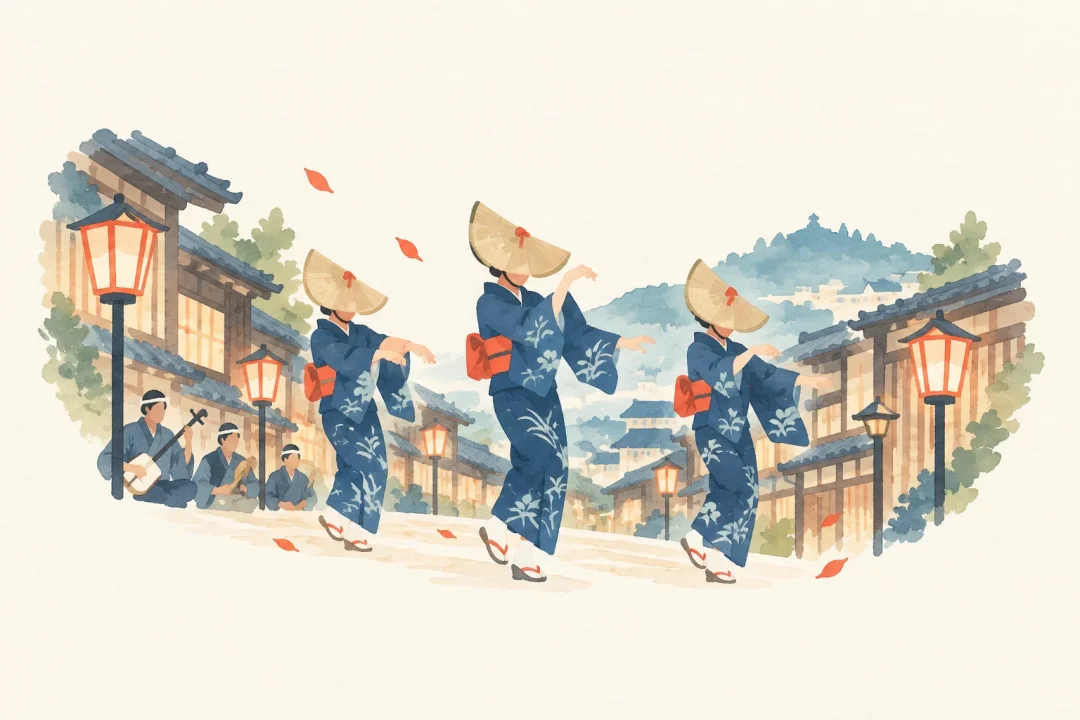
Yamaga Odori is a traditional Bon Odori dance passed down in Yamaga-machi and Ota in Kitsuki City, Oita Prefecture, and in some districts of Tashibun in Bungotakada City.
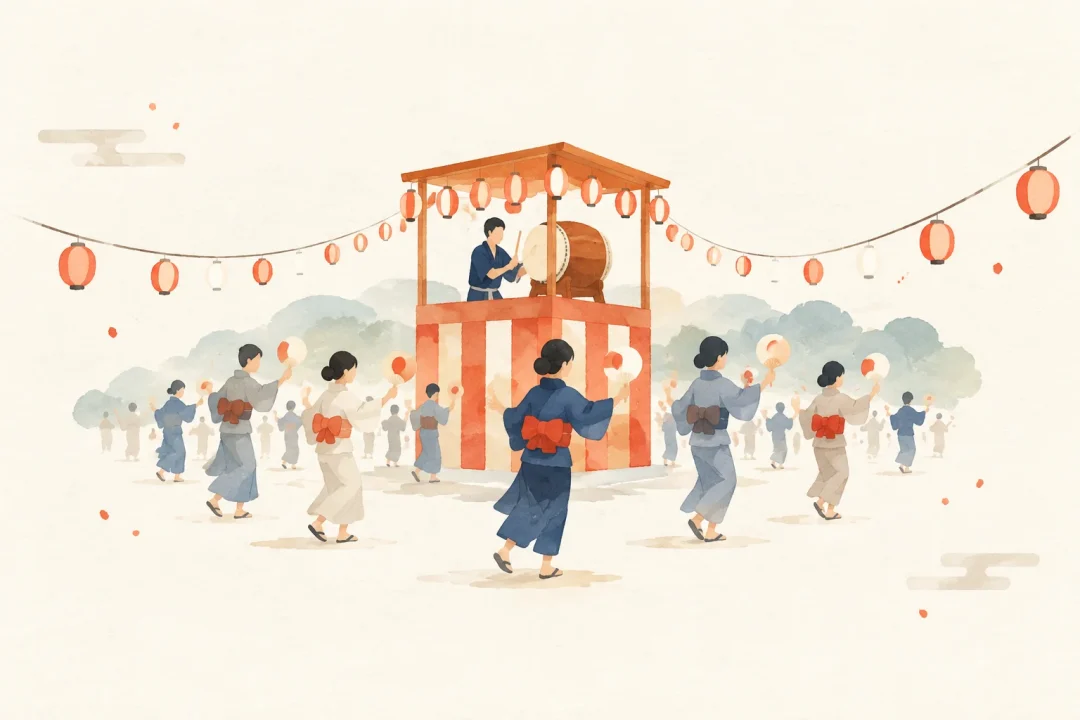
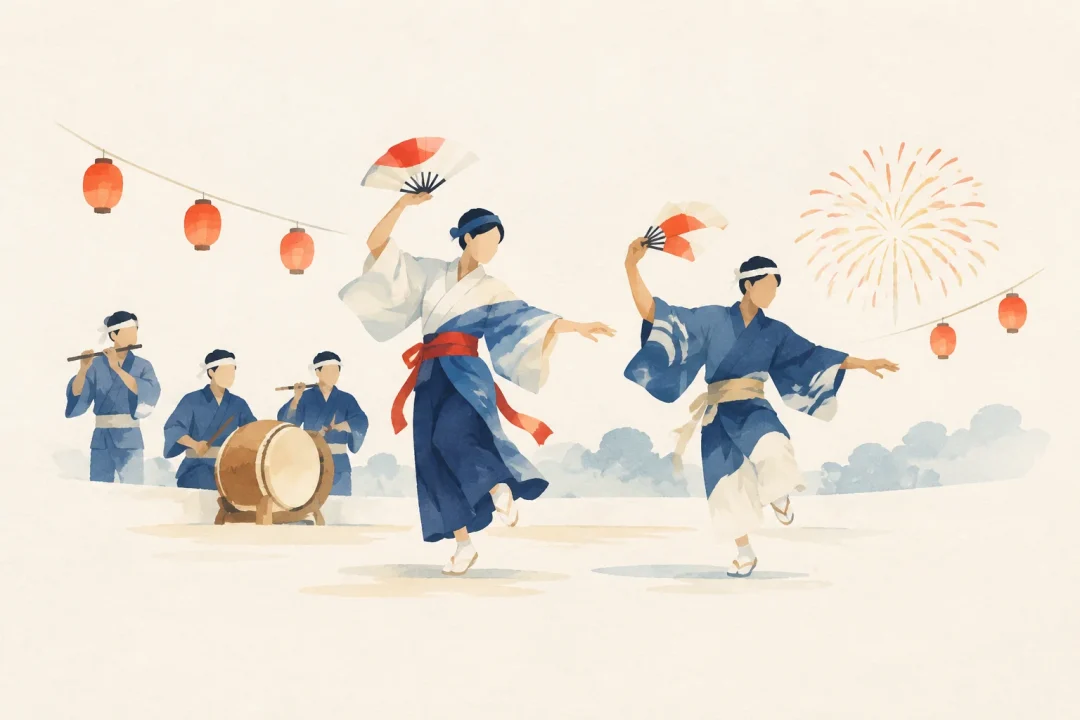
The basic form is a circle dance that moves clockwise around a , accompanied only by drums.
While enjoyed as entertainment, it also retains a strong character as a memorial dance associated with observances such as the first Bon memorial service and Jizo Bon.
Another defining feature is that each settlement has passed down its own songs and dances.
Source: 山家踊り - Wikipedia
Festival highlights
The highlight is the simple circle dance, accompanied only by the lead singer’s songs and drums.
The lead singer and drummers take turns during the dance, but linking phrases keep the songs going without interruption.
Set phrases are also used when switching dances, and at a signal the dancers all change their movements at once.
The types and tempos of the dances vary by area, so you can also look for the distinctive character of each settlement.
A Bon Odori tradition in Yamaga, with drums and narrative songs passed down in each settlement
What to expect
For the first Bon memorial dance, a stand draped with white cloth is placed in a corner of the square and decorated with a photograph of the deceased, offerings, a memorial tablet, and other items.
People from the neighborhood offer incense and pay their respects. Once the priest or another officiant has finished chanting sutras, the Bon Odori begins.
The dancing then continues for about 2 hours, with breaks, and may end with a raffle or gift exchange.
The program varies by area and event; in places with many children, people may also set off handheld fireworks.
Location and access
- Venue and address
Events are held throughout the Yamaga area.
The specific settlement and venue vary by event.
- Train and bus
Directions are available for traveling from JR Usa Station to Tateishi Station on an Ōita-bound local train on the Nippo Main Line.
The trip from Usa Station to Tateishi Station takes about 10 minutes.
- By car
As venues are spread throughout the Yamaga area, driving routes to individual venues vary by location.
Source: 竜ヶ尾盆踊り | 盆踊りの世界
Event venue 大分県杵築市、豊後高田市 山香 region
This map uses the venue name. Check the official guide for the event area and entrances.
Dates and season
- Season
August 13 through around the 16th
Origins and History of Yamaga Odori
However, like Tsurusaki Odori and Kusaji Odori, it is considered a long-established Bon Odori tradition, and different dances and narrative songs have been passed down in the settlements of Yamaga-go.
Some songs were danced until around Showa 30, but are no longer performed today. The state of transmission varies by area.
In recent years, the activities of the Yamaga Bon Odori Preservation Society have led to the revival of the dance in some areas, while its continuation is said to be at risk in surrounding areas.
Yamaga Odori at a Glance
Yamaga Odori is a Bon Odori dance passed down in settlements in northeastern Oita Prefecture, including Yamaga-machi in Kitsuki City.
Dancers form a circle around a yagura and dance to the lead singer’s narrative singing, accompanied only by drums.
It is both a ritual tradition associated with observances such as the first Bon memorial service and a part of local life, with people from children to older adults taking part in the drumming and dancing.
The locations and types of dances vary from settlement to settlement.
Japanese Festivals.jp Editorial Team
Celebrating local culture and helping you discover a side of Japan you never knew.
Article updated: 2026/10/19
Submit information or a correction Submit photos of this festival