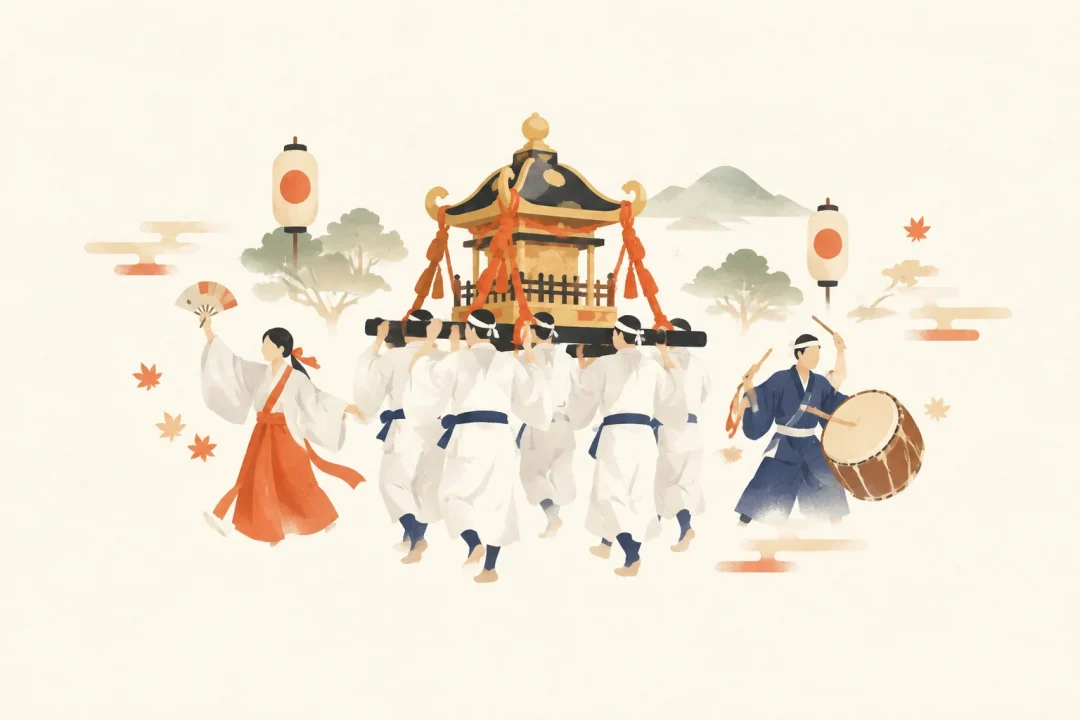
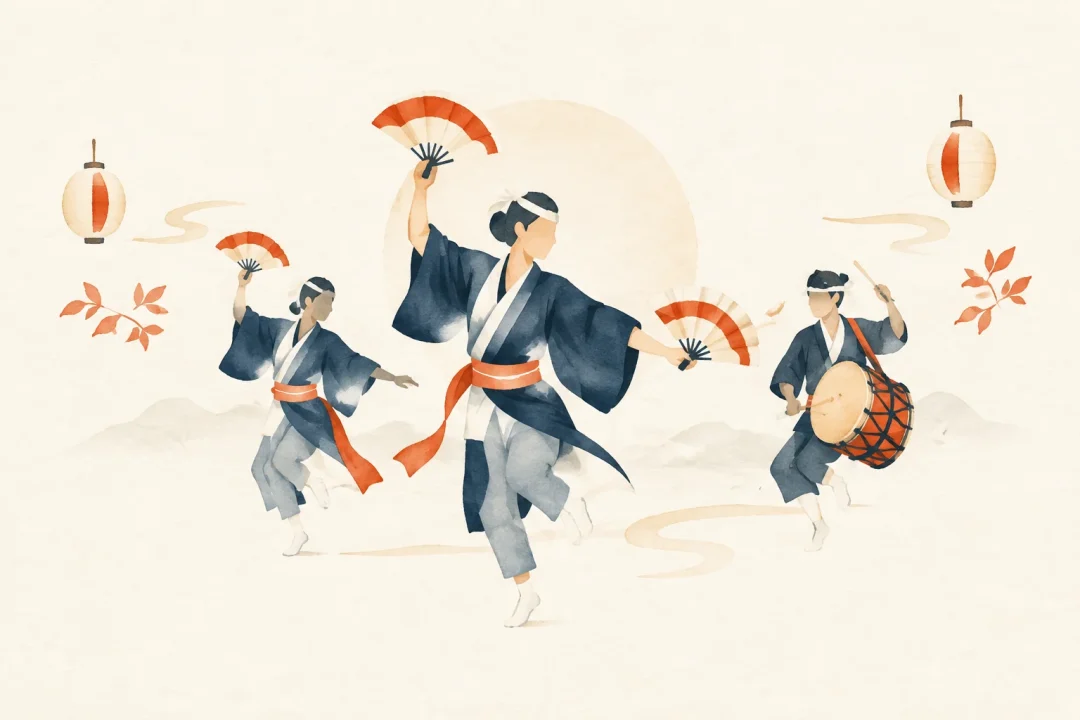
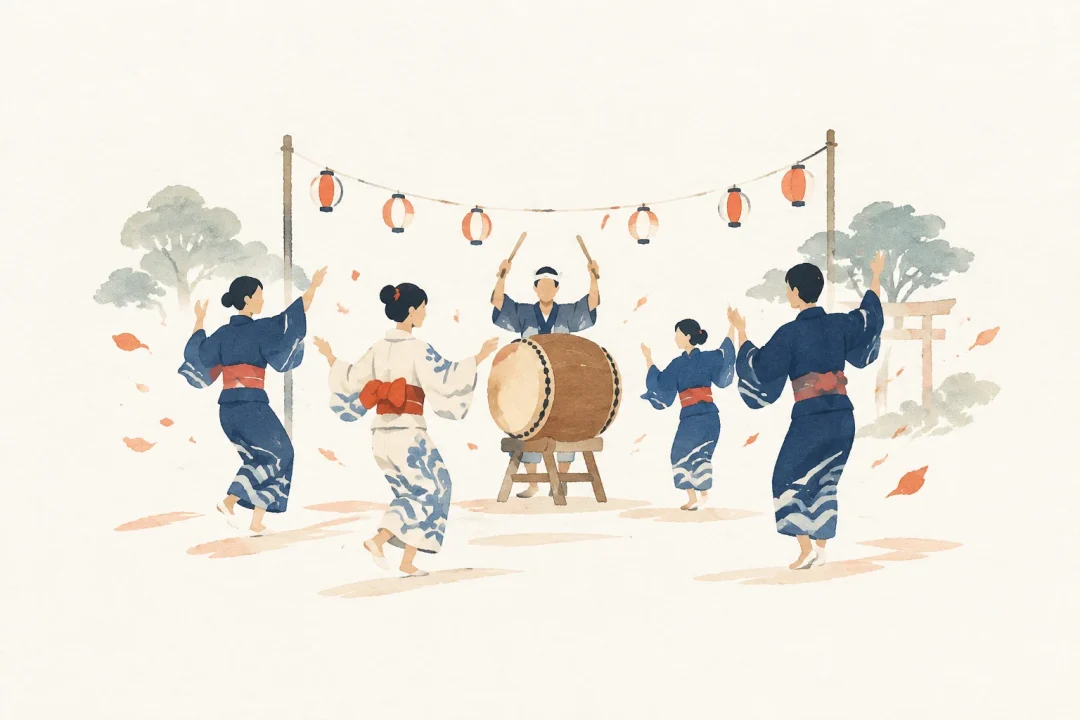
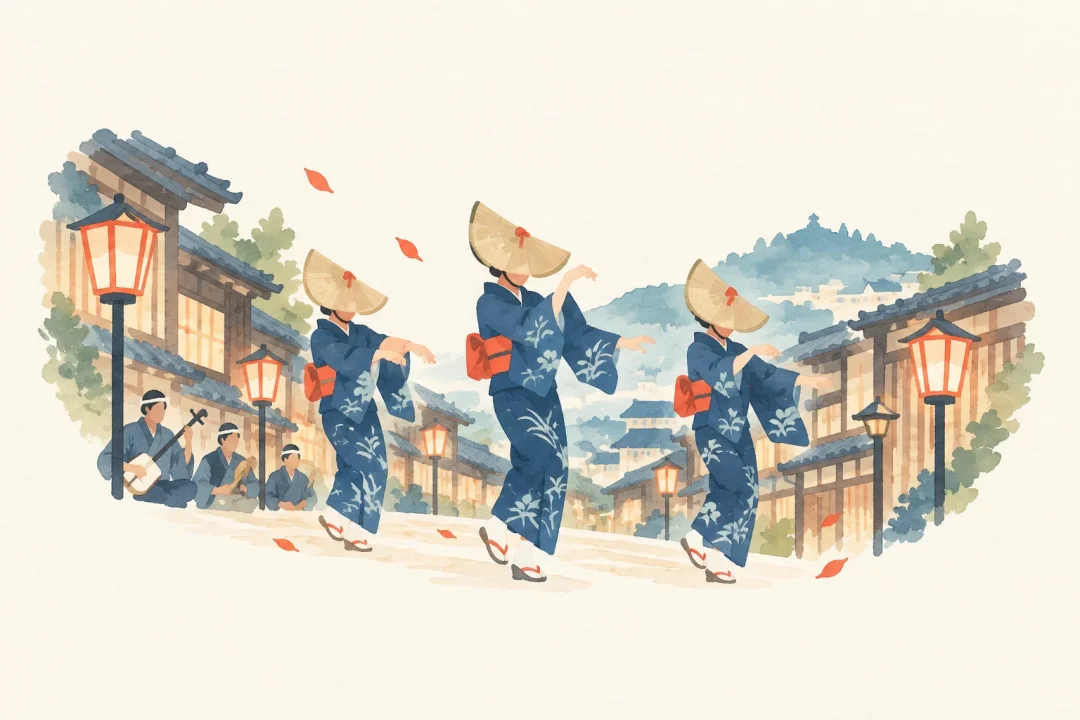
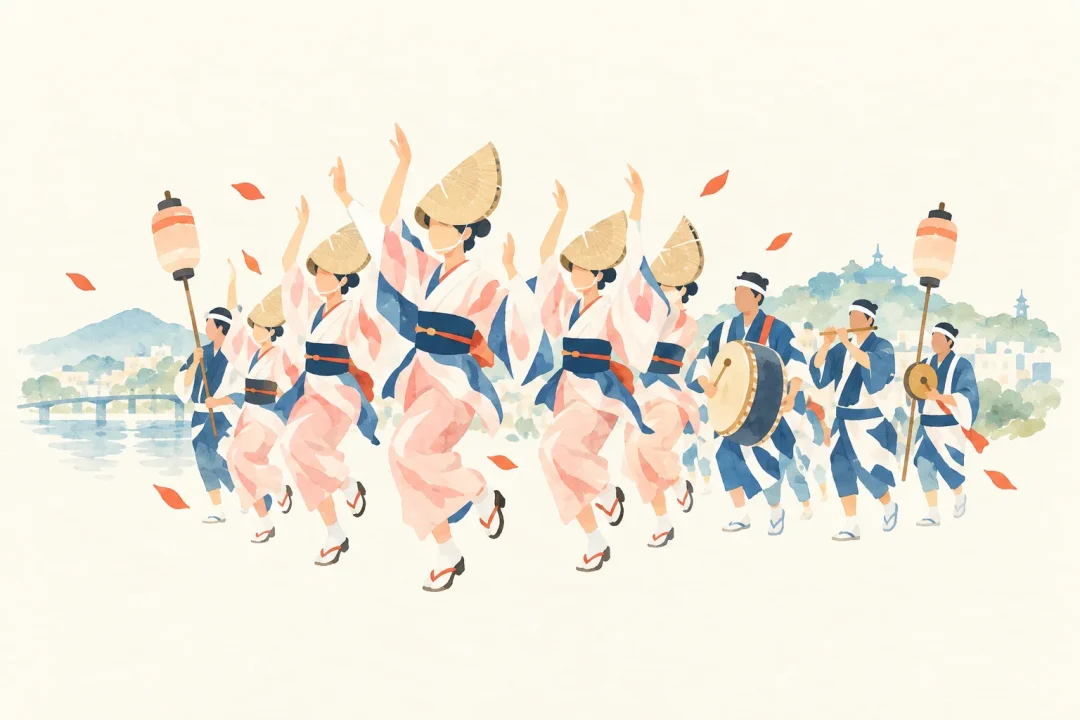
An Obon furyu dance in Totsukawa Village, brought to life with drums, fans, and lanterns
Totsukawa no Odori
Festival information
EVENT INFORMATION- Season / frequency
- Every year during the period in August / Every year
- Location
- School grounds and other locations in the Kohara, Musashi, and Nishikawa districts of Totsukawa Village
- Area
- Nara Prefecture・Totsukawa Village(From Tokyo: approx. 3 h–3 h 30 min · bullet train + connecting train)Prefecture-level estimate to a main station or airport, not the venue. Airport access, check-in and onward travel are extra; remote areas and islands can take much longer.
- Features
- Highlights and activities
- Wishes behind the festival
- Last updated
- 2026/10/19
An Obon furyu dance passed down in Kohara, Musashi, and Nishikawa in Totsukawa Village, striking for its drums, fans, and cut-pattern lanterns. Distinct processions and songs in each district preserve traditional forms that have been passed down for generations.
About Totsukawa no Odori
The Totsukawa no Odori is an Obon furyu dance passed down in Kohara, Musashi, and Nishikawa in Totsukawa Village, Nara Prefecture.
Each district has preserved dances featuring drums, fans, and cut-pattern lanterns.
This performing art preserves elements of large-scale furyu dances and also retains a ritual character as an Obon observance to welcome ancestral spirits.
It was designated a National Important Intangible Folk Cultural Property in 1989 and registered in 2022 as part of UNESCO’s Intangible Cultural Heritage, “Furyu-odori.”
Source: 十津川村の盆踊り | 十津川村観光サイト
Festival highlights
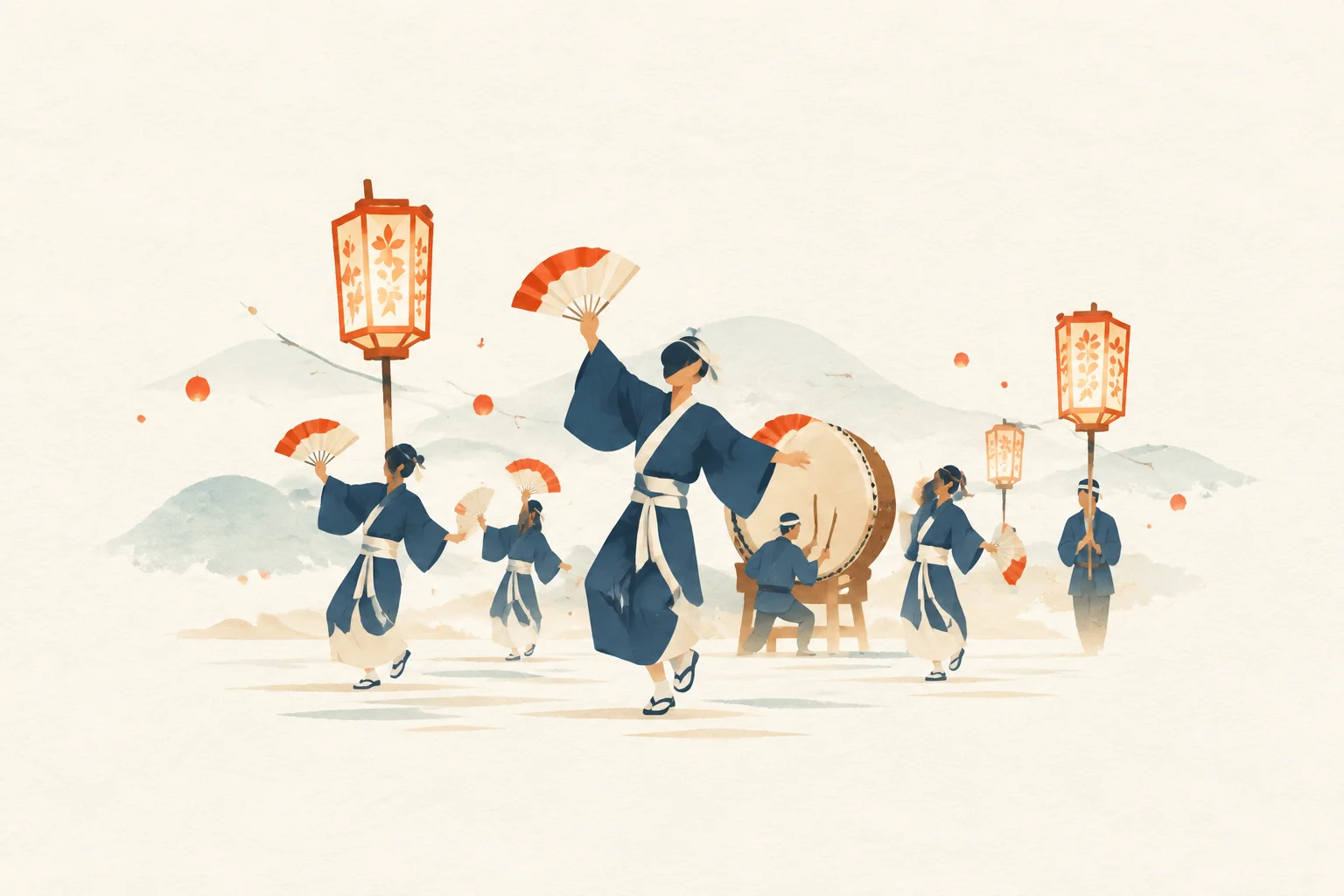
A highlight is the procession in which men play drums with tasseled drumsticks while women dance, waving fans.
When lantern bearers carrying cut-pattern lanterns suspended from bamboo poles join in, the lights add a special atmosphere to the music and dance.
In Musashi, traditions include men and women singing in call-and-response and a circular dance in 3 rows, with drum carriers, drummers, and women holding fans.
In Nishikawa, there is also a distinctive style of performance in which dancers move from place to place while maintaining their formation.
Source: 国指定文化財等データベース
An Obon furyu dance in Totsukawa Village, brought to life with drums, fans, and lanterns
What to expect
During the Obon period, dances are held in each of the Kohara, Musashi, and Nishikawa districts.
In Kohara, participants practice repeatedly before the main performance. In Musashi, they dance in the schoolyard from dusk, with men and women singing in call-and-response.
In Nishikawa, the performance follows the sequence Yoriko, Iriha, and Kakeiri, with processions dancing while playing drums, as well as dancers accompanied by lantern bearers.
Clothing and items carried, such as , fans, drums, and tasseled drumsticks, vary depending on the song.
How to take part
The dances have been handed down by preservation associations and local residents, and people of all ages and genders from each district take part.
The tradition of people returning to their hometowns dancing alongside villagers is also described.
It is not stated whether general visitors may join the dance circle or how each district welcomes visitors, so if you would like to observe, it is best to check with a local preservation association or similar group.
Source: 奈良祭時記 / 奈良県
Location and access
- Venue
School grounds and other locations in the Kohara, Musashi, and Nishikawa districts of Totsukawa Village
Event venue 奈良県十津川村 十津川村小原
This map uses the venue name. Check the official guide for the event area and entrances.
Dates and season
They are held each year during the Obon period in August in the districts of Ohara, Musashi, and Nishikawa.
The dates vary by district. The guide lists them as August 13, 14, and 15, in that order for Ohara, Musashi, and Nishikawa.
Accommodation and hotels PR
Showing nearby accommodation.
Prices and availability are current at the time of retrieval. For multi-night stays, only the first night’s price is shown. Confirm the final price and directions to the venue with the booking provider. Select your dates again when using the area search link. Search area: within 3 km of Central Nara Prefecture / Totsukawa Village (the search is not centered on the festival venue)
Origins and History of Totsukawa no Odori
The Totsukawa no Odori is said to descend from furyu dances that flourished during the Muromachi period, and is described as having been passed down for more than 300 years.
The dances are said to have been passed down by monks and worshippers making pilgrimages to Mount Tamaki, and lyrics reflecting the lineage of nenbutsu dances have also been preserved.
Once performed inside temple halls and on riverbanks, the dances are now held in schoolyards and other locations.
In Nishikawa, people from the surrounding area began gathering in Nagai around the beginning of the Taisho period, helping establish the tradition that continues today through the preservation association.
Source: 奈良県の伝統行事 / 奈良県
Official information
The Totsukawa Village tourism website introduces the Obon dances and the distinctive features of the “Odori” in each district, along with collections of lyrics and dance videos.
Details of its cultural-property designation and further information can also be found in the Agency for Cultural Affairs’ Database of Nationally Designated Cultural Properties.
Totsukawa no Odori at a Glance
The Totsukawa no Odori is an Obon furyu dance combining drums, fans, and cut-pattern lanterns, passed down in Kohara, Musashi, and Nishikawa in Totsukawa Village.
The formations, songs, and ways of performing vary by district, offering a rich range of expressions rooted in the local community.
The 2026 dates are still being confirmed, but the event is usually held during the Obon period in August.
Japanese Festivals.jp Editorial Team
Celebrating local culture and helping you discover a side of Japan you never knew.
Article updated: 2026/10/19
Submit information or a correction Submit photos of this festival