Tamanooya Shrine’s nighttime ritual, where ancient divination meets sumo-like movements
Tamanooya Shrine’s Urate Shinji
Festival information
EVENT INFORMATION- Season / frequency
- Every year on September 24, from 8 p.m. to 9 p.m. / Every year
- Location
- Within Tamanooya , in front of the shrine gate
- Area
- Yamaguchi Prefecture・Hofu City(From Tokyo: approx. 1 h 35 min–1 h 55 min · flight time only)Prefecture-level estimate to a main station or airport, not the venue. Airport access, check-in and onward travel are extra; remote areas and islands can take much longer.
- Features
- Highlights and activities
- Last updated
- 2026/11/13
Tamanooya Shrine’s Urate is a divination ritual held in front of the shrine gate on the eve of the , featuring movements resembling sumo. It is said to originate in divinations of good and bad fortune for Emperor Chuai’s army, and is designated an Intangible Folk Cultural Property of Yamaguchi Prefecture.
About Tamanooya Shrine’s Urate Shinji
Tamanooya Shrine’s Urate Shinji is an Intangible Folk Cultural Property designated by Yamaguchi Prefecture.
It is held on the eve of Tamanooya Shrine’s reisai, on the stone paving in front of the shrine gate, and carried out by attendants from shrine-affiliated families who have served in the role for generations.
It is said to originate in a tale of divining good and bad fortune for an army, and has also been called “Urate Sumo” because it includes movements resembling sumo.
A nighttime ritual in the shrine grounds that conveys an ancient divination ceremony and movements said to be the origins of sumo.
Festival highlights
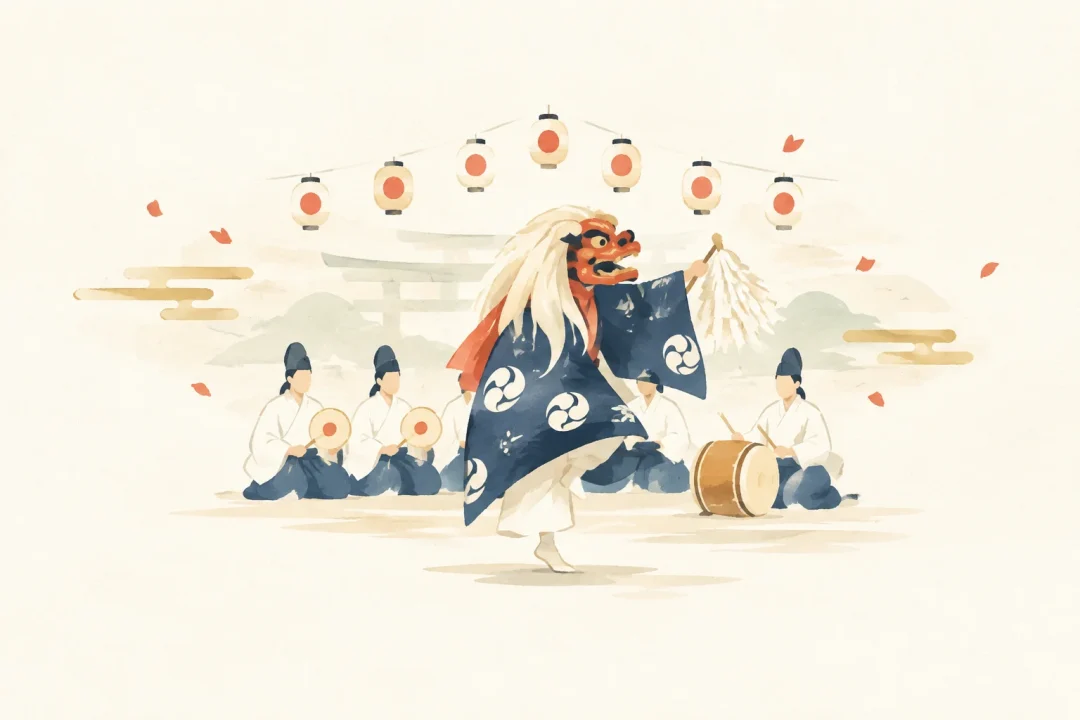
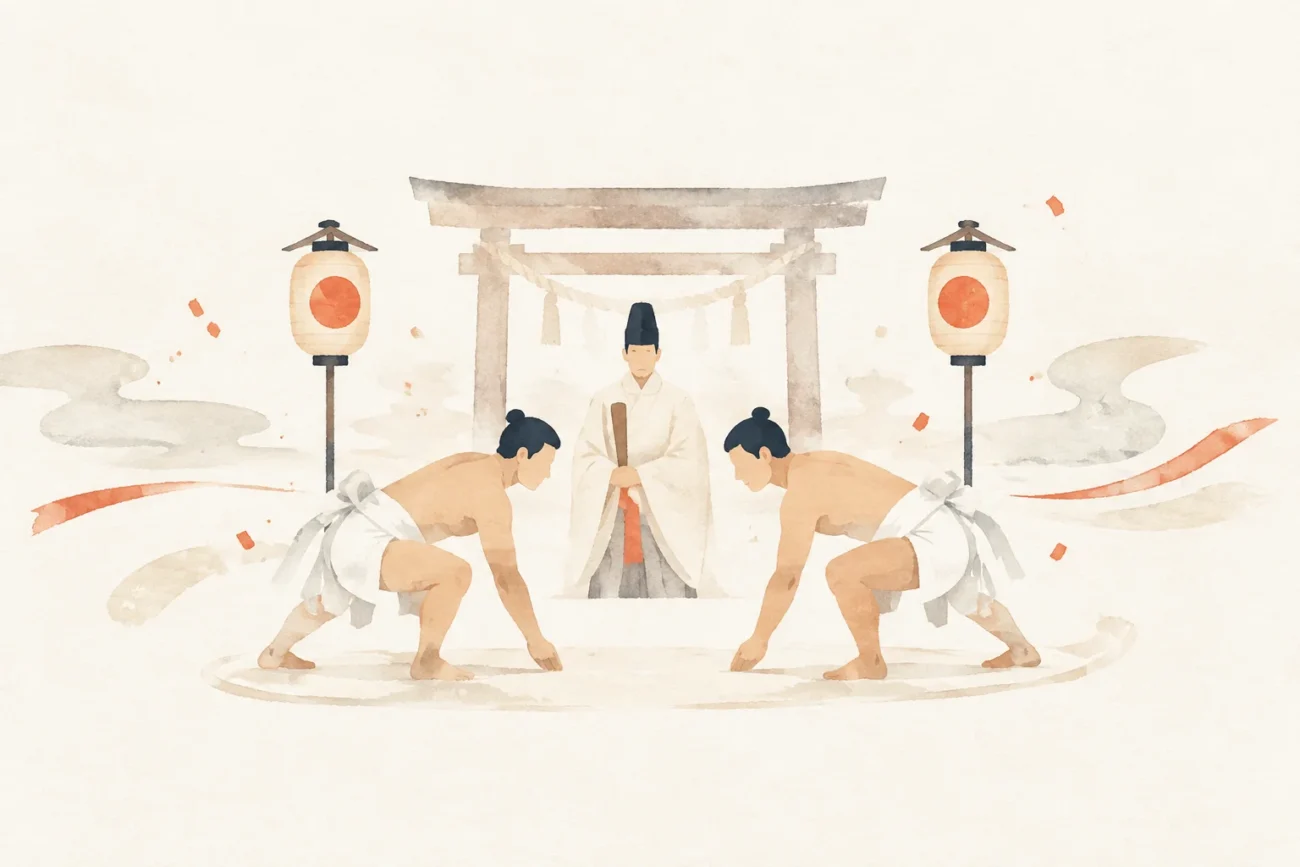
A highlight is the distinctive steps and striking gestures repeated by the two attendants in front of the shrine gate, surrounded by a ritual fire and .
The two attendants carry round cushions and ornamental swords, advancing and retreating with their feet in a zigzag pattern while repeatedly striking the left and right sides of their waists.
Finally, they strike the ground with both hands—12 times in a common year and 13 in a leap year—then raise both hands, face north, give a battle cry, and withdraw.
The old practice of cooking black-and-white offerings in an earthen cauldron is also a distinctive feature of this ritual.
Tamanooya Shrine’s nighttime ritual, where ancient divination meets sumo-like movements
What to expect
During the ritual, the chief priest and others first take their seats, and a priest purifies the attendants.
Two senior shrine attendants, dressed in kamishimo, serve as judges. The two attendants carry round cushions and ornamental swords, face one another with prescribed steps, and repeat movements using their waists and palms.
They then switch places and strike the ground, performing the action 12 times in a common year and 13 times in a leap year.
Finally, they give a battle cry, bow once, and withdraw.
Location and access
- Venue and address
The stone-paved area in front of the shrine gate, within Tamanooya Shrine grounds / Osaki, Hofu City
Address Osaki, Hofu City
Dates and season
- Season
Every year on September 24, from 8 p.m. to 9 p.m.
- Frequency
Every year
Accommodation and hotels PR
Showing nearby accommodation.
Prices and availability are current at the time of retrieval. For multi-night stays, only the first night’s price is shown. Confirm the final price and directions to the venue with the booking provider. Select your dates again when using the area search link. Search area: within 3 km of Central Yamaguchi Prefecture / Hofu City (the search is not centered on the festival venue)
Nearby attractions

三田尻塩田記念産業公園
山口県防府市にある展示館

毛利氏庭園
山口県の公園・庭園のスポットです。

毛利邸
山口県防府市にある毛利宗家の本邸

防府天満宮
山口県防府市にある神社

防府市文化財郷土資料館
山口県の博物館・美術館のスポットです。
Origins and History of Tamanooya Shrine’s Urate Shinji
According to tradition, the ritual began when Emperor Chuai visited Tamanooya Shrine during his western expedition and divined good and bad fortune for his army.
According to a related legend, an offering cooked in an earthen pot was presented to Tamaya Myojin for a divination of good and bad fortune. In response, descendants are said to have made new earthen cauldrons and bamboo implements and dedicated them before the reisai.
Since the ritual was once held at the Hour of the Ox, it was called the “night ritual”; records state that it is now held on September 24, following the adoption of the solar calendar.
Hereditary family duties remain among the shrine’s attendants, who continue the ritual in the local community.
Official information
Yamaguchi Prefecture’s cultural property information lists Tamanooya Shrine’s Urate Shinji as a prefecture-designated Intangible Folk Cultural Property.
Hofu City’s list of prefecture-designated cultural properties also gives its location as Osaki and its owner as the Urate Shinji Preservation Society.
Tamanooya Shrine’s Urate Shinji at a Glance
Tamanooya Shrine’s Urate Shinji is a divination ritual held in front of the shrine gate on the eve of the reisai, featuring movements resembling sumo.
They carry round cushions and ornamental swords, repeat prescribed steps and movements using their waists and palms, then strike the ground and give a battle cry.
It is said to originate in divinations of good and bad fortune for Emperor Chuai’s army. Old traditions also survive concerning black-and-white cooked offerings prepared in an earthen cauldron and hereditary ritual attendants.
It is passed down at Tamanooya Shrine in Osaki, Hofu City, as an Intangible Folk Cultural Property designated by Yamaguchi Prefecture.
Sources and references
Japanese Festivals.jp Editorial Team
Celebrating local culture and helping you discover a side of Japan you never knew.
Article updated: 2026/11/13