An ancient Shimagahara ceremony of offering rice cakes and a rite where fire and water cross paths
Shusho-e at Shōgatsu-dō
Festival information
EVENT INFORMATION- Season / frequency
- Every year on February 11 and the 12th / Every year
- Location
- Kanjōji Temple
- Area
- Mie Prefecture・Iga City(From Tokyo: approx. 2 h 30 min–3 h · bullet train + connecting train)Prefecture-level estimate to a main station or airport, not the venue. Airport access, check-in and onward travel are extra; remote areas and islands can take much longer.
- Highlights and activities
- Wishes behind the festival
- Last updated
- 2026/11/14
The Shusho-e at Shōgatsu-dō, passed down at Kanjōji Temple in Shimagahara, Iga City, is a traditional event combining an agricultural rite of offering rice cakes with Buddhist observances involving fire and water.
About Shusho-e at Shōgatsu-dō
The Shusho-e at Shōgatsu-dō is an ancient ceremony held every year on February 11 and the 12th at Kanjōji Temple in Shimagahara, Iga City. It brings together an agricultural rite of offering rice cakes and Buddhist observances.
The Ōmochi-e ceremony takes place on the 11th, followed by the Datta rite and other observances on the 12th, with prayers for bountiful harvests, peace in the nation, and protection from misfortune.
This event has been protected and passed down jointly by the temple and the local community. In 1954, it was designated an Intangible Folk Cultural Property of Mie Prefecture.
Festival highlights
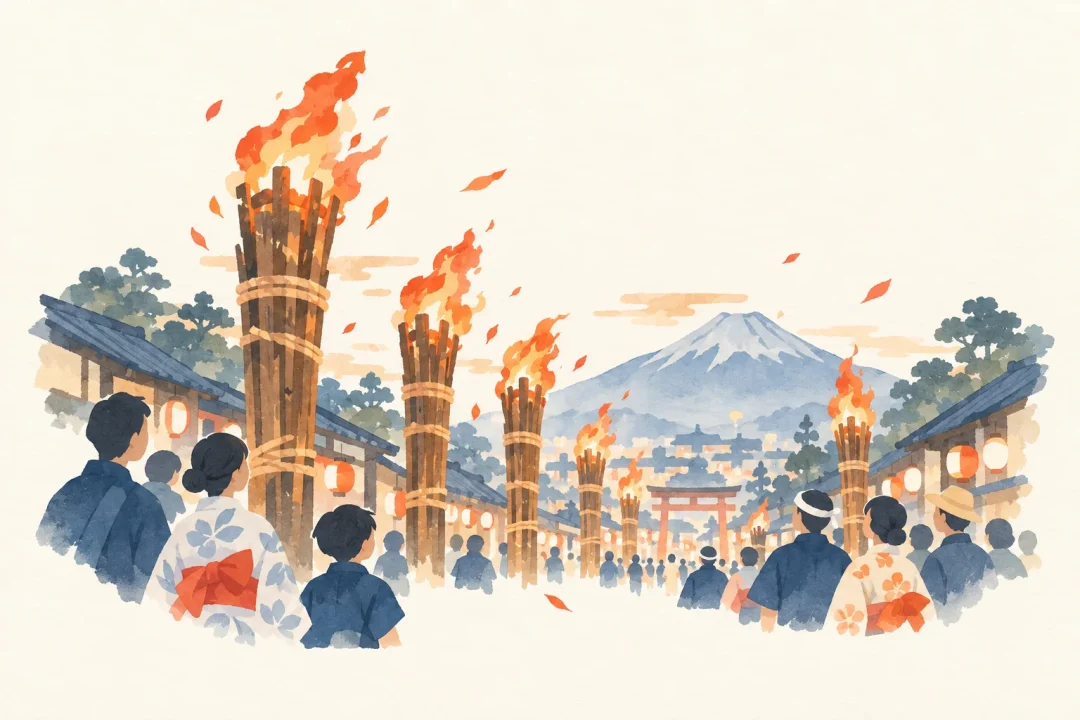
Highlights include the nerikomi procession, in which the head families carry large rice cakes and Setsuku offerings into Shōgatsu-dō, and the dance with fire and water performed during the Datta rite.
During the nerikomi procession, participants call out “Etō, etō,” while the clatter of their geta sandals echoes through the .
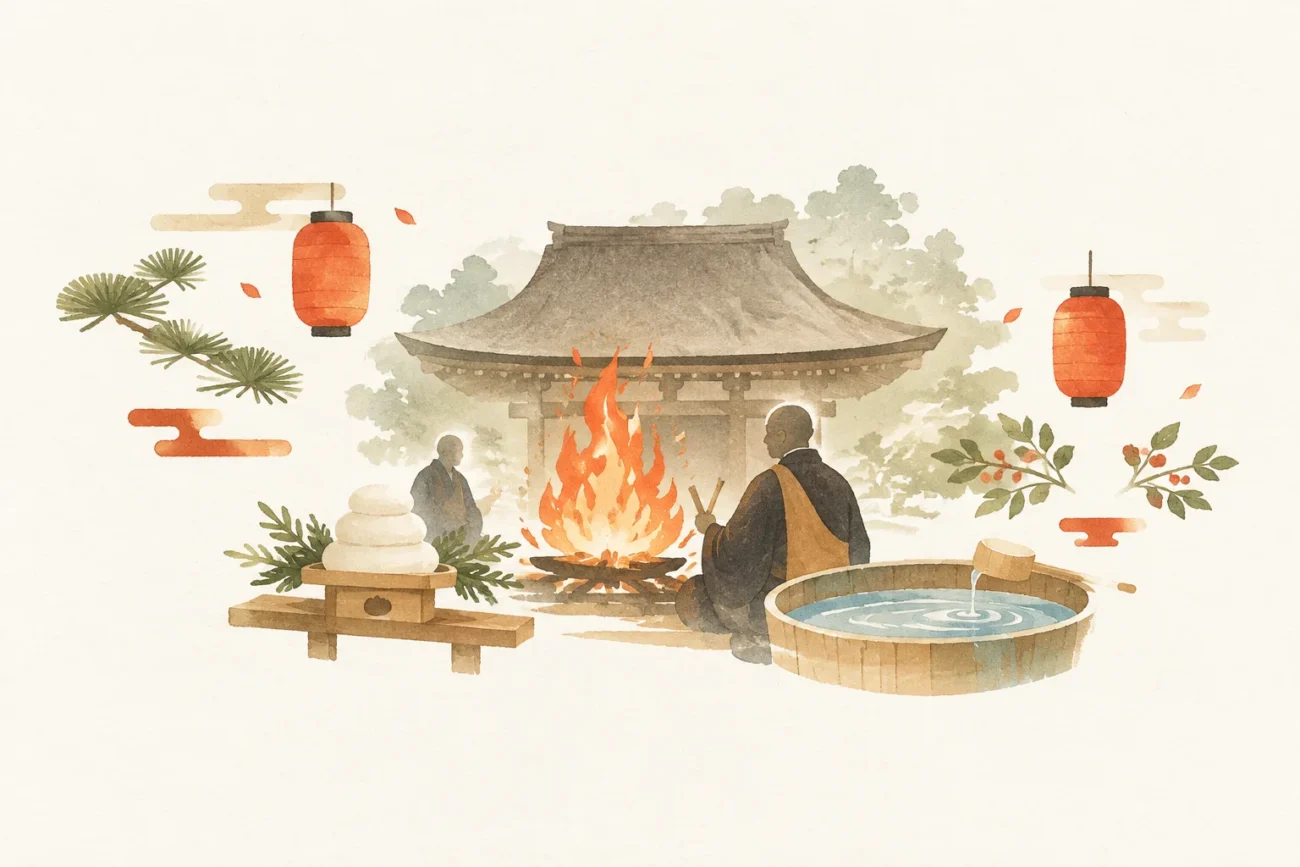
In the ascetic rite, fire and water are brandished in a fierce, interweaving dance offering—a solemn scene that preserves an ancient ritual.
An ancient Shimagahara ceremony of offering rice cakes and a rite where fire and water cross paths
What to expect
The event begins with the Ōmochi-e ceremony, where rice cakes are made by the members on duty and the head families of 7 kō groups, then offered to Shōgatsu-dō.
On the 11th, each kō group passes through the tower gate and processes into the main hall, offering rice cakes to the principal image and singing celebratory songs.
On the 12th, the Datta rite is performed, with a dance offering in which fire and water are brandished.
How to take part
The event is centered on the members on duty and head families of 7 kō groups.
Some kō groups have been formed in recent years, with younger generations joining through social media.
Location and access
- Venue and address
Kanjōji Temple, 1349 Shimogahara, Iga City
- Train and bus
About a 25-minute walk from Shimagahara Station on the JR Kansai Main Line
- By car
About 20 minutes from the Ouchi IC on the Meihan National Highway
- Parking
Yes
Address 1349 Shimogahara, Iga City, Mie Prefecture
Dates and season
- Season
Every year on February 11 and the 12th
- Frequency
Every year
Accommodation and hotels PR
Showing nearby accommodation.
Prices and availability are current at the time of retrieval. For multi-night stays, only the first night’s price is shown. Confirm the final price and directions to the venue with the booking provider. Select your dates again when using the area search link. Search area: within 3 km of Central Mie Prefecture / Iga City (the search is not centered on the festival venue)
Nearby attractions
Around Kanjōji Temple are Unomiya Shrine, which has close ties to the temple; Sainenji Temple, home to a kaya tree more than 500 years old and a Nirvana painting; and Kōsaka Shrine.
The former honjin site, Gyōja-dō, the former Shimagahara Village Office, and other historic sites are scattered around Shimagahara-juku.
Kanjōji Temple lies near Shimagahara-juku on the Yamato Highway, allowing visitors to explore the history of both the temple and the post town.

上野城
三重県伊賀市に存在した城
写真:The original uploader was T@ka at Japanese Wikipedia . / CC BY-SA 3.0
Photo source ·
伊賀流忍者博物館
三重県伊賀市にある忍者の博物館

敢國神社
三重県伊賀市一之宮にある神社

芭蕉翁記念館
三重県伊賀市の上野公園にある記念館
Origins and History of Shusho-e at Shōgatsu-dō
The Shusho-e at Shōgatsu-dō is believed to have developed from a rite of offering rice cakes to the New Year deity, incorporating the Setsuku-no-Kashira observance from folk religion to become today’s large rice-cake offering ritual, known as nerikomi.
The event includes rites akin to the Shuni-e at Tōdai-ji’s Nigatsu-dō, such as the Datta rite, and its connection with Tōdai-ji has drawn attention.
Although few old records survive, local tradition says the event has continued for 1,300 years. In 1954, it was designated an Intangible Folk Cultural Property of Mie Prefecture.
Official information
Official information: Iga-Ueno Tourism Association, “Shusho-e at Shōgatsu-dō”
Shusho-e at Shōgatsu-dō at a Glance
The Shusho-e at Shōgatsu-dō is an ancient ceremony protected and passed down by Kanjōji Temple and the community of Shimagahara.
Over 2 days, rice cakes are made and offered to Shōgatsu-dō in the nerikomi procession, and the Datta rite is performed with fire and water brandished, praying for bountiful harvests, peace in the nation, and protection from misfortune.
It is distinguished by the blending of the Ōmochi-e ceremony and Shingon Buddhist rites, and is designated an Intangible Folk Cultural Property of Mie Prefecture.
Sources and references
Japanese Festivals.jp Editorial Team
Celebrating local culture and helping you discover a side of Japan you never knew.
Article updated: 2026/11/14