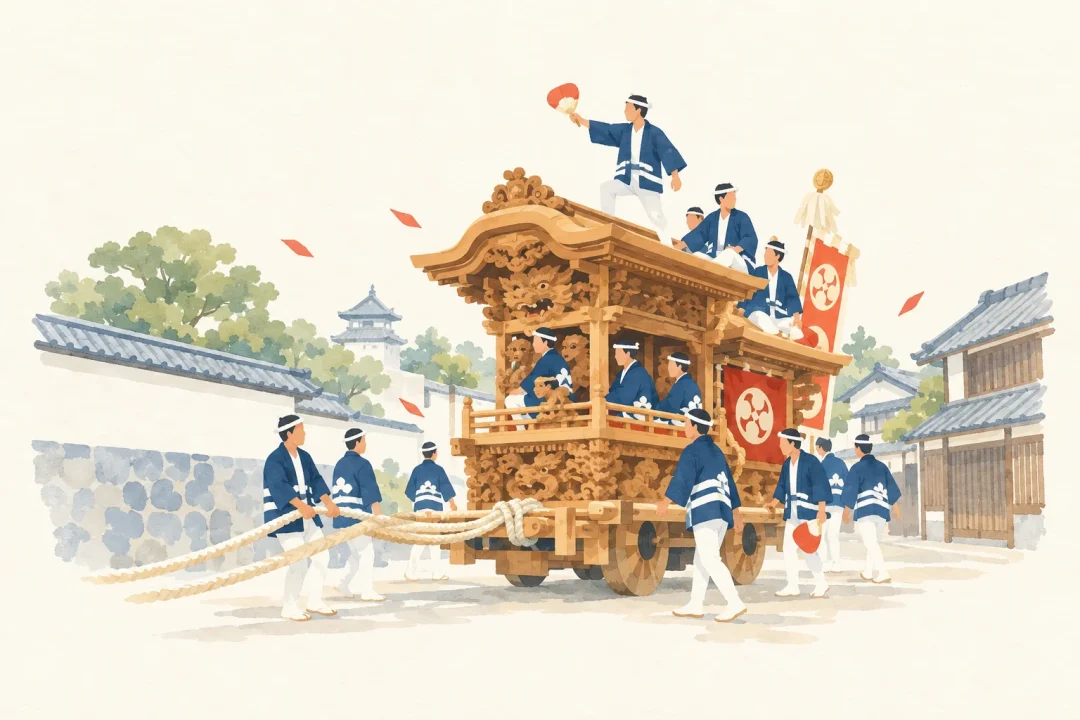
A harvest-prayer Ten Festival passed down at the shrine in Miwa
Sanwa Ten Festival
Festival information
EVENT INFORMATION- Season / frequency
- October 30 (listed as the date)
- Location
- Sanwa Shrine
- Area
- Tochigi Prefecture・Nakagawa Town(From Tokyo: approx. 50 min–1 h · bullet train)Prefecture-level estimate to a main station or airport, not the venue. Airport access, check-in and onward travel are extra; remote areas and islands can take much longer.
- Wishes behind the festival
- Last updated
- 2026/11/11
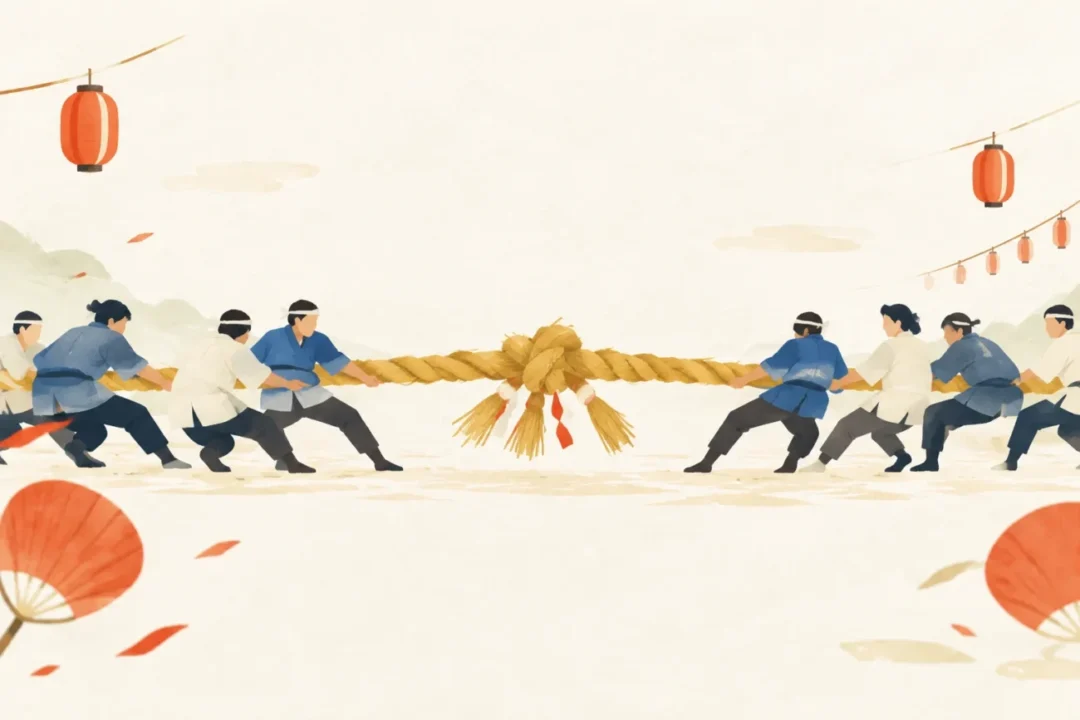
A Ten Festival praying for a bountiful harvest, passed down at Sanwa Shrine in Miwa, Nakagawa Town.
About Sanwa Ten Festival
The Sanwa Ten Festival is a Ten Festival passed down at Sanwa Shrine in Miwa, Nakagawa Town.
It is described as a festival praying for a bountiful harvest, passed down since the Tensho era of the Azuchi-Momoyama period (1573–1591).
It is a local rite associated with Sanwa Shrine, and was designated an Intangible Folk Cultural Property of Nakagawa Town in Heisei 6, July 14.
Festival highlights
The highlight is the Ten Festival, held at Sanwa Shrine and passed down with prayers for a bountiful harvest.
The festival itself is said to date back to the Tensho era of the Azuchi-Momoyama period, giving it a long history of transmission.
Specific details of the performances, implements, and proceedings today could not be confirmed, but the festival is notable as a local rite designated an Intangible Folk Cultural Property by the town.
A harvest-prayer Ten Festival passed down at the shrine in Miwa
What to expect
At the Sanwa Ten Festival, a Ten Festival praying for a bountiful harvest is held.
The festival is passed down as the reisai of Sanwa Shrine, and the reisai date is given as October 30.
Since no specific details are provided about the procession, , performances, or times on the day, what can be confirmed is that it is a rite praying for a good harvest and is connected with Sanwa Shrine.
Location and access
- Venue and address
Sanwa Shrine (726 Miwa, Nakagawa Town)
Address 726 Miwa, Nakagawa Town, Nasu District, Tochigi Prefecture
Dates and season
- Season
October 30 (listed as the reisai date)
Accommodation and hotels PR
Showing nearby accommodation.
Prices and availability are current at the time of retrieval. For multi-night stays, only the first night’s price is shown. Confirm the final price and directions to the venue with the booking provider. Select your dates again when using the area search link. Search area: within 3 km of Central Tochigi Prefecture / Nakagawa Town (the search is not centered on the festival venue)
Nearby attractions
About 500 meters northeast of Sanwa Shrine is Goryo Shrine, enshrined as the mausoleum of Nasu no Yoichi Munetaka.
The relative locations of Sanwa Shrine and Goryo Shrine are described.
The materials do not provide information about facility opening hours or visitor guidance.

那珂川町馬頭広重美術館
栃木県那須郡那珂川町にある町立美術館
写真:Photo by Woranol Sattayavinij / CC BY 2.0
Photo source ·Origins and History of Sanwa Ten Festival
The Sanwa Ten Festival is a Ten Festival praying for a bountiful harvest, said to have been passed down since the Tensho era of the Azuchi-Momoyama period (1573–1591).
It is described as being held on October 30 as the reisai of Sanwa Shrine, and has been passed down in connection with the shrine in Miwa.
In Heisei 6, July 14, the Sanwa Ten Festival Preservation Society was listed as its administrator, and the festival was designated an Intangible Folk Cultural Property of Nakagawa Town.
Official information
The Sanwa Ten Festival is listed as an Intangible Folk Cultural Property in the town-designated cultural properties list on the official Nakagawa Town website.
Its location is Sanwa Shrine, 726 Miwa, Nakagawa Town; the administrator is the Sanwa Ten Festival Preservation Society; and the designation date is Heisei 6, July 14.
This is the official reference for confirming its status as a cultural property.
Sanwa Ten Festival at a Glance
The Sanwa Ten Festival is a Ten Festival praying for a bountiful harvest, passed down at Sanwa Shrine in Miwa, Nakagawa Town.
It is said to have been passed down since the Tensho era of the Azuchi-Momoyama period, and was designated an Intangible Folk Cultural Property of Nakagawa Town in Heisei 6, July 14.
Sources and references
Japanese Festivals.jp Editorial Team
Celebrating local culture and helping you discover a side of Japan you never knew.
Article updated: 2026/11/11