A spring festival featuring rice-planting rites and dances, with a tug-of-war called Kagihiki to divine whether the harvest or the fishing will be good
Performing arts associated with the Yamamiya Shrine Spring Festival (Kagihiki, Shogatsu Odori)
Festival information
EVENT INFORMATION- Season / frequency
- The second Saturday and Sunday of February
- Location
- Yamamiya Shrine and Anraku Shrine
- Area
- Kagoshima Prefecture・Shibushi City(From Tokyo: approx. 1 h 50 min–2 h 20 min · flight time only)Prefecture-level estimate to a main station or airport, not the venue. Airport access, check-in and onward travel are extra; remote areas and islands can take much longer.
- Wishes behind the festival
- Required number of participants
- Kagihiki is performed by 3 people on each side, upper and lower.
- Last updated
- 2026/10/25
A kinen-sai held at Yamamiya Shrine and Anraku Shrine, where rice-planting-related shrine rites, Shogatsu Odori, and Kagihiki have been passed down.
About Performing arts associated with the Yamamiya Shrine Spring Festival (Kagihiki, Shogatsu Odori)
These performing arts are part of the spring festival at Yamamiya Shrine and Anraku Shrine, a kinen-sai praying for a good harvest.
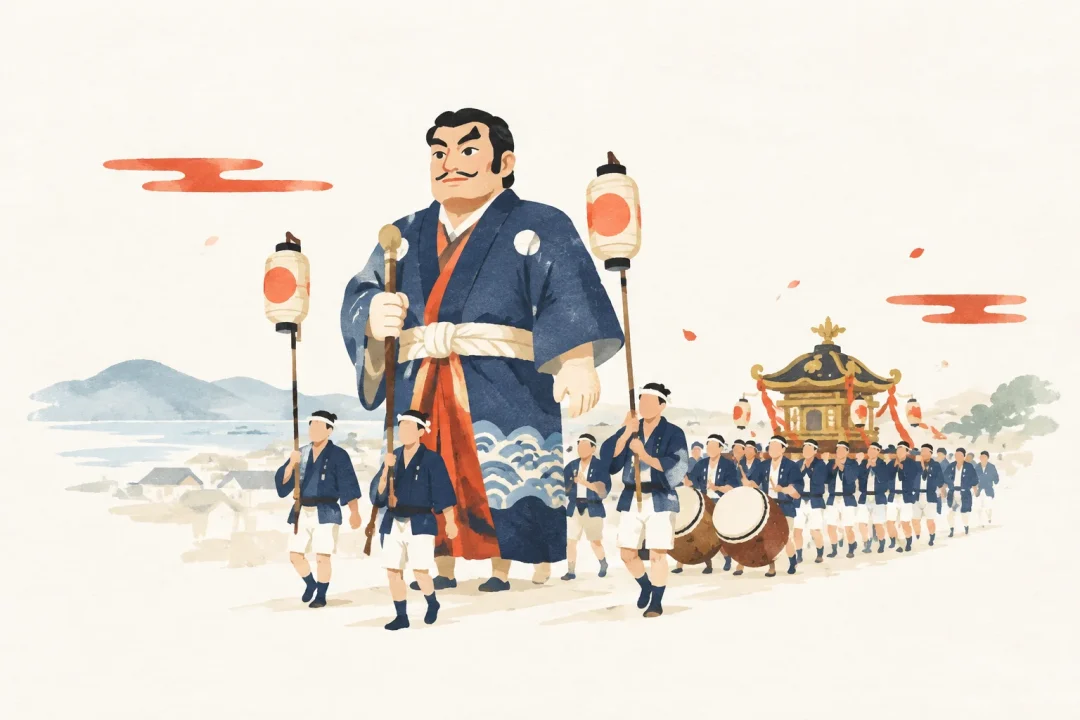
The descends from Yamamiya Shrine to Anraku Shrine. The following day, after Ueue-sai is held at Anraku Shrine, the mikoshi returns to Yamamiya Shrine.
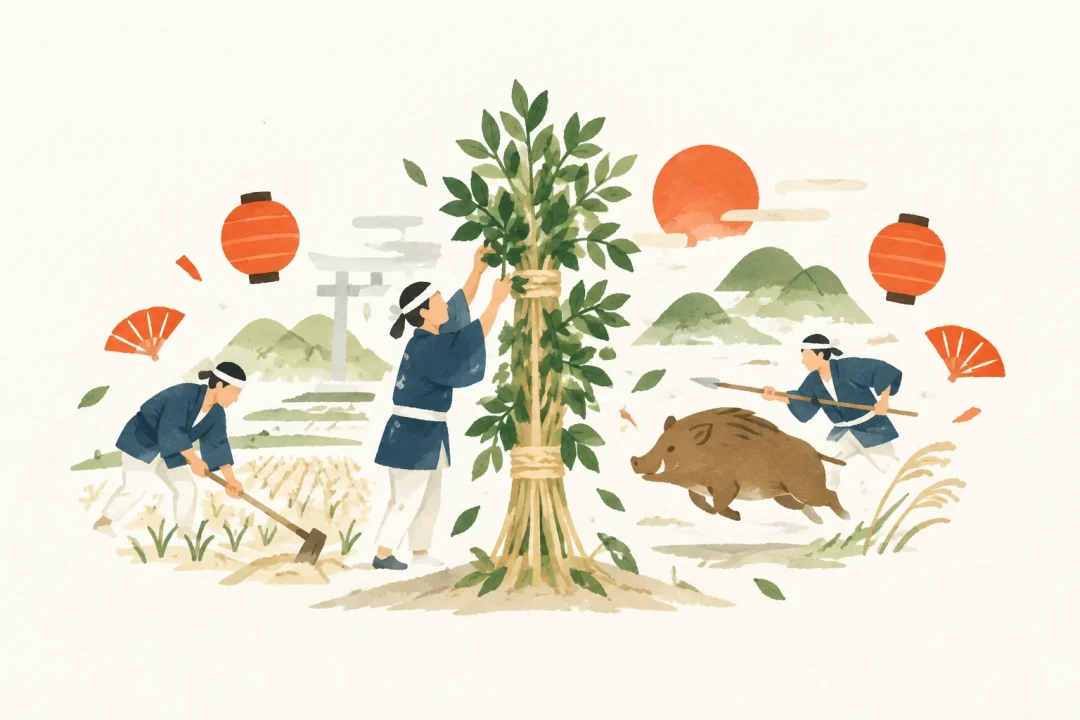
At Yamamiya Shrine, Otaue—in which bamboo skewers are planted to represent rice plants—and Hamakudari are performed. At Anraku Shrine, the program includes Ta-uchi, Ushitsukai, Tanemaki, Kagihiki, and Shogatsu Odori.
Festival highlights
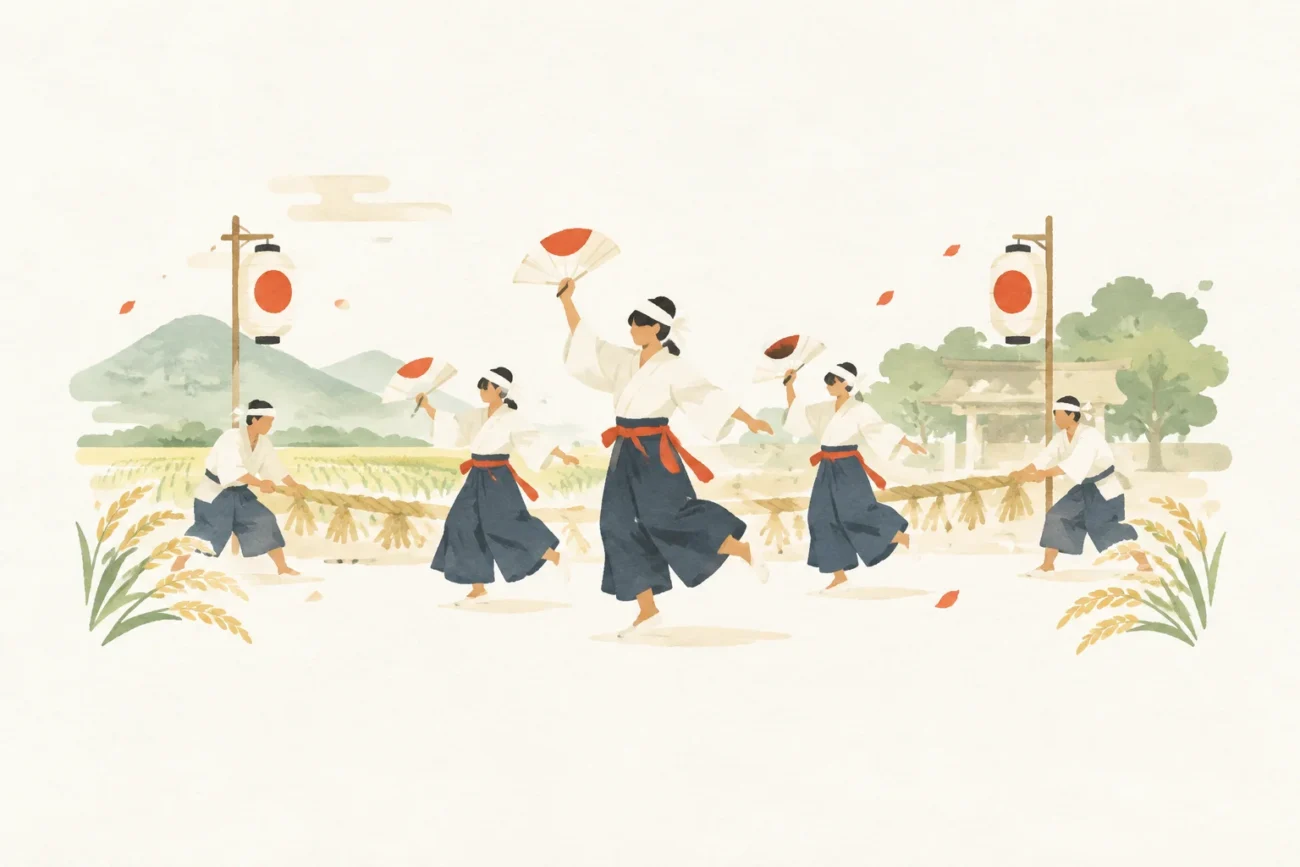
Highlights include Shogatsu Odori, which consists of 9 dances, and Kagihiki, a tug-of-war using “hooks” made from oak branches.
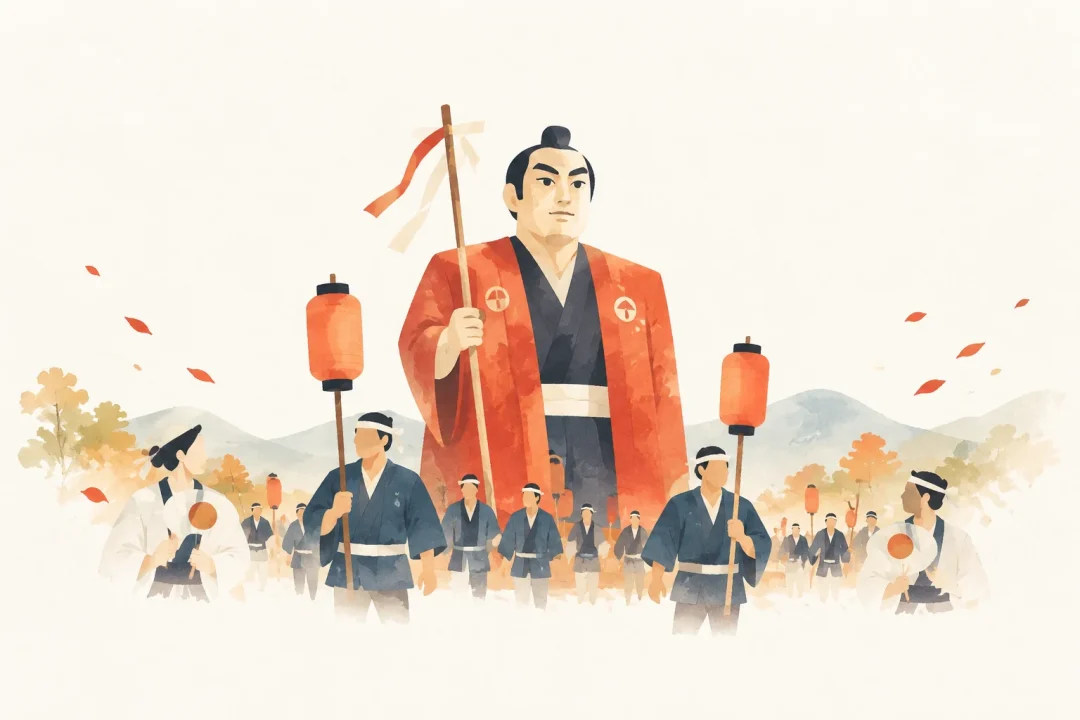
For Shogatsu Odori, dancers wear items such as momohiki trousers, black montsuki, a Hakata obi, and a black ohaguro head covering.
Kagihiki takes place in the beside the . Two teams of 3 people, one representing the upper side and one the lower, compete. It is said that a win by the upper side brings a good harvest, while a win by the lower side brings a good catch.
A spring festival featuring rice-planting rites and dances, with a tug-of-war called Kagihiki to divine whether the harvest or the fishing will be good
What to expect
The festival unfolds at Yamamiya Shrine and Anraku Shrine, with the mikoshi procession and shrine rites continuing from one to the other.
At Yamamiya Shrine, Otaue is performed by planting bamboo skewers made to resemble rice plants in the shrine grounds, along with Hamakudari. At Anraku Shrine, the grounds are treated as a rice paddy for Ta-uchi, where the soil is tilled with a water hoe; Ushitsukai, where a performer wearing an ox mask pulls a boga; and Tanemaki, where rice seeds are sown.
These are joined by Shogatsu Odori and Kagihiki, which are also offered to the deities.
How to take part
必要人数:カギヒキは上・下それぞれ3名
Location and access
- Venue and address
Yamamiya Shrine and Anraku Shrine (Anraku, Shibushi-cho, Shibushi City)
Source: 山宮神社春祭に伴う芸能(カギヒキ,正月踊)
Event venue 鹿児島県志布志市 山宮神社
This map uses the venue name. Check the official guide for the event area and entrances.
Dates and season
- Season
The second Saturday and Sunday of February
Accommodation and hotels PR
Showing nearby accommodation.
Prices and availability are current at the time of retrieval. For multi-night stays, only the first night’s price is shown. Confirm the final price and directions to the venue with the booking provider. Select your dates again when using the area search link. Search area: within 3 km of Central Kagoshima Prefecture / Shibushi City (the search is not centered on the festival venue)
Origins and History of Performing arts associated with the Yamamiya Shrine Spring Festival (Kagihiki, Shogatsu Odori)
This spring festival is said to have ancient origins as a kinen-sai, a festival praying for a good harvest. In the past, it was held on the day of the rabbit in the lunar New Year.
Shogatsu Odori was once offered by communities throughout southern Kyushu and, since the Meiji period, has been passed down by local young people.
According to cultural-property materials from Kagoshima Prefecture, the festivals at Yamamiya Shrine and Anraku Shrine are considered one continuous festival because the two do not include events with the same content.
Official information
The Shibushi City official website introduces the festival’s schedule, performing arts, Shogatsu Odori costumes, and Kagihiki method under the title of the prefecturally designated cultural property “Performing Arts Associated with the Yamamiya Shrine Spring Festival (Kagihiki, Shogatsu Odori).”
Performing arts associated with the Yamamiya Shrine Spring Festival (Kagihiki, Shogatsu Odori) at a Glance
The performing arts associated with the Yamamiya Shrine Spring Festival connect Yamamiya Shrine and Anraku Shrine in a kinen-sai featuring a mikoshi procession, rice-planting-related shrine rites, Shogatsu Odori, and Kagihiki.
The festival’s distinctive local performing arts include Shogatsu Odori, made up of 9 dances, and Kagihiki, in which 3 people from each side—the upper and lower—pull against each other using hooks made from oak branches.
Shogatsu Odori, once offered by communities throughout southern Kyushu, has been passed down by local young people since the Meiji period.
Japanese Festivals.jp Editorial Team
Celebrating local culture and helping you discover a side of Japan you never knew.
Article updated: 2026/10/25
Submit information or a correction Submit photos of this festival