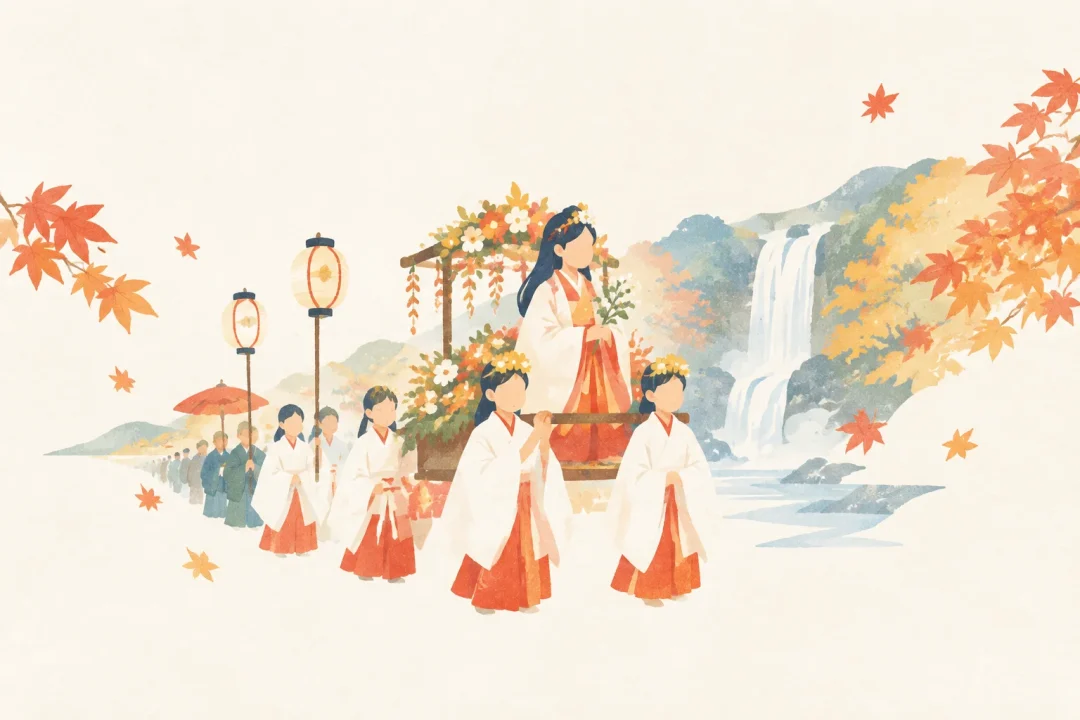
The Semori doll and nenbutsu procession carry on the village’s prayers for a good harvest
Semori Okuri
Festival information
EVENT INFORMATION- Season / frequency
- The last Sunday of June, after rice planting has finished / 1 time per year
- Location
- From Hosenji Temple to the riverbank at Suginose
- Area
- Ehime Prefecture・Seiyo City(From Tokyo: approx. 1 h 25 min–1 h 45 min · flight time only)Prefecture-level estimate to a main station or airport, not the venue. Airport access, check-in and onward travel are extra; remote areas and islands can take much longer.
- Highlights and activities
- Wishes behind the festival
- Last updated
- 2026/11/21
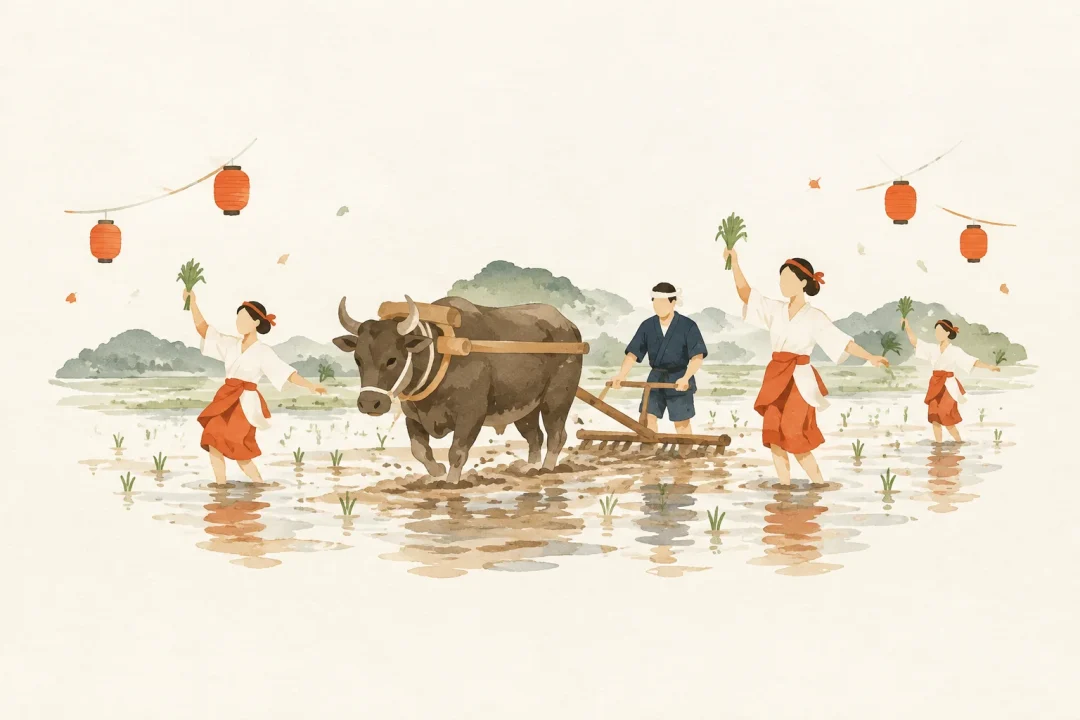
This traditional event takes place after rice planting in Shirokawa Town, sending the Semori doll downstream while praying for a bountiful harvest and the driving away of pests.
About Semori Okuri
Semori Okuri is a pest-driving ritual held after rice planting has finished.
Set in the Taho, Uonari, and Imada areas of Shirokawa, Seiyo City, the event honors the spirit of Saito Bettō Sanemori and prays for a bountiful harvest and the driving away of pests.
A local event deeply connected with rice cultivation, in which a warrior-shaped Semori doll, made in Taho for generations, is sent downstream with nenbutsu prayers, bells, and drums.
Festival highlights
A highlight is the large warrior-shaped Semori doll, which has been made in Taho for generations.
Accompanied by bells and drums, the doll is carried in a procession along the ridges of fields where rice planting has finished, passing from Taho to the Uonari area.
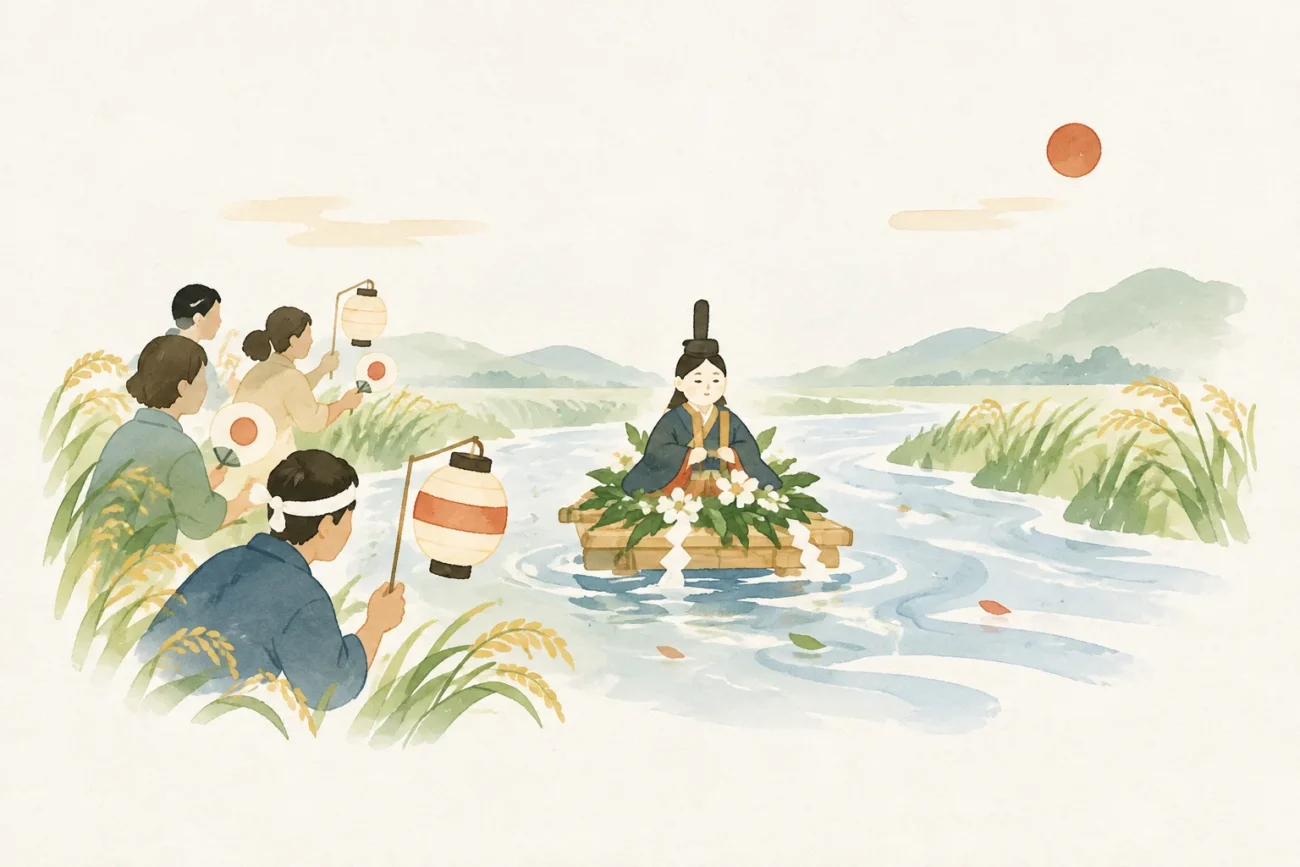
The procession stops at a chado to pay its respects, and the event ends with the doll being sent down the river along with offerings.
The Semori doll and nenbutsu procession carry on the village’s prayers for a good harvest
What to expect
The event begins with a memorial service at Hosenji Temple to invite a spirit into the Semori doll, which is then moved to Oike Pond in Taho.
After a nenbutsu memorial service at Oike Pond, the procession sets off downstream and makes a brief rest stop and pays its respects at a chado along the way.
The procession continues downstream and ends with participants chanting nenbutsu prayers for the memorial service at the riverbank at Suginose before dispersing.
According to the information provided, the doll is sent down the river along with offerings.
Location and access
- Venue and address
From Hosenji Temple to the riverbank at Suginose / Taho and Uonari, Shirokawa, Seiyo City, Ehime Prefecture
- By car
About 40 minutes by car from Seiyo-Uwa IC / About 40 minutes by car from Uchiko-Ikarasaki IC
Address Taho and Uonari, Shirokawa, Seiyo City, Ehime Prefecture
Dates and season
- Season
The last Sunday of June, after rice planting has finished
- Frequency
1 time per year
Accommodation and hotels PR
Showing nearby accommodation.
Prices and availability are current at the time of retrieval. For multi-night stays, only the first night’s price is shown. Confirm the final price and directions to the venue with the booking provider. Select your dates again when using the area search link. Search area: within 3 km of Central Ehime Prefecture / Seiyo City (the search is not centered on the festival venue)
Nearby attractions
Nearby are the Donosaka terraced rice paddies, selected as one of Japan’s 100 Best Terraced Rice Fields.
Local farmers still cultivate fields on these stone-walled terraced rice paddies, which cover about 1.2 hectares.
Semori Okuri is introduced as one of the traditional cultural practices connected with rice cultivation in this area.

愛媛県歴史文化博物館
愛媛県西予市にある博物館

開明学校
愛媛県西予市宇和町に建てられた、四国最古の小学校
Origins and History of Semori Okuri
Semori Okuri is said to derive from a legend that the resentment of Saito Bettō Sanemori, who met an untimely death in the late Heian period, became pests.
It has been said that Sanemori was defeated after his feet became entangled in rice stubble, and that his spirit became planthoppers that devoured the rice plants.
The event has a history of more than 300 years and preserves for today the tradition of pest-driving rituals dating back to the Edo period, along with the area’s rice-growing culture.
Official information
Seiyo City official website: “City-Designated Semori Okuri”
Semori Okuri at a Glance
Semori Okuri is a pest-driving ritual passed down in the Taho, Uonari, and Imada areas of Shirokawa, Seiyo City.
After rice planting, people hold a memorial service for the Semori doll and carry it from Taho toward Uonari in a procession accompanied by bells, drums, and nenbutsu prayers, wishing for a bountiful harvest and the driving away of pests.
After stopping to pay their respects at a chado, participants perform a memorial service for the doll on the riverbank at Suginose and then send it down the river, bringing the event to a close.
Japanese Festivals.jp Editorial Team
Celebrating local culture and helping you discover a side of Japan you never knew.
Article updated: 2026/11/21