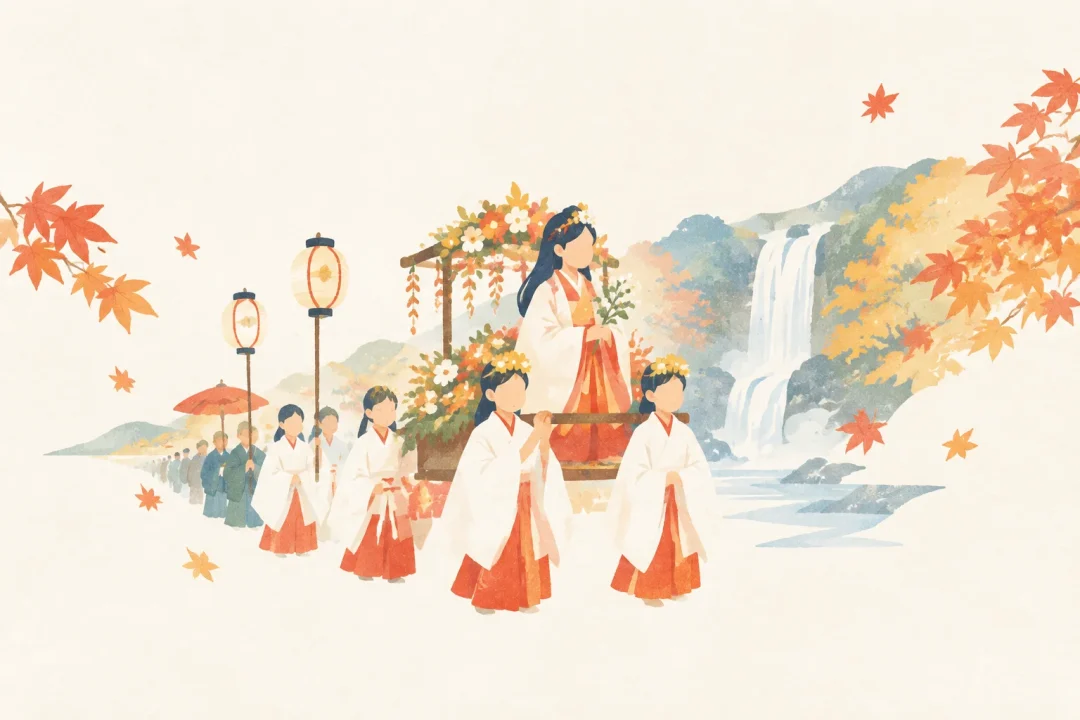
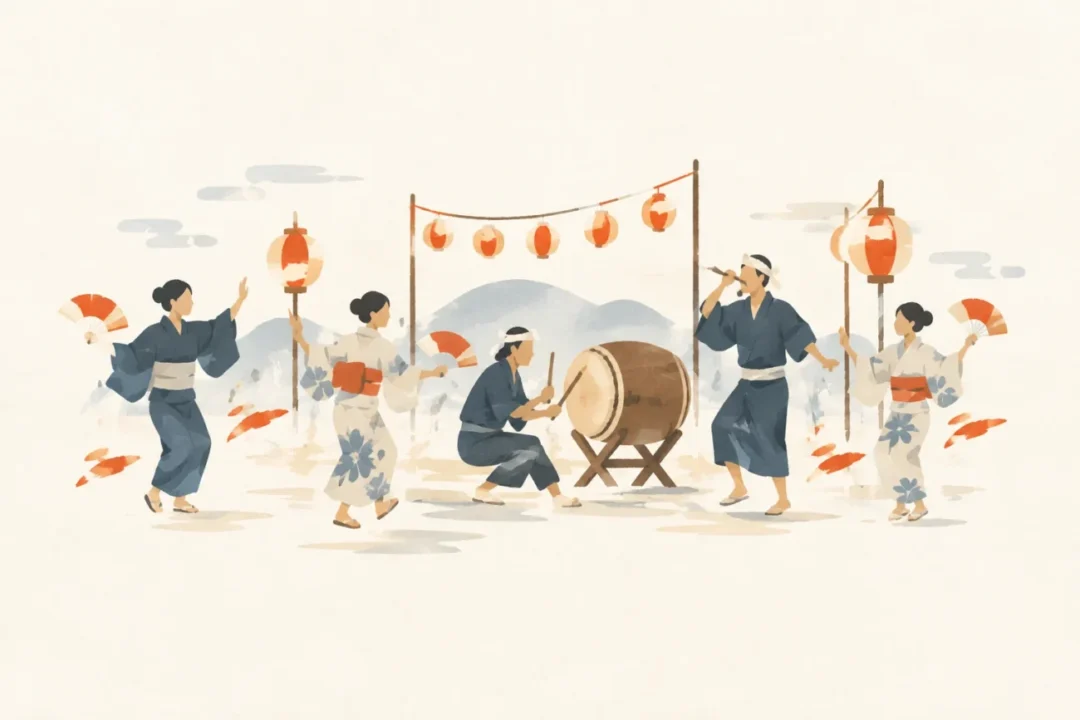
A festival passed down between sea and shore, featuring a lacquered boat and performances of song and dance
Kasuga Shrine Ofuneren
Festival information
EVENT INFORMATION- Season / frequency
- Autumn
- Location
- Around Kadonowaki, the Nakahama , and the floating platforms at sea
- Area
- Ehime Prefecture・Seiyo City(From Tokyo: approx. 1 h 25 min–1 h 45 min · flight time only)Prefecture-level estimate to a main station or airport, not the venue. Airport access, check-in and onward travel are extra; remote areas and islands can take much longer.
- Features
- Highlights and activities
- Last updated
- 2026/11/12
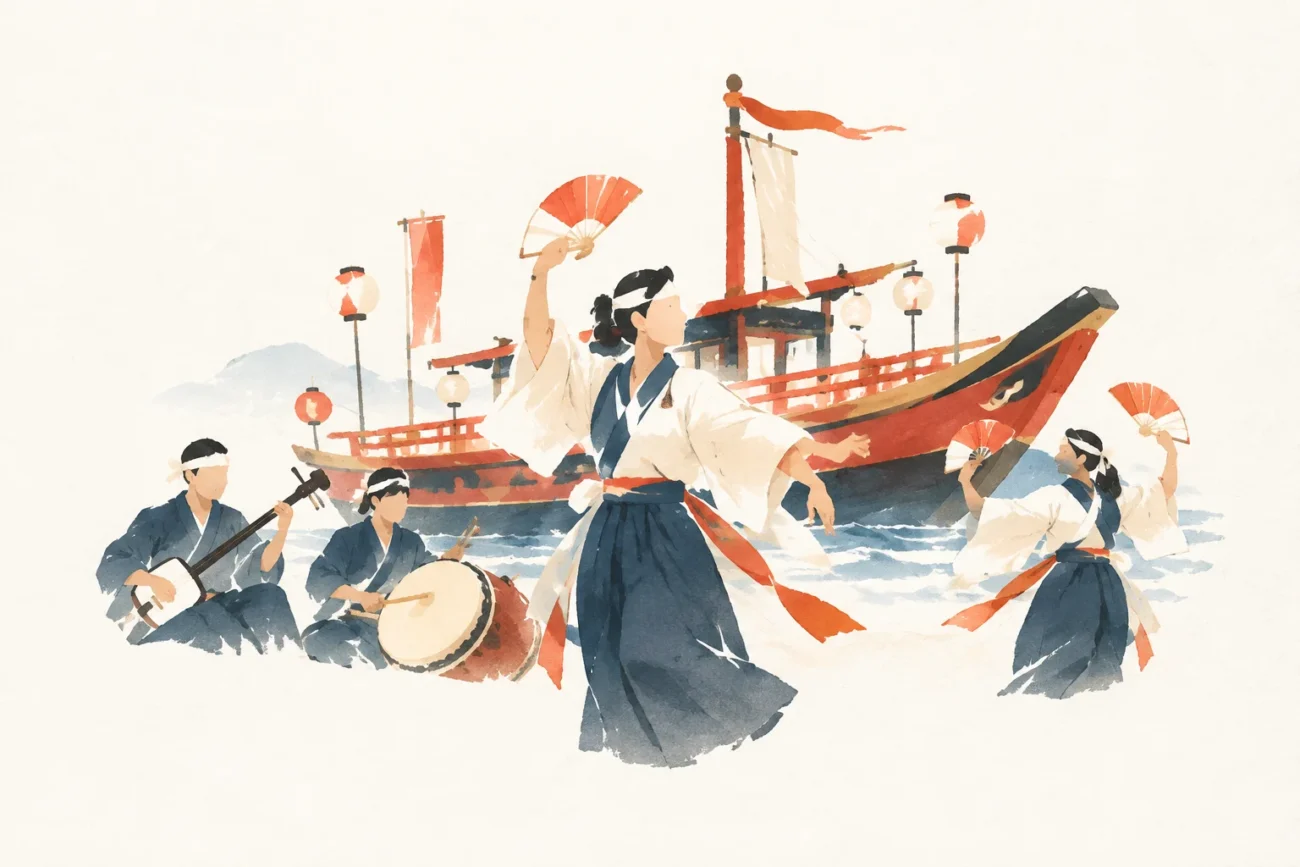
The Ofuneren at the autumn festival of Kasuga Shrine is a traditional event held in Kariwa, Akehama-cho, Seiyo City. Performances of song and dance to shamisen and are presented against the backdrop of a lacquered boat.
About Kasuga Shrine Ofuneren
The Kasuga Shrine Ofuneren is an event that has been held as part of the autumn festival at Kasuga Shrine in Kariwa, Akehama-cho, Seiyo City, Ehime Prefecture.
A lacquered boat, assembled as a single vessel by joining its front and rear sections, is used. Performances of song and dance to shamisen and taiko accompany the ’s departure and the sea procession.
Dancing was once performed aboard the boat, but fishing boats can no longer be used because they have become mechanized, so performances of song and dance now take place on land.
Festival highlights
Highlights include performances of song and dance against the backdrop of the lacquered boat, and dancing to the sounds of shamisen and taiko.
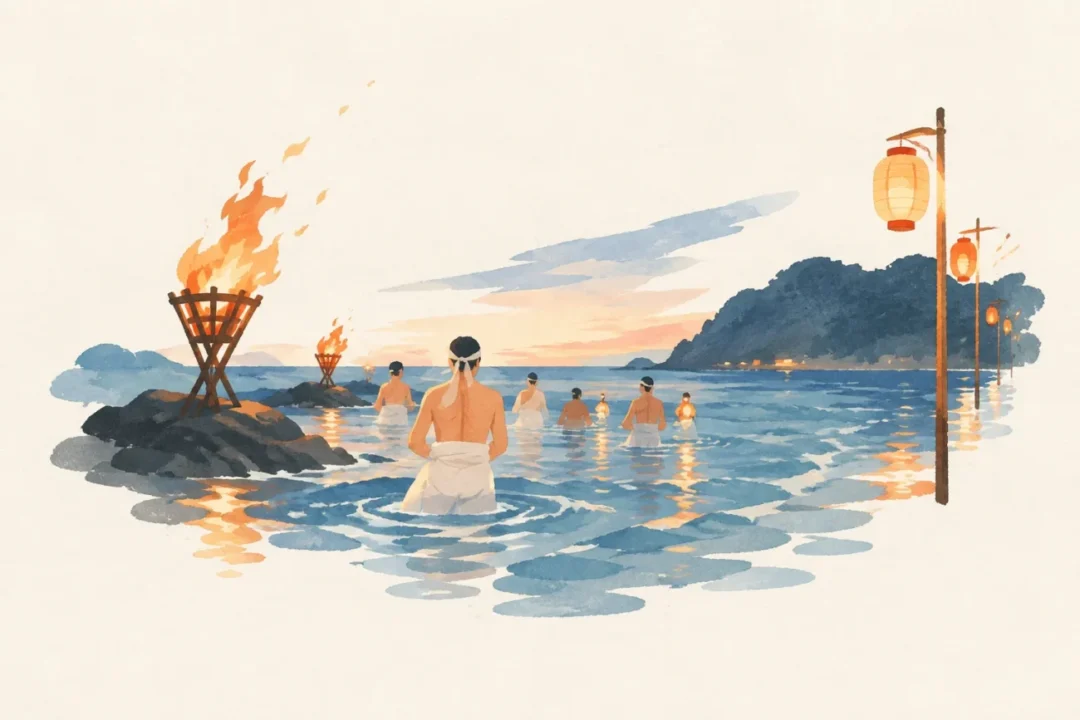
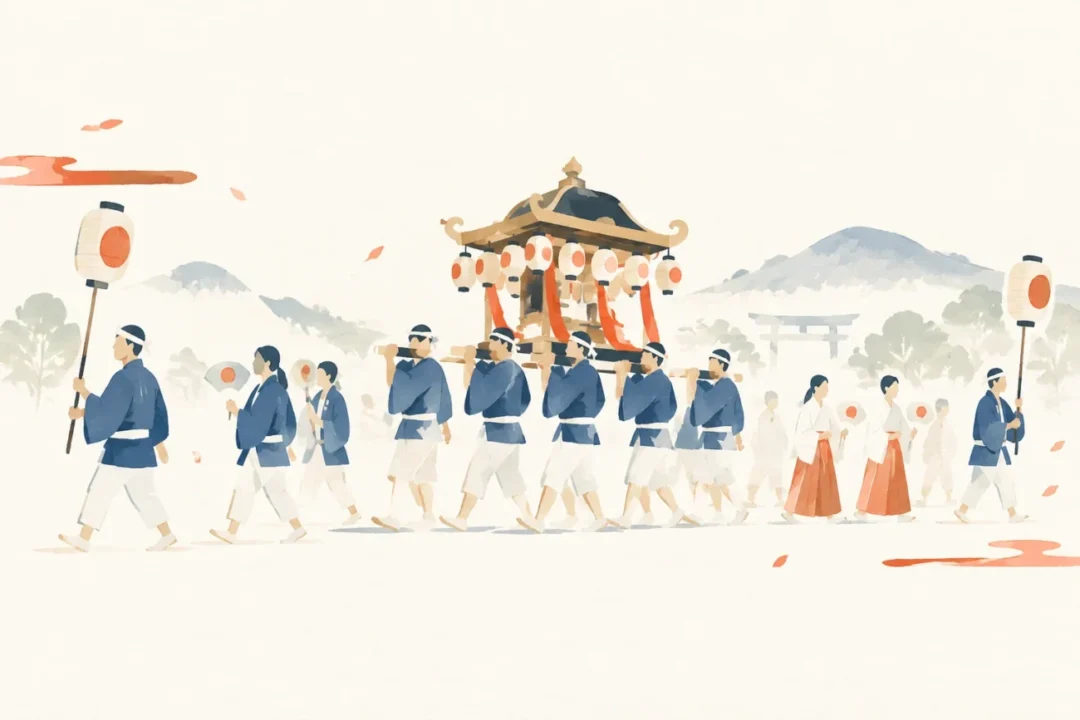
When the mikoshi reaches the Nakahama otabisho, the boat is moved onto 2 floating platforms prepared at sea.
During the subsequent sea procession, the boat approaches the shore at Kadonowaki, and dancing is also performed along the shore.
Distinctive features include the boat made in the Meiji 20s and the old equipment and garments, such as the hakama, kamishimo, and keicho newly made in Keio 2 (1866).
A festival passed down between sea and shore, featuring a lacquered boat and performances of song and dance
What to expect
The event begins with the mikoshi’s departure in the early morning. When it reaches the Nakahama otabisho, the boat is moved onto 2 floating platforms at sea.
Performances of song and dance to shamisen and taiko take place against the backdrop of the boat, which then approaches the shore at Kadonowaki during the sea procession.
Dancing is also performed along the shore, but performances of song and dance now take place on land rather than aboard the boat.
Location and access
- Venue and address
Kadonowaki, Kariwa, Akehama-cho, Seiyo City
Address Kadonowaki, Kariwa, Akehama-cho, Seiyo City
Dates and season
- Season
Autumn
Accommodation and hotels PR
Showing nearby accommodation.
Prices and availability are current at the time of retrieval. For multi-night stays, only the first night’s price is shown. Confirm the final price and directions to the venue with the booking provider. Select your dates again when using the area search link. Search area: within 3 km of Central Ehime Prefecture / Seiyo City (the search is not centered on the festival venue)
Nearby attractions

愛媛県歴史文化博物館
愛媛県西予市にある博物館

開明学校
愛媛県西予市宇和町に建てられた、四国最古の小学校
Origins and History of Kasuga Shrine Ofuneren
Records note that the Ofuneren has continued as part of the autumn festival at Kasuga Shrine, but do not identify the event’s origins.
The boat was made in the Meiji 20s. Its front and rear sections are joined to assemble it as a single vessel.
The hakama, kamishimo, and keicho worn for the event were newly made in Keio 2 (1866)September and have been passed down to the present with ongoing care.
Some of the garments and equipment associated with the parade have also been preserved, with a long history behind them.
Official information
Seiyo City official page, “City-Designated Kasuga Shrine Ofuneren”
Kasuga Shrine Ofuneren at a Glance
The Ofuneren at Kasuga Shrine is a traditional event held as part of the autumn festival in Kariwa, Akehama-cho, Seiyo City.
Using a lacquered boat dating from the Meiji 20s, the scenes progress from the mikoshi’s departure in the early morning to its arrival at the Nakahama otabisho, performances of song and dance aboard floating platforms, a sea procession, and dancing along the shore.
Dancing is no longer performed aboard the boat; performances of song and dance take place on land.
Sources and references
Japanese Festivals.jp Editorial Team
Celebrating local culture and helping you discover a side of Japan you never knew.
Article updated: 2026/11/12