A summer ritual that brings Tsuwano's streets to life with white heron dances and music
Sagimai

The 2026 edition of Sagimai has ended.
Festival information
EVENT INFORMATION- Dates
- 2026/07/20 〜 2026/07/27Ended
- Season / frequency
- Every year on July 20 and July 27 / Held annually
- Location
- Various locations around Tsuwano, Yasaka Shrine
- Area
- Shimane Prefecture・Tsuwano Town(From Tokyo: approx. 1 h 20 min–1 h 40 min · flight time only)Prefecture-level estimate to a main station or airport, not the venue. Airport access, check-in and onward travel are extra; remote areas and islands can take much longer.
- Highlights and activities
- Wishes behind the festival
- Participation / viewing
- Spectators welcome
- Required number of participants
- 20 people
- Last updated
- 2026/10/19
A traditional ritual in which male and female herons, spreading their white wings, dance through the town of Tsuwano to the accompaniment of singing, bells, drums, and flutes. Enjoy the procession accompanying the festival rites at Yasaka Shrine, along with elegant dances repeated at designated locations.
About Sagimai
Sagimai is a classical performing-arts ritual passed down at Yasaka Shrine in Tsuwano, Shimane Prefecture.
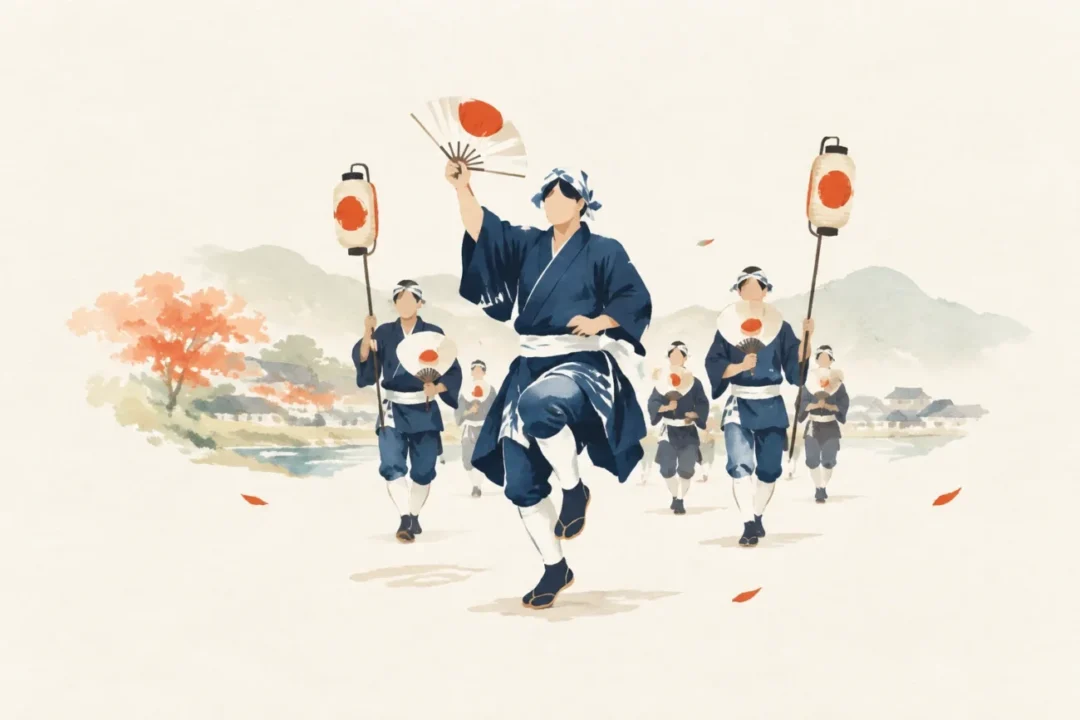
Performers dressed to resemble herons dance to songs, bells, drums, and flutes, accompanying the procession.
Designated an Important Intangible Folk Cultural Property of Japan, it is a summer tradition closely connected with Tsuwano's townscape.
Source: 鷺舞神事(祗園祭) | しまね観光ナビ|島根県公式観光情報サイト / 津和野弥栄神社の鷺舞 文化遺産オンライン
Festival highlights
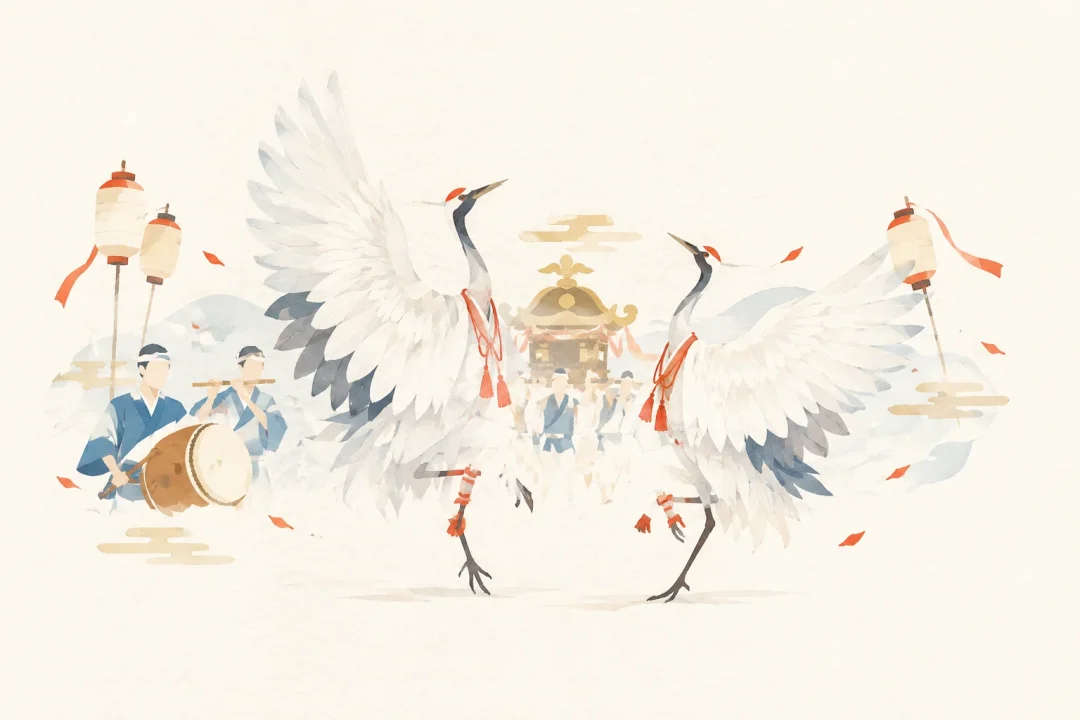
A highlight is the male and female herons, each wearing white wooden wings on their backs, facing one another and performing movements such as spreading their wings and turning in circles.
The movements of the stick dancers and kakko drummers add to the performance, while the singing and music accompany the dance.
The Sagimai is performed not only on the grounds of Yasaka Shrine but also at various locations around Tsuwano, where visitors can enjoy it against the backdrop of the castle town.
A summer ritual that brings Tsuwano's streets to life with white heron dances and music
What to expect
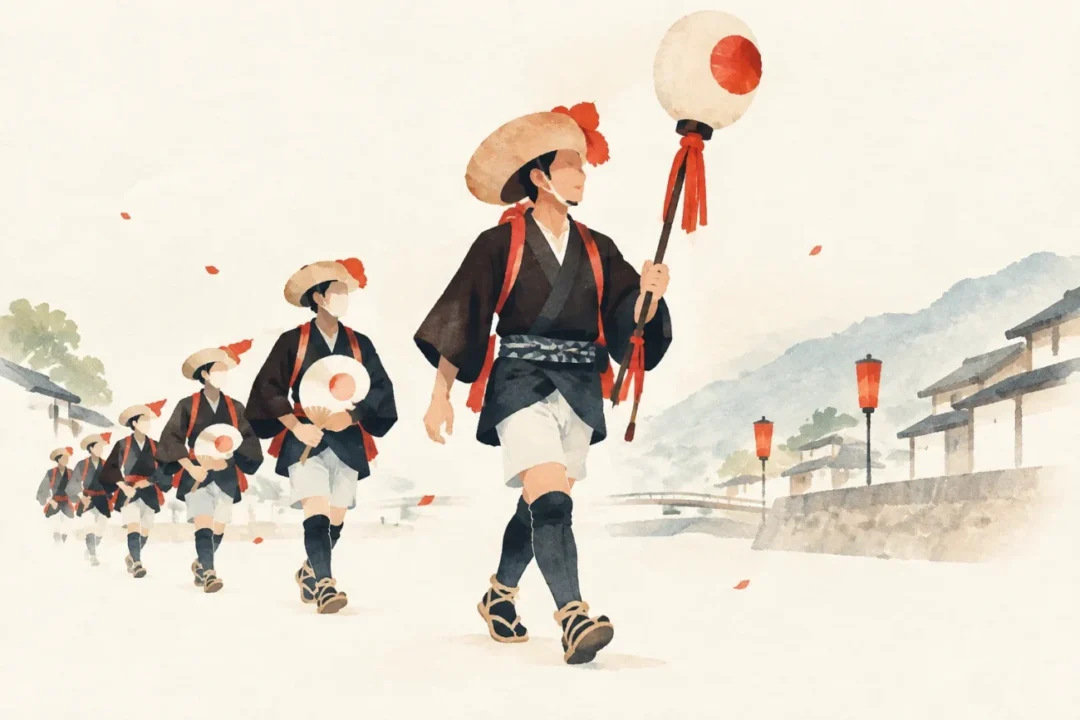
During the ritual, after offering a dance at Yasaka Shrine, the Sagimai procession makes its way through town accompanying the mikoshi.
At designated points along the route, performers portraying herons, stick dancers, kakko drummers, musicians, and singers each perform their respective roles.
On July 27, the procession follows the route in reverse to accompany the return procession, and the dance concludes at the shrine.
How to take part
Visitors can watch the event.
必要人数:20人
Location and access
- Venue and address
Various locations around Tsuwano, and Yasaka Shrine.
Yasaka Shrine is at 64-6 Ushiroda Ro, Tsuwano, Kanoashi District, Shimane Prefecture.
- Train and bus
A 10-minute walk from Tsuwano Station on the JR Yamaguchi Line.
- Parking
Nearby paid parking is available.
The listed parking capacity is 200 vehicles.
Address 64-6 Ushiroda Ro, Tsuwano, Kanoashi District, Shimane Prefecture (Yasaka Shrine), and various locations around town
Dates and season
2026 event information (the listed dates have passed)
In 2026, the rites were held on July 20 and July 27.
The procession on July 20 travels around various locations in town and Yasaka Shrine, while July 27 is the return procession.
The event was listed as running from 4 p.m. to 6:30 p.m., with the Sagimai performed at various locations around town.
Accommodation and hotels PR
Showing nearby accommodation.
Prices and availability are current at the time of retrieval. For multi-night stays, only the first night’s price is shown. Confirm the final price and directions to the venue with the booking provider. Select your dates again when using the area search link. Search area: within 3 km of Central Shimane Prefecture / Tsuwano Town (the search is not centered on the festival venue)
Nearby attractions
Around the Sagimai venues, there are places where you can experience Tsuwano's history and culture.
Tsuwano Local History Museum is introduced as a museum featuring materials on local history, while Taikodani Inari Shrine and Tsuwano Washibara Hachimangu Shrine are also listed as nearby attractions.
You can visit Tsuwano's townscape and cultural facilities along with the Sagimai.

太皷谷稲成神社
島根県鹿足郡津和野町にある神社

安野光雅美術館
島根県の博物館・美術館のスポットです。

桑原史成写真美術館
島根県の博物館・美術館のスポットです。

森鷗外記念館
島根県津和野町にある文学館

津和野町郷土館
島根県津和野町にある博物館
Origins and History of Sagimai
The furyu dance performed at Kyoto's Gion Festival is said to have been brought to Yamaguchi by the Ouchi clan and then transferred to Tsuwano.
It is said to have begun in Tsuwano in 1542, when the Yoshimi clan brought it there. After being discontinued for a time, it was taught anew by people from Kyoto in the early Edo period and revived.
In 1994, it was designated an Important Intangible Folk Cultural Property of Japan, and in 2022 it was inscribed on UNESCO's Intangible Cultural Heritage list as one of the “Furyu-odori” dances.
Official information
For the venue, route, and transportation information, see “Sagimai Ritual (Gion Festival)” on Shimane Kanko Navi.
The Tsuwano Town Tourism Association is listed as the contact point. Its phone number is 0856-72-1771.
An explanation of its cultural heritage designation is also available on the Agency for Cultural Affairs' Japan Heritage online platform.
Sagimai at a Glance
Sagimai is a traditional ritual accompanying the festival at Tsuwano Yasaka Shrine, in which male and female herons wearing white wings dance to singing and music.
The dance is performed at the shrine and various locations around Tsuwano on July 20 and the 27th.
Its history, transmitted via Kyoto and Yamaguchi, and the procession winding through the townscape are major attractions.
Japanese Festivals.jp Editorial Team
Celebrating local culture and helping you discover a side of Japan you never knew.
Article updated: 2026/10/19
Submit information or a correction Submit photos of this festival