Flutes and drums echo across the island during Obon; a circle dance of remembrance passed down through generations
Oshima Suko Odori

Festival information
EVENT INFORMATION- Season / frequency
- Every year during , August 14 and 15 / Every year
- Location
- The Matoyama, Higashi-Kannoura, Nishi-Kannoura, and Nishi-Uto districts of Ōshima Village, Hirado City. Offerings take place at , temples, official residences, grave sites, private homes, and other locations; on August 15, a combined public performance is held in the square in front of the town hall.
- Area
- Nagasaki Prefecture・Hirado City(From Tokyo: approx. 1 h 50 min–2 h 20 min · flight time only)Prefecture-level estimate to a main station or airport, not the venue. Airport access, check-in and onward travel are extra; remote areas and islands can take much longer.
- Features
- Highlights and activities
- Wishes behind the festival
- Last updated
- 2026/10/19
Oshima's Suko Odori has been passed down in the various districts of Oshima, Hirado City. During the Obon season, dances accompanied by flutes, drums, and gongs are offered at shrines, temples, and cemeteries, with a joint public performance also held on August 15.
About Oshima Suko Odori
Oshima's Suko Odori is a folk performing art of the Buddhist chant tradition passed down on Oshima in Hirado City, Nagasaki Prefecture.
During the Obon season, offerings are made at shrines and temples in the districts of Azeyama, Higashikamiura, Nishikamiura, and Nishiudo.
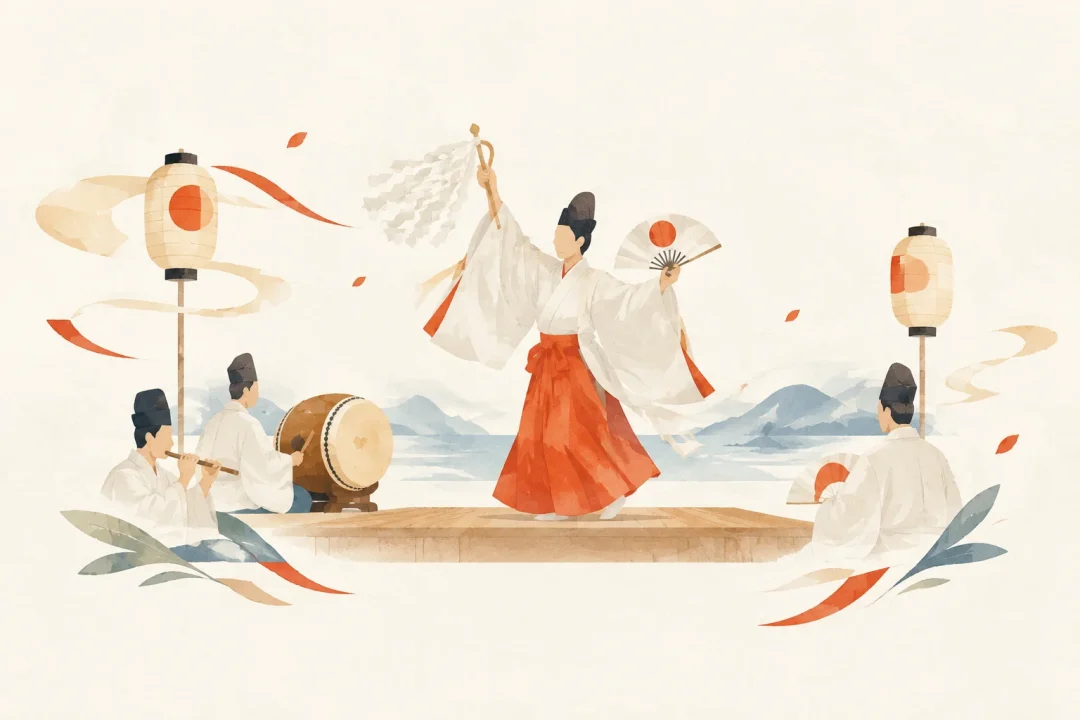
To the accompaniment of flutes, drums, and gongs, the dancers form a circle, sing, and repeat measured movements.
It has also been selected as a Nationally Selected Intangible Folk Cultural Property.
Festival highlights
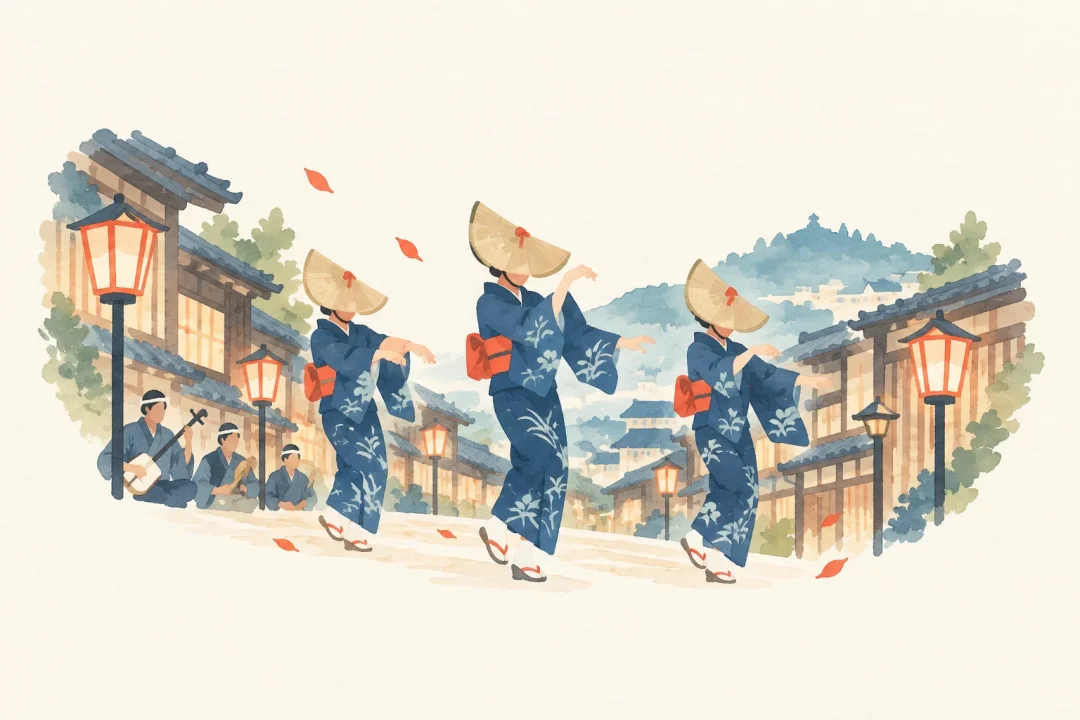
A highlight is watching the dancers, dressed in katabira robes, kakuobi sashes, sandals, and sedge hats, dance in a circle to the sound of flutes, drums, and gongs.
The dance is known for its melancholy music and lyrics evocative of medieval performing arts.
On August 15, dances from each district come together in the plaza in front of the town office for a joint public performance, alongside Jangara and stick-fighting demonstrations.
Flutes and drums echo across the island during Obon; a circle dance of remembrance passed down through generations
What to expect
The dance begins with a procession led by spears, banners, flutes, drums, and then the dancers, who form a circle to perform at shrines and temples.
In addition to yakudori dances performed at shrines, temples, and official residences, memorial dances are held at cemeteries and at the homes of families observing their first Obon.
According to information from Hirado City, the event continues from the early morning of August 14 until late at night on the 15th, with a joint public performance in the afternoon of the 15th.
Source: 国指定文化財等データベース
Location and access
- Venue and address
Matoyama, Higashi-Kannoura, Nishi-Kannoura, and Nishi-Uto districts in Ōshima Village, Hirado City.
Offerings take place at jinja, temples, official residences, grave sites, private homes, and other locations; on August 15, a combined public performance is held in the square in front of the town hall.
- Train and bus
Access is via the Ōshima Ferry from the nearest station.
Address Azeyama, Higashikamiura, Nishikamiura, and Nishiudo, Oshima Village, Hirado City, Nagasaki Prefecture
Dates and season
The Suko Odori of Ōshima is performed publicly as an offering each year during Obon.
The offering dates are August 14 and 15, and a combined public performance featuring dances from each district is held in the afternoon of August 15.
Accommodation and hotels PR
Showing nearby accommodation.
Prices and availability are current at the time of retrieval. For multi-night stays, only the first night’s price is shown. Confirm the final price and directions to the venue with the booking provider. Select your dates again when using the area search link. Search area: within 3 km of Central Nagasaki Prefecture / Hirado City (the search is not centered on the festival venue)
Tips for your visit
Offerings take place not only at jinja and temples, but also at official residences, grave sites, and private homes.
The combined public performance is listed as taking place on August 15 in the square in front of the town hall or branch office, so the viewing location varies depending on when you visit.
Nearby attractions

亀岡神社
長崎県平戸市にある神社

松浦史料博物館
長崎県平戸市にある博物館

鄭成功記念館
長崎県平戸市にある記念館
Origins and History of Oshima Suko Odori
It is said that after the fall of Suko Tsumaki Castle, which stood in what is now Shiroishi Town, Saga Prefecture, members of the Hirai clan and their retainers fled to Oshima, where they danced in remembrance of their homeland and passed the tradition on.
While it is associated with the legend of the fall of Suko Castle, another theory holds that it is a form of Buddhist chant-based performing art that has been passed down on Oshima since ancient times.
In 1973, the districts were added to the designation, and the name was changed to “Oshima Suko Odori.”
Official information
The Hirado City official website’s “Oshima Suko Odori” page provides information about the dance, offering dates and locations, and the groups that preserve it.
Details of its cultural property designation, location, and access information can also be found in Nagasaki Prefecture’s cultural property database.
Oshima Suko Odori at a Glance
Oshima's Suko Odori is a Buddhist chant-based dance passed down in the districts of Oshima, Hirado City, and is offered at shrines, temples, and cemeteries during the Obon season.
Highlights include the circular dances accompanied by flutes, drums, and gongs, and the joint public performance on August 15.
This locally rooted folk performing art is associated with the legend of the fall of Suko Castle and has a memorial aspect dedicated to ancestors.
Japanese Festivals.jp Editorial Team
Celebrating local culture and helping you discover a side of Japan you never knew.
Article updated: 2026/10/19
Submit information or a correction Submit photos of this festival