Omura’s traditional performing art, with long swords and short swords dancing in two concentric circles
Omura’s Okita Odori

Festival information
EVENT INFORMATION- Season / frequency
- It is sometimes performed on November 3 (Omura Festival). / Once every 3 years
- Area
- Nagasaki Prefecture・Omura City(From Tokyo: approx. 1 h 50 min–2 h 20 min · flight time only)Prefecture-level estimate to a main station or airport, not the venue. Airport access, check-in and onward travel are extra; remote areas and islands can take much longer.
- Highlights and activities
- Last updated
- 2026/10/19
A dance with long swords and short swords passed down in Okita-machi, Omura City, Nagasaki Prefecture. The sight of two concentric circles accompanied by music displays the distinctive features of furyu dance passed down through the community.
About Omura’s Okita Odori
Omura’s Okita Odori is a furyu dance passed down in Okita-machi, Omura City, Nagasaki Prefecture.
A defining feature is the sight of dancers with long swords and short swords forming two concentric circles and dancing as they face and clash with one another.
It is a National Important Intangible Folk Cultural Property and, together with Kuromaru Odori, is inscribed on UNESCO’s Intangible Cultural Heritage list as “Furyu Odori.”
Source: 大村市/沖田踊(おきたおどり)
Festival highlights
One highlight is the scene where older children carrying long swords and younger children carrying short swords form two concentric circles, one on the outside and one on the inside.
The dancers face one another, clashing their swords as they dance to the accompaniment of a shime-daiko, flutes, a gong, and singing.
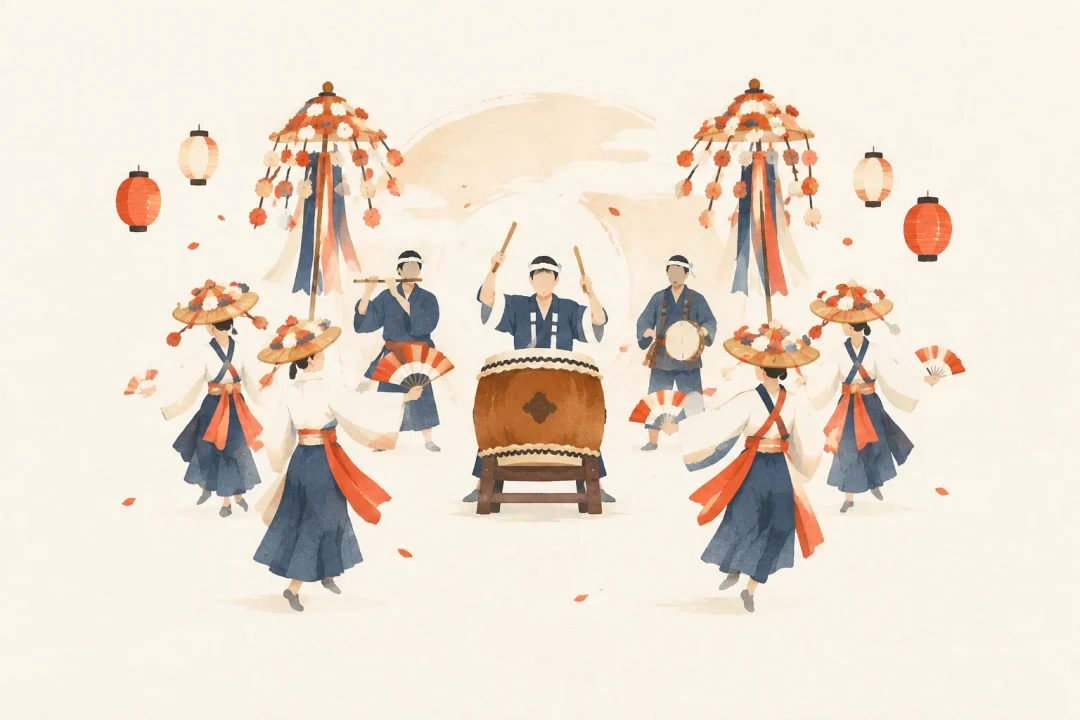
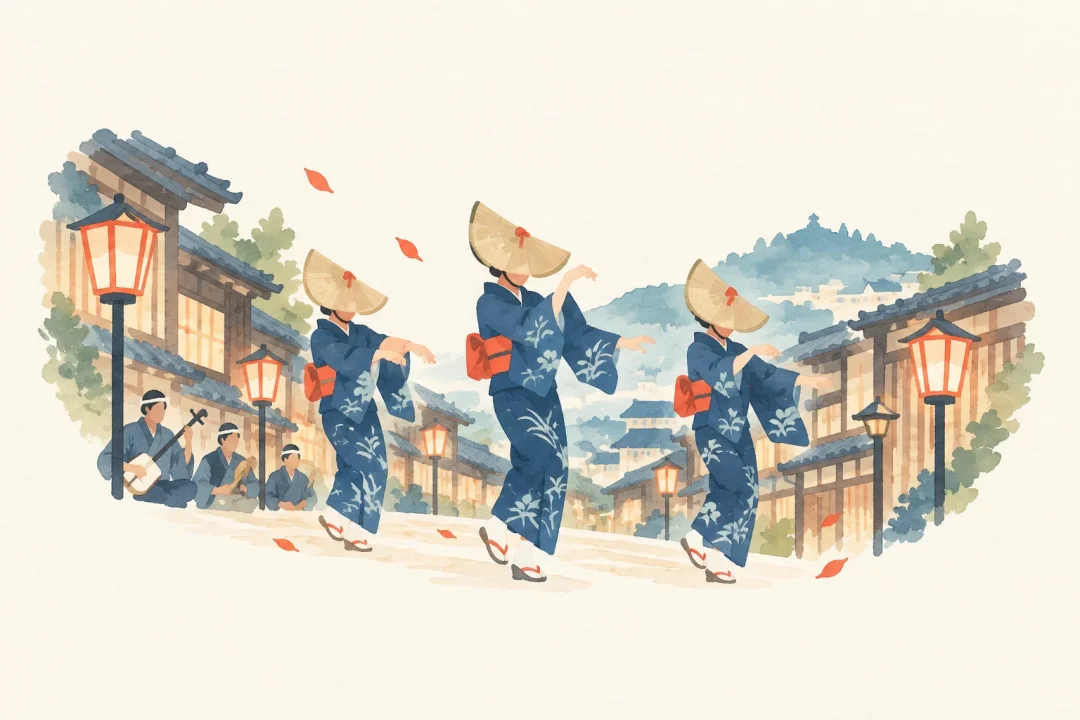
The procession to the dance area, as well as the costumes—including black kimono, sedge hats, and headbands—create a distinctive scene unique to Okita Odori.
Source: 国指定文化財等データベース
Omura’s traditional performing art, with long swords and short swords dancing in two concentric circles
What to expect
The performance begins with a procession to the dance area, led by a guide and featuring a parasol float, banners, dancers, and musicians.
In the dance area, the short-sword dancers form the inner circle and the long-sword dancers the outer circle, dancing as they face one another.
The hayashi accompaniment features a shime-daiko, flute, gong, and singing, and each dancer is accompanied by an attendant.
Location and access
- Address
Omura City
Host municipality 長崎県大村市
This map shows the surrounding area, not the exact venue location.
Dates and season
- Season
It is sometimes performed on November 3 (Omura Festival).
- Frequency
Once every 3 years
Accommodation and hotels PR
Showing nearby accommodation.
Prices and availability are current at the time of retrieval. For multi-night stays, only the first night’s price is shown. Confirm the final price and directions to the venue with the booking provider. Select your dates again when using the area search link. Search area: within 3 km of Central Nagasaki Prefecture / Omura City (the search is not centered on the festival venue)
Origins and History of Omura’s Okita Odori
The origins of Okita Odori are uncertain, but it is said to have been taught by Hoyo, a wandering samurai who came from the Chugoku region during the Bunmei era.
Okita Odori, Suko Odori, and Kuromaru Odori are regarded as “auspicious dances that began at the same time” and were performed at celebrations held by the Omura domain during the Edo period.
Even today, the makeup and number of dancers share characteristics with records from the early modern period.
Official information
The Omura City official website’s “Okita Odori” page provides information about the dance’s features and its cultural property designation.
Omura’s Okita Odori at a Glance
Omura’s Okita Odori is a furyu dance passed down in Okita-machi, Omura City.
Dancers with long swords and short swords form two concentric circles and dance facing one another to the accompaniment of drums, flutes, a gong, and singing.
Tradition holds that Hoyo taught the dance during the Sengoku period. It has been passed down as one of the “Furyu Odori” dances, designated a National Important Intangible Folk Cultural Property and inscribed on UNESCO’s Intangible Cultural Heritage list.
Japanese Festivals.jp Editorial Team
Celebrating local culture and helping you discover a side of Japan you never knew.
Article updated: 2026/10/19
Submit information or a correction Submit photos of this festival