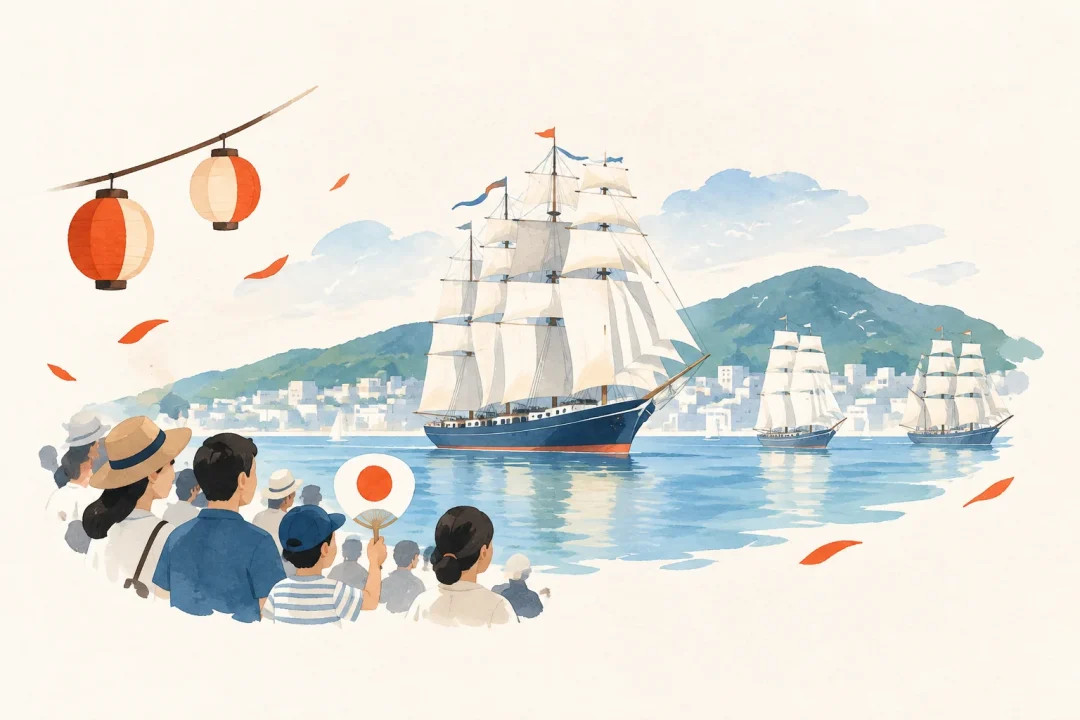
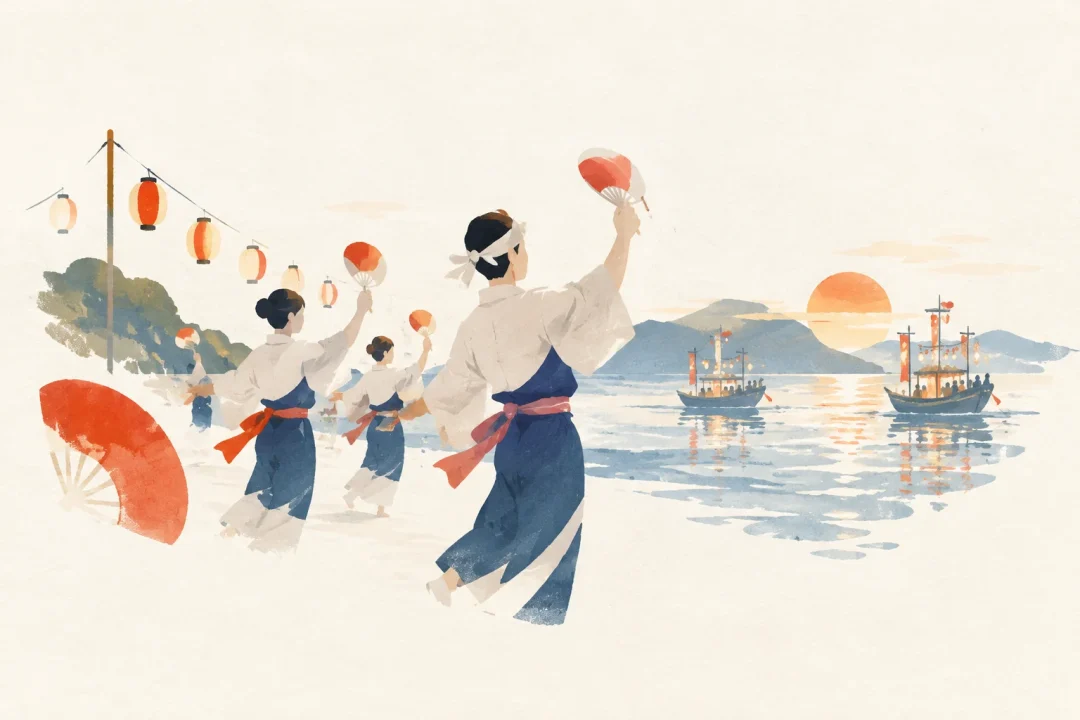
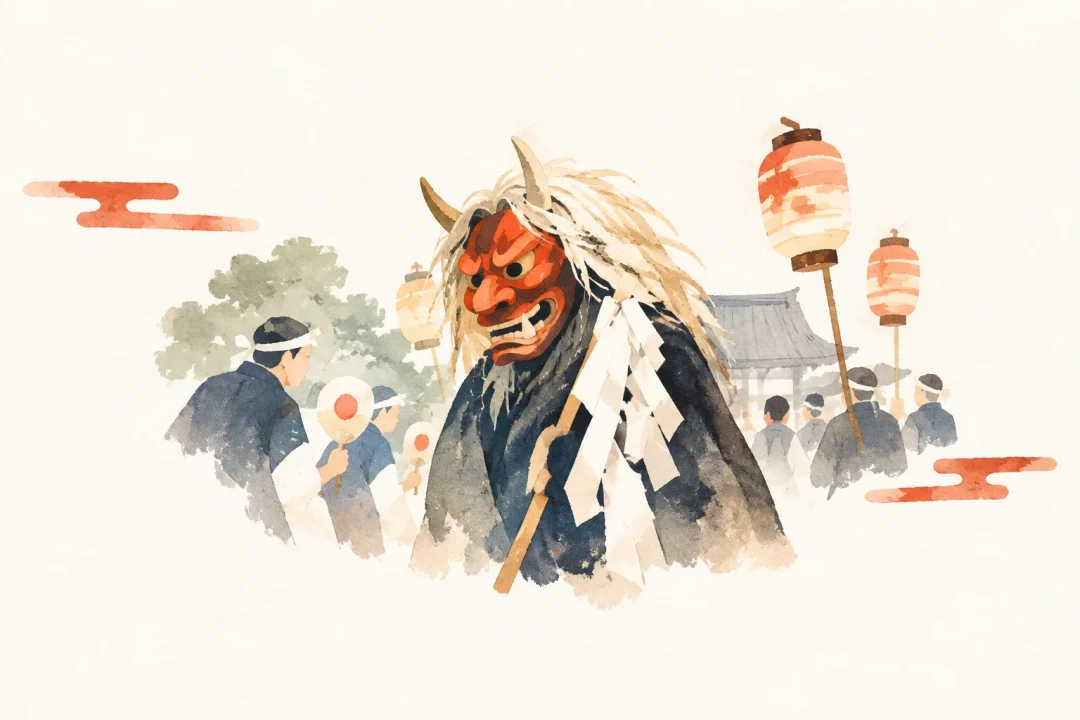
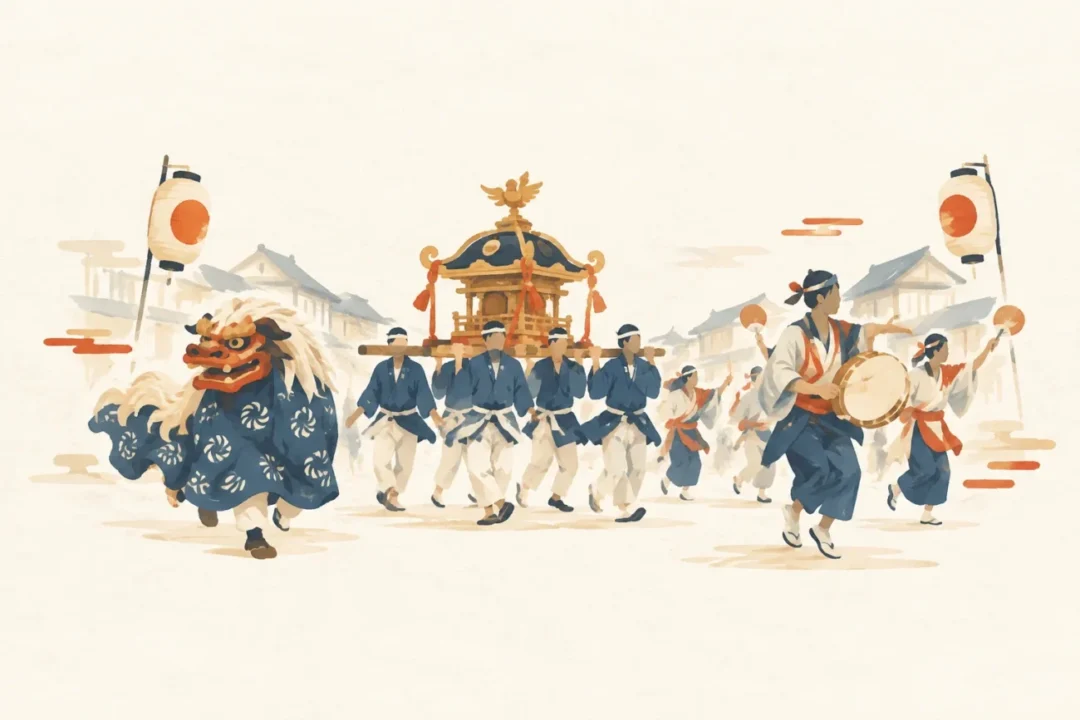
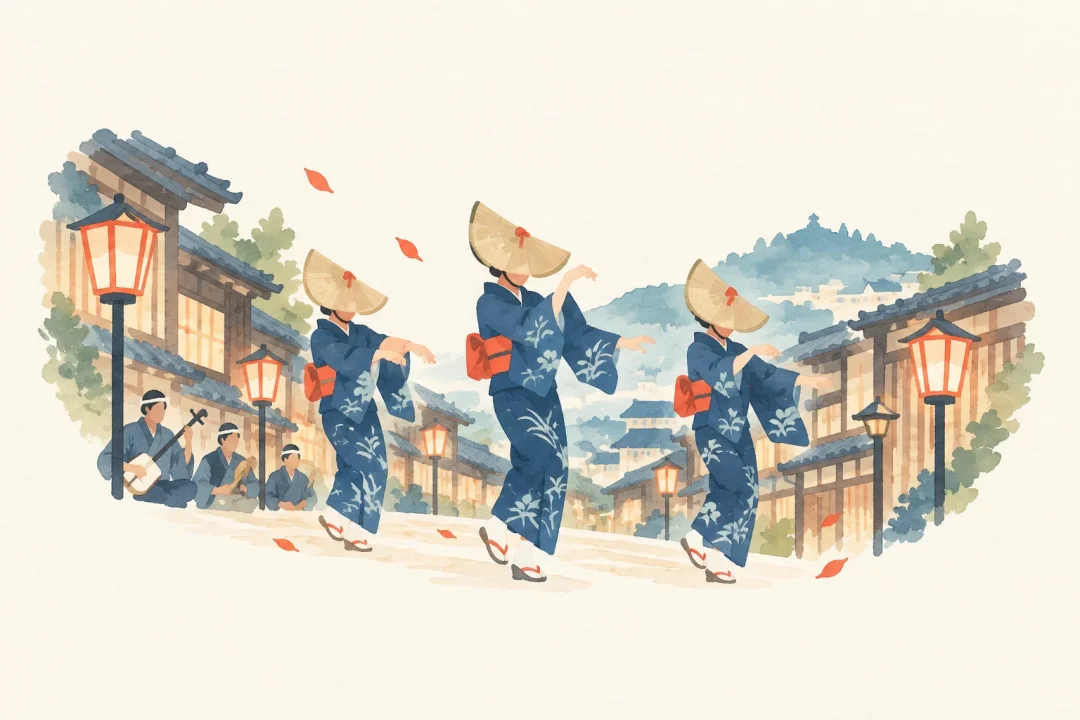
Omura's celebrations and elegant traditions carried on through three dances
Omura's Kori Sando (Suko Odori, Okita Odori, and Kuromaru Odori)
Festival information
EVENT INFORMATION- Season / frequency
- They are usually performed around November. Kuromaru Odori is dedicated every year at the Hoyo Festival on November 28. / They take turns performing at annual events and other occasions.
- Area
- Nagasaki Prefecture・Omura City(From Tokyo: approx. 1 h 50 min–2 h 20 min · flight time only)Prefecture-level estimate to a main station or airport, not the venue. Airport access, check-in and onward travel are extra; remote areas and islands can take much longer.
- Highlights and activities
- Last updated
- 2026/10/19
Suko Odori, Okita Odori, and Kuromaru Odori are Omura's Kori , passed down through districts of Omura City, Nagasaki Prefecture. Through a procession and dances in the courtyard, they present furyu odori, combining drums, flutes, songs, distinctive costumes, and props.
About Omura's Kori Sando (Suko Odori, Okita Odori, and Kuromaru Odori)
Omura's Kori Sando comprises three furyu odori passed down in the districts of Suko, Okita, and Kuromaru, which were once part of Kori Village in Omura City, Nagasaki Prefecture.
According to local tradition, the three dances are auspicious dances that began at the same time; locally, they are known as Kori Sando.
Today, each dance takes turns performing at events such as the Omura Autumn Festival.
Source: 国指定文化財等データベース
Festival highlights
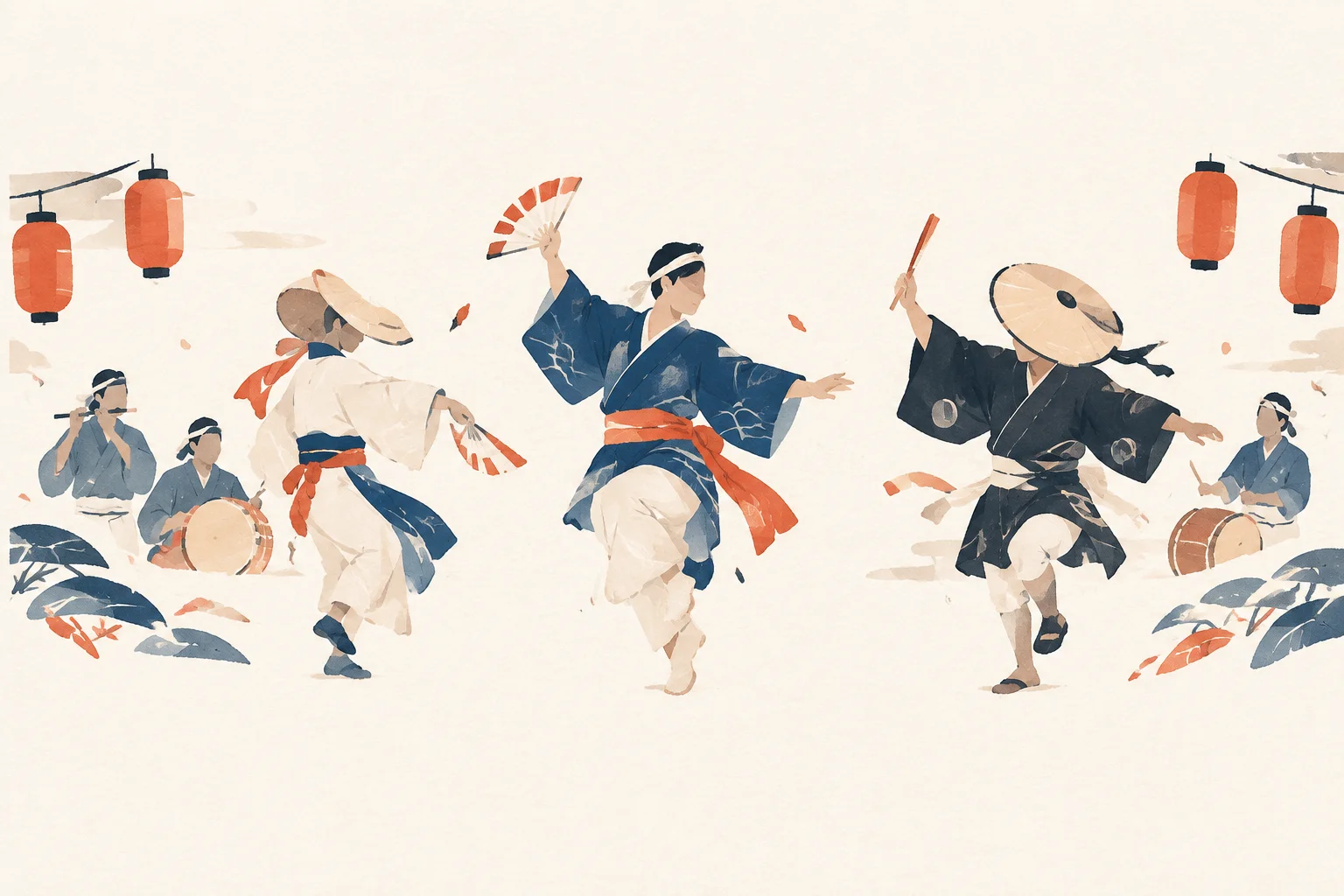
A highlight is that each of the three dances is performed with its own distinctive costumes, props, and formations.
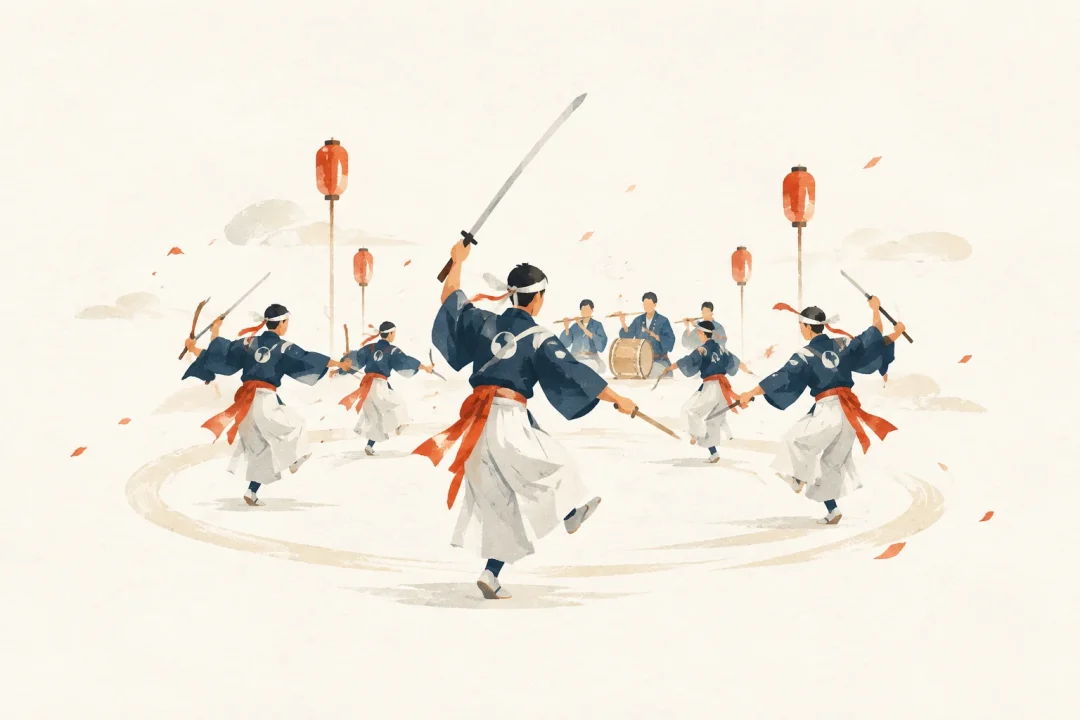
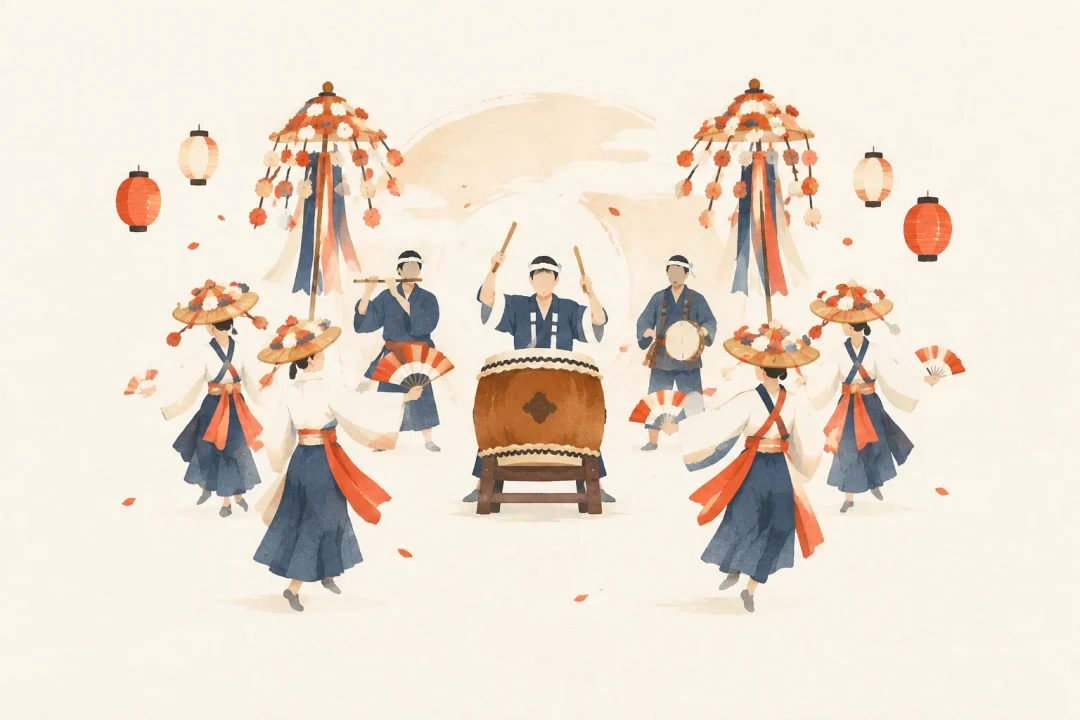
In Suko Odori, the dancers perform around the mai-daiko; in Okita Odori, naginata and short swords form two circles and clash.
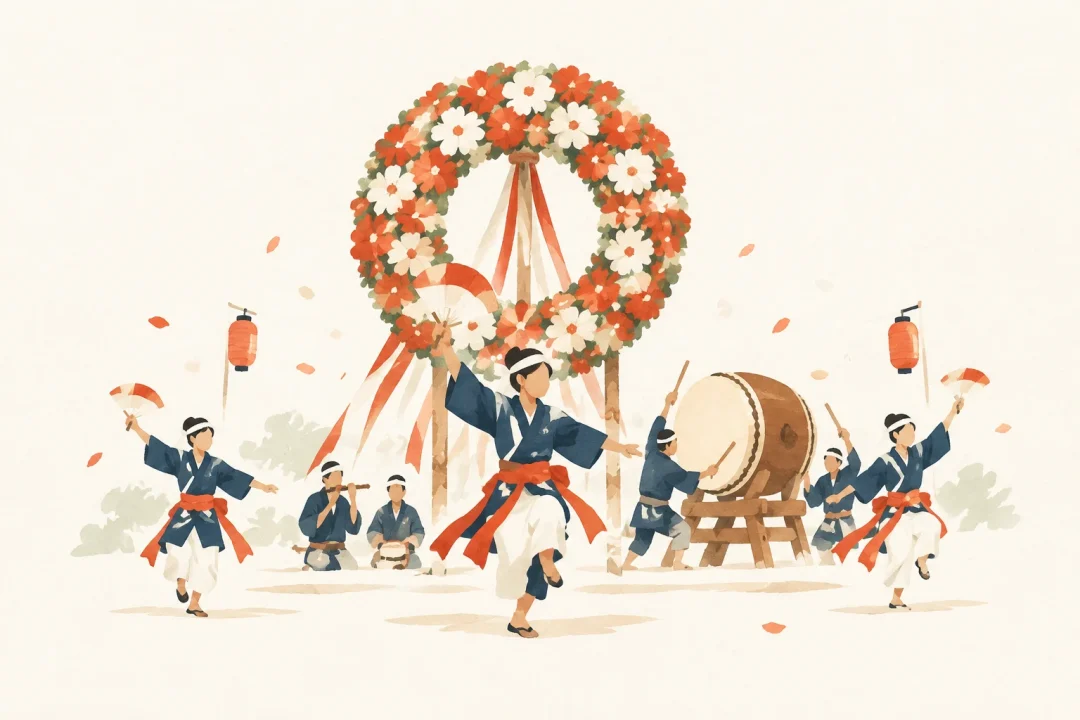
In Kuromaru Odori, large flower rings decorated with washi paper flowers on 81 bamboo poles and large flags move to the beat of drums, creating a vivid spectacle.
Omura's celebrations and elegant traditions carried on through three dances
What to expect
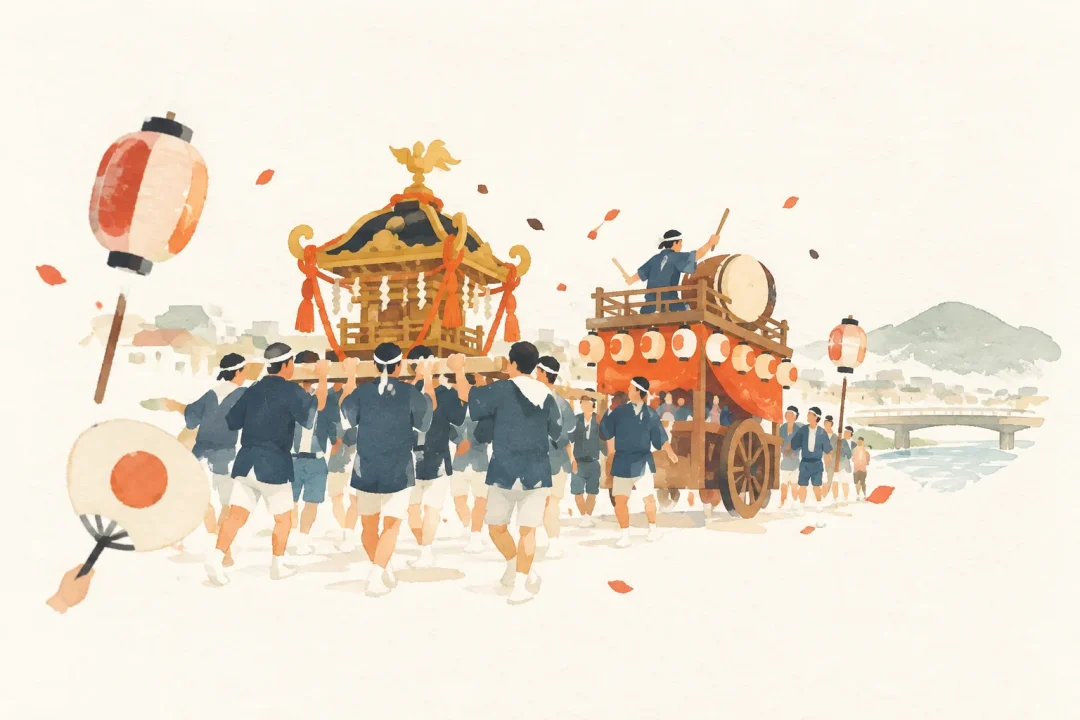
Each of the three dances has two parts: a procession to the dance courtyard, followed by dancing in the courtyard upon arrival.
Suko Odori features Kakiodori and Hayaodori, while Kuromaru Odori features Koodori and Shamisen Odori following Iriha.
Musicians use flutes, drums, gongs, voices, shamisen, and other instruments, while the dancers move through formations as they take their designated positions.
Location and access
- Venue and address
These dances have been passed down in the districts of Suko, Okita, and Kuromaru, and the performance locations vary by event.
- Train and bus
Take a rapid train from JR Nagasaki Station for about 50 minutes and get off at JR Omura Station.
- By car
It takes about 30 minutes from Nagasaki Interchange to Omura Interchange.
Source: 大村市/大村市へのアクセス
Event venue 長崎県大村市 寿古
This map uses the venue name. Check the official guide for the event area and entrances.
Dates and season
- Season
They are usually performed around November.
Kuromaru Odori is dedicated every year at the Hoyo Festival on November 28.
- Frequency
They take turns performing at annual events and other occasions.
Accommodation and hotels PR
Showing nearby accommodation.
Prices and availability are current at the time of retrieval. For multi-night stays, only the first night’s price is shown. Confirm the final price and directions to the venue with the booking provider. Select your dates again when using the area search link. Search area: within 3 km of Central Nagasaki Prefecture / Omura City (the search is not centered on the festival venue)
Origins and History of Omura's Kori Sando (Suko Odori, Okita Odori, and Kuromaru Odori)
The origins of the three dances are uncertain, but the Gosonki records that Suko Odori was taught by someone who came from Suko in Hizen Province in 1480, and that Okita Odori and Kuromaru Odori were taught by Hoyo, a ronin who came from the Chugoku region during the Bunmei era.
During the Edo period, the dances were performed at celebratory events hosted by the Omura domain. Even when Bon dances were prohibited in 1814, these dances were allowed to continue because of their long-standing tradition.
The composition and number of dancers recorded in early modern documents have been handed down to the present day.
Official information
The Agency for Cultural Affairs' Database of Nationally Designated Cultural Properties lists Omura's Kori Sando as an Important Intangible Folk Cultural Property.
The Suko Odori Preservation Society, the Okita Odori Preservation Society, and the Kuromaru Odori Preservation Society are listed as preservation groups.
In 2022, Okita Odori and Kuromaru Odori were inscribed on UNESCO's Representative List of the Intangible Cultural Heritage of Humanity as part of Furyu-odori.
Omura's Kori Sando (Suko Odori, Okita Odori, and Kuromaru Odori) at a Glance
Omura's Kori Sando is a cultural property that preserves as a connected art form the furyu odori passed down in the three districts of Suko, Okita, and Kuromaru.
The dances progress from a procession to dancing in the courtyard, and each offers distinctive expressions, including mai-daiko, naginata and short swords, large flower rings, and large flags.
Japanese Festivals.jp Editorial Team
Celebrating local culture and helping you discover a side of Japan you never knew.
Article updated: 2026/10/19
Submit information or a correction Submit photos of this festival