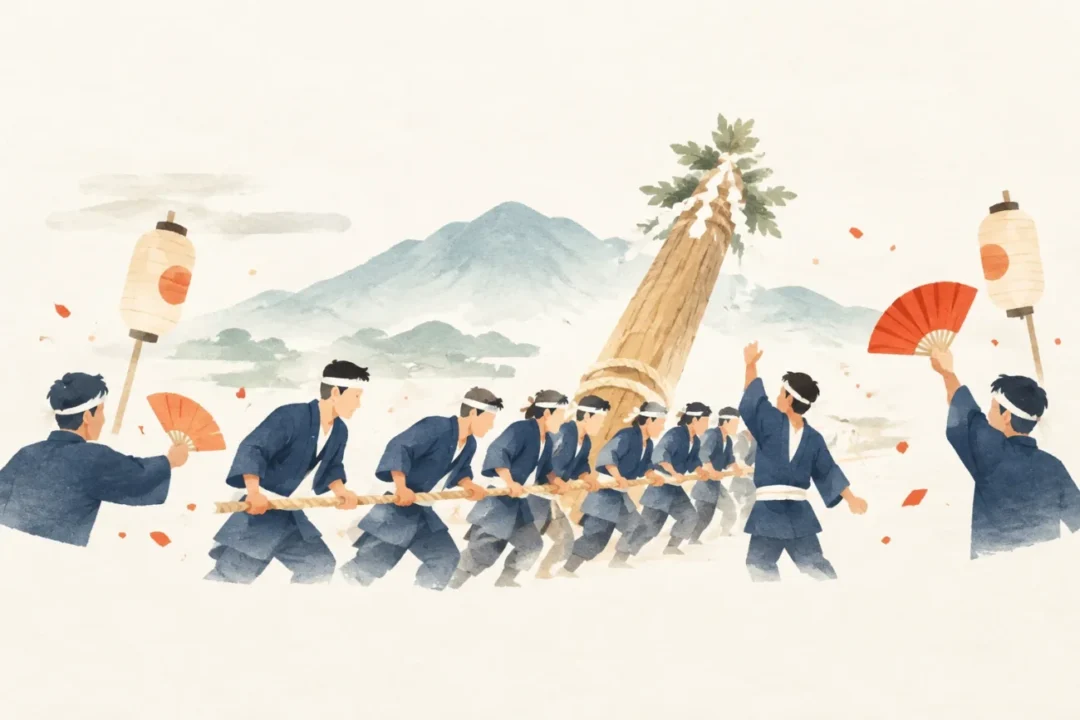
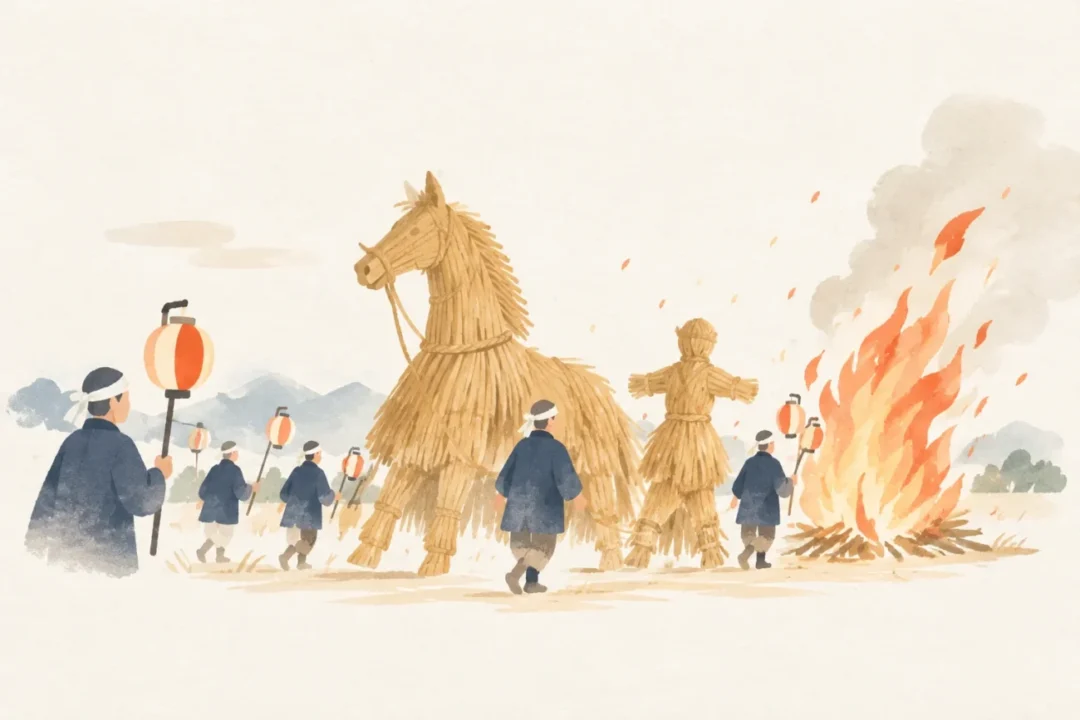
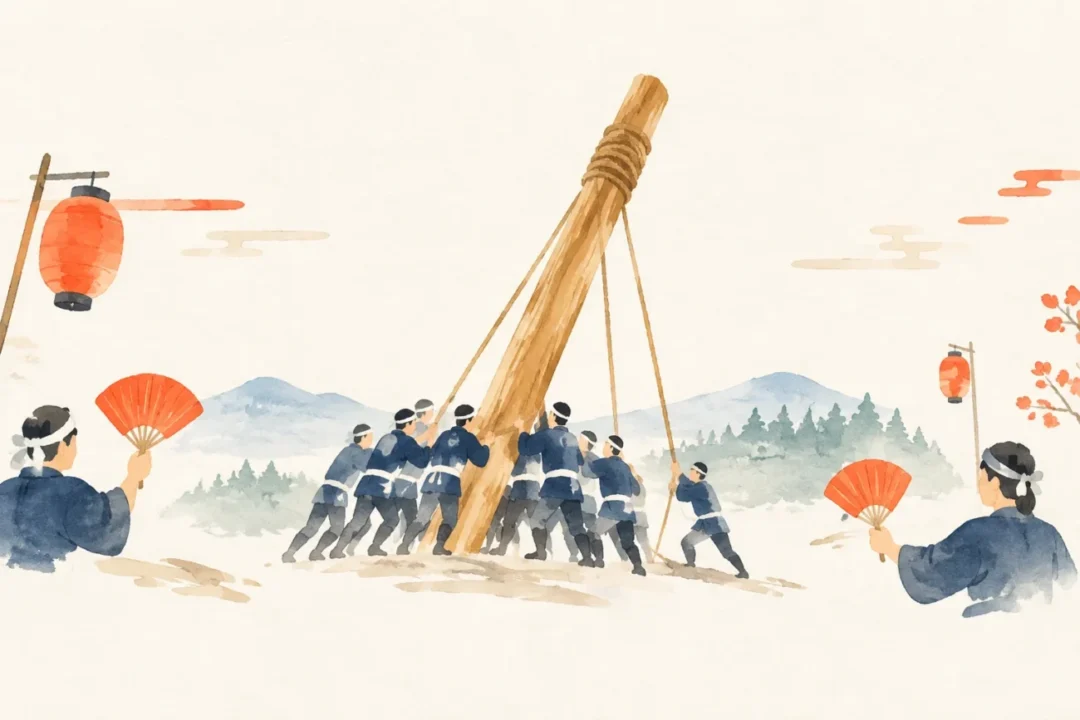
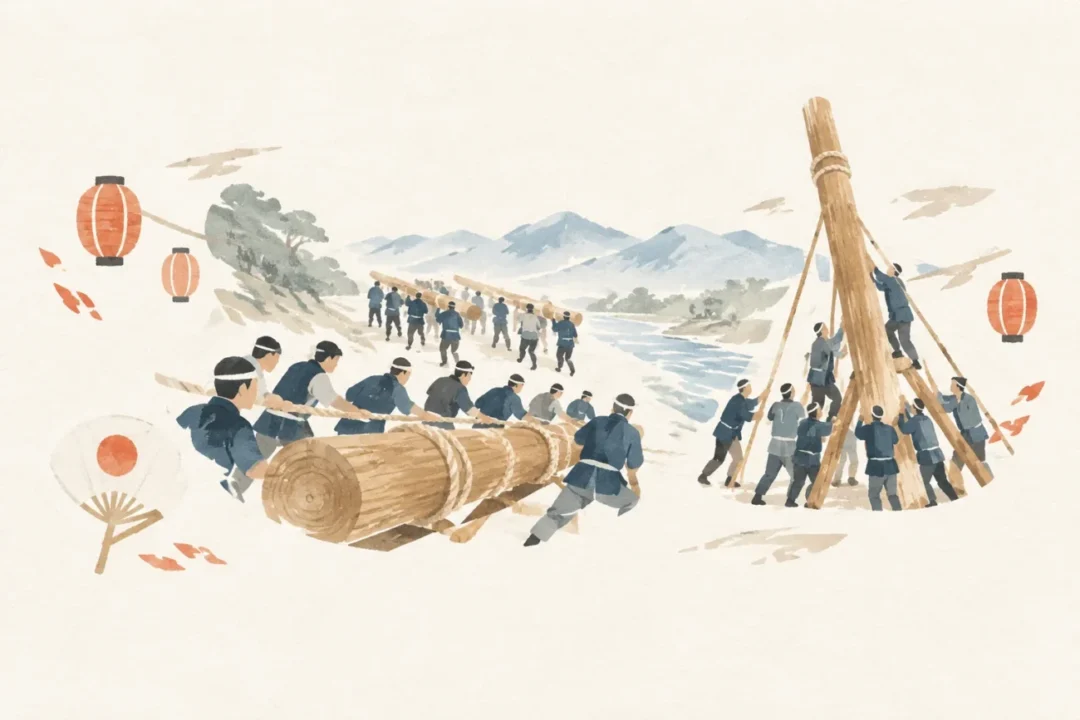
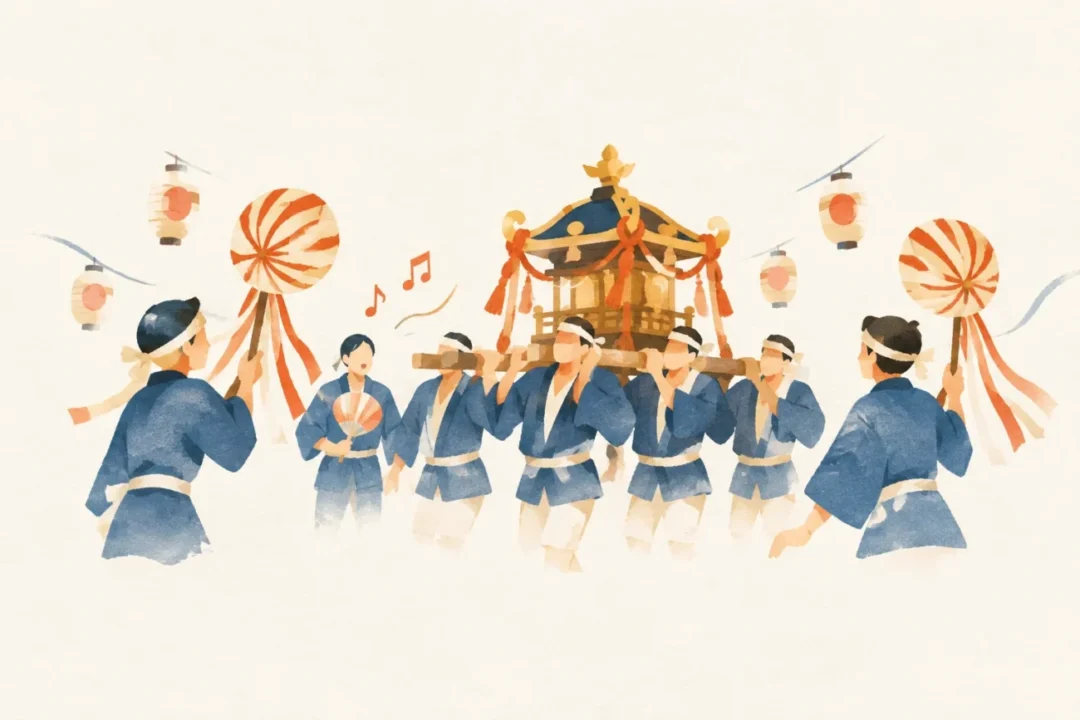
Kitakono’s nighttime kinen-sai, centered on the 12 nenjiri poles
Ono Shrine Nenjiri-bō Festival
Festival information
EVENT INFORMATION- Season / frequency
- The night of January 6
- Location
- Ono Shrine
- Area
- Nagano Prefecture・Shiojiri City(From Tokyo: approx. 1 h 20 min–1 h 50 min · bullet train)Prefecture-level estimate to a main station or airport, not the venue. Airport access, check-in and onward travel are extra; remote areas and islands can take much longer.
- Wishes behind the festival
- Last updated
- 2026/11/11
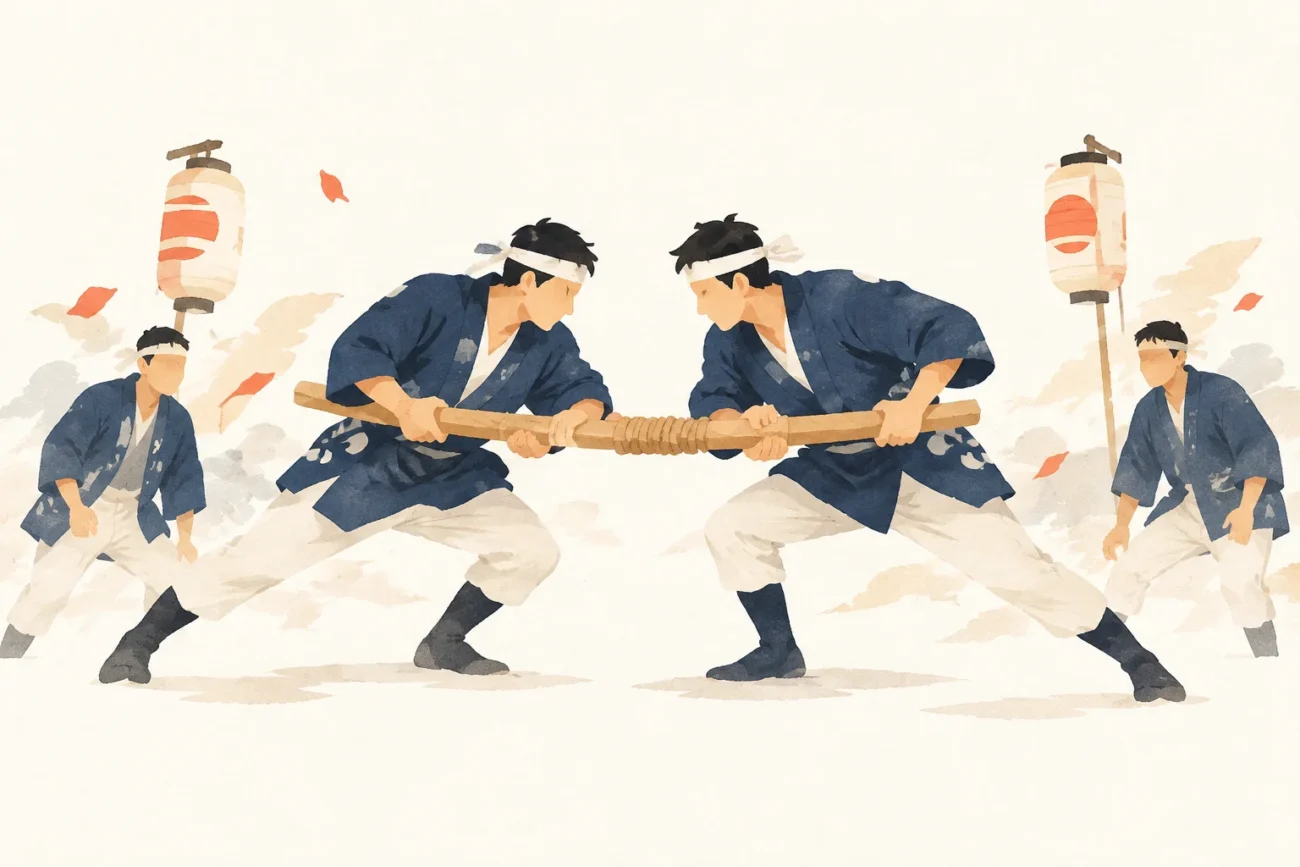
The Ono Shrine Nenjiri-bō Festival is a kinen-sai held at night on January 6, where the young people of Kitakono compete in strength with nenjiri poles.
About Ono Shrine Nenjiri-bō Festival
The Ono Shrine Nenjiri-bō Festival is an event designated as an Intangible Folk Cultural Property. It is held at night on January 6 at Ono Shrine in Kitakono, Shiojiri City.
It is considered a folk performing art classified as okonai, in which young men who are of Ono Shrine compete to seize the nenjiri poles and pull them into their own districts.
Okonai, also called Otatsukuri Festival, is a kinen-sai held before the start of farming, accompanied by divination for the coming year.
Festival highlights
One highlight is the 12 nenjiri poles, representing the 12 months of the year.
The poles are about 1.2 meters long, made by shaving green hardwood with the bark still on and sharpening the ends into four faces. Each is marked with a branded seal reading “御田作祈年祭” and a number.
The young men take the poles in sequence, from Pole One through Pole Seven, and parade through the area while testing their strength.
At the end, the poles are assigned by drawing lots, and a kagami mochi is pierced onto the end of a pole. The participants perform dōzuki while chanting “Men’yō, San’yō.”
Kitakono’s nighttime kinen-sai, centered on the 12 nenjiri poles
What to expect
At night, the young men get ready and gather at the community center, then parade to Ono Shrine singing long-carrier songs.
After receiving a purification rite before the deity, they take the poles from Pole One through Pole Seven in order from the priest and parade while testing their strength.
Once all the poles have been returned to the shrine, they draw lots for the winning poles, made by tying an iron ring to a hemp rope, and distribute them in order of seniority.
The young men from each district pierce a kagami mochi onto the pole they drew, then perform dōzuki while chanting “Men’yō, San’yō.”
Location and access
- Venue and address
Ono Shrine, Miyamae, Kitakono, Shiojiri City
Address Miyamae, Kitakono, Shiojiri City
Dates and season
- Season
The night of January 6
Accommodation and hotels PR
Showing nearby accommodation.
Prices and availability are current at the time of retrieval. For multi-night stays, only the first night’s price is shown. Confirm the final price and directions to the venue with the booking provider. Select your dates again when using the area search link. Search area: within 3 km of Central Nagano Prefecture / Shiojiri City (the search is not centered on the festival venue)
Origins and History of Ono Shrine Nenjiri-bō Festival
The Ono Shrine Nenjiri-bō Festival is a folk performing art classified as okonai.
Okonai, also called Otatsukuri Festival, is described as a kinen-sai held before the start of farming, accompanied by divination for the coming year.
The festival is designated as a city-designated Intangible Folk Cultural Property. Its designation date is Showa 45 January 13.
The owners are said to be the ujiko of Ono Shrine.
Official information
Cultural property information from Shiojiri City’s official website: “Ono Shrine Nenjiri-bō Festival (Ono Nenjiri-bō Matsuri)”
Ono Shrine Nenjiri-bō Festival at a Glance
The Ono Shrine Nenjiri-bō Festival is a folk performing art designated as an Intangible Folk Cultural Property. It is held at night on January 6 at Ono Shrine in Kitakono, Shiojiri City.
The young ujiko head to the shrine singing long-carrier songs, take numbered nenjiri poles, and parade while competing in strength.
At the end, the poles are assigned by drawing lots, and a kagami mochi is pierced onto a pole as the participants perform dōzuki while chanting “Men’yō, San’yō.”
Sources and references
Japanese Festivals.jp Editorial Team
Celebrating local culture and helping you discover a side of Japan you never knew.
Article updated: 2026/11/11