Dengaku and Niwa no Mai in Nishinoshima: a traditional festival enlivened by music
Oki Dengaku and Niwa no Mai
Festival information
EVENT INFORMATION- Season / frequency
- In odd-numbered years, at Mita Hachiman Shrine in mid-September; in even-numbered years, at Hiyoshi Shrine on day 9 of lunar month 9 / Every other year (alternating between Mita Hachiman Shrine and Hiyoshi Shrine)
- Location
- Hiyoshi Shrine
- Area
- Shimane Prefecture・Nishinoshima Town(From Tokyo: approx. 1 h 20 min–1 h 40 min · flight time only)Prefecture-level estimate to a main station or airport, not the venue. Airport access, check-in and onward travel are extra; remote areas and islands can take much longer.
- Highlights and activities
- Wishes behind the festival
- Last updated
- 2026/10/19
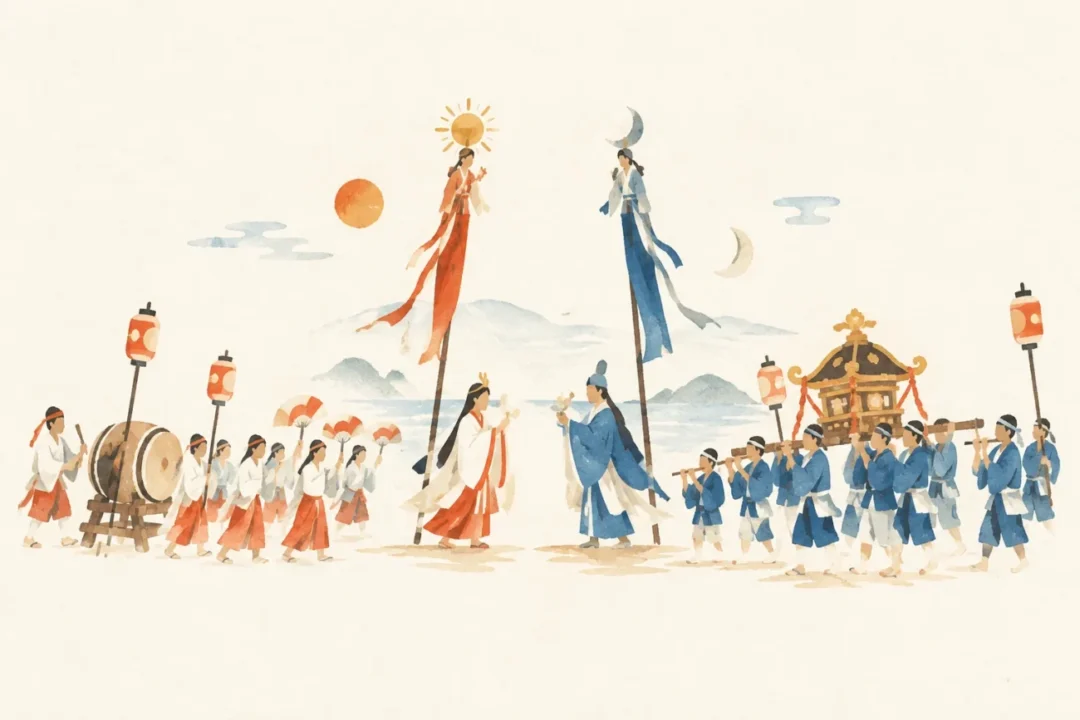
Traditional performing arts of and garden dance, passed down in Nishinoshima Town, Shimane Prefecture. At festivals held at Mita Hachiman Shrine and Hiyoshi Shrine, performances such as the gods’ sumo, , and Dengaku-odori are presented as offerings.
About Oki Dengaku and Niwa no Mai
“Oki Dengaku and Niwa no Mai” is a folk performing art passed down in Nishinoshima Town, Shimane Prefecture. The name combines dengaku from the Mita district with Niwa no Mai from the Urago district.
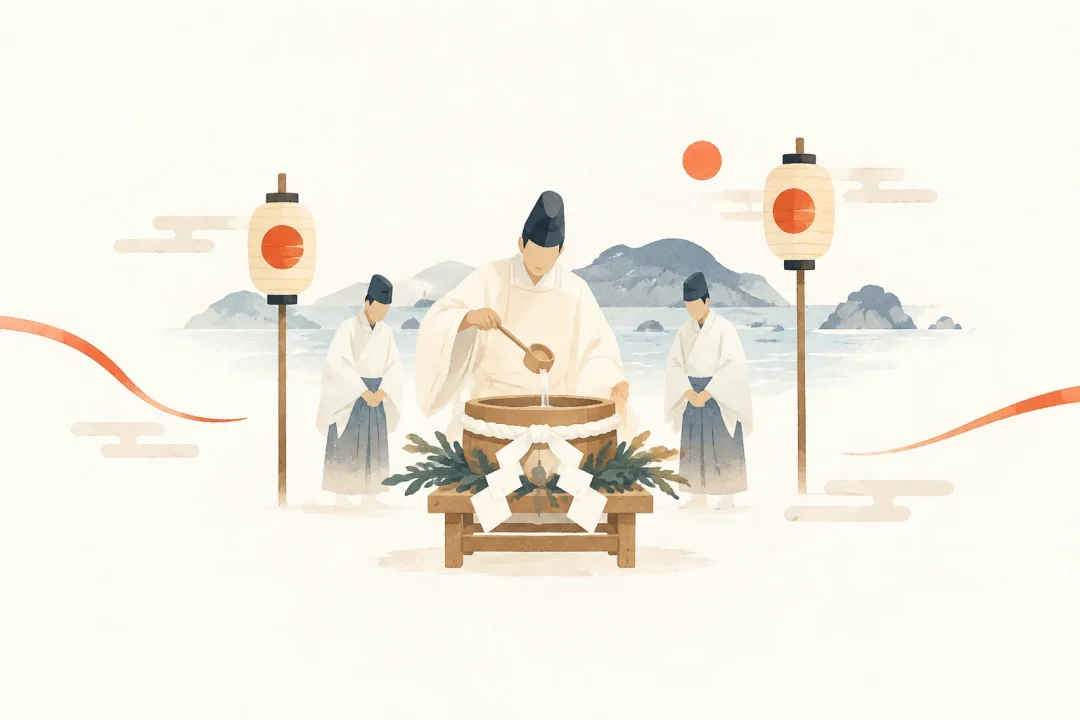
At festivals held at Mita Hachiman Shrine and Hiyoshi Shrine, performing arts passed down through the local community are presented as offerings.
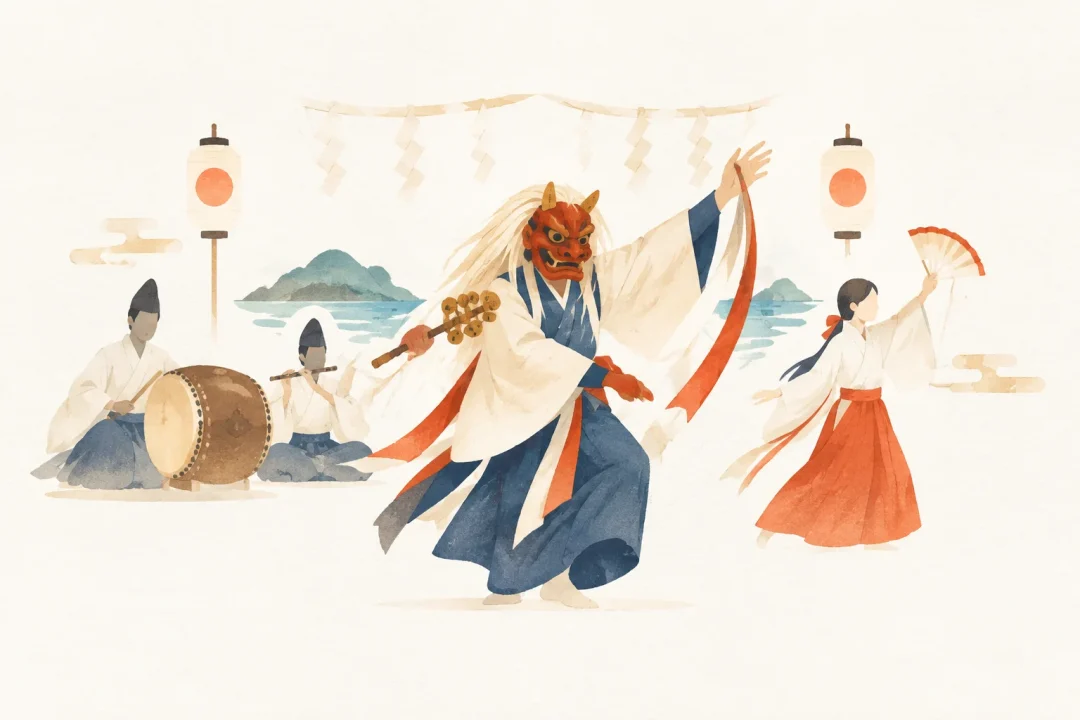
In Dengaku-odori, several dances and a group dance are performed to flute, drum, and other music.
Dengaku at Mita Hachiman Shrine is designated a National Important Intangible Folk Cultural Property.
Source: 隠岐の田楽と庭の舞|文化デジタルライブラリー / 国指定文化財等データベース
Festival highlights
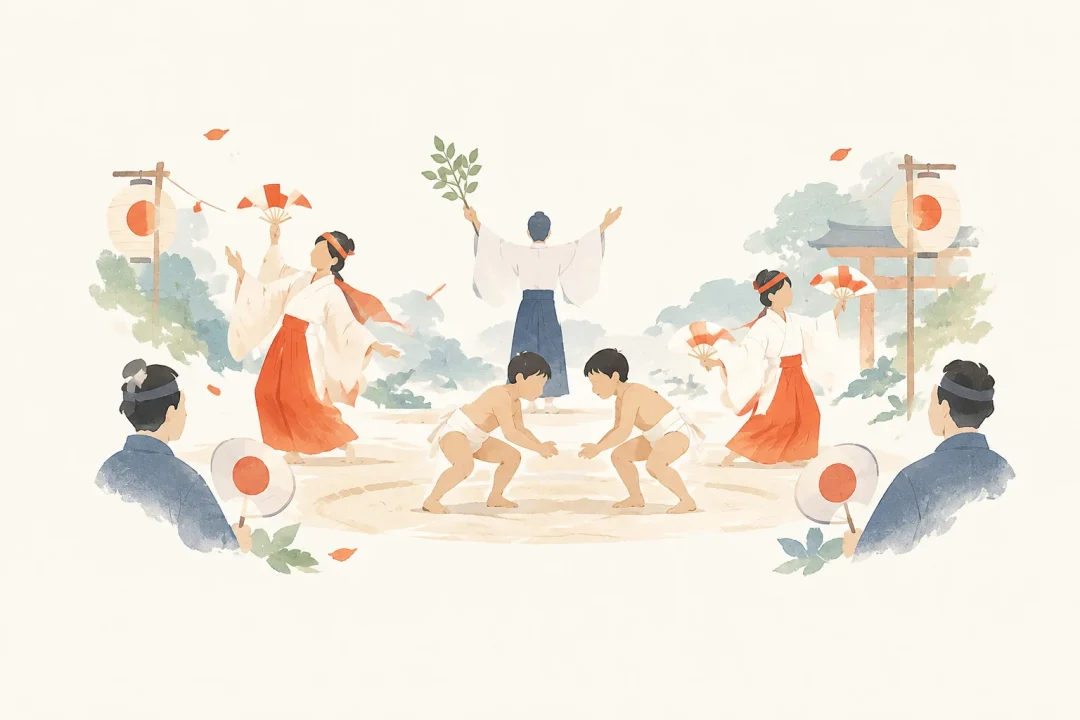
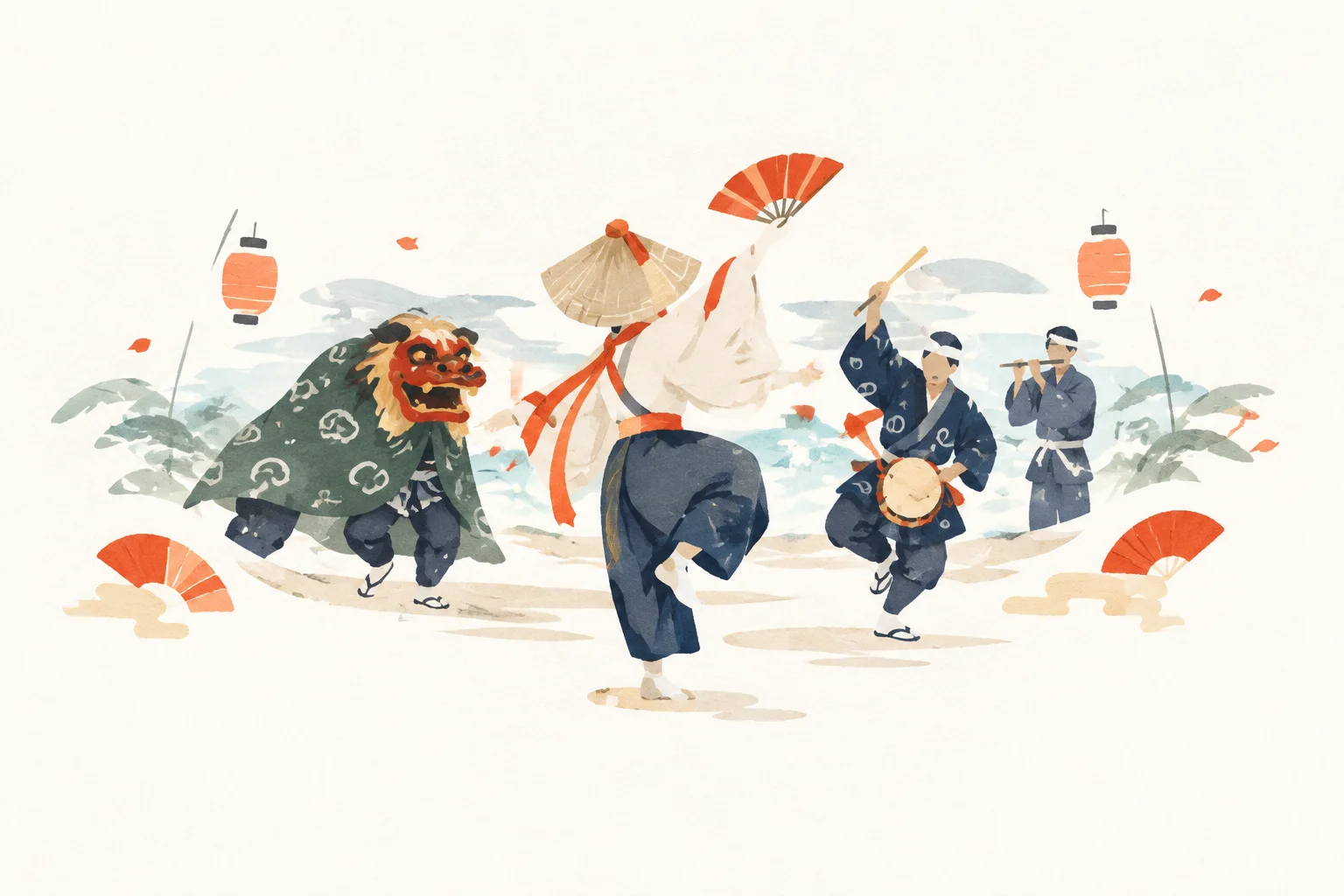
Highlights include “the gods’ sumo,” “lion dance,” and either “Dengaku-odori” or “Niwa no Mai,” performed in sequence at the festival.
In Dengaku-odori, dancers wearing dengaku hats and bird-shaped crowns dance while playing binzasara and hand drums.
After the individual dances, a group dance is performed, with the dancers moving in two parallel lines and changing formations as they proceed.
The combination of music, calls, props, and costumes also helps give each performance its distinctive character.
Source: 美田八幡宮の田楽 文化遺産オンライン
Dengaku and Niwa no Mai in Nishinoshima: a traditional festival enlivened by music
What to expect
At the festival, the performances are first presented on a stage after the religious rites.
At Mita Hachiman Shrine, the program proceeds in the order of “the gods’ sumo,” “lion dance,” and “Dengaku-odori.” Dengaku-odori unfolds through Nakamonguchi, Suttende, Ko-zasara, and the group dance.
The performers dance, turning to face all four directions, facing one another, or standing back to back.
Dengaku-odori alone is said to be an elaborate performance at Mita Hachiman Shrine that takes 2 hours.
Location and access
- Venue and address
Hiyoshi Shrine (Urago, Nishinoshima Town, Oki District, Shimane Prefecture)
Address Urago, Nishinoshima Town, Oki District, Shimane Prefecture
Dates and season
Since 2026 is an even-numbered Gregorian year, the event is scheduled to take place at Hiyoshi Shrine on day 9 of lunar month 9.
The festivals at Mita Hachimangu Shrine and Hiyoshi Shrine are held in alternating years.
Accommodation and hotels PR
Showing nearby accommodation.
Prices and availability are current at the time of retrieval. For multi-night stays, only the first night’s price is shown. Confirm the final price and directions to the venue with the booking provider. Select your dates again when using the area search link. Search area: within 3 km of Central Shimane Prefecture / Nishinoshima Town (the search is not centered on the festival venue)
Nearby attractions
Nishinoshima Town highlights Matengai and Tsutenkyo as attractions of the Oki Islands UNESCO Global Geopark.
From Matengai, you can take in views of the Kuniga Coast. Tsutenkyo is said to be a natural bridge formed by coastal erosion and landslides.
It is recommended as a sightseeing destination where visitors can experience the island’s terrain and local way of life alongside the festival.
Origins and History of Oki Dengaku and Niwa no Mai
Oki Dengaku and Niwa no Mai are performing arts passed down in the Mita and Urago districts of Oki Island.
Records in written documents and on ridge tags preserved at the shrine suggest that dengaku at Mita Hachiman Shrine was already being performed by the late Muromachi period.
In the Mita area, parishioners from 7 communities have supported the festival by sharing duties such as dancing, playing music, and building the stage.
Dengaku and Niwa no Mai are still passed down as performing arts presented in alternating years.
Official information
The National Cultural Properties Database and the Bunka Digital Library provide information on the designation, performances, location, and time of year for Oki Dengaku and Niwa no Mai.
Oki Dengaku and Niwa no Mai at a Glance
Oki Dengaku and Niwa no Mai is the collective name for the dengaku and garden dances passed down in Mita and Urago in Nishinoshima Town.
Ritual performances include the gods’ sumo, lion dances, and Dengaku-odori, accompanied by flute and drum music.
2026 is a year when the event is held at Hiyoshi Shrine on day 9 of lunar month 9.
This festival offers a chance to appreciate performing arts with a long history in the community, including their costumes, props, and dance formations.
Japanese Festivals.jp Editorial Team
Celebrating local culture and helping you discover a side of Japan you never knew.
Article updated: 2026/10/19
Submit information or a correction Submit photos of this festival