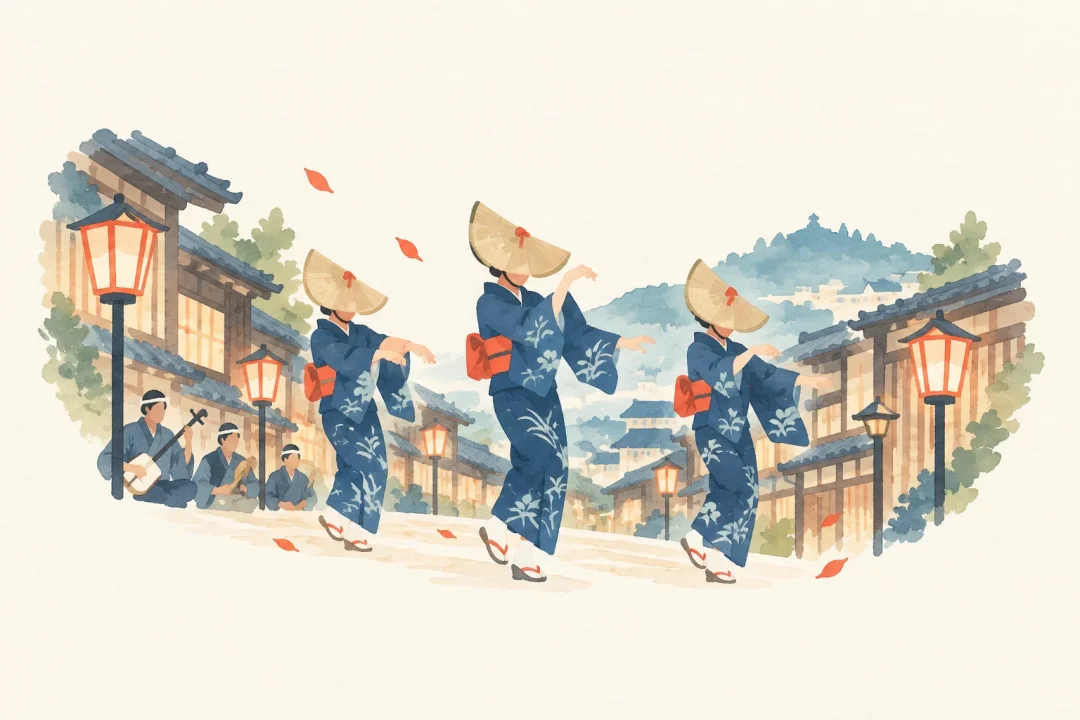
A rainmaking dance passed down in Iya, brought to life by flower hats and taiko
Nishi-Iya Jindai Odori
The 2026 edition of Nishi-Iya Jindai Odori has ended.
Festival information
EVENT INFORMATION- Dates
- 2026/08/07Ended
- Season / frequency
- Every year
- Location
- Zentoku Tenmangu Shrine precincts
- Area
- Tokushima Prefecture・Miyoshi City(From Tokyo: approx. 1 h 15 min–1 h 35 min · flight time only)Prefecture-level estimate to a main station or airport, not the venue. Airport access, check-in and onward travel are extra; remote areas and islands can take much longer.
- Features
- Highlights and activities
- Wishes behind the festival
- Participation / viewing
- Spectators welcome
- Participation fee
- Free
- Last updated
- 2026/10/19
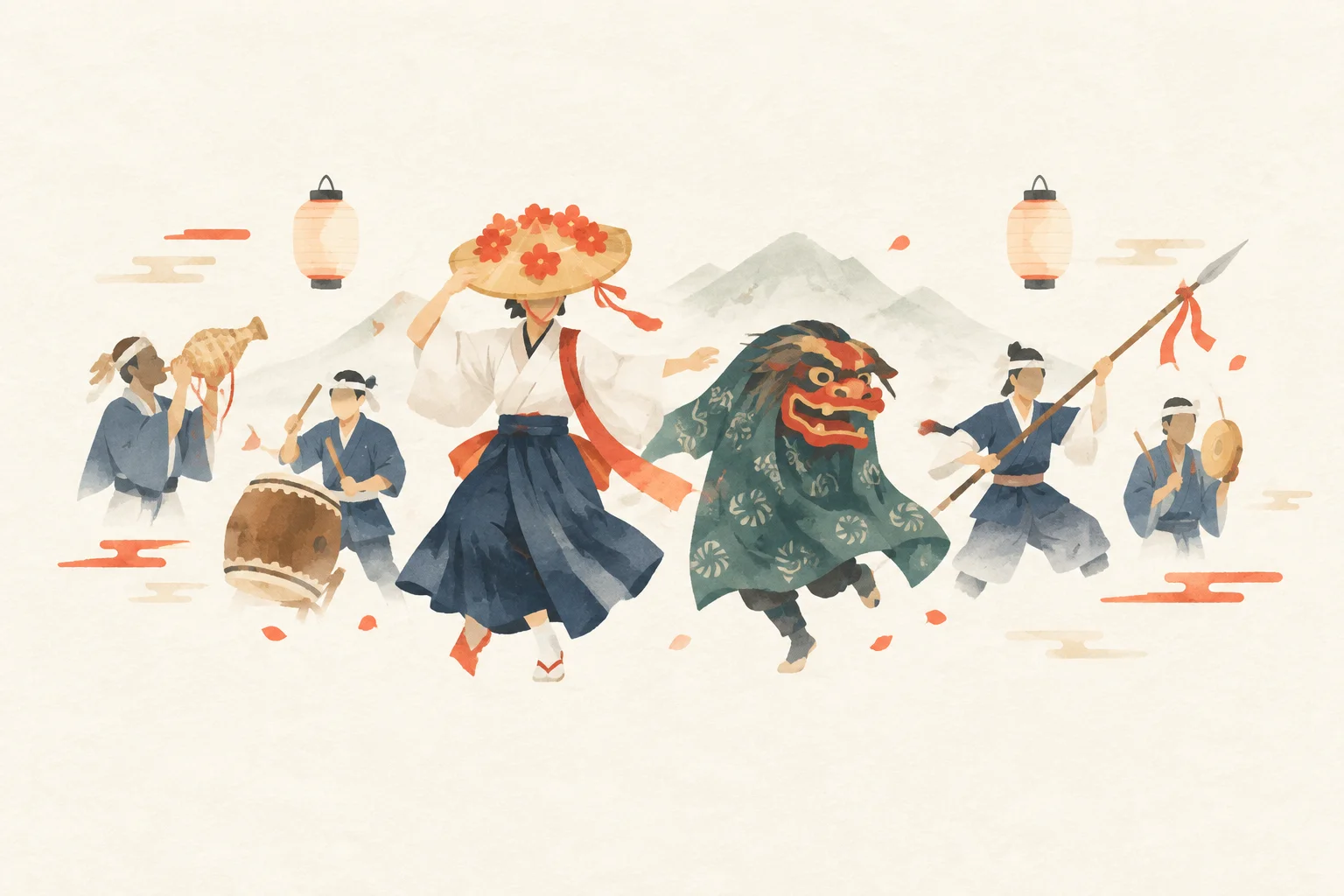
A traditional performing art from Nishi-Iya, in which dancers in flower hats, a lion, naginata performers, and others dance to the sound of and kane bells, following the signal of a yamabushi’s conch shell. It is dedicated at the Zentoku Tenmangu Shrine festival, conveying prayers for rain and the region’s history to the present day.
About Nishi-Iya Jindai Odori
Nishi-Iya Jindai Odori is a Furyu Odori dance passed down for generations in the Nishi-Iya area of Miyoshi, Tokushima Prefecture.
It is dedicated at the Zentoku Tenmangu Shrine festival and is both a National Important Intangible Folk Cultural Property and part of the UNESCO Intangible Cultural Heritage listing “Furyu-odori, ritual dances imbued with people’s hopes and prayers.”
Passed down as a performing art associated with prayers for rain, it conveys the region’s history and beliefs to the present day.
Source: 令和8年度「西祖谷の神代踊」の実施について(8月7日実施) - 三好市教育委員会 / 国指定文化財等データベース / 「風流踊(ふりゅうおどり)」のユネスコ無形文化遺産登録について|徳島県ホームページ
Festival highlights
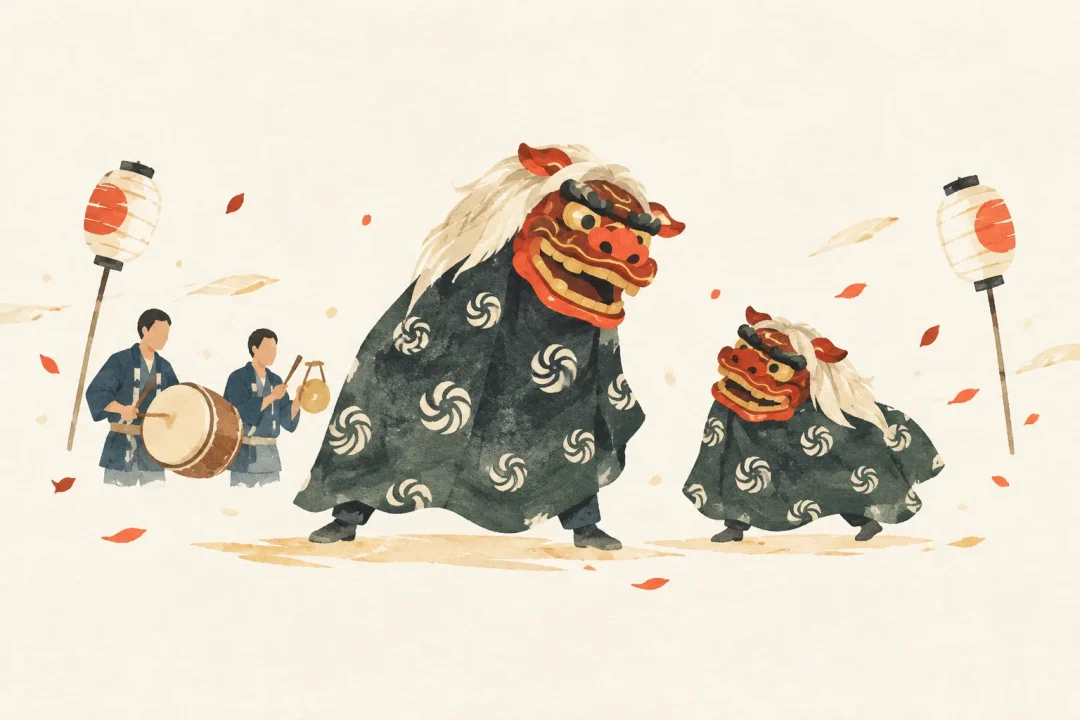
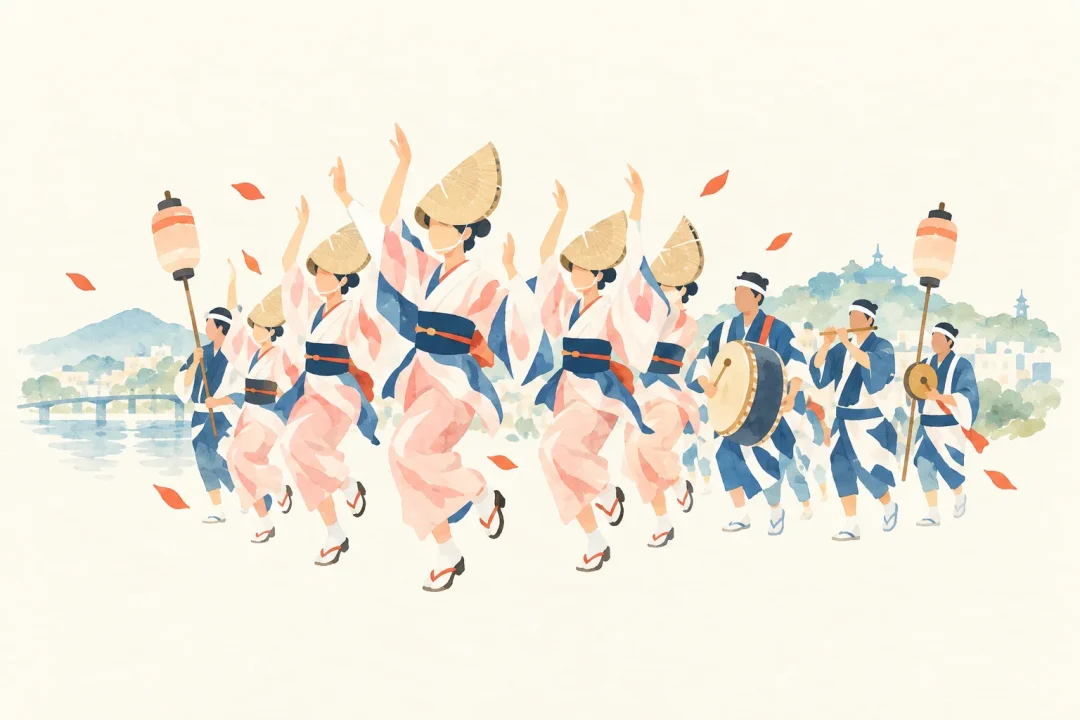
At the signal of a yamabushi’s conch shell, performers including stick dancers, a lion, naginata performers, and dancers form a circle and dance.
Highlights include the rhythms of the taiko and kane bells, the dancers in flower hats, and their nimble movements.
There are 12 types each of taiko rhythms and fan dances. Pieces such as “Kore no Oniwa,” “Hana Odori,” and “Koharugi” are performed.
A rainmaking dance passed down in Iya, brought to life by flower hats and taiko
What to expect
In 2026, the schedule stated that the ritual would begin at around 10 a.m., followed by the dedication in the Tenmangu shrine precincts from around 10:30 a.m.
The dance begins at the sound of a conch shell. Each group takes turns dancing, with breaks, and at the end they dance out to the sound of the conch shell.
In case of rain, the event was scheduled to be held at the former Zentoku Elementary School gymnasium.
How to take part
Visitors can watch the event.
参加費:無料
Location and access
- Venue and address
Zentoku Tenmangu Shrine precincts (1204 Zentoku, Nishi-Iyayama-son, Miyoshi, Tokushima Prefecture).
In case of rain, the event will be held at the former Zentoku Elementary School gymnasium (362 Zentoku, Nishi-Iyayama-son, Miyoshi, Tokushima Prefecture).
Local bus services and taxis are listed as options within Miyoshi City.
- By car
From Ikawa-Ikeda IC, take National Route 32, Prefectural Route 45, and Prefectural Route 32. Turn left in front of Iba Shoten, just before Kazurabashi, and head toward the forest road.
The full journey takes approximately 1 hour and 20 minutes.
Small cars or taxis are recommended because some sections have steep slopes and narrow roads.
- Parking
Parking is limited, so groups are advised to carpool.
If there are many spectators, visitors may be asked to move their cars.
Source: 神代踊 | 大歩危祖谷ナビ<三好市公式観光サイト>
Address 1204 Zentoku, Nishi-Iyayama-son, Miyoshi, Tokushima Prefecture
Dates and season
2026 event information (the listed dates have passed)
In 2026, the event was scheduled for August 7 (Friday), which falls on day 25 of lunar month 6.
The ritual was scheduled to begin at around 10 a.m., followed by the dedication from around 10:30 a.m.
Festival times may vary, so visitors are advised to allow plenty of time on the day.
Accommodation and hotels PR
Showing nearby accommodation.
Prices and availability are current at the time of retrieval. For multi-night stays, only the first night’s price is shown. Confirm the final price and directions to the venue with the booking provider. Select your dates again when using the area search link. Search area: within 3 km of Central Tokushima Prefecture / Miyoshi City (the search is not centered on the festival venue)
Tips for your visit
The area around the venue has steep slopes and narrow stretches of road. Those who are unsure about driving are advised to use a small car or taxi.
Parking is limited, so it is best to carpool if possible.
There is reportedly 1 toilet in the shrine precincts. When taking photos, please be considerate of the festival proceedings, people around you, and their image rights.
Nearby attractions
The Iya Kazurabashi Vine Bridge is in Zentoku, Nishi-Iyayama-son, the same area as the venue.
Made from shirakuchikazura vines, this suspension bridge is 45 meters long and 2 meters wide, and is one of the Iya region’s notable historical and cultural attractions.
Nearby is Biwa Falls, associated with the legends of the Heike clan, where you can experience Iya’s nature and traditions alongside the festival.
Source: 大歩危祖谷ナビ<三好市公式観光サイト>

三好市健康とふれあいの森
徳島県の公園・庭園のスポットです。

劔神社
徳島県三好市の剣山にある神社

大歩危峡遊覧船
徳島県三好市の大歩危峡を行き来する観光遊覧船

平家屋敷民俗資料館
徳島県三好市にある博物館

道の駅大歩危
徳島県三好市にある国道32号の道の駅
写真:Lunatic_artemis(uploader) / Public domain
Photo source ·
阿波池田うだつの家・たばこ資料館
日本の徳島県三好市にある博物館
Origins and History of Nishi-Iya Jindai Odori
Jindai Odori is said to have originated during a drought in the time of Sugawara no Michizane, when people danced to pray for rain on behalf of the farmers.
Records show that Hachisuka Nariaki, lord of the Tokushima domain, watched the performance in 1828.
Before the Taisho era, it was known as Kasagaku or Taiko Odori. After a performance before the Emperor in Taisho 11, the name “Jindai Odori” became established, and in 1976 it was designated a National Important Intangible Folk Cultural Property.
Official information
The 2026 event information is published by the Miyoshi City Board of Education.
It includes the event date, venue, times for the ritual and dedication, the venue in case of rain, and notes for visitors.
Explanations of its cultural heritage status and registration details can also be found in the Agency for Cultural Affairs’ Database of National Cultural Properties.
Nishi-Iya Jindai Odori at a Glance
Nishi-Iya Jindai Odori is a Furyu Odori dance originating in prayers for rain, passed down at the Tenmangu Shrine in Nishi-Iya, Miyoshi City.
The dance brings together the conch shell signal, taiko and kane bells, flower hats, a lion, and naginata, reflecting its long history of transmission.
In 2026, the performance was scheduled to be dedicated at Zentoku Tenmangu Shrine on August 7.
Japanese Festivals.jp Editorial Team
Celebrating local culture and helping you discover a side of Japan you never knew.
Article updated: 2026/10/19
Submit information or a correction Submit photos of this festival