A furyū-odori of songs and fans, passed down during Obon on the island
Niijima no Ō-odori
The 2026 edition of Niijima no Ō-odori has ended.
Festival information
EVENT INFORMATION- Dates
- 2026/08/14 〜 2026/08/15Ended
- Season / frequency
- Every year on August 14 and 15 / Every year
- Location
- Myōrenji Temple (Wakago) / Chōeiji Temple (Honson)
- Area
- Tokyo Metropolis・Niijima Village(Within Tokyo: approx. 15 min–1 h by train (central areas))Prefecture-level estimate to a main station or airport, not the venue. Airport access, check-in and onward travel are extra; remote areas and islands can take much longer.
- Features
- Highlights and activities
- Wishes behind the festival
- Participation / viewing
- Spectators welcome
- Participation fee
- Free (open viewing)
- Last updated
- 2026/10/19
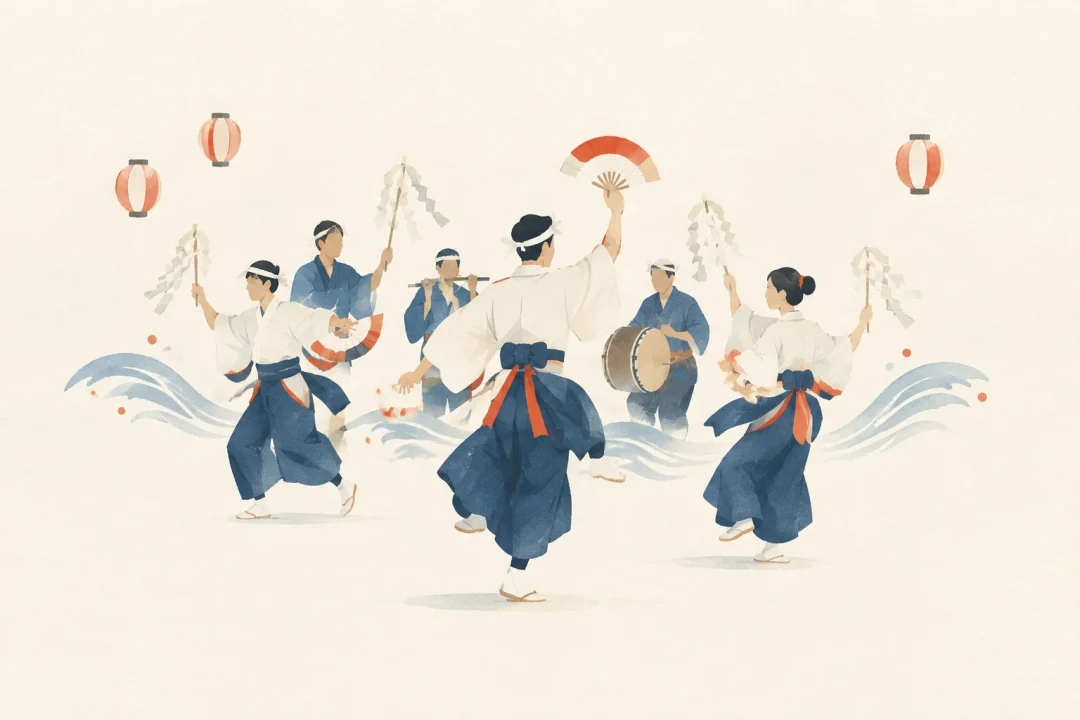
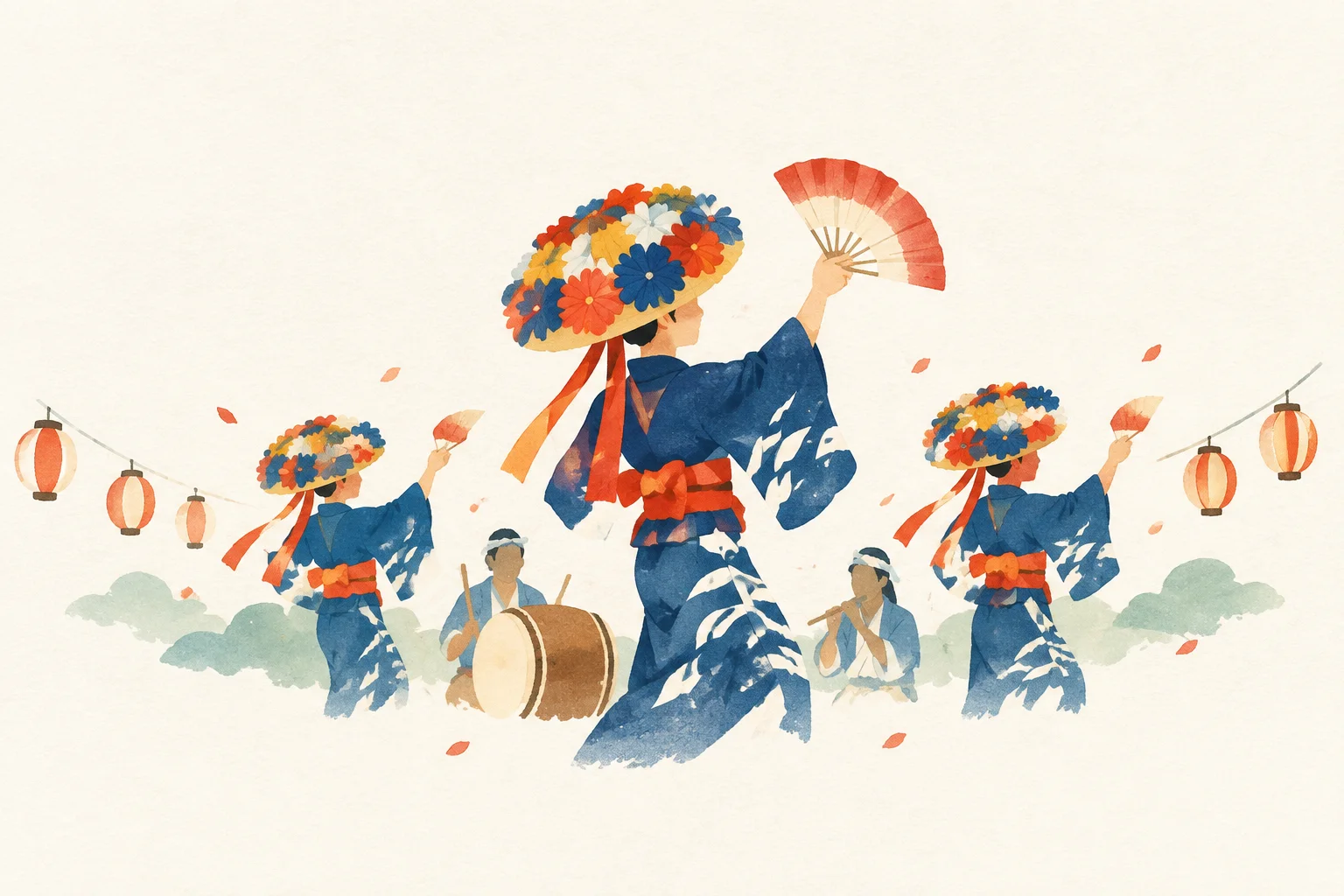
Niijima no Ō-odori is a traditional performing art passed down in Honson and Wakago, Niijima Village. Colorful kaba veils, singing and drums, and distinctive movements using fans are presented in the .
About Niijima no Ō-odori
Niijima no Ō-odori is a small-song dance performed during Obon and passed down in Honson and Wakago, Niijima Village, Tokyo.
The dance is performed in the grounds of Chōeiji Temple in Honson and Myōrenji Temple in Wakago, with each preserving a different style.
It is designated a National Important Intangible Folk Cultural Property and is also included in UNESCO’s Intangible Cultural Heritage listing “Furyū-odori.”
You can see performing arts passed down in the island’s villages as part of local Obon observances.
Source: 国指定文化財等データベース
Festival highlights
Highlights include the colors of the kaba veils hanging from the hats and the slow, graceful movements of the fan dance.
Purple kaba veils are used in Honson and red ones in Wakago. Dancers wear crested formal attire and an inrō.
A large umbrella called kasabōroku, believed to ward off evil, and a kama are set up in the temple grounds. The dancers’ movements are accompanied by the singers’ sustained vowels and the sound of drums.
The differing waist heights and movements in Honson and Wakago are also a distinctive feature.
Source: 大踊 |地域資源紹介記事 | 東京都 地域資源(TOKYOイチオシナビ)
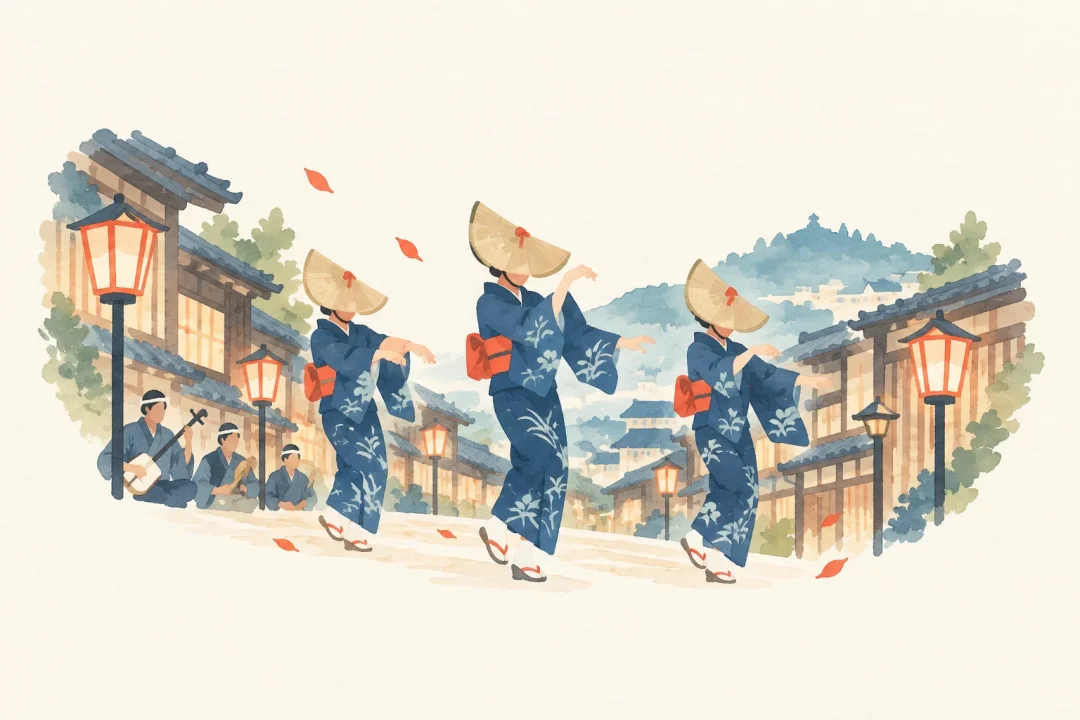
A furyū-odori of songs and fans, passed down during Obon on the island
What to expect
In Honson, the head priest and village representatives sit in the temple grounds. After tea is offered, a procession led by lanterns enters in two rows.
In Wakago, the procession moves in this order: kama, lanterns, kasabōroku, drums, singers, and dancers. Once the circle is formed, the dance begins.
The repertoire differs between Honson and Wakago, but both begin with Yakusho-iri-odori and end with Ise-odori.
The dance area is enclosed with ropes, and watchmen and dance instructors help keep the event running.
How to take part
Members of the general public may attend as spectators.
According to the 2026 information, viewing is free and open to all in both Wakago and Honson.
However, the dancers in the Ō-odori are said to be men, and anyone joining the dance must wear an inrō.
Spectators should watch quietly as part of the local Obon observance, from a place that does not obstruct the dance circle or its progress.
Source: 【新島の大踊2026】8月14日は若郷・15日は本村。トンネルの通行制限で行き方が決まる | イベント情報|東京都・2026年8月14日(金)
Location and access
- Venue and address
In 2026, the event was listed as scheduled to take place in the grounds of Myōrenji Temple in Wakago and Chōeiji Temple in Honson.
The address is Niijima Village, Tokyo.
- Train and bus
You can reach Niijima by boat or plane.
The Heisei Niijima Tunnel leading to Wakago is closed to pedestrians and bicycles, and the village-run Fureai Bus operates 3 times a day.
- By car
Visitors are advised to use a rental car, rental motorcycle, taxi, or similar means to get to Wakago.
Chōeiji Temple in Honson is located within the Honson settlement.
- Parking
Parking is unavailable on the day of the Ō-odori, and visitors are advised to come on foot.
If you are going to Wakago, you will need to arrange a vehicle well in advance.
Source: 新島の大踊 | 新島村観光案内所| 旅行 · Accommodation · 食事
Address Niijima Village, Tokyo
Dates and season
2026 event information (the listed dates have passed)
In 2026, it was held at Myōrenji Temple in Wakago on August 14 (Friday) and at Chōeiji Temple in Honson on August 15 (Saturday).
The event is listed as taking place in the evening in Wakago and from late afternoon in Honson.
It is canceled in rainy weather and is not rescheduled.
Start times vary from year to year, so check before visiting.
Accommodation and hotels PR
Showing nearby accommodation.
Prices and availability are current at the time of retrieval. For multi-night stays, only the first night’s price is shown. Confirm the final price and directions to the venue with the booking provider. Select your dates again when using the area search link. Search area: within 3 km of Central Tokyo Metropolis / Niijima Village (the search is not centered on the festival venue)
Tips for your visit
The event is canceled in rainy weather and is not rescheduled, so check the forecast when making plans.
The Heisei Niijima Tunnel leading to Wakago is closed to pedestrians and bicycles, so it is best to arrange your transportation in advance.
Please avoid blocking the dance circle or passageways, and take care not to touch ritual objects or offerings.
When taking photos, please also be mindful of using flash or a tripod.
Nearby attractions
The Niijima Village Museum collects and exhibits materials on the village’s nature, history, and folk culture.
It also has a life-size model of a dancer from Niijima no Ō-odori and an area where visitors can view the dance.
Visiting alongside the villages of Honson and Wakago, where the festival takes place, can help you learn more concretely about the dance costumes and local culture.
Origins and History of Niijima no Ō-odori
Niijima no Ō-odori is said to have originated from furyū-odori dances that were popular during the Muromachi period and spread to the island.
One account says it was brought to the island during the period when it served as a place of exile for about 200 years, beginning in the early Edo period, and that exiles taught the dance to local people.
It is said that, over time, the dance in Niijima came to be performed as a memorial dance to honor ancestors.
Today, it is passed down in Honson and Wakago, with each area preserving its own repertoire and movements.
Official information
The National Cultural Properties Database lists Niijima no Ō-odori as a National Important Intangible Folk Cultural Property.
Event information and local transportation details can be checked in the Niijima Tourist Information Center’s guide to “Niijima no Ō-odori.”
The official Niijima Village website also provides information about village events and transportation access.
Source: 新島村の紹介|東京都新島村
Niijima no Ō-odori at a Glance
Niijima no Ō-odori is a nationally designated Important Intangible Folk Cultural Property, passed down during Obon in the temple grounds of Honson and Wakago.
In 2026, it was held in Wakago on August 14 and in Honson on August 15. Highlights included red and purple kaba veils, singing and drums, and dance styles that differ by area.
Admission is free, but the event is canceled in rainy weather with no rescheduling, and note that you cannot travel to Wakago on foot or by bicycle.
Japanese Festivals.jp Editorial Team
Celebrating local culture and helping you discover a side of Japan you never knew.
Article updated: 2026/10/19
Submit information or a correction Submit photos of this festival