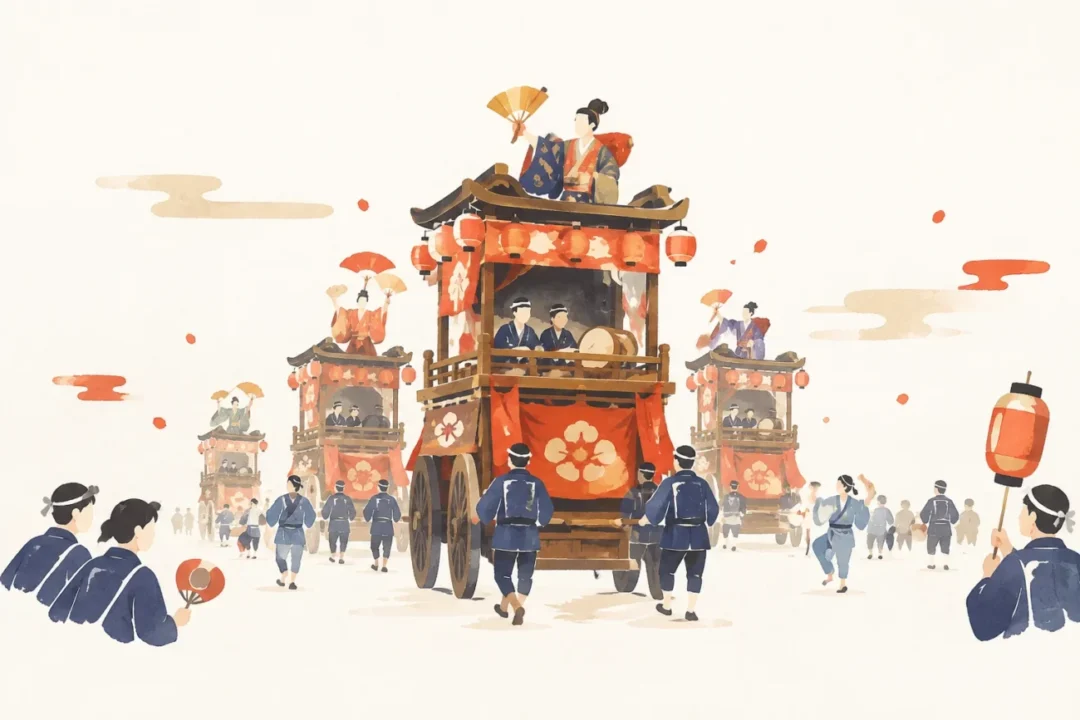
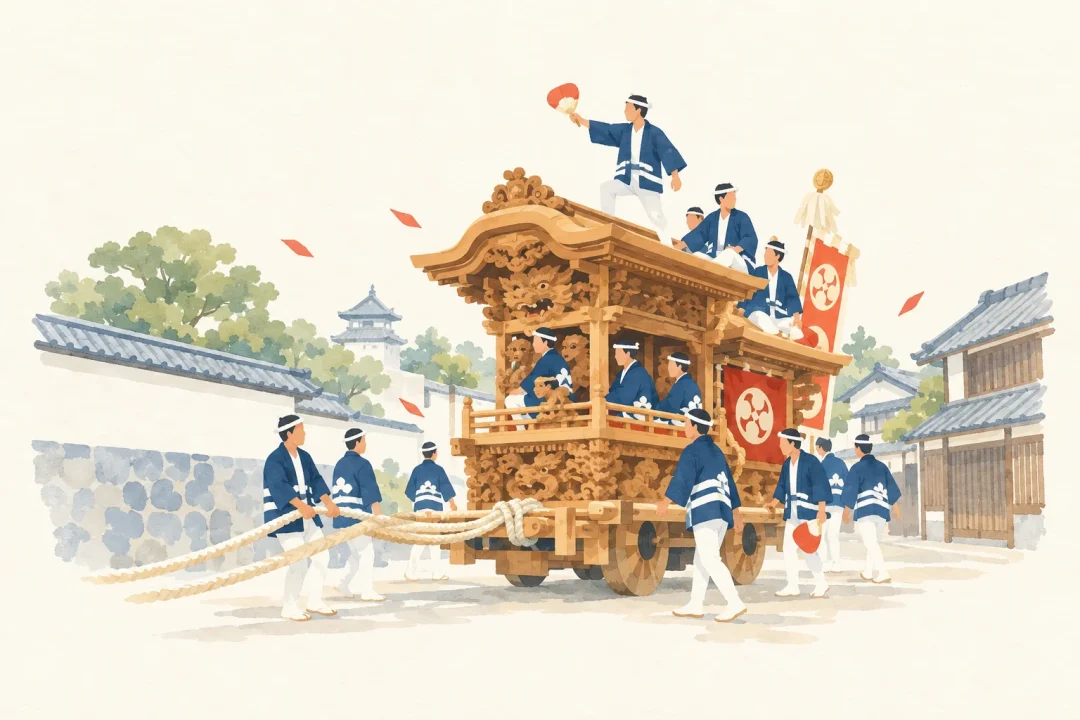
A four-dashi festival in Narumi, passed down since the mid-Edo period
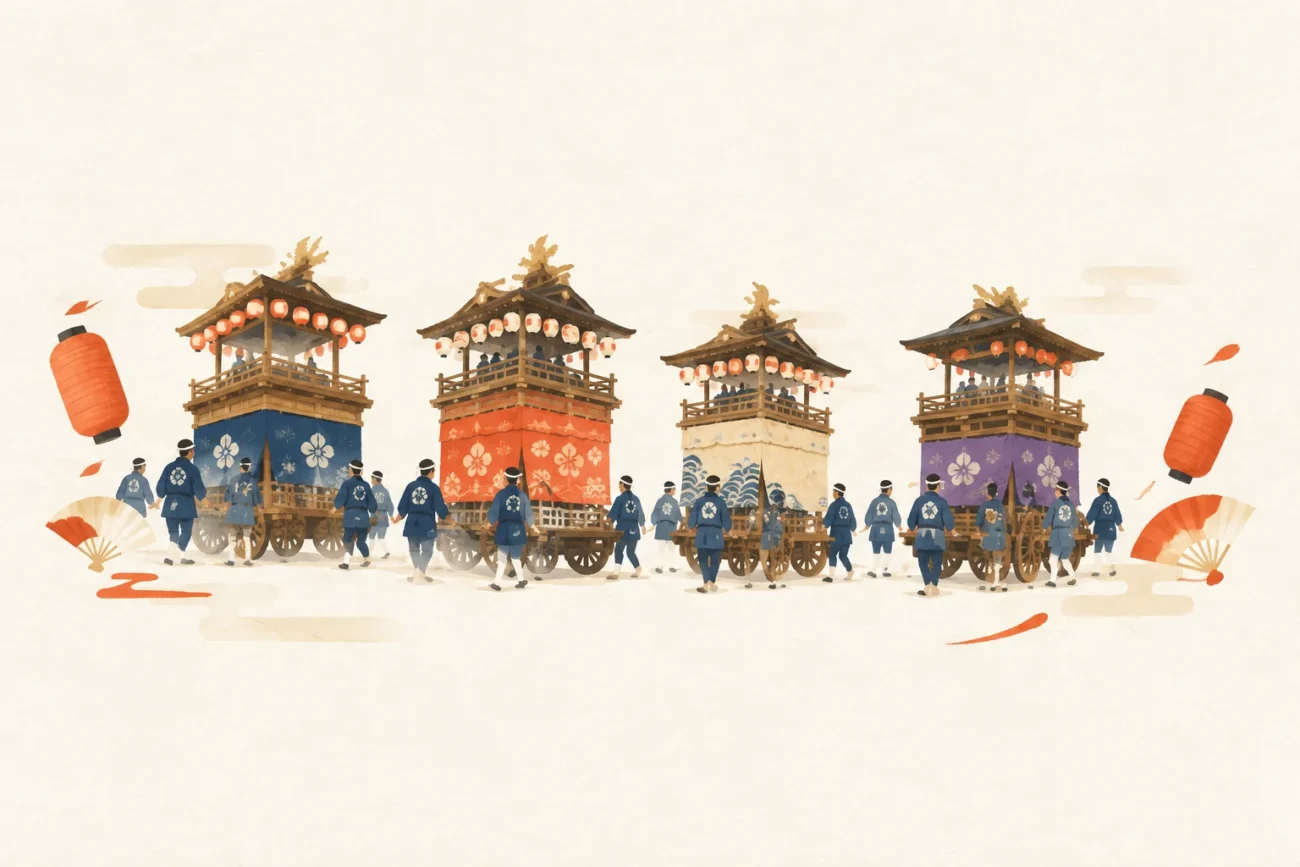
The Narumi Festival (Uragata) dashi event and the dashi from Tange, Kitaura, Hanai, and Shironoshita
Festival information
EVENT INFORMATION- Location
- Narumi-cho
- Area
- Aichi Prefecture・Nagoya City(From Tokyo: approx. 1 h 40 min–2 h · bullet train)Prefecture-level estimate to a main station or airport, not the venue. Airport access, check-in and onward travel are extra; remote areas and islands can take much longer.
- Last updated
- 2026/11/12
A festival in Narumi-cho, Midori Ward, Nagoya, featuring from Tange, Kitaura, Hanai, and Shironoshita.
About The Narumi Festival (Uragata) dashi event and the dashi from Tange, Kitaura, Hanai, and Shironoshita
The Narumi Festival (Uragata) dashi procession is a festival passed down in Narumi-cho, Midori Ward, Nagoya.
The list of city-designated cultural properties includes the event featuring four dashi from Tange, Kitaura, Hanai, and Shironoshita.
The festival is said to date back to the mid-Edo period, and the dashi from each neighborhood are described as having been built between the Edo period and the Bunsei era.
Festival highlights
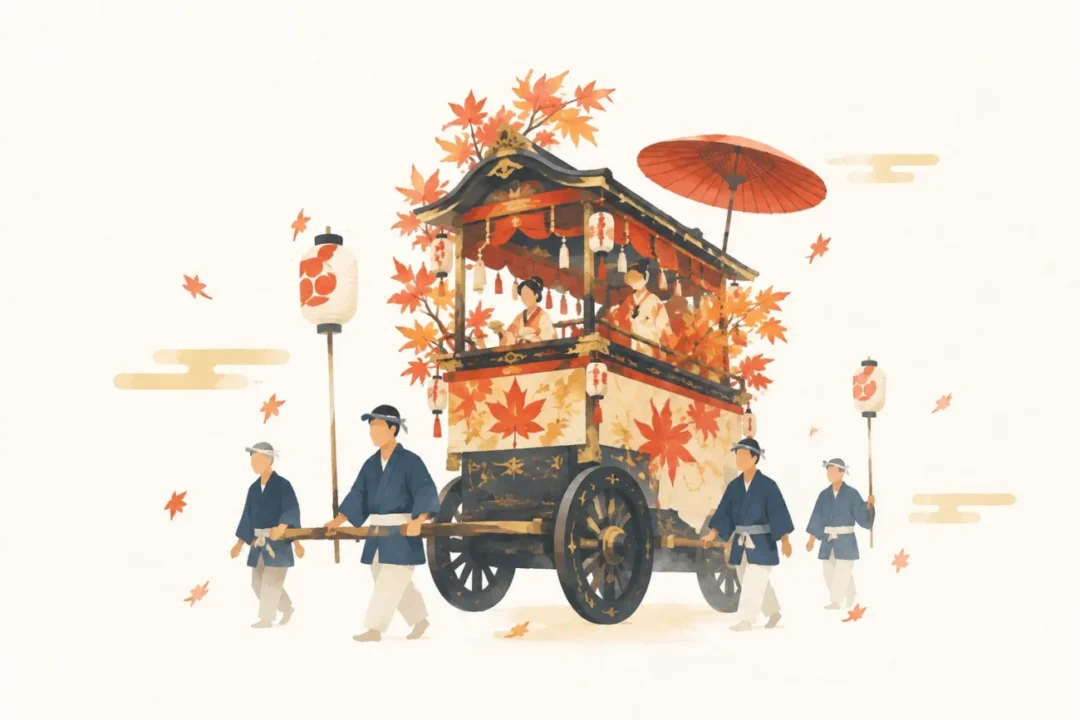
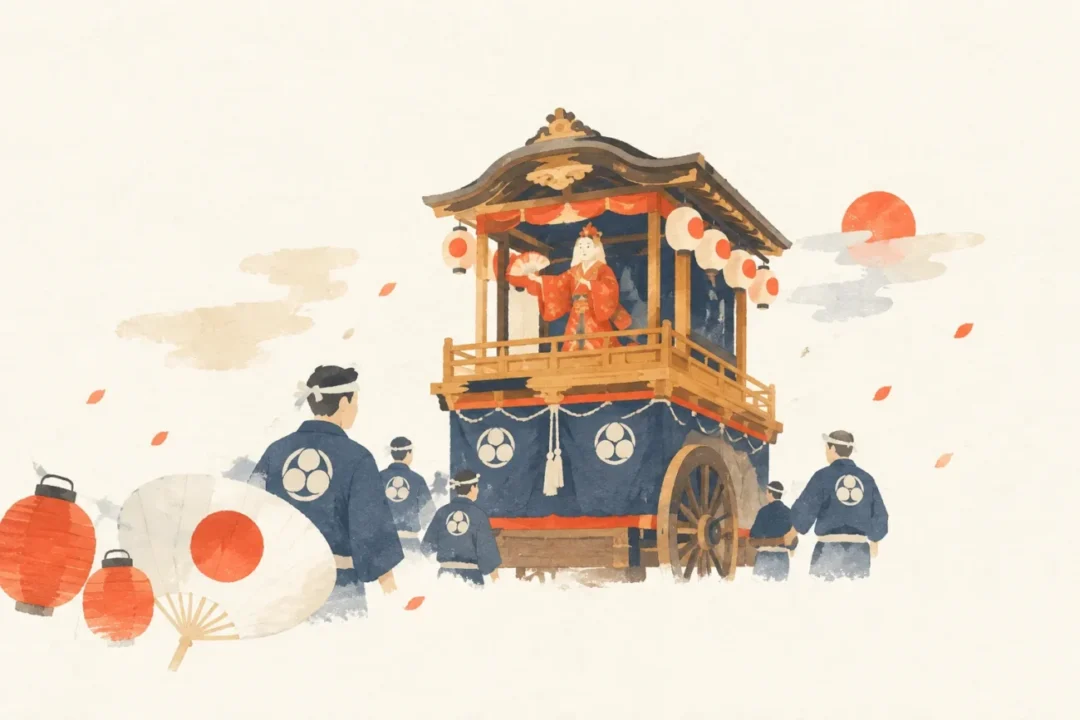
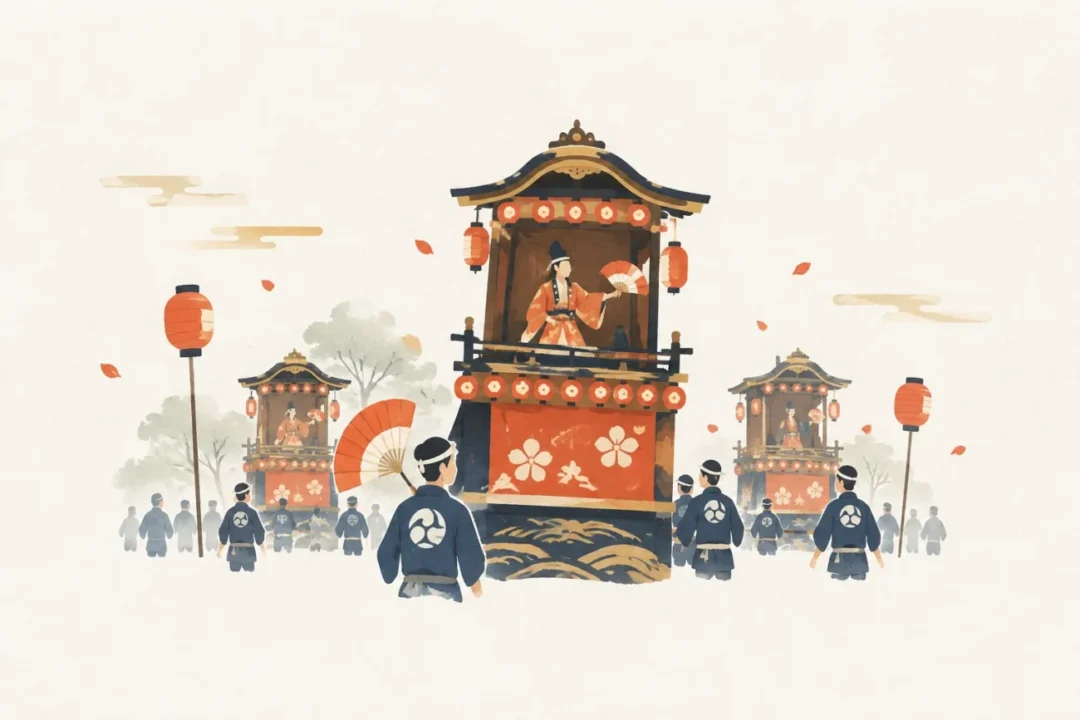
One highlight is the appearance of dashi from four neighborhoods: Tange, Kitaura, Hanai, and Shironoshita.
The dashi also have different histories. Records say that those from Tange, Hanai, and Shironoshita were built in the Edo period, while the Kitaura dashi was built in Bunsei 2 (1819).
Seeing the festival events alongside the history of each dashi offers a way to learn how the tradition has been passed down in each part of Narumi.
A four-dashi festival in Narumi, passed down since the mid-Edo period
What to expect
This event is made up of dashi passed down in the neighborhoods of Tange, Kitaura, Hanai, and Shironoshita, as part of the Narumi Festival (Uragata) dashi procession.
Records document the construction of each of the four dashi. The Kitaura dashi is dated to Bunsei 2 (1819), while those from Tange, Hanai, and Shironoshita are said to have been built in the Edo period.
The specific procession order and times on the day are not provided.
Location and access
- Venue and address
Narumi-cho, Midori Ward, Nagoya
Address Narumi-cho, Midori Ward, Nagoya, Aichi Prefecture
Accommodation and hotels PR
Showing nearby accommodation.
Prices and availability are current at the time of retrieval. For multi-night stays, only the first night’s price is shown. Confirm the final price and directions to the venue with the booking provider. Select your dates again when using the area search link. Search area: within 3 km of Central Aichi Prefecture / Nagoya City (the search is not centered on the festival venue)
Nearby attractions

昭和美術館
愛知県名古屋市昭和区にある美術館
Pokémon The Park 2005
2005年に愛知県名古屋市のデ・ラ・ファンタジア内に開いていた遊園地

でんきの科学館
名古屋市中区栄の中部電力による企業博物館

トヨタ産業技術記念館
名古屋市西区の企業博物館

ノリタケの森
名古屋市西区にある複合施設

リニア・鉄道館
愛知県名古屋市港区にある鉄道博物館

レゴランド・ジャパン
愛知県名古屋市港区にあるテーマパーク

名古屋城
愛知県の城

名古屋市博物館
名古屋市瑞穂区に所在する歴史博物館

名古屋市科学館
愛知県名古屋市中区の白川公園内にある科学館

名古屋市美術館
愛知県名古屋市にある美術館

名古屋港水族館
名古屋市港区の水族館
Origins and History of The Narumi Festival (Uragata) dashi event and the dashi from Tange, Kitaura, Hanai, and Shironoshita
Records say that the Narumi Festival (Uragata) dates back to the mid-Edo period.
The dashi from Tange, Hanai, and Shironoshita are said to have been built in the Edo period, while the Kitaura dashi was built in Bunsei 2 (1819).
These events and dashi were included in Nagoya City’s list of city-designated cultural properties in Heisei 26March 31.
Official information
The Narumi Festival (Uragata) dashi event and its four dashi are listed in the Nagoya City official website’s “List of City-Designated Cultural Properties.”
The Narumi Festival (Uragata) dashi event and the dashi from Tange, Kitaura, Hanai, and Shironoshita at a Glance
The Narumi Festival (Uragata) dashi event is a festival in Narumi-cho, Midori Ward, Nagoya, said to date back to the mid-Edo period.
Records document four dashi from Tange, Kitaura, Hanai, and Shironoshita. The Kitaura dashi is dated to Bunsei 2 (1819), while the other three are said to have been built in the Edo period.
Sources and references
Japanese Festivals.jp Editorial Team
Celebrating local culture and helping you discover a side of Japan you never knew.
Article updated: 2026/11/12