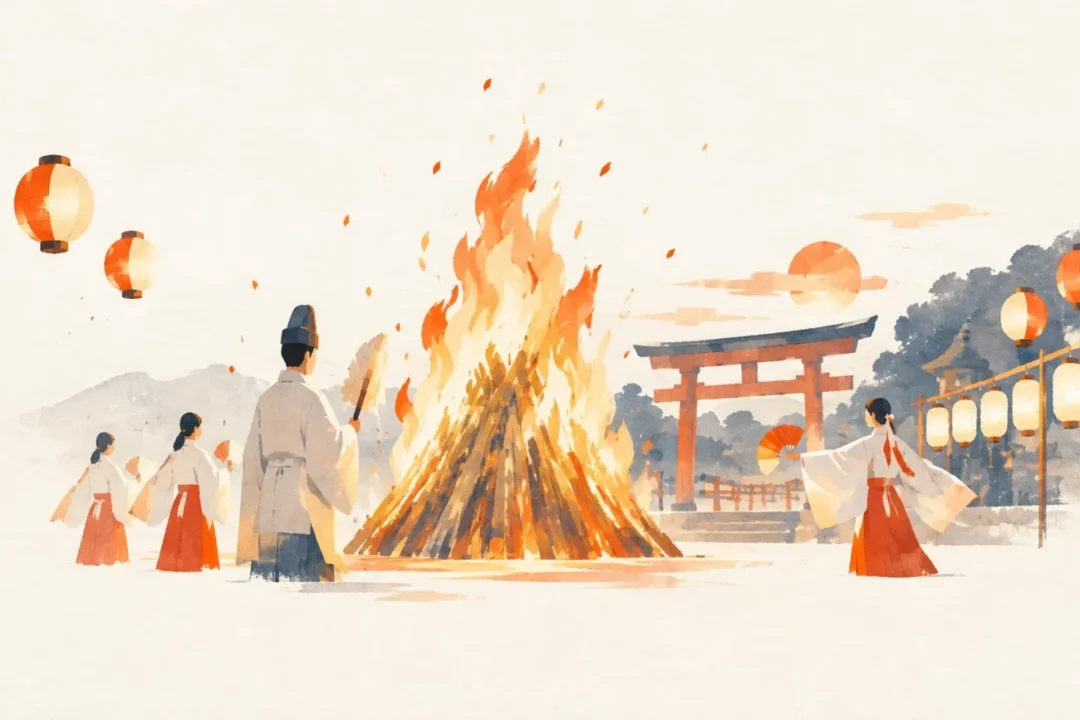
A festival rooted in Nakayama tradition, where taro from the east and west are compared at Nogamiyama
Nakayama Imo Kurabe Festival

Festival information
EVENT INFORMATION- Season / frequency
- Around every September / Every year
- Location
- Kumano Shrine and Nogamiyama
- Area
- Shiga Prefecture・Hino Town(From Tokyo: approx. 2 h 20 min–3 h · bullet train + connecting train)Prefecture-level estimate to a main station or airport, not the venue. Airport access, check-in and onward travel are extra; remote areas and islands can take much longer.
- Features
- Highlights and activities
- Wishes behind the festival
- Last updated
- 2026/10/19
A traditional event passed down from Kumano Shrine to Nogamiyama, in which the Nakayama district holds a contest to see whose taro is longest.
About Nakayama Imo Kurabe Festival
A festival passed down in the Nakayama district, featuring a contest to see whose Tōnoimo—a type of taro—is longest.
After the miyaza ceremony at Kumano Shrine, the participants head to Nogamiyama, where each of the two parts of the district performs rituals using its own homegrown taro.
The event continues as a way to foster harmony between the two parts of the district through the taro contest and to pray for the development of local livelihoods, including dry-field farming and rice cultivation.
It was designated an Important Intangible Folk Cultural Property of Japan in 1991.
Source: 国指定文化財等データベース
Festival highlights
The highlight is the contest at the ritual site on Nogamiyama, where Higashidani and Nishidani compare the lengths of the taro they have chosen that year.
The taro are decorated on mōsō bamboo, and Yamawake and Yamako form separate processions for each part of the district and carry them to the ritual site.
At the ritual site, the ceremony proceeds with distinctive speech and formal recitations, as well as prescribed movements. At the end, the length is measured from the base to the tip of the leaves.
The festival is notable for this contest, which is rarely seen elsewhere in Japan, and for the way it brings the two parts of the district together at the end.
A festival rooted in Nakayama tradition, where taro from the east and west are compared at Nogamiyama
What to expect
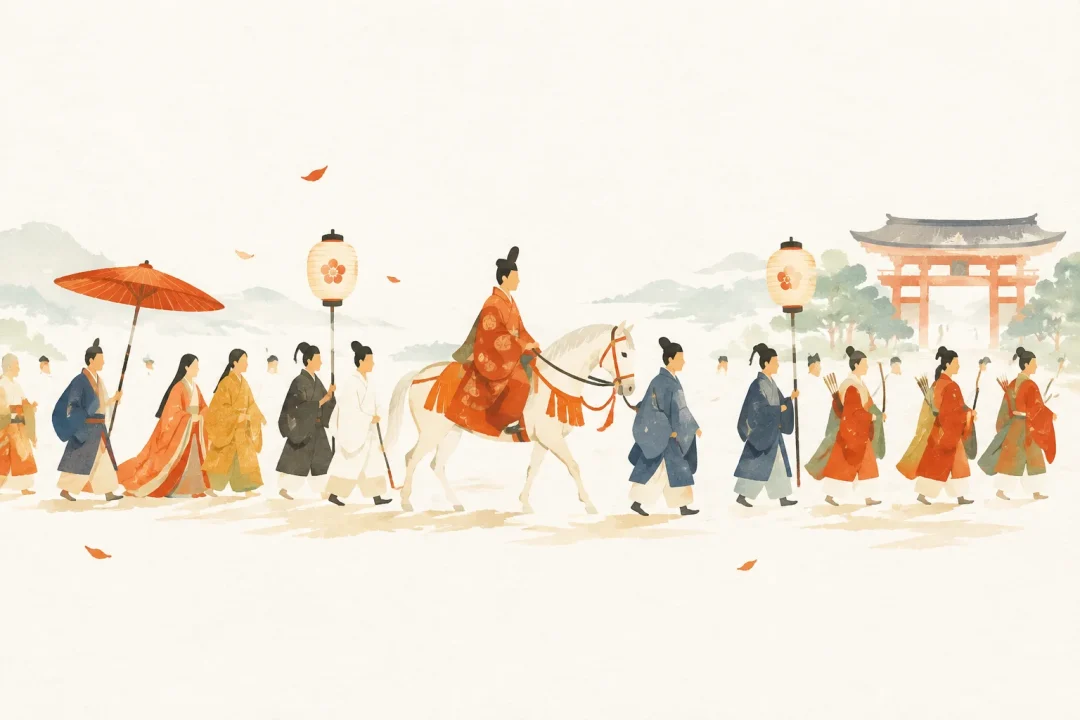
The festival begins with a miyaza ceremony at the shrine office of Kumano Shrine. Higashidani and Nishidani then take separate routes to the ritual site on Nogamiyama.
At the ritual site, Yamawake and Yamako take their designated seats and carry out the ceremony according to distinctive formal recitations and movements.
At the end, the length of the taro chosen by each of the two parts of the district is compared. The participants then return to Kumano Shrine for the closing ceremony.
Preparations and proceedings involve a division of roles based on age hierarchy.
Source: 近江中山の芋競べ祭り – 日野観光協会
Location and access
- Venue and address
Kumano Shrine and Nogamiyama (Nakayama, Hino Town, Gamo District, Shiga Prefecture)
- Train and bus
About 10 minutes by car from Hino Station on the Omi Railway.
Information is available about bicycle rentals in front of the station.
- By car
About 10 minutes by car from Hino Station on the Omi Railway.
Source: シリーズ1 芋くらべ祭の村-近江中山民俗誌- | 映像資料 | 国立歴史民俗博物館
Address Nakayama, Hino Town, Gamo District, Shiga Prefecture
Dates and season
- Season
Around every September
- Frequency
Every year
Accommodation and hotels PR
Showing nearby accommodation.
Prices and availability are current at the time of retrieval. For multi-night stays, only the first night’s price is shown. Confirm the final price and directions to the venue with the booking provider. Select your dates again when using the area search link. Search area: within 3 km of Central Shiga Prefecture / Hino Town (the search is not centered on the festival venue)
Tips for your visit
The festival connects two locations, Kumano Shrine and Nogamiyama. At Nogamiyama, there is a procession up the mountain, followed by rituals at the site.
If you attend as a spectator, take care not to obstruct the procession from the shrine to the ritual site or the progress of the ceremony.
Before setting out, check the latest information on the date, access restrictions on the day, and parking availability.
Nearby attractions

近江日野商人館
日本の滋賀県蒲生郡日野町にある資料館
Origins and History of Nakayama Imo Kurabe Festival
The Omi Nakayama Imo Kurabe Festival is described as having a tradition of more than 850 years.
It was once held in lunar calendar: August, but is said to have settled into its current date of September 1 from Showa 46 onward.
In Nakayama, the miyaza’s order and division of roles, split between Higashidani and Nishidani, support the festival. An age-based hierarchy, progressing from Yamako and Yamawake to Katte and Otona, is involved in preparations and the proceedings.
It was designated an Important Intangible Folk Cultural Property of Japan in 1991.
Official information
The Hino Tourism Association provides information about the venue, and describes the festival as a Nationally Designated Important Intangible Folk Cultural Property.
Explanations of its cultural significance, the division of roles, and how the festival proceeds can also be found in the Database of Nationally Designated Cultural Properties.
Nakayama Imo Kurabe Festival at a Glance
A traditional event rarely seen elsewhere in Japan, in which Higashidani and Nishidani, two parts of the Nakayama district, compete at Nogamiyama to see whose homegrown taro is longest.
The event includes a miyaza ceremony at Kumano Shrine, processions from each part of the district, and speeches and movements following ancient customs, before the taro are measured at the end.
The festival is held in the hope of fostering harmony between the two parts of the district and developing local livelihoods. It has also been designated an Important Intangible Folk Cultural Property of Japan.
Japanese Festivals.jp Editorial Team
Celebrating local culture and helping you discover a side of Japan you never knew.
Article updated: 2026/10/19
Submit information or a correction Submit photos of this festival