Mochizuki’s michikiri: straw figures carrying prayers for protection from calamities
Mochizuki Fusegi Festival
Festival information
EVENT INFORMATION- Season / frequency
- The Sunday closest to July 2
- Location
- Mochizuki area
- Area
- Saitama Prefecture・Higashimatsuyama City(From Tokyo: approx. 30 min–1 h · train)Prefecture-level estimate to a main station or airport, not the venue. Airport access, check-in and onward travel are extra; remote areas and islands can take much longer.
- Highlights and activities
- Wishes behind the festival
- Last updated
- 2026/11/11
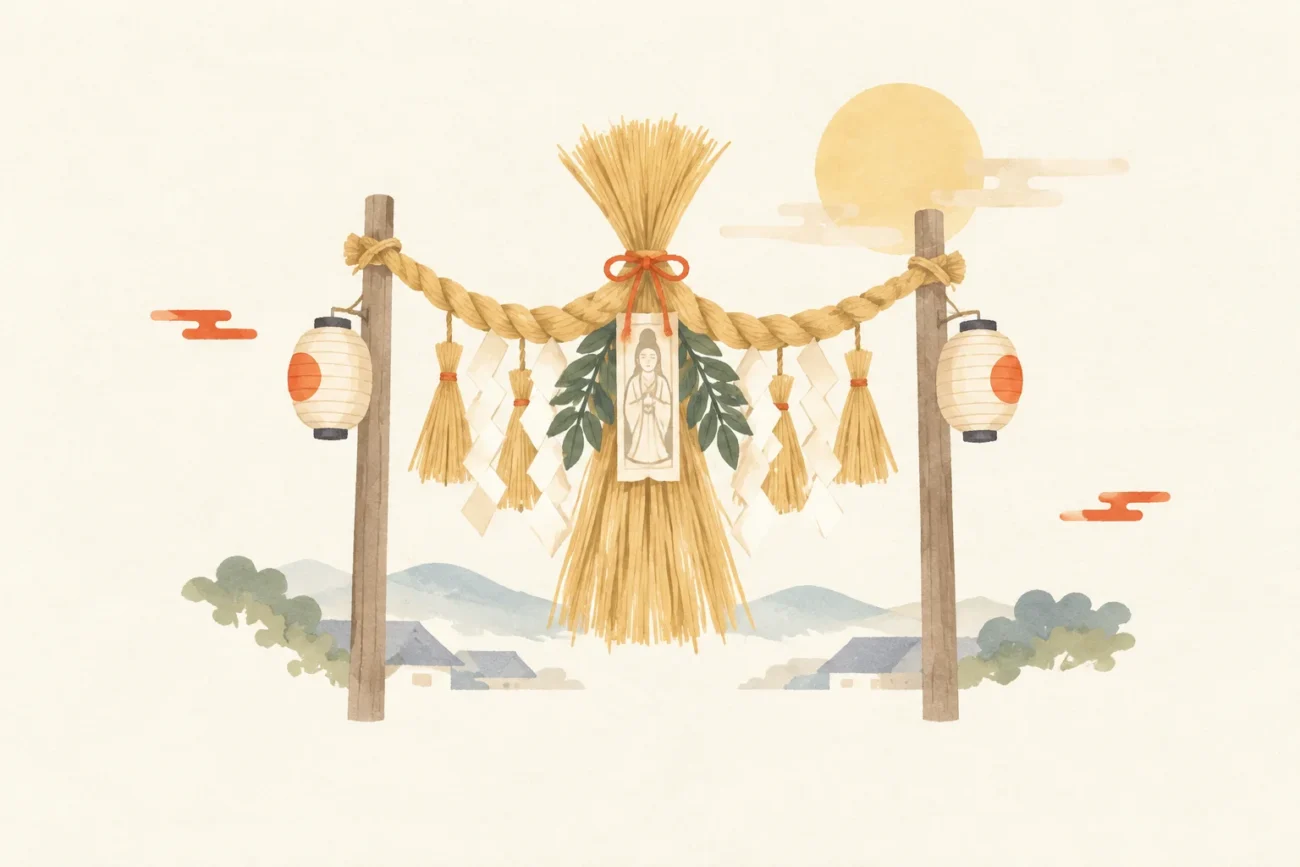
The Mochizuki Fusegi Festival is a folk event in which straw objects are placed at district entrances and crossroads to keep harmful things, such as illness and disasters, from entering. Each component has its own meaning, and amulets of Kannon are also displayed.
About Mochizuki Fusegi Festival
The Mochizuki Fusegi Festival is a folk event intended to keep harmful things, such as illness and disasters, from entering the district.
Straw objects made with prayers for protection from calamities are placed at district entrances, crossroads, and other locations to prevent evil spirits from entering.
Displaying an amulet of Kannon bestowed by Iwadonoyama Shoboji Temple is also a distinctive feature of this event.
Festival highlights
A highlight is the variety of forms made from straw and the meaning embodied in each one.
The large straw sandal is said to represent a giant in the district powerful enough to defeat even evil spirits. It also carries a prayer for continued strength in the legs and lower back.
Depictions of male and female genitalia are thought to have served both to discourage people from entering and to express a wish for the prosperity of descendants.
Mochizuki’s michikiri: straw figures carrying prayers for protection from calamities
What to expect
During the event, straw objects are made with prayers for protection from calamities and placed at district entrances, crossroads, and other locations.
Each component represented in the fusegi has its own meaning, including a large straw sandal and depictions of male and female genitalia.
In addition, an amulet of Kannon, bestowed by Iwadonoyama Shoboji Temple, is displayed.
Location and access
- Venue and address
Mochizuki area
Address Mochizuki area
Dates and season
- Season
The Sunday closest to July 2
Accommodation and hotels PR
Showing nearby accommodation.
Prices and availability are current at the time of retrieval. For multi-night stays, only the first night’s price is shown. Confirm the final price and directions to the venue with the booking provider. Select your dates again when using the area search link. Search area: within 3 km of Central Saitama Prefecture / Higashimatsuyama City (the search is not centered on the festival venue)
Nearby attractions

原爆の図丸木美術館
埼玉県東松山市にある美術館

埼玉県平和資料館
埼玉県東松山市の物見山公園内にある埼玉県立の資料館
Origins and History of Mochizuki Fusegi Festival
The Mochizuki Fusegi Festival is a folk event passed down in the Mochizuki area of Higashimatsuyama City.
On March 24, Heisei 18 (2006), it was designated an Intangible Folk Cultural Property of Higashimatsuyama City.
Although the event’s origins, how it came about, and how it changed over time are not documented, the event is introduced in the form that can currently be confirmed, using straw objects and amulets of Kannon.
Official information
Higashimatsuyama City official website, “Mochizuki Fusegi Festival”
Mochizuki Fusegi Festival at a Glance
The Mochizuki Fusegi Festival is a folk event in which straw objects are placed at district entrances and crossroads to keep harmful things, such as illness and disasters, from entering the district.
The large straw sandal is thought to represent a giant who drives away evil spirits and a wish for strength in the legs and lower back; depictions of male and female genitalia are thought to discourage entry and express a wish for the prosperity of descendants.
It is held in the Mochizuki area and is designated an Intangible Folk Cultural Property of Higashimatsuyama City.
Sources and references
Japanese Festivals.jp Editorial Team
Celebrating local culture and helping you discover a side of Japan you never knew.
Article updated: 2026/11/11